Faroe Islands vs Iceland

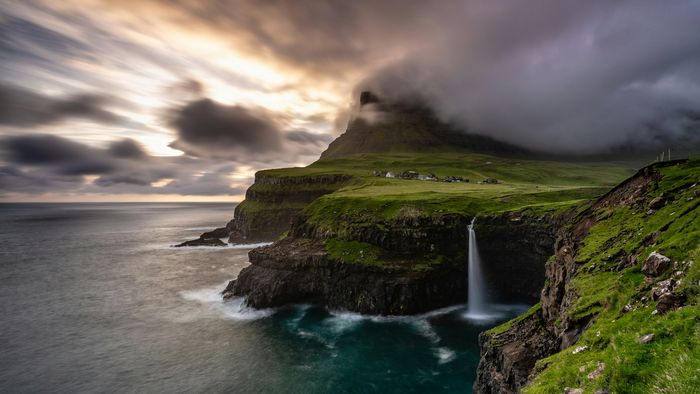
Two dramatic North Atlantic islands, at different stages of discovery. The Faroes are small, quiet and raw: cliff-walled green islands, grass-roofed hamlets, waterfalls off the edge, few other tourists and modest infrastructure. Iceland is bigger and far more developed: geysers, waterfalls, glaciers and volcanoes on a grand scale, a well-oiled tourist machine, the Ring Road and the Blue Lagoon. An undiscovered, intimate archipelago, or a varied, polished, busier island.

Northern Europe

Faroe Islands

Eighteen green, cliff-walled islands in the North Atlantic — grass-roofed hamlets, waterfalls off the edge of the world.

Best time to visit
  1. January: avoid
  2. February: avoid
  3. March: fine
  4. April: fine
  5. May: peak
  6. June: peak
  7. July: peak
  8. August: peak
  9. September: fine
  10. October: fine
  11. November: avoid
  12. December: avoid
Peak Fine Avoid

Northern Europe

Iceland

Geysers, glaciers, northern lights, hot springs.

Best time to visit
  1. January: fine
  2. February: peak
  3. March: fine
  4. April: fine
  5. May: peak
  6. June: peak
  7. July: peak
  8. August: peak
  9. September: peak
  10. October: fine
  11. November: fine
  12. December: fine
Peak Fine Avoid

Read our full guides about Faroe Islands and Iceland.

Side by side

Emphasised where they differ. Muted rows are much the same either way.

Faroe Islands Iceland
Best time May–August February, May–September
Climate cold cold
Budget High, Scandinavian — Nordic prices, but fewer paid attractions beyond the hike fees and tolls High, Scandinavian — and more to spend on, with tours, the Blue Lagoon and a full tourist economy
Trip length 1–1 wks 1–2 wks
Visa Not in the Schengen Area, but visa-free for most Western passports (check requirements). Verify before travel. Schengen — visa-free for most Western passports (90 days).
Currency Danish Krone (DKK); Faroese notes also circulate. ISK (Krona). Roughly 138 ISK ≈ 1 USD.
Language Faroese and Danish; English widely spoken. Icelandic. English universal.
Tap water Tap water is safe. Tap water excellent — best in the world by some metrics.
Safety Very safe; the hazards are weather, cliffs, and narrow roads, not crime. Very safe. Weather and roads in winter are the real risks.

General guidance — visas, safety, and health change, so check your government's travel advisory and the official sources before you go.

The split

Quiet and raw, or varied and developed

Two North Atlantic islands — one small, quiet and undiscovered, the other bigger, geothermal and polished.

Small vs bigthe scaleAn intimate archipelago, or a large varied island
Raw vs geothermalthe landscapeCliffs and grass, or volcanoes and glaciers
Quiet vs busythe crowdsUnder-visited, or a full tourist economy

The Faroes are small, quiet and raw: cliff-walled green islands, grass-roofed hamlets, waterfalls spilling into the sea, few other tourists and modest infrastructure. Iceland is bigger and far more developed: geysers, glaciers and volcanoes at scale, the Ring Road, the Blue Lagoon and a slick tourist economy. An undiscovered, intimate archipelago, or a varied, polished, busier island.

Operational detail — the Faroes’ hike fees, new sustainability fee and tunnel tolls; Iceland’s eruption and road status and the Blue Lagoon — lives on the two guides: Faroe Islands, know before you go and Iceland, know before you go. This page is the head-to-head.

Who suits which

Who each actually suits

Quiet-and-raw or varied-and-developed — so these never invert.

If you want…Faroe IslandsIceland
Varied geothermal landscapesCliffs and grassWins clearly. Volcanoes, glaciers
Quiet, undiscovered feelWins clearly. Few touristsHeavily touristed
Dramatic sea cliffsWins. Staggering cliffsHas them, not the focus
Easy infrastructure and toursModest, weather-hitWins. A full tourist machine
A road-trip (Ring Road)Tunnels between small islesWins. The classic circuit
An intimate scaleWins. Small and personalBigger, more spread

Doing both

Genuinely combinable

North Atlantic neighbours — flights and a ferry link them.

These two combine well: they’re North Atlantic neighbours, linked by Atlantic Airways flights and the Smyril Line ferry (Denmark–Faroes–Iceland), so a two-stop trip is natural. Mind the entry quirk — the Faroes are outside Schengen (no EES/ETIAS there), Iceland is in it. Both are summer-best. If you must pick one, choose the Faroes for quiet, raw, undiscovered islands, Iceland for varied geothermal spectacle and easy infrastructure.

What we leave out

What we deliberately leave out

Exact prices and the moving pieces — the Faroes’ per-site hike fees (being reshaped in 2026); Iceland’s eruption status, road closures and Blue Lagoon pricing — change within a season, so the figures here are the shape of the gap, not a quote; the country guides carry the live detail.

Faroe Islands or Iceland, month by month

Which of the two is the better bet for each month of the year, scored on how well the season suits each place.

Which to choose

Choose Faroe Islands if:

  • You want quiet, raw, undiscovered islands and dramatic cliffs.
  • Few tourists and an intimate scale appeal.
  • Quiet-and-untrodden beats varied-and-busy.

Choose Iceland if:

  • You want geothermal spectacle, glaciers and volcanoes at scale.
  • A well-developed, easy, varied island appeals.
  • Range and polish beat quiet and raw.

Common questions

How do the Faroe Islands and Iceland compare?
By scale and development. The Faroes are small, quiet and raw — cliff-walled green islands, grass-roofed hamlets, waterfalls off the edge, few tourists and modest infrastructure. Iceland is bigger and far more developed — geysers, glaciers and volcanoes at scale, the Ring Road, the Blue Lagoon and a full tourist machine. An intimate, undiscovered archipelago, or a varied, polished island. See the Faroe Islands and Iceland guides.
Which has the more varied landscapes?
Iceland, clearly — it has the full geothermal set: erupting volcanoes, glaciers, geysers, black beaches, ice lagoons and waterfalls, all reachable on the Ring Road. The Faroes are more singular — staggering sea cliffs, green slopes and fog — gorgeous but one dominant register. Diverse natural spectacle, or concentrated cliff-and-ocean drama.
Which is quieter and more off-the-beaten-track?
The Faroes, by a wide margin. They remain genuinely under-visited, so the big viewpoints are quiet and the feel is intimate. Iceland is heavily touristed now, especially the south coast and Golden Circle, with the infrastructure (and crowds) to match. Untrodden and intimate, or busy but easy.
Can I combine them?
Yes, unusually — they’re neighbours in the North Atlantic, linked by Atlantic Airways flights and the Smyril Line ferry (Denmark–Faroes–Iceland), so a two-stop trip works. Note an entry quirk: the Faroes are outside Schengen, so EES/ETIAS don’t apply there, while Iceland is in Schengen. Both are summer-best. If choosing one: quiet and raw (Faroes), or varied and developed (Iceland).

Still undecided

Take the quiz

Three matches. Often answers comparison questions for you.

Start the quiz