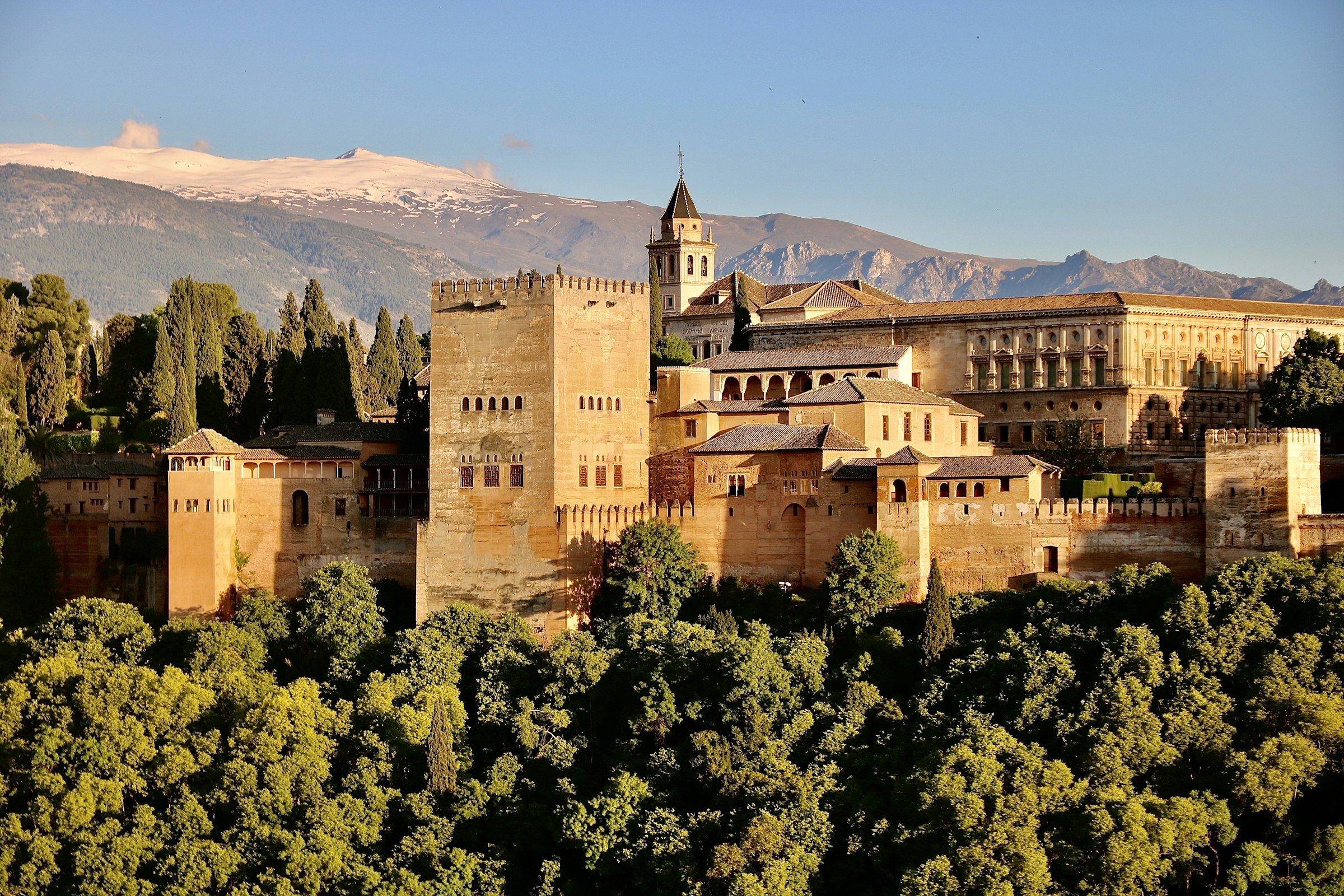
Spain
Food, beaches, and three or four cities that each justify the trip.
Spain runs deeper than its beach-holiday reputation suggests. Madrid and Barcelona are obvious and still worth it, but Andalusia is the real prize — Granada, Seville, Córdoba, and Moorish history layered into living cities. The food culture rivals anywhere in Europe, the coast is long and varied, and your money goes further than in France or Italy. Inland summers are brutal; aim for spring or autumn.
A first trip splits between one big city and Andalusia. Fly into Madrid, do the Prado and a late tapas crawl in La Latina, then take the AVE south — Seville in around two and a half hours. From there it's short hops: Córdoba's Mezquita, Granada's Alhambra (book weeks ahead), white villages in between. Eating sets the daily structure: menú del día lunches, dinner no earlier than nine. Trains and food are cheap; city-centre hotels in high season are not.
The crowds are the tax. Barcelona is saturated, the Alhambra sells out, and Seville in August hits temperatures that empty its own streets. Coastal strips like Benidorm exist for a market that probably isn't you, and August shuts down chunks of the cities as locals flee. Dinner at ten takes adjusting. But Spain absorbs tourism better than most places — step two streets off any main drag and the country still belongs to the people who live there.
Highlights
-
Andalusia
Granada, Seville, Córdoba — Moorish palaces and the best of southern Spain.
-
Barcelona
Gaudí, the beach, and a food scene that earns the hype.
-
Madrid
Underrated. Great museums, late nights, and the best day trips in the country.
-
San Sebastián & the north
Pintxos, green coast, and cooler summers.
-
Mallorca & the Balearics
Past the party reputation lie quiet coves and hill villages.
Practical info
- Visa
- Schengen — visa-free for most Western passports (90 days).
- Currency
- EUR (€)
- Language
- Spanish. English in cities and tourism, less elsewhere.
- Safety
- Very safe. Pickpocketing in Barcelona and Madrid.
- Getting around
- AVE high-speed trains link the major cities. Drive for Andalusia and the coast.
- Tap water
- Tap water safe.
- Plug type
- Type C Type F 230V
- Money
- Cards widely accepted; cash for small bars and markets.
General guidance — visas, safety, and health change, so check your government's travel advisory and the official sources before you go.
Common questions
- When is the best time to visit Spain?
- Spring (mid-April to June) and early autumn (September to late October) — warm, sunny, lighter crowds, lower fares. Avoid the interior south in July and August: Seville and Córdoba regularly pass 40°C, and the summer of 2025 was the hottest on record. August is also Spain’s own holiday month, when city shops and family restaurants close while the coast and islands hit peak. The whole calendar, with the festival dates, is in the seasonal section.
- Do you need to book the Alhambra in advance?
- Yes — and before anything else on the trip. The Alhambra caps the day at about 6,600 tickets, and the Nasrid Palaces admit roughly 300 people per 30-minute slot on a fixed window assigned when you buy — miss it and you forfeit. Booking opens up to about 90 days ahead and peak dates sell out weeks out. It is the single most common Spain planning mistake; the booking section has the full list.
- Why is the Sagrada Família suddenly in the news?
- Its central Tower of Jesus Christ was topped out in February 2026 — the cross went up on 20 February, at 172.5 m making it the tallest church in the world (the exterior is now essentially complete; interiors are targeted for 2028). Entry is €26, or €36 with the towers, booked online only — there is no box office, and it sells out around two months ahead.
- Is Spain cracking down on tourism?
- Parts of it, yes — and 2024–2026 saw real anti-mass-tourism protests in Barcelona, the Balearics and the Canaries. Barcelona’s city tourist surcharge rose to €5 per person per night in April 2026 (set to climb to €8 by 2029), it will end all ~10,000 tourist-apartment licences by November 2028, and it is cutting its cruise terminals from seven to five. None targets individual visitors, but it changes the cost and where you can stay — see overtourism.
- How does rail work in Spain, and is it cheap?
- The high-speed network is the backbone (Madrid–Barcelona in about 2h30, plus Seville, Málaga and Valencia), and since liberalisation three operators compete on the main lines — Renfe with its low-cost Avlo, the French-owned Ouigo and the Italian-backed Iryo. That cut average Madrid–Barcelona fares by roughly 40–58%, with cheap seats from about €9 on Ouigo. Book early: the cheapest buckets go first, and Ouigo opens sales nine to ten months ahead.
- What do you need to enter Spain?
- Spain is in Schengen and the eurozone, so visa-exempt visitors (US, UK, Canada, Australia and others) need no visa for stays up to 90 days in any 180. The EU’s biometric Entry/Exit System (EES) is live — in full operation since 10 April 2026 — so expect a facial photo and fingerprints on arrival instead of a passport stamp. The separate ETIAS authorisation is not yet required; it is expected in 2027.
Entry & borders
The border is biometric now — but there is no ETIAS yet
The EES is live; the much-trailed ETIAS is not. Two separate systems, and only one of them affects your 2026 trip.
The Entry/Exit System (EES) rolled out across the Schengen external border from 12 October 2025 and reached full operation on 10 April 2026. For non-EU short-stay travellers it replaces the inked passport stamp with a biometric record — a facial image and fingerprints, logged electronically on each entry and exit. First registration can add a few minutes at the booth; it is quicker once your file exists.
The ETIAS authorisation is a different, later thing, and it is not required as of October 2026 — the EU abandoned its "last quarter of 2026" target in mid-2026 and now points to 2027, with several months’ notice promised first. When it does arrive it will cost €20, last three years or until the passport expires, and carry no fee for travellers under 18 or over 70 (who still must hold one).
Do not pay for "EES" or "ETIAS" on a third-party website in 2026 — EES needs no application at all, and ETIAS is not open yet, so any site charging for one now is a scam. ETIAS, when it launches, will be sold only through the official EU portal.
Booking the sights
The headline sights run on timed slots and hard caps
Spain’s most famous buildings sell a fixed half-hour, not a day ticket — and the Alhambra sells out weeks ahead.
Plan the whole trip around the Alhambra. Granada’s Moorish palace-city caps the day at about 6,600 tickets, and the Nasrid Palaces — the part everyone comes for — admit roughly 300 people per 30-minute slot, on a window fixed when you buy and impossible to enter outside. Book it the instant your dates are firm; everything else can follow. Barcelona’s Sagrada Família and Park Güell, Seville’s Real Alcázar and the rest all sell timed slots too, and walk-up is routinely gone by mid-morning in season.
| Sight | Must book? | 2026 adult | Window / note |
|---|---|---|---|
| Alhambra, Granada | Yes — book first | ~€19 | Nasrid Palaces: fixed 30-min slot; ~90 days ahead |
| Sagrada Família, Barcelona | Yes — online only | €26 / €36 towers | No box office; sells out ~2 months out |
| Park Güell, Barcelona | Yes — timed | €18 | Up from €10 in 2025; 30-min slots |
| Real Alcázar, Seville | Yes in season | €13.50 | Named 30-min slot; gone 2–4 weeks ahead |
| Mezquita, Córdoba | Walk-up OK | €15 | Free Mon–Sat 08:30–09:30 |
| Museo del Prado, Madrid | Recommended | €15 | Free Mon–Sat 18:00–20:00, Sun 17:00–19:00 |
Prices read off each site’s official portal in October 2026; set annually, so re-check before you travel. The Alhambra’s exact figure runs ~€19 at the box office to ~€22 online with the booking fee.
Two free windows worth timing a day around: the Mezquita-Catedral of Córdoba is free to individuals Monday to Saturday, 08:30–09:30 (last entry ~09:20, no groups), and the Prado is free for the last two hours daily — though you still reserve a timed slot. Neither helps at the Alhambra, where there is no free route into the Nasrid Palaces.
Tourist taxes
There is no national tax — the regions set their own
Spain charges nothing nationally. Catalonia and the Balearics each levy a per-night tax, and Barcelona’s is climbing every year.
€5 → €8 Barcelona’s nightly city surcharge, rising each year to 2029
In Barcelona the total per-night tax (regional IEET plus the city surcharge, before VAT) runs from about €7 at an ordinary hotel to €8.40 at a four-star and €12 at five-star or luxury; a cruise call is charged too. It applies to the first seven nights and exempts under-16s.
The Balearics run a separate "sustainable tourism tax" (ITS) that is sharply seasonal: in peak summer 2026 it is about €6 per person per night at a five-star, €4 at a four-star and €2 at a tourist apartment, falling in the shoulder months, dropping to nothing in January and February, and halving from the ninth night. Both regions add 10% VAT on top. Everywhere else in Spain — Madrid, Andalusia, the Canaries — there is no bed tax at all.
Where to go
Nine regions, and they are nothing like each other
The green, rainy, pintxos-eating north has little in common with the Moorish south. Pick a region to its gateway and do it properly.
A week does one region, or two neighbours, well — not the country, which is the size of France. The natural pairings are Seville–Córdoba–Granada across Andalusia, Barcelona with the Costa Brava, and Bilbao with San Sebastián. The Canaries are the winter exception: mild Atlantic sun all year, when the mainland is cool.
| Region | Suits | Gateway |
|---|---|---|
| Madrid & the centre | Art (the Prado, Reina Sofía), grand squares and late nights; day-trips to Toledo and Segovia | Madrid (MAD) |
| Barcelona & Catalonia | Gaudí, a beach-and-city combo and Catalan identity, with the Costa Brava and Girona nearby | Barcelona (BCN) |
| Andalusia | The Moorish south — the Alhambra, Córdoba’s Mezquita, Seville’s flamenco and the white villages | Seville (SVQ) / Málaga (AGP) |
| Basque Country | A food pilgrimage — San Sebastián’s pintxos and Bilbao’s Guggenheim, on a green north coast | Bilbao (BIO) |
| Valencia & the east | The best-value city break — the City of Arts & Sciences, the home of paella, Costa Blanca beaches | Valencia (VLC) |
| Balearic Islands | Island-hopping — varied Mallorca, quiet Menorca, party-and-chic Ibiza, car-free Formentera | Palma (PMI) |
| Canary Islands | Winter sun and volcanic hiking — Teide, the dunes of Gran Canaria, Lanzarote’s lava | Tenerife (TFS) / Las Palmas (LPA) |
| Galicia & the north-west | The Camino’s end at Santiago, outstanding Rías Baixas seafood and a lush Atlantic coast | Santiago (SCQ) |
| Costa del Sol | Sun-and-sand package holidays and golf — Marbella glamour, 300-plus sunny days | Málaga (AGP) |
Trains & driving
A three-way price war on the rails, and free motorways
Competition has made Spanish high-speed rail some of Europe’s cheapest — and most of the big toll roads are now free.
−40% the fall in Madrid–Barcelona fares since the line opened to competition
| Getting around | Fare 2026 | Note |
|---|---|---|
| Madrid–Barcelona high-speed | from ~€9 | Ouigo cheapest; Renfe/Iryo compete; ~2h30 |
| Barcelona T-casual (10 trips) | €13.00 | Single ticket €2.90, zone 1 |
| Madrid Metro single | €1.50–€2.00 | By distance; +€3 airport supplement |
| Barcelona airport ↔ centre | €5.90–€7.45 | Metro L9 Sud €5.90; Aerobús €7.45 |
| Madrid Barajas ↔ centre | €2.60–€5.00 | Cercanías C-1 €2.60; Exprés bus flat €5 |
Renfe/Iryo/Ouigo, TMB and CRTM fares, 2026. Note that standard Barcelona tickets and the T-casual are not valid at the airport Metro stations — you need the €5.90 airport fare there (the Rodalies R2 line, within zone 1, is the exception).
If you drive, most of Spain’s big toll motorways are now free — the AP-1, AP-2, AP-4, AP-7 and others reverted to the state as their concessions expired, and the AP-68 Bilbao–Zaragoza follows in November 2026. There is no national road charge. The catch is the low-emission zones (ZBE), now mandatory in every town over 50,000: a foreign-registered car cannot get the DGT windscreen sticker, so to enter the Madrid or Barcelona zones legally you must pre-register the vehicle in the city’s own scheme (Barcelona charges a one-off €5) — though enforcement against foreign plates is still patchy.
When to go
The shoulders are the sweet spot — summer inland is brutal
Get the season wrong and midday in Seville is genuinely punishing; get it right and Spain is near-perfect.
Crimson bars are the traps — the inland-south heat and the August city shutdown. The Canaries dodge both (year-round sun). Festival dates shift: in 2026, Semana Santa is 29 Mar–5 Apr, Seville’s Feria de Abril 21–26 Apr, San Fermín in Pamplona 6–14 Jul, and La Tomatina in Buñol on 26 Aug.
Aim for mid-April to June or September to late October — warm, open, far more comfortable, cheaper. July and August bake the interior: Seville and Córdoba routinely pass 40°C, and the summer of 2025 was Spain’s hottest on record, with an August heatwave that topped 45°C in the south. August is also the domestic holiday month — city shops and family restaurants close for weeks while the coast and the islands run at full peak and full price. The cities then are hot and half-shut; the sweet spot is the shoulder.
If a festival is the point of the trip, pin the dates early and book lodging far ahead — rooms vanish and prices jump. Las Fallas fills Valencia 1–19 March (the fiery Cremà on the 19th); Semana Santa processions peak over Holy Week (29 March–5 April in 2026); Seville’s Feria de Abril follows (21–26 April 2026); Pamplona’s San Fermín running of the bulls is the fixed 6–14 July; and La Tomatina in Buñol is the last Wednesday of August (26 August 2026), ticketed and capped at around 20,000.
Overtourism & swaps
For every mobbed sight, a quieter twin
Spain is at the centre of Europe’s overtourism debate — and the relief is usually ten minutes away.
The backlash is real: Barcelona, the Balearics and the Canaries all saw anti-mass-tourism marches through 2024 and 2025 — water-pistol protests on Barcelona’s streets, tens of thousands marching in the Canaries — driven by housing costs, not hostility to individual visitors, who have not been targeted. The concrete measures change the trip at the edges, not the welcome. So trade down from the headline names and the experience usually improves:
- Park Güell is sold out or packedSkipthe ticketed Monumental Zone queueGothe free Bunkers del Carmel — an open hilltop with a 360° view, best at sunset
- The Sagrada Família is a crushSkipa midday slotGothe first morning slot for the quietest light, or another Gaudí house — Casa Batlló, La Pedrera
- The Alhambra’s Nasrid tickets are goneSkipgiving up on GranadaGoa gardens-and-Alcazaba ticket, plus the free Mirador de San Nicolás for the classic view across to the palace
- Ibiza is too muchSkipthe club-strip crowdsGoquiet Menorca (a UNESCO biosphere of calm calas) or car-light Formentera
- Barcelona feels overrunSkipbasing the whole trip thereGoGirona and Tarragona nearby, or Valencia and San Sebastián as calmer city breaks
The measure most likely to touch your 2026–2028 trip is lodging: Barcelona will not renew any of its ~10,000 licensed tourist apartments, ending them all by November 2028, and is cutting its cruise terminals from seven to five. Book a licensed hotel or pensión rather than counting on a short-let, especially for later trips, and expect apartment stock to thin.
Good to know
Late meals, four languages, and watch your bag
The rhythm of a Spanish day catches first-timers out — get it right and everything flows.
The clock runs late. Lunch is the main meal, around 14:00–16:00, and dinner rarely starts before 21:00; most kitchens simply close in between, roughly 16:00 to 20:30, so a tourist arriving hungry at 19:00 finds restaurants shut or empty. In smaller towns a midday siesta break still shutters independent shops from about 14:00 to 17:00. Tipping is not expected — round up or leave small change; there is no US-style percentage.
Spanish (Castilian) is spoken everywhere, but Spain has four co-official languages: you will also see and hear Catalan (in Catalonia, the Balearics and — as "Valencian" — Valencia), Basque in the Basque Country, and Galician in the north-west. A few local words go a long way, especially outside Madrid. Tap water is safe across the mainland and most of the islands.
The one real nuisance is pickpocketing and bag-snatching, concentrated in Barcelona — La Rambla, the beaches and Metro lines L1, L3 and L5 at rush hour and around the Sagrada Família — and in central Madrid. Keep your bag zipped and in front and your phone out of back pockets; violent crime against visitors is rare.
Explore more of Spain
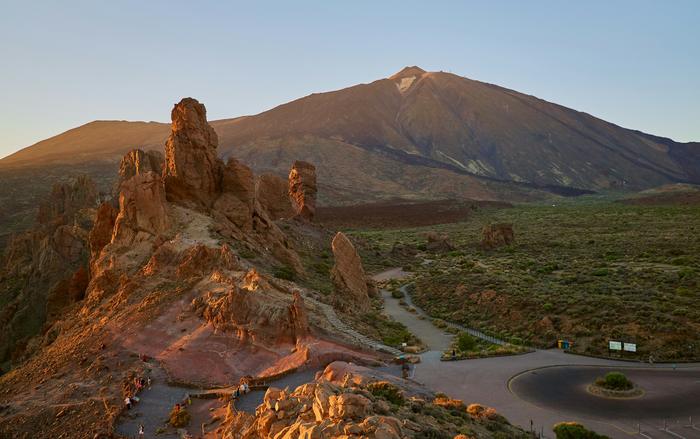
Canary Islands
Year-round warm weather, volcanic landscapes, easy from Europe.
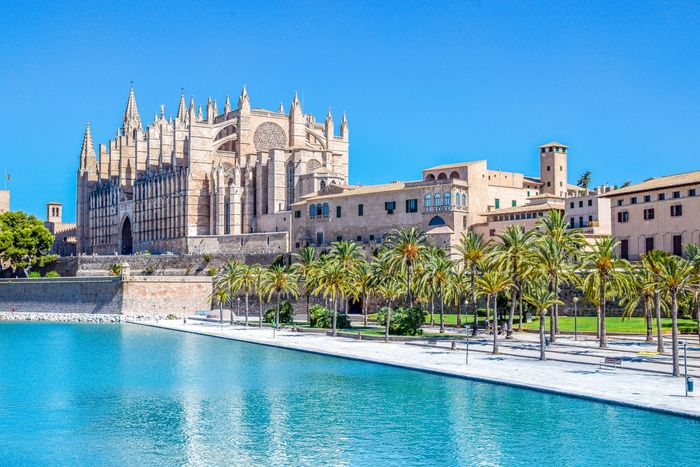
Mallorca
Far more than package beaches — turquoise coves, a UNESCO mountain range, and one of the Med’s best cities.
Compare Spain
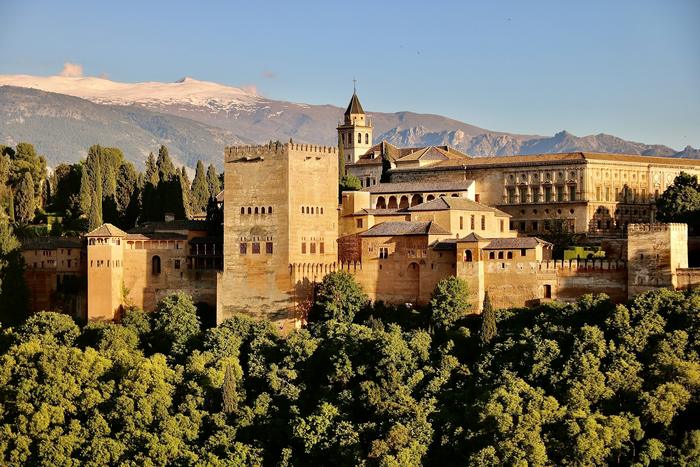



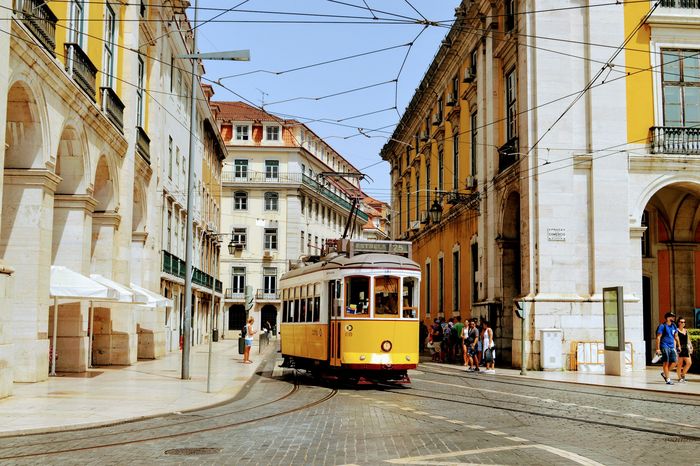
If you like Spain, also consider

Japan
Extraordinary food, culture, and cities. Nothing quite prepares you for it.
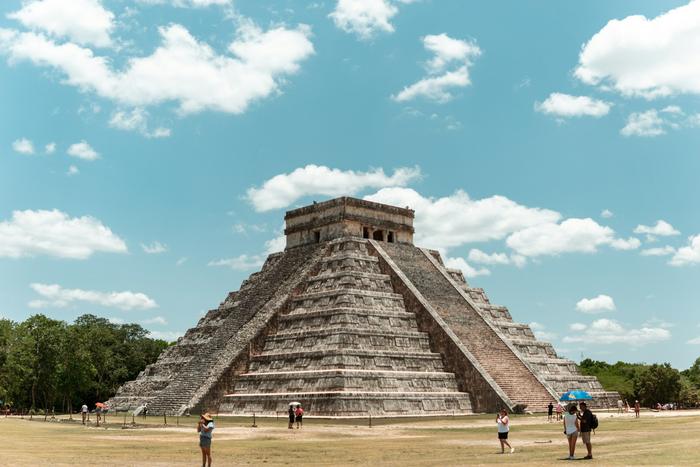
Mexico
Mexico City is world-class. Add the coast, ruins, and food culture.
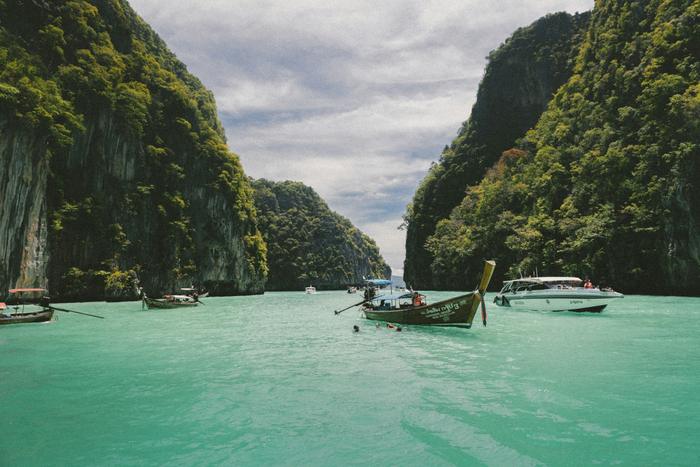
Thailand
The complete package for warm-climate travel.
Not sure where to go
Take the 5-minute quiz
Answer a few honest questions and get matched to destinations that actually fit how you travel.
Start the quiz