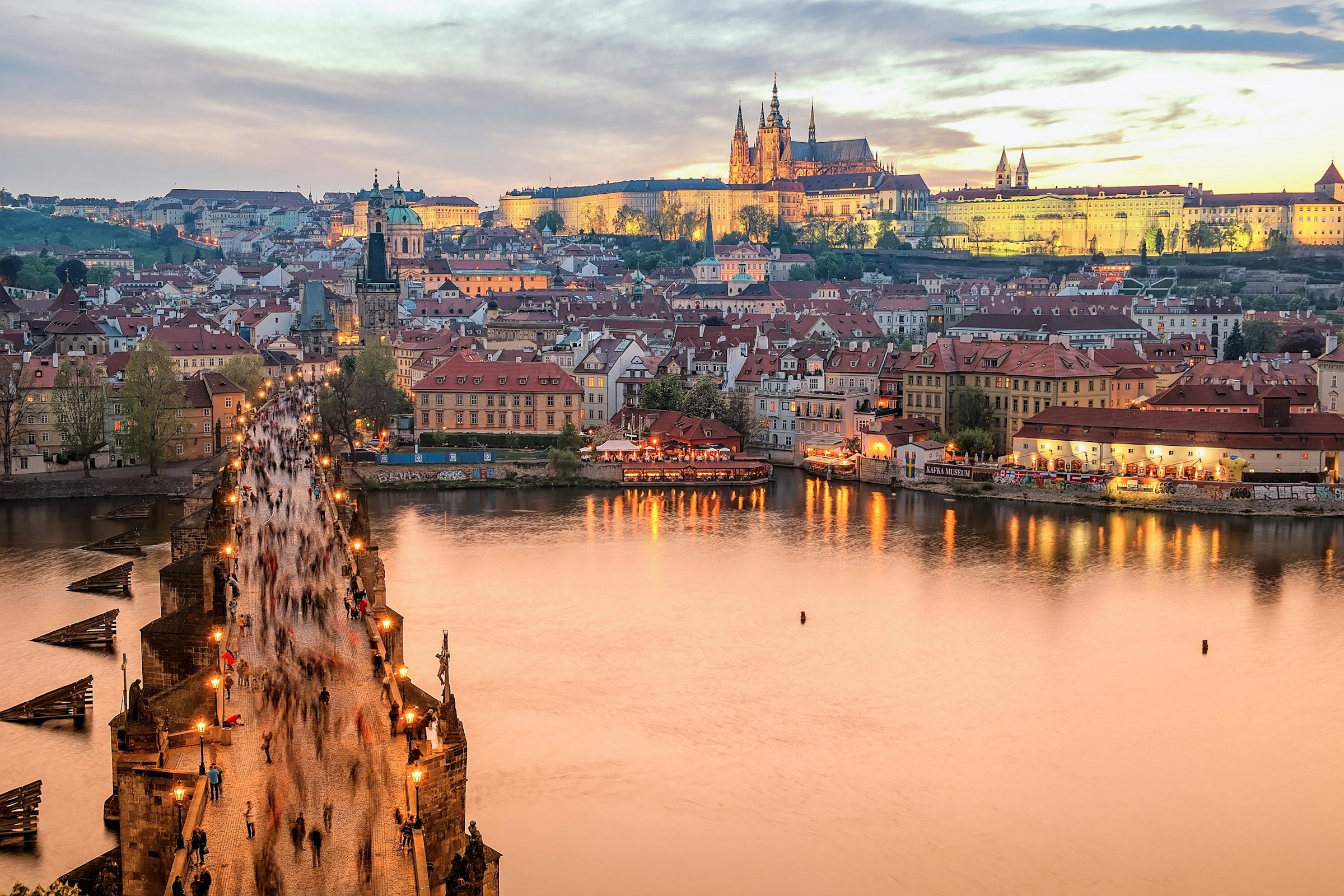
Czech Republic
Prague earns the crowds. The rest of the country is the bonus.
Prague is one of Europe's most beautiful capitals, and yes, it's busy — go early and walk past the Old Town Square. The payoff is real: a castle complex, riverside bars, and the world's best beer for the price of water. Český Krumlov and the spa towns make easy escapes. Central, cheap, and very walkable.
Prague does the heavy lifting: mornings on Charles Bridge before the tour groups arrive, the castle district, then afternoons drifting through Malá Strana and Vinohrady with a pivo that costs less than a coffee. Trains make day trips painless — Kutná Hora's bone church in an hour, Český Krumlov in three. Your money goes mostly to a room in the center; food and beer stay cheap by Western European standards, especially once you leave the Old Town.
Central Prague is a tourist machine: currency-exchange traps, overpriced Old Town restaurants, and stag parties owning the weekend nightlife. The food is heavy — pork, dumplings, repeat — and November is grey enough to test anyone. If you're chasing dramatic landscapes or beach weather, this is the wrong country. But as a two-to-four-day city break with real history, river views, and the best beer culture in the world, it's hard to spend this little and get this much.
Highlights
-
Prague
Castle, Charles Bridge, and beer halls — beat the crowds before 9am.
-
Český Krumlov
A storybook town on a river bend, two hours south.
-
Kutná Hora
The bone church and a silver-mining past, a day trip from Prague.
-
Moravia
Wine country and quieter cities most visitors never reach.
Practical info
- Visa
- Schengen — visa-free for most Western passports (90 days).
- Currency
- CZK (Koruna), roughly 23 CZK ≈ 1 USD.
- Language
- Czech. English in Prague tourism, less elsewhere.
- Safety
- Very safe; watch for pickpockets in central Prague.
- Getting around
- Excellent trains and trams; very walkable.
- Tap water
- Tap water safe.
- Plug type
- Type C Type E 230V
- Money
- Cards widely accepted; cash for small pubs.
General guidance — visas, safety, and health change, so check your government's travel advisory and the official sources before you go.
Common questions
- When is the best time to visit Czechia?
- May–June and September–October are the sweet spots — mild, long days or autumn colour, and thinner crowds than the July–August peak, when Prague is hottest and busiest. Winter is cold and quiet except for the Christmas-market season (late November to late December), which is a genuine draw: Old Town Square in Prague, plus Brno and other cities, fill with wooden stalls, mulled wine and roast sausages. Central Prague — Charles Bridge, Old Town Square — is at its most crowded midday in summer and over the Christmas holidays.
- Does Czechia use the euro?
- No — and this is the single most common tourist mistake. Czechia is in the EU and Schengen but has not adopted the euro; it uses the Czech koruna (CZK, Kč), with no target date for switching. Euros are not legal tender, and where a tourist spot accepts them the rate is poor. Pay in koruna, and use cards (widely accepted) or bank ATMs. At any card terminal or ATM, if asked whether to be charged in your home currency or CZK, always choose CZK — "dynamic currency conversion" into your own currency typically costs you 8–15%.
- How do I avoid the Prague money traps?
- Two traps catch visitors. First, street exchange booths — especially the "0% commission" ones around Old Town Square and the airport — hide terrible rates; skip them and use a bank ATM instead. Second, decline dynamic currency conversion (choose to be charged in koruna, not your home currency) at every ATM and card machine, and avoid the non-bank Euronet ATMs, whose rates run markedly worse than the Czech banks (Česká spořitelna, ČSOB, KB). Do those two things and your money goes 10–20% further than the tourist default.
- How does public transport and intercity travel work?
- Prague’s integrated metro, tram and bus network is excellent and cheap — but you must validate your ticket in the yellow machine as you board or enter, or face an on-the-spot fine from plainclothes inspectors (raised in January 2026 to CZK 1,200 if you pay immediately, 2,000 if you pay late; the activation window is now just one minute). Between cities, trains are the easy option: the state railway (České dráhy) plus private operators RegioJet and Leo Express run frequent, comfortable, reserved-seat services on the Prague–Brno–Ostrava line. Buses (RegioJet, FlixBus) reach towns like Český Krumlov cheaply, and most big sights are feasible day trips from Prague.
- Is the beer really that central?
- Yes — Czechia has the highest beer consumption per person in the world (around 180 litres a year) and has topped that ranking for decades. Pilsner itself was invented in Plzeň in 1842 (Pilsner Urquell). In a traditional pub the serving runs on a tab: a paper slip on your table tallies the beers, a fresh one arrives automatically when your glass empties, and to stop you put a coaster on top of the glass. Toast "Na zdraví" with eye contact, and don’t lose the slip.
- What are the day trips from Prague worth doing?
- Several, and most are easy by train or bus. Český Krumlov (a UNESCO Renaissance town curled in a river bend) is the headliner — stay overnight to see it after the day-trippers leave. Kutná Hora pairs a soaring Gothic cathedral (St Barbara’s) with the macabre Sedlec Ossuary. Karlovy Vary is the grand thermal-spa town west of Prague, and the beer pilgrims’ pair — Plzeň (pilsner’s birthplace) and České Budějovice (the original Budweiser) — round it out. Further east, Brno and Moravian wine country are a different, less-touristed Czechia.
When to go
Shoulder months, and the Christmas markets
The easy answer is spring or autumn — with one winter exception worth travelling for.
The May–June and September–October shoulders are the sweet spot — mild, long days or autumn colour, far fewer people than the crimson July–August peak, when central Prague is shoulder-to-shoulder by midday. The other crimson bar is the Christmas-market season (late Nov–Dec) — genuinely atmospheric and worth travelling for, if busy. January–February is cold and quiet.
For the best balance of weather and crowds, come in the May–June or September–October shoulders — warm or crisp, long daylight or autumn colour, and far thinner than the July–August peak, when Prague is hottest and the Old Town is shoulder-to-shoulder by midday. Winter is cold and quiet, with one bright exception.
That exception is the Christmas-market season, late November to late December: Old Town Square in Prague, plus Brno and other cities, fill with wooden stalls, mulled wine (svařák) and roast sausages. It’s the most atmospheric time to visit — and still busy, so book accommodation ahead and expect the central squares to be crowded despite the winter chill.
- you want Prague without the crushSkipthe July–August peak at middayGoMay–June or September–October — or an early start before the crowds
- you’re paying by card or drawing cashSkipaccepting “charge in your home currency”Goalways choosing koruna (DCC costs ~8–15%), and bank ATMs over Euronet
- you’re riding Prague transitSkipboarding without validating your ticketGostamping it in the yellow machine — or risk a CZK 1,200 fine
Money
Koruna, not euros — and the exchange traps
The country’s biggest practical gotcha isn’t a sight or a scam — it’s assuming the euro and getting fleeced on exchange.
Czechia is in the EU and Schengen but has not adopted the euro — it uses the Czech koruna (CZK, Kč), with no switch on the horizon. Euros aren’t legal tender, and the few tourist spots that take them give a poor rate, so pay in koruna. The classic rip-offs are the street exchange booths — above all the "0% commission" ones around Old Town Square and at the airport, which bury dreadful rates — so change money at a bank ATM instead.
The subtler drain is dynamic currency conversion: when an ATM or card machine asks whether to charge you in your home currency or in koruna, always choose koruna — being billed in your own currency typically costs 8–15%. And skip the non-bank Euronet ATMs in favour of the Czech banks (Česká spořitelna, ČSOB, KB). Overall costs are moderate — cheaper than Western Europe, though central Prague has crept up — and tipping is around 10%, usually by rounding up.
Taken together, the money traps cost the unwary 10–20%: a “0% commission” booth with an awful rate, a DCC prompt that bills you in pounds or dollars, and a Euronet ATM with high fees. The fix is simple and worth repeating — use a Czech bank’s ATM, decline conversion to your home currency every time, and pay by card in koruna.
Getting around
Validate the ticket, take the train
Prague’s transport is superb and cheap — with one rule that costs the unwary a fine — and the intercity trains are a pleasure.
Prague’s integrated metro, tram and bus network is excellent value, but it runs on one firm rule: validate your ticket in the yellow machine as you board or enter the metro. Plainclothes inspectors do check, and an unvalidated ticket draws an on-the-spot fine — raised in January 2026 to CZK 1,200 (2,000 if you pay late) — so buy a time-based or day ticket and stamp it. For street rides, use Bolt or Uber rather than hailing a taxi near the tourist spots, where overcharging is common.
Between cities, the train is the easy choice: the state railway (České dráhy) alongside the private RegioJet and Leo Express run frequent, comfortable, reserved-seat services on the Prague–Brno–Ostrava spine, cheaply booked online. For towns off the rail line — Český Krumlov above all — RegioJet and FlixBus coaches are cheap and direct, and most major sights work as day trips from Prague.
| Way | Use it for | Note |
|---|---|---|
| Prague metro / tram / bus | Getting around the city | Cheap; validate your ticket or risk a CZK 1,200 fine |
| Train (ČD / RegioJet / Leo Express) | Prague–Brno–Ostrava | Frequent, comfortable, reserved seats |
| Bus (RegioJet / FlixBus) | Towns off the rail line | Český Krumlov and the like; cheap |
| Bolt / Uber | City rides | Use these over street-hailed taxis (overcharging) |
Validate single transit tickets in the yellow machine as you board — fines rose in January 2026 (CZK 1,200 on the spot) and the activation window is now one minute. Most big sights work as day trips from Prague. Checked October 2026.
The one Prague transport rule that fines tourists: stamp your single ticket in the yellow validation machine the moment you board or enter the metro. Plainclothes inspectors check, and an unvalidated ticket now costs CZK 1,200 on the spot (2,000 if you pay late), with just a one-minute activation window after you tap. The simplest defence is a time or day pass, validated once at the start — then you ride all day without the gamble.
Prague
The castle, the clock, the bridge
The capital’s historic core is a UNESCO fairy tale — and the single biggest ancient castle on earth.
The largest Prague Castle — the world’s biggest ancient castle (Guinness)
Prague’s Historic Centre is a UNESCO World Heritage Site (inscribed 1992), and it earns the fairy-tale cliché. Prague Castle (see the figure) and the Gothic St Vitus Cathedral crown one bank; across the Charles Bridge — statue-lined, best walked at dawn before the crowds — lies the Old Town, where the medieval Astronomical Clock performs on the hour in the square. The old Jewish Quarter (Josefov), with its synagogues and cemetery, is among the most important in Europe.
The one discipline Prague asks is timing: the central sights — Charles Bridge, the Old Town Square clock, the castle — are mobbed from mid-morning through the afternoon in season, so do them early or late. And keep your wits about the money and taxi traps covered above; they’re the main way visitors lose out here, not crime.
Beyond Prague
Český Krumlov, the bone church, the spas
The day trips and second cities are the reward — a country with 17 UNESCO sites packed into a small map.
Czechia crams 17 UNESCO World Heritage Sites into a small country, and most are easy from Prague. Český Krumlov, a Renaissance town curled inside a Vltava bend, is the stunner — day-tripped to death, so stay overnight for the lamplit, empty version. At Kutná Hora, the Gothic St Barbara’s church pairs with the macabre Sedlec Ossuary, the “bone church” decorated with the remains of tens of thousands (now timed-ticket entry, and photography is banned inside). Karlovy Vary is the colonnaded thermal-spa town (a UNESCO Great Spa Town); Plzeň and České Budějovice are the beer pilgrimages; and out in Moravia, Brno brings a modernist icon (Villa Tugendhat) and the country’s wine region.
| Place | What it’s for | Good to know |
|---|---|---|
| Český Krumlov | A Renaissance town in a river bend | UNESCO; stay overnight for the quiet |
| Kutná Hora | St Barbara’s church + the bone church | UNESCO; Sedlec Ossuary (no photos) |
| Karlovy Vary | The grand thermal-spa town | UNESCO Great Spa Towns; summer film festival |
| Plzeň | The birthplace of pilsner | Pilsner Urquell, 1842 |
| České Budějovice | Home of Budweiser Budvar | The original Czech Budweiser |
| Brno & Moravia | The second city, wine country | Villa Tugendhat; Moravian vineyards |
Food & beer
Pork, dumplings, and the world’s best lager
Hearty, meaty, dumpling-heavy cooking — built around the beer that Czechia drinks more of than anyone.
No. 1 for decades the world’s top beer-drinking nation
Czech food is hearty and meat-and-dumpling-heavy: the national svíčková (beef sirloin in a cream-and-root-vegetable sauce with bread dumplings), the everyday vepřo-knedlo-zelo (roast pork, dumplings, sauerkraut), rich guláš, and fried bramboráky in the pubs. The Christmas markets add mulled svařák and roast sausages. But the heart of it is the beer (see the figure) — the world’s best lager, drunk more here than anywhere, in a pub culture with its own etiquette. One tourist-trap caveat: the trdelník “chimney cake” everywhere in Prague isn’t actually a traditional Czech sweet.
| Dish / drink | What it is | Note |
|---|---|---|
| Svíčková | Beef sirloin in a cream sauce, bread dumplings | A national dish |
| Vepřo-knedlo-zelo | Roast pork, dumplings, sauerkraut | The everyday classic |
| Guláš | Czech-style beef goulash | Often in a bread bowl |
| Bramboráky | Fried potato pancakes | The pub-and-street snack |
| Svařák | Hot spiced mulled wine | The Christmas-market staple |
| Pilsner Urquell / Budvar | The great Czech lagers | The whole point of the pub |
A warning worth having: trdelník, the spit-roasted “chimney cake” sold all over tourist Prague, is NOT a traditional Czech pastry — it’s a recent tourist import. The real Czech table is pork, dumplings, sauerkraut and superb lager.
Culture
Bohemia and Moravia, Kafka and the Velvet Revolution
A small nation with an outsized cultural and historical weight — and a famously peaceful recent past.
Czech-speaking and made of two historic lands — Bohemia in the west (Prague) and Moravia in the east (Brno, the wine country) — Czechia punches far above its size culturally. Prague gave the world Franz Kafka; the country produced the composers Dvořák and Smetana and the Art Nouveau of Alfons Mucha. Its modern history is defined by two peaceful turns: the 1989 Velvet Revolution that ended communism and made the playwright Václav Havel president, and the amicable 1993 “Velvet Divorce” that split Czechoslovakia into Czechia and Slovakia without a shot. That civilised, understated character runs through the place — and through the pub, where the evening really happens.
Good to know
Scams, borders, and the pub tab
The practical footnotes — the Prague scams to shrug off, the EU entry picture, and how a Czech pub actually works.
Czechia is very safe (the US rates it Level 1); the risks in Prague are the usual city ones — pickpocketing in the crowds, and the exchange and taxi traps covered above rather than any danger. On borders, Czechia is Schengen: the EU’s biometric Entry/Exit System (EES) is now fully deployed, so expect fingerprint-and-photo registration on arrival, while the separate ETIAS authorisation is not yet required and is expected to phase in from late 2026 into 2027 (€20). The accommodation tax remains a modest CZK 50 a night.
A 2026 note for night owls: Prague has enacted a city-centre ban on organised, guided nighttime pub crawls between 22:00 and 06:00 (with fines up to CZK 100,000 for operators), aimed at rowdy stag-party tourism. It doesn’t affect going to pubs and bars yourself — just the commercial bar-crawl tours. And the pub ritual you’ll meet the first evening: beers are tallied on a paper slip, a fresh one comes automatically as your glass runs low, and a coaster on top of the glass means you’re done. Toast "Na zdraví" with eye contact, and keep the slip safe.
Compare Czech Republic

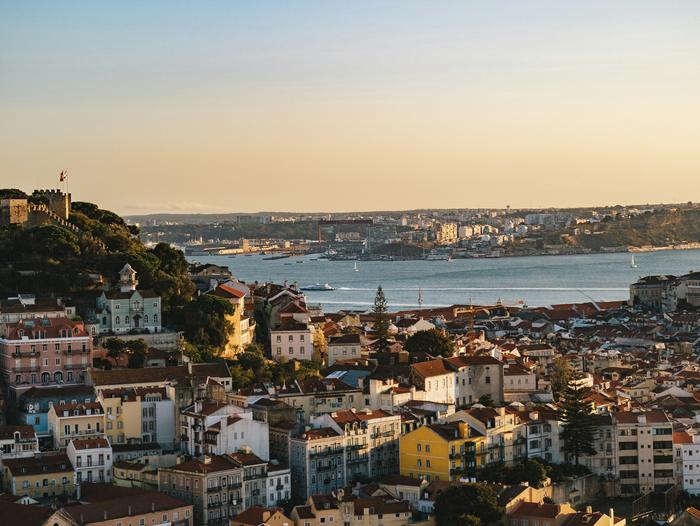

If you like Czech Republic, also consider

France
Paris is only the opening act — wine country, the Alps, and two coastlines.

Greece
Ruins in the morning, a swim by noon, taverna until dark.
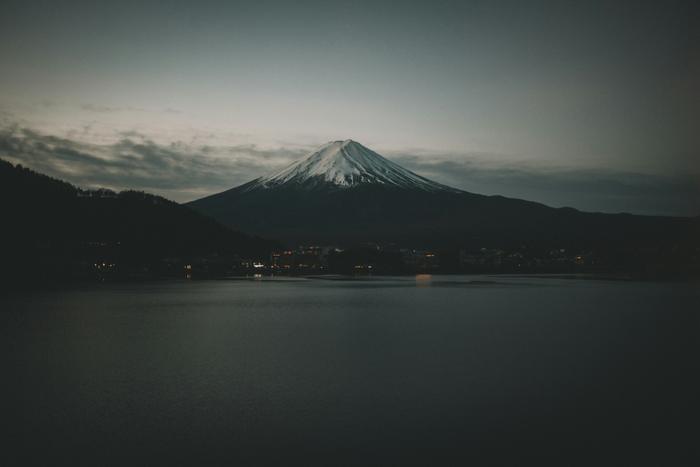
Japan
Extraordinary food, culture, and cities. Nothing quite prepares you for it.
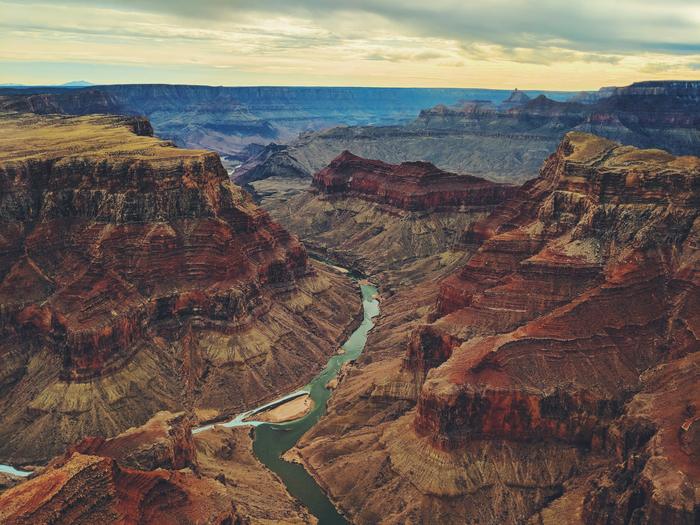
United States
A continent pretending to be a country — cities, deserts, and the best national parks anywhere.
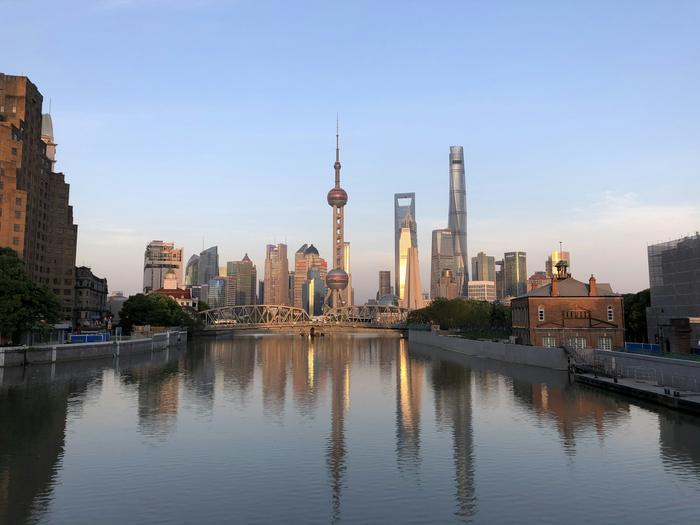
China
Ancient history and hypermodern cities at a scale that's hard to grasp until you're there.
Not sure where to go
Take the 5-minute quiz
Answer a few honest questions and get matched to destinations that actually fit how you travel.
Start the quiz