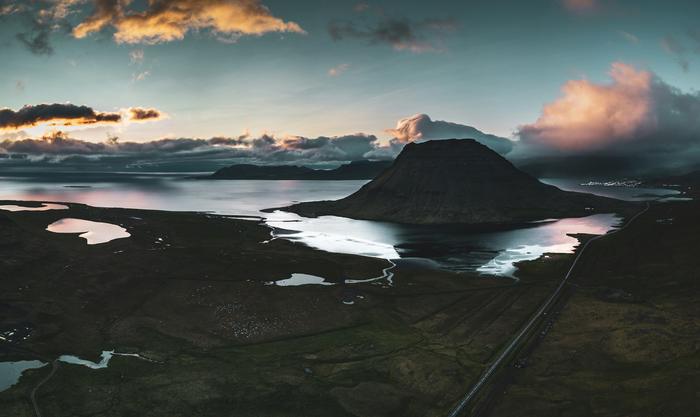
Iceland
Geysers, glaciers, northern lights, hot springs.
- January: fine
- February: peak
- March: fine
- April: fine
- May: peak
- June: peak
- July: peak
- August: peak
- September: peak
- October: fine
- November: fine
- December: fine
Two Nordic trips with different landscapes and rhythms. Iceland is the compact volcanic island — geysers, waterfalls, volcanoes, glaciers and black beaches strung along a drivable ring road, a dense greatest-hits of raw geology. Sweden is the vast country — Stockholm’s island capital, clean design, endless forests and lakes, and the Lapland north with its aurora and midnight sun. One is a concentrated geology road trip; the other a broad nature-and-design country.
Geysers, glaciers, northern lights, hot springs.
Island-strewn cities in summer, aurora and snow in the far north.
Read our full guides about Iceland and Sweden.
Emphasised where they differ. Muted rows are much the same either way.
| Iceland | Sweden | |
|---|---|---|
| Best time | February, May–September | May–August |
| Climate | cold | cold |
| Budget | Expensive — but compact, so travel distances stay short | Expensive too — a far bigger country costs more to cross |
| Trip length | 1–2 wks | 1–3 wks |
| Visa | Schengen — visa-free for most Western passports (90 days). | Schengen — visa-free for most Western passports (90 days). |
| Currency | ISK (Krona). Roughly 138 ISK ≈ 1 USD. | SEK (Swedish Krona). Not in the euro. |
| Language | Icelandic. English universal. | Swedish. English near-universal. |
| Tap water | Tap water excellent — best in the world by some metrics. | Tap water excellent. |
| Safety | Very safe. Weather and roads in winter are the real risks. | Very safe. Weather and winter cold are the main risks. |
General guidance — visas, safety, and health change, so check your government's travel advisory and the official sources before you go.
The split
Both are Nordic — but one is a compact volcanic island road trip, the other a vast forests-design-and-Lapland country.
Iceland is the compact volcanic island — geysers, waterfalls, volcanoes, glaciers and black beaches along a drivable ring road, a dense greatest-hits of raw geology. Sweden is the vast country: Stockholm’s island capital, clean design, endless forests and lakes, and the Lapland north with its aurora and midnight sun.
The operational detail — Iceland’s ring-road and geothermal sites; Sweden’s Lapland logistics and krona — lives on the two guides: Iceland, know before you go and Sweden, know before you go. This page is the head-to-head.
The real difference
The trade: Iceland offers a dense greatest-hits of dramatic landscapes; Sweden offers a great city plus vast nature and Lapland.
Iceland wins on concentrated drama. A drivable ring road links geysers, waterfalls, volcanoes and glaciers in a compact island — the smooth, scenery-packed road trip, if an expensive one.
Sweden wins on variety and the city. Stockholm and its archipelago, clean design, and its own vast nature and Lapland give it broader appeal across a bigger country. Choose the Iceland geology road trip, or the Sweden nature-and-design country.
Who suits which
Both are Nordic — but one leans geology and the ring road, the other a great city and vast nature.
| If you want… | Iceland | Sweden |
|---|---|---|
| Geysers, waterfalls, volcanoes | Wins. A greatest-hits | Forests, not geothermal drama |
| A great city break | Reykjavík, small | Wins. Stockholm |
| A self-drive road trip | Wins. The ring road | Big distances |
| The northern lights | Strong. Easy to base | Strong. Lapland |
| Scandinavian design | Characterful, smaller | Wins. The design capital |
| A compact, scenery-packed trip | Wins. Compact island | Spread out |
Doing both
Different corners of the north — usually one or the other.
Iceland and Sweden are separate trips in different parts of the north, linked by a flight (often via Copenhagen or Oslo), so most people choose one — an Iceland road trip or a Sweden nature-and-design country. Each also compares with the Nordics (see Iceland vs Norway, Finland vs Iceland, Denmark vs Sweden and Norway vs Sweden).
What we leave out
Exact prices beyond the structural comparison — both are expensive and move with season — so the figures here are the shape of the difference, not a quote; the country guides carry the live detail. The shared entry mechanics (both in Schengen; króna vs krona) and the seasonal logistics are covered on the guides rather than restated here.
Which of the two is the better bet for each month of the year, scored on how well the season suits each place.
Paris is only the opening act — wine country, the Alps, and two coastlines.
The benchmark for food, history, and beauty.
Ruins in the morning, a swim by noon, taverna until dark.
Food, beaches, and three or four cities that each justify the trip.
The ski and alpine benchmark — every other mountain range is measured against this.
Dubrovnik, the Adriatic coast, ancient cities. Compact and beautiful.
Prague earns the crowds. The rest of the country is the bonus.
The best value city in Western Europe.
Still undecided
Three matches. Often answers comparison questions for you.
Start the quiz