
Lisbon, Portugal
The best value city in Western Europe.
Lisbon has been quietly the best Western European city for years. Warm enough year-round to be outside, hilly and walkable, ridiculously good seafood, beaches 30 minutes by train, and prices that still beat Paris or Barcelona by a wide margin. The light here is something travelers don't shut up about for a reason.
Lisbon days are vertical: climb through Alfama in the morning before the tour groups, cross to Cacilhas on the ferry for grilled fish at lunch, then claim a miradouro with a cold Sagres as the light turns amber. The train from Cais do Sodré puts you on a Cascais beach in under an hour; Sintra needs its own full day. A pastel de nata costs about a euro; the splurges are seafood — percebes, carabineiros — and a fado night in Alfama.
The honest part: the hills are relentless, and tram 28 is a pickpocket-friendly queue you can skip without losing anything. Short-term rentals have hollowed out parts of Alfama and Baixa, so the postcard center can feel staged, and August brings heat and crowds without much payoff. Dinner starts late; if you want to eat at six, you'll eat alone. But as a base — beaches, palaces, seafood, weather, prices — no Western European city offers a better deal.
Highlights
-
Alfama
The oldest, most atmospheric quarter — fado bars and trams.
-
Belem
The original pastel de nata, monastery, and tower.
-
Cascais & Sintra
Beach town and palace town — both day trips, both essential.
-
LX Factory & Time Out Market
Modern food and design scene.
Practical info
- Visa
- Portugal (Schengen) — visa-free for most Western passports (90 days). Verify before travel.
- Currency
- EUR (€).
- Language
- Portuguese. English widely spoken.
- Safety
- Very safe. Pickpocketing on tram 28 is the main concern.
- Getting around
- Metro, trams, trains to Cascais and Sintra. Walkable.
- Tap water
- Tap water is safe.
- Plug type
- Type C Type F 230V
- Money
- Cards everywhere.
General guidance — visas, safety, and health change, so check your government's travel advisory and the official sources before you go.
Common questions
- When should I visit, and how late do people eat?
- Spring (April–June) and autumn (September–October) are the sweet spot — warm, long days, lighter crowds. August is peak heat (regularly into the mid-30s°C), peak crowds and peak prices, with many locals away; winter is mild and quiet. June is special for the Santo António festivals, when the old quarters fill with grilled-sardine smoke and street parties. On food: dinner starts late, around 8–10pm, so a kitchen that’s busy at 6:30 is mostly serving tourists — shift your clock an hour or two and you eat where locals do. A pastel de nata still costs under €2.
- How do I get from Lisbon airport into the city?
- The Metro Red Line runs straight from the airport station into town — about €1.90 (plus a €0.50 reusable card) and roughly 25 minutes to the centre, with one change. The dedicated Aerobus shuttle no longer exists, so the alternatives are the Metro, a regular city bus, or Uber/Bolt/FREE NOW, which are cheap and reliable and often the easiest option for a group with luggage. The old “Viva Viagem” transport card has been rebranded “navegante ocasional” — same idea, a €0.50 rechargeable card you load with single tickets, a day pass or pay-as-you-go “Zapping”.
- Are Lisbon’s famous funiculars and the Santa Justa lift running?
- Mostly not, as of 2026 — and for a sombre reason. After the Elevador da Glória derailment on 3 September 2025, which killed 16 people, the city’s historic funiculars were suspended for investigation and safety work. As things stand the Glória, Bica and Lavra funiculars and the Santa Justa lift remain closed (the Glória is to be rebuilt, not expected back until around 2029), and only the Graça funicular has reopened. So don’t build a day around riding them: walk the hills (grippy shoes help), or use the Metro and buses. Confirm the current status before counting on any specific one.
- Does Sintra need a full day, and do I need to book ahead?
- Yes to both. Sintra is a full-day trip, not a half-day add-on — the train from Rossio is about €2.30 each way and 40 minutes, but the palaces are spread over a steep hillside linked by the 434 bus and queues. Crucially, Pena Palace runs on mandatory timed entry (park + palace €20) and sells out — in summer, same-day slots can be gone hours ahead, so book online a few days in advance on the official Parques de Sintra site. Pair Pena with Quinta da Regaleira (€20, its initiation well the highlight) and the Moorish castle (€12), go early, and give it the whole day.
- Is Tram 28 worth it, or is it a tourist trap?
- Both. The yellow Tram 28 is a genuinely lovely rattle through Graça, Alfama, Baixa and Estrela — and a notorious pickpocket hotspot in the standing crush. If you ride it, go early morning to beat the crowds, keep bags zipped and in front, and keep your phone away. Tapping a contactless bank card onboard costs noticeably more than a loaded navegante card, so load the card first. Honestly, you lose little by skipping it and simply walking the same neighbourhoods — Alfama is best on foot anyway.
- What should I eat in Lisbon?
- Start with the pastel de nata, the warm custard tart dusted with cinnamon — the original is Pastéis de Belém (since 1837), but every good pastelaria makes them. The savoury staple is bacalhau (salt cod, with a proverbial “365 ways” to cook it), alongside grilled fish and seafood — the cataplana stew and, in June, charred sardines. Drink vinho verde or a crisp white, finish with a ginjinha (sour-cherry liqueur, sometimes in a chocolate cup), and eat it all to a fado soundtrack in Alfama. Dinner runs late — book the fado houses, and arrive hungry after 8pm.
When to go
Spring and autumn, and the June festivals
A warm, walkable, good-value city best in the shoulders — with a sardine-smoked June all its own.
The April–June and September–October shoulders are the sweet spot — warm, long days, far fewer people than the crimson July–August peak, when it’s in the mid-30s°C, prices spike and the centre is mobbed. June is worth timing for the Santo António festivals; and the mild, quiet Dec–Feb winter is the cheapest time to come.
What Lisbon is for is a warm, walkable, good-value city with the coast on its doorstep. Days run vertical — climb through Alfama before the tour groups, claim a miradouro as the light turns amber, eat grilled fish and pastéis de nata — and the hills are relentless, so grippy shoes earn their keep (especially now that most funiculars are out of service). The payoff is a capital that still beats Paris or Barcelona on price while delivering seafood, fado and the famous light.
Come in spring or autumn; August is hot, crowded and dear, and winter is mild, quiet and cheap. If you can, time it for June, when the Santo António festivals turn the old quarters into a street party of grilled sardines, bunting and basil pots — the city at its most joyful.
- you want Lisbon warm but not mobbedSkipAugustGoApril–June or September–October
- you were counting on the famous funicularsSkipbuilding a plan around themGowalking or the Metro — most remain closed after the 2025 accident
- you’re doing SintraSkipturning up without a Pena ticketGobooking a timed slot days ahead on the official Parques de Sintra site
Entry & Schengen
Schengen, with EES now live
Portugal is in Schengen — the 90/180 clock applies, and the biometric EES border is now running.
Lisbon sits inside the Schengen area, so visa-exempt visitors (the UK, US, Canada, Australia and most others) get 90 days in any rolling 180, counted across every Schengen country you pass through, not reset in Portugal. Since April 2026 the Entry/Exit System (EES) has been live: non-EU arrivals are now registered biometrically — a facial image and fingerprints — rather than stamped, which can slow the border while it beds in.
The separate ETIAS authorisation is confirmed at €20 but still has no firm launch date, with most reporting pointing to 2027; under-18s and over-70s are exempt from the fee (though they still apply). Until it goes live there is nothing to apply for — and when it does, it’s a quick online step, not a visa.
The euro is the currency and cards work almost everywhere, so you need little cash — a bit for small cafés, markets and the odd ginjinha stall. Decline “pay in your home currency” on any card terminal or ATM (choose euros), use a bank ATM (Multibanco) rather than the Euronet machines, and your money goes further.
Getting around
A 2026 fare reset — and the funiculars are mostly shut
Cheap and compact — a €1.90 single and reliable apps — but the historic lifts are a sombre exception.
Lisbon’s transport reset in 2026: a €1.90 single valid 60 minutes with transfers, loaded onto the renamed “navegante ocasional” card (€0.50), with a 24-hour pass at €7.25 (Carris + Metro) rising to €10.35 with the Cacilhas ferry. For door-to-door, Uber, Bolt and FREE NOW all operate widely and are cheap — often the easiest call from the airport with bags, since the Aerobus no longer exists. If you’ll sightsee hard, the Lisboa Card (24h €31 / 48h €51 / 72h €62) bundles unlimited transport — including the Sintra and Cascais trains — with free or discounted entry to 50-plus sights.
The one ride to approach with care is Tram 28, a pickpocket magnet in the crush (see the FAQ). And the sadder change: most of the historic funiculars are out of service after the 2025 Glória accident, so plan to walk the hills or take the Metro rather than relying on the famous yellow lifts.
| Way | Use it for | Note |
|---|---|---|
| Metro / Carris (bus, tram) | Getting around the city | €1.90 single (60-min transfers) on a navegante ocasional card |
| Metro Red Line | Airport to the centre | ~€1.90, ~25 min, one change — the Aerobus is gone |
| Uber / Bolt / FREE NOW | Door-to-door; airport with bags | Cheap and reliable; easiest from the airport |
| 24-hour pass | A full day of unlimited transit | €7.25 (Carris + Metro); €10.35 adds the Cacilhas ferry |
| Lisboa Card | Hard sightseeing + Sintra/Cascais trains | 24h €31 / 48h €51 / 72h €62; includes 50+ sights |
Load the navegante card first — tapping a bank card onboard a tram costs more than the card fare. Pay-as-you-go “Zapping” is cheaper than the single. Checked October 2026.
The funicular closures are the result of the 3 September 2025 Elevador da Glória derailment, which killed 16 people. As of 2026 the Glória, Bica and Lavra funiculars and the Santa Justa lift remain shut (the Glória is being rebuilt, not expected back before ~2029); only the Graça funicular has reopened. Treat any “must-ride the Bica/Glória” tip as out of date, and check the current status before you go.
The city
Seven hills, viewpoints and the Pombaline grid
A city of miradouros and crooked old quarters — rebuilt, after catastrophe, on a modern grid.
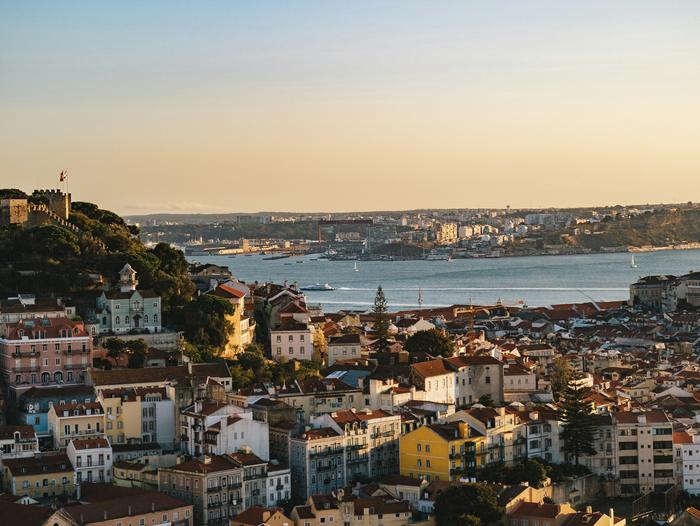
Seven hills Lisbon — a city of viewpoints
The city’s character is in its quarters. Alfama is the old Moorish maze below the castle — fado, washing lines, Tram 28; the Baixa is the elegant downtown grid; Chiado and Bairro Alto are the shopping-and-nightlife slopes; and riverside Belém holds the monuments, while modern Parque das Nações (the Expo ’98 site) has the aquarium. The defining history is the Great Earthquake of 1 November 1755, which flattened the city and killed tens of thousands; the Marquis of Pombal rebuilt the Baixa on a rational grid of wide streets — the Pombaline plan, an early feat of earthquake-resistant urbanism.
Across the Tagus, the 25 de Abril Bridge — a dead ringer for San Francisco’s Golden Gate, and built by the same American firm — carries the eye to the Cristo Rei statue on the Almada shore. It’s a city made for wandering between viewpoints; just remember the hills are steep and, for now, mostly unassisted by the lifts.
Sights & tickets
Belém, a castle, and timed entry everywhere
The big monuments are cheap by European standards — but most now run on timed slots you should pre-book.
The monumental set piece is Belém: the Jerónimos Monastery (cloisters €18; the church itself free) and the riverside Belém Tower (€15), reopened in May 2026 after restoration. Both now run on timed-entry slots with real queues in peak season, so book ahead rather than turning up. In town, the hilltop Castelo de São Jorge (€17, free with the Lisboa Card) owns the view, and out at Parque das Nações the Oceanário (€25) is among Europe’s best aquariums.
For no-ticket wandering, the LX Factory under the 25 de Abril bridge and the Time Out Market food hall at Cais do Sodré are both free to enter (you pay per stall at the market, and it’s heaving at mealtimes). The sight that needs the most planning is a day trip — Sintra — which gets its own section below.
| Sight | What it is | Ticket (2026) |
|---|---|---|
| Jerónimos Monastery | Manueline cloisters in Belém | €18 (church free); timed entry |
| Belém Tower | The riverside fortress tower | €15; reopened May 2026, timed + daily cap |
| Castelo de São Jorge | The hilltop castle and view | €17; free with the Lisboa Card |
| Oceanário de Lisboa | One of Europe’s best aquariums | €25; at Parque das Nações |
| Time Out Market | Food hall at Cais do Sodré | Free to enter; pay per stall; heaving at mealtimes |
Day trips
Sintra, the coast and Europe’s edge
Lisbon is also a base — fairytale palaces, Atlantic beaches and the westernmost point of mainland Europe, all within a train or bus ride.
The headline day trip is Sintra — a UNESCO cultural landscape of romantic palaces in misty wooded hills, led by the technicolour Pena Palace (timed entry, sells out — book ahead) and the garden follies and initiation well of Quinta da Regaleira. It wants a whole day, early start included. From the same western line, Cascais is a 40-minute hop to a beach-resort town, and buses run on to Cabo da Roca, the wild cliff-top cape that is the westernmost point of mainland Europe.
South across the Tagus lie the beaches and dolphins of the Setúbal peninsula and the Arrábida hills; north stands the colossal baroque palace-convent of Mafra; and a little further out, the walled medieval town of Óbidos rewards the trip with its ramparts and a ginjinha served in an edible chocolate cup. The Lisboa Card covers the Sintra and Cascais trains if you’re buying one anyway.
| Day trip | What it’s for | Good to know |
|---|---|---|
| Sintra | Fairytale palaces in wooded hills | Full day; Pena is timed and sells out — book ahead |
| Cascais | A beach resort town | ~40 min by train from Cais do Sodré (~€2.30) |
| Cabo da Roca | The westernmost point of mainland Europe | Wild cliffs; by bus from Sintra or Cascais |
| Setúbal & Arrábida | Beaches, dolphins, wine | South across the Tagus |
| Mafra | A vast baroque palace-convent | UNESCO-listed (2019) |
| Óbidos | A walled medieval town | Try the ginjinha in a chocolate cup |
Food & fado
Custard tarts, salt cod and a mournful song
The best-value eating in any Western capital — and a UNESCO-listed song to eat it to.
Since 1837 Pastéis de Belém — the original custard tart
Lisbon is the best-value eating in any Western European capital. The savoury heart is bacalhau — salt cod, with a proverbial 365 recipes — plus grilled fish, seafood cataplana, and, in June, charred sardines eaten in the street. Wash it down with crisp vinho verde or a Setúbal Moscatel, and finish with a ginjinha, the sour-cherry liqueur poured from hole-in-the-wall bars. And everywhere, all day, the pastel de nata (see the figure).
The cultural pairing is fado. Book a small casa de fado in Alfama or Mouraria rather than a tourist dinner-show, go late, and let the guitarra portuguesa and a voice full of saudade carry the evening. Eat late generally — kitchens get going after 8pm — and you’ll be on local time, where the city is at its best.
Good to know
A €4 city tax, pickpockets, and a staged centre
The practical footnotes — a euro economy with a doubled tourist tax and petty theft the main risk.
The city’s tourist tax is €4 per person per night (doubled from €2 in September 2024), capped at seven nights, with under-13s exempt; it’s usually collected at the accommodation on checkout, not shown in booking-site prices. Tipping is modest — rounding up or 5–10% for good service, never obligatory. The real risk is petty theft, not violence: it clusters on Tram 28, the 15E tram to Belém, the crowded Metro and the tourist crush at miradouros and the Time Out Market — keep bags zipped and phones away and you’ll be fine.
One honest caveat about the centre: short-term “alojamento local” rentals have hollowed out parts of Alfama and Baixa, so the postcard core can feel staged and emptied of locals. The city has pushed back — a late-2025 containment rule tightened where new licences are granted, and thousands of non-compliant permits were cancelled in 2026 — but the effect lingers. Base yourself a little off the core (Graça, Campo de Ourique, Príncipe Real) and Lisbon feels far more like itself.
A base tip: the prettiest-looking Alfama/Baixa rentals are also the most touristed, noisiest and most pickpocket-prone blocks. Staying one neighbourhood out — Graça for views, Campo de Ourique for a local food market, Príncipe Real for cafés — keeps you ten walkable minutes from the sights while giving you a real Lisbon street to come home to.
Compare Lisbon, Portugal

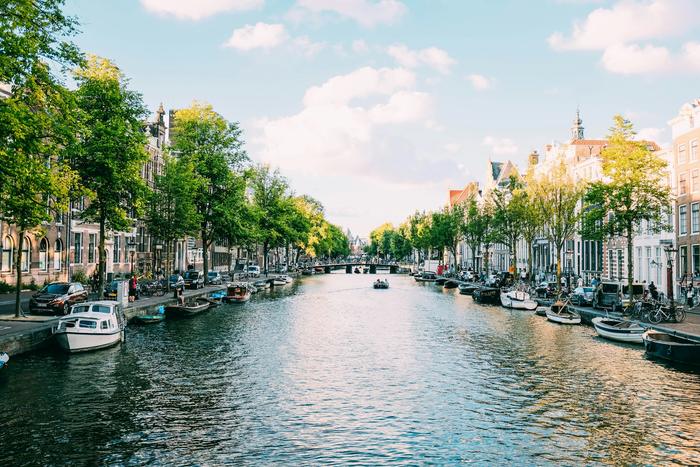
If you like Lisbon, Portugal, also consider

Greece
Ruins in the morning, a swim by noon, taverna until dark.

Japan
Extraordinary food, culture, and cities. Nothing quite prepares you for it.
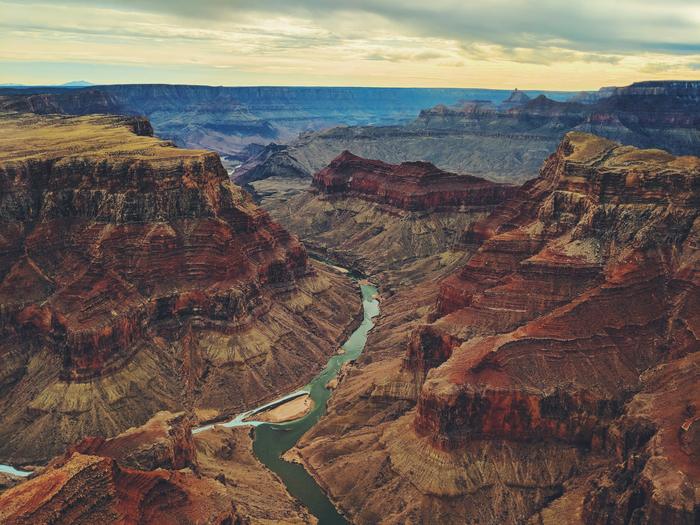
United States
A continent pretending to be a country — cities, deserts, and the best national parks anywhere.
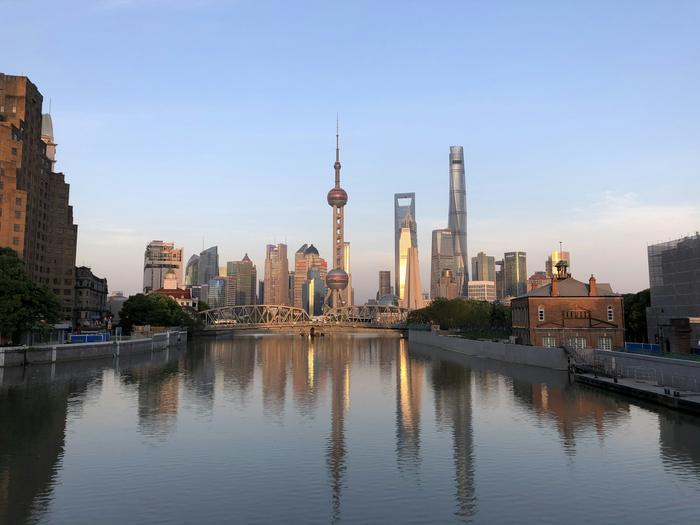
China
Ancient history and hypermodern cities at a scale that's hard to grasp until you're there.
Not sure where to go
Take the 5-minute quiz
Answer a few honest questions and get matched to destinations that actually fit how you travel.
Start the quiz