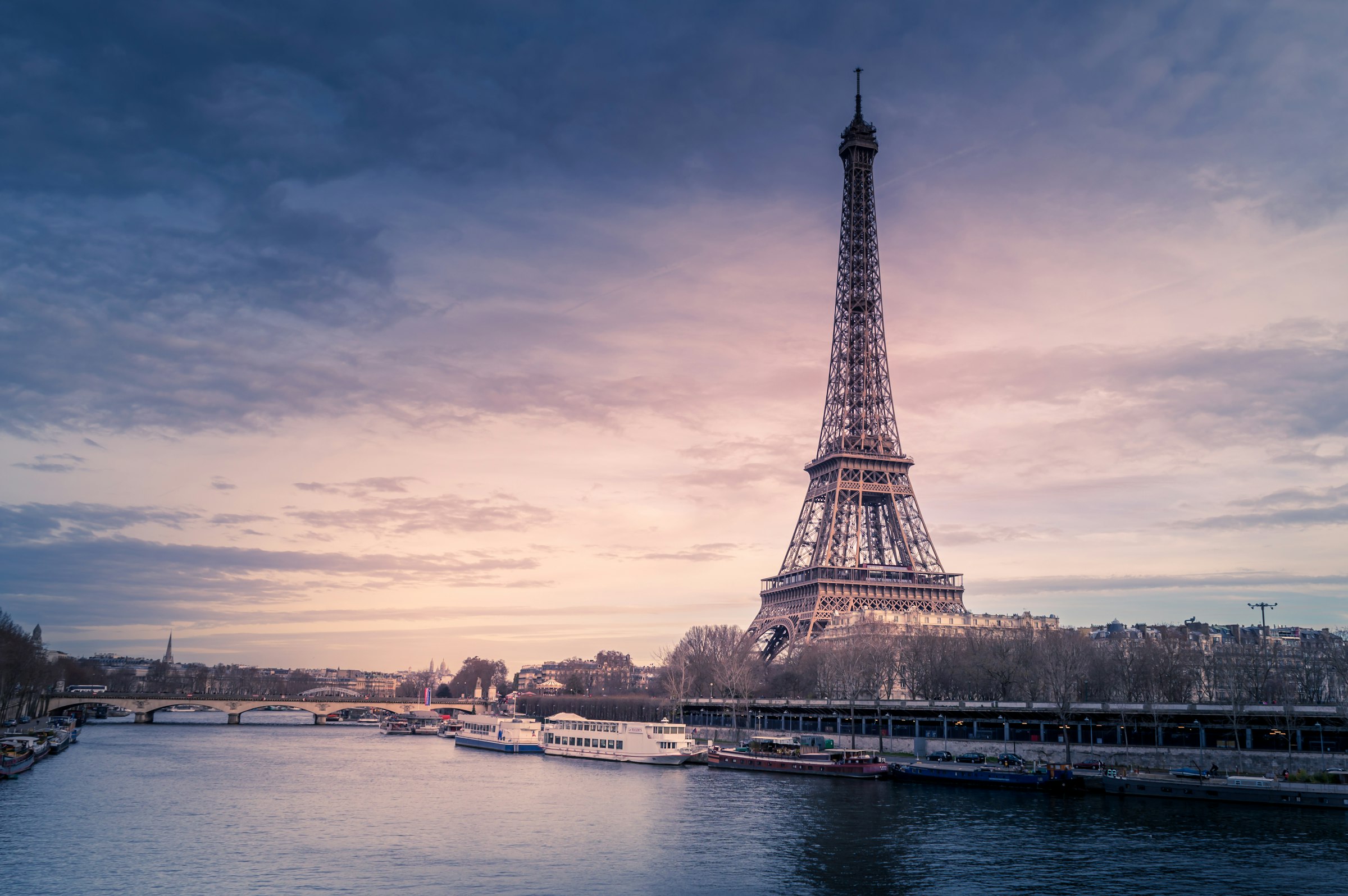
France
Paris is only the opening act — wine country, the Alps, and two coastlines.
France is the most visited country on earth, and it isn't a fluke. Paris alone justifies the flight, but the country gets better the further you go: Burgundy and Bordeaux for wine, the Alps for skiing and hiking, Provence for light and food, and a Mediterranean and Atlantic coast that feel like two different countries. Avoid August, when the French themselves flee to the coast and prices climb.
The TGV changes how you plan: Paris to Bordeaux or Avignon in a few hours, so a single week can honestly cover the capital plus one region done properly. In Paris, skip the checklist sprint — pick a few arrondissements, eat the bakery breakfast, book one serious dinner. Then go regional: a Burgundy village on market morning, a Provence hill town, a cable car out of Chamonix. Lodging and restaurants take the money; trains and museums are fair value.
Paris will test you: hotel prices are high, the Louvre is a scrum around the Mona Lisa, and service runs brisk if you don't open with a bonjour. The Riviera in July and August is overpriced and gridlocked, and much of the country genuinely closes in August. If you want effortless friendliness and low costs, France isn't that trip. It is, however, the most reliable great-food, great-art trip in the world — and it never runs out of regions.
Highlights
-
Paris
World capital of food, art, and walking. Give it more days than you think.
-
Provence & the Riviera
Markets, hill towns, and the Mediterranean coast. Lavender peaks in July.
-
The French Alps
Chamonix and Annecy — skiing in winter, alpine hiking in summer.
-
Bordeaux & Burgundy
Wine country you can actually drink your way through by bike.
-
Loire Valley
Châteaux, river towns, and the gentlest road trip in the country.
Practical info
- Visa
- Schengen — visa-free for most Western passports (90 days).
- Currency
- EUR (€)
- Language
- French. English in Paris and tourism, less in rural areas.
- Safety
- Very safe. Pickpocketing in Paris and on the Riviera.
- Getting around
- TGV trains are fast and extensive. Drive for Provence, the Alps, and wine country.
- Tap water
- Tap water safe and good.
- Plug type
- Type C Type E 230V
- Money
- Cards accepted nearly everywhere; small cash for markets and bakeries.
General guidance — visas, safety, and health change, so check your government's travel advisory and the official sources before you go.
Common questions
- When is the best time to visit France?
- Late spring (May to mid-June) and September are the sweet spots — warm, everything open, fares and crowds below the peak. The one timing trap is August: France takes its five weeks of statutory leave then, so independent shops, bakeries and restaurants across the cities hang a fermeture annuelle sign and close for two weeks or more, while the coast is at its most packed. The seasonal section lays out the whole calendar, including the lavender window and the Alpine ski season.
- Which French sights must be booked in advance?
- More than people expect. The Louvre now requires a timed slot for everyone — pass-holders and free-entry visitors included — and so do Versailles and the Catacombs; Sainte-Chapelle, the Eiffel Tower summit and the Mont-Saint-Michel abbey all sell out in season. Near Marseille, the Calanques’ Sugiton creek even rations the trail with a free daily quota. The full list and the booking windows are in the booking section.
- Has the Louvre really become more expensive?
- For non-EU visitors, yes. Since 14 January 2026 the Louvre charges €32 for visitors resident outside the EU/EEA against €22 for those inside it — a roughly 45% gap, and the first big museum to split its pricing this way. Under-18s are still free, and a timed slot is mandatory at either price. See what it costs.
- How does rail booking work in France?
- The TGV network is excellent and booked on SNCF Connect, where sales now open about six months ahead (expanded in 2026) and the cheapest seats go first under dynamic pricing — mid-week, early and late trains are cheapest, Friday and Sunday evenings dearest. The low-cost OUIGO brand undercuts it from around €19. A rail pass still needs a paid seat reservation on every TGV, so for point-to-point trips an early OUIGO is usually cheaper. Rent a car for the rural regions trains barely reach.
- What do you need to enter France?
- France is in Schengen and the eurozone, so visa-exempt visitors (US, UK, Canada, Australia and others) need no visa for stays up to 90 days in any 180. The EU’s biometric Entry/Exit System (EES) is live — in full operation since 10 April 2026 — so expect a fingerprint-and-photo registration on arrival instead of a passport stamp. The separate ETIAS travel authorisation is not yet required; it is expected in 2027.
- Do you need a car in France?
- Not for the cities or the headline routes — the TGV spine links Paris, Lyon, Marseille, Bordeaux and Strasbourg fast, and Paris itself is best done on the Métro. A car earns its keep in the regions the trains barely reach: the Dordogne, the Provence back-country, the Alsace wine villages and inland Brittany. If you do drive, note the Crit’Air low-emission rules for Paris and Lyon.
Entry & borders
The border is biometric now — but there is no ETIAS yet
The EES is live; the much-trailed ETIAS is not. Two separate systems, and only one of them affects your 2026 trip.
The Entry/Exit System (EES) rolled out across the Schengen external border from 12 October 2025 and reached full operation on 10 April 2026. For non-EU short-stay travellers it replaces the inked passport stamp with a biometric record — four fingerprints and a facial photo, logged electronically on each entry and exit. First registration can add time at the booth; it is quicker on subsequent trips once your file exists.
The ETIAS authorisation is a different thing, and a later one. It is not required as of October 2026 — the EU abandoned its "last quarter of 2026" target in mid-2026 and now points to 2027, with several months’ notice promised before it goes live. When it does, it will cost €20, last three years or until the passport expires, and be waived for travellers under 18 and over 70, with a roughly six-month grace period after launch.
Do not pay for "ETIAS" or "EES" on a third-party website in 2026 — EES needs no application at all, and ETIAS is not yet open, so any site taking money for one now is a scam. When ETIAS does launch it will be sold only through the official EU portal.
Booking ahead
France’s headline sights are behind timed tickets and quotas
Turning up at the door is increasingly not an option — the binding constraint is the booking window, not the queue.
Book the big sights before you fly, not when you arrive. The Louvre makes a timed slot obligatory for all visitors, Versailles makes it mandatory on every ticket type including free admission, and the Catacombs admit essentially no one without one. Sainte-Chapelle and the Eiffel Tower summit sell their slots out through spring and summer. The one that surprises people is natural, not cultural: in the Calanques National Park near Marseille, the Sugiton creek caps daily numbers and checks a QR code at the trailhead.
| Site | Must book? | 2026 adult price | Window / note |
|---|---|---|---|
| Louvre | Yes — all visitors | €22 EU / €32 non-EU | Up to 90 days ahead; 30-min slot |
| Palace of Versailles | Yes — every ticket | €25–€35 Passport | Timed Palace slot; Trianon €15 |
| Eiffel Tower | Strongly advised | €23.50 lift / €36.70 top | Summit slots sell out first |
| Catacombs of Paris | Yes — timed only | ~€29 | No practical walk-ups |
| Sainte-Chapelle | Recommended | ~€13 | Sells out spring–summer |
| Mont-Saint-Michel abbey | Yes in season | €13 low / €16 high | Tickets ~1 month ahead |
Prices read off each site’s official ticketing portal in October 2026; they are set annually, so re-check before you travel. Louvre pricing splits by residence (EU/EEA vs outside) since 14 January 2026. Notre-Dame, reopened December 2024, is free — an optional free timed reservation skips the queue.
The Calanques quota is the shape of things to come. Sugiton’s roughly 400 free places are released three days ahead at 09:00 and checked by QR at the trailhead; the same rationing model is spreading to fragile natural sites across France. If the creek is full, the neighbouring Calanques (Morgiou, Sormiou) and the coastal path from Cassis are not quota’d.
What it costs
Two prices for the same ticket, and a tax per night
The headline change for 2026 is that your museum bill now depends on where you live — and the city tax is quietly steep in Paris.
€32 vs €22 the Louvre for a non-EU visitor vs an EU resident
Paris’s taxe de séjour (the local tourist tax, charged per person per night on top of the room rate) runs from about €1–€3 for a one- or two-star hotel up to €15.93 for palace-class hotels and unclassified short-lets — it has climbed since the 200% Île-de-France transport surcharge was folded in. Over a week for two, that is a real line on the bill, not a rounding error.
The Paris Museum Pass (€66/€82/€98 for 2/4/6 days) pays off quickly if you museum-hop, covering the Louvre, Versailles, the Musée d’Orsay and around fifty sites. The catch: it covers entry, but the Louvre and Versailles still require you to reserve a free timed slot separately — the pass is not a skip-the-booking card.
Where to go
Nine regions, nine different holidays
France is not a single trip. Pick a region to its gateway airport, and do it properly.
A week does one region, or two neighbours, well — not the country. The fast exception is the Loire, which day-trips from Paris by TGV. Everything along the Mediterranean (Provence and the Riviera) pairs naturally; so do Bordeaux and the Dordogne, and Strasbourg with the Alsace wine route.
| Region | Suits | Gateway |
|---|---|---|
| Paris & Île-de-France | First-timers — world-class art, food and monuments; the one region that works entirely car-free | CDG / Orly |
| Provence | Slow summer touring — hilltop villages, lavender, markets and Roman ruins around Avignon and the Luberon | Marseille (MRS) |
| French Riviera / Côte d’Azur | Beaches, glamour and festivals from Nice to Cannes, Antibes and Monaco | Nice (NCE) |
| Loire Valley | Renaissance château-hopping, cycling and wine — easy by TGV from Paris | Tours (TUF) |
| Normandy | D-Day beaches, Mont-Saint-Michel, Giverny and the chalk cliffs | Paris / Caen |
| Brittany | Wild Celtic coast, the walls of Saint-Malo, the Carnac megaliths and seafood | Rennes (RNS) |
| French Alps | Summer hiking and winter skiing — Mont Blanc, Chamonix, lakeside Annecy | Geneva (GVA) / Lyon |
| Bordeaux & the Dordogne | Wine (Saint-Émilion) and prehistory — the Lascaux cave art, seen as the replica | Bordeaux (BOD) |
| Alsace | Half-timbered wine villages, Strasbourg and Colmar, and the famous Christmas markets | Strasbourg / Basel |
Trains & driving
Fast trains, a flat city fare, and a windscreen sticker
France runs on the TGV — book it early. In the cities the fare is now flat; behind the wheel, the catch is the low-emission sticker.
6 months how far ahead TGV fares now open
| Paris transport | Fare 2026 | Note |
|---|---|---|
| Single Métro / RER ticket | €2.55 | Flat, zone-free since 2025; the carnet of 10 is gone |
| Single bus / tram | €2.05 | Cheaper than the Métro single |
| Airport ↔ central Paris | €14 | One flat fare — CDG (RER B) or Orly (M14 / Orlyval) |
| Navigo Jour (day, all zones) | €12.30 | Worth it from ~5 rides a day |
| Navigo Semaine (week) | €32.40 | Mon–Sun; €2 one-off for the Navigo Easy card |
Île-de-France Mobilités fares, 2026. The 2025 reform scrapped zones and the paper carnet for a single flat fare; the airport fare is a single €14 whether you ride the RER or the Métro 14 extension.
If you drive, a Crit’Air vignette (a colour-coded emissions sticker) is mandatory to enter the low-emission zones (ZFE) in Paris, Lyon and other cities — missing it is a €68 fine. Lyon began fining the dirtier Crit’Air 3 vehicles from 1 July 2026; the Paris/Grand Paris ZFE is still in its no-fine "educational" phase through 31 December 2026. On the autoroutes, tolls run about €0.10/km, so Paris–Nice (~930 km) is roughly €90–€100 in tolls each way; the limit is 130 km/h, dropping to 110 in the rain.
When to go
The shoulder months — and the August shutdown
France’s calendar has one big trap: August, when the country goes on holiday and the cities half-close.
Crimson bars are the ones that catch people out — the lavender window is short and the August closures are real. Lavender and ski dates shift with the weather each year.
Aim for May to mid-June or September — warm, quieter, cheaper, everything open. August is the trap: with five weeks of statutory leave, French workers take theirs then, and across the cities independent shops, boulangeries, pharmacies and restaurants hang a fermeture annuelle notice and close for two weeks or more — often until 1 September, frequently with no warning online. So the coast is packed while Paris and Lyon feel emptied. The grands départs on the first weekends of July and August jam the autoroutes and the trains.
Lavender is a short window, not a summer-long sight: the Valensole plateau in Provence runs from about 15 June, peaks roughly 1–15 July, and is cut from mid-July — arrive in late July expecting purple fields and you will find stubble (the higher Sault plateau holds on a little later). Strikes (grèves) are a real risk: 2026 saw nationwide rail action on 10 June and again around 30 June, with roughly two-thirds of TGVs running on the worst day. Check the SNCF Connect app before any dated travel and leave slack in tight connections.
Beating the crowds
For every mobbed sight, a quieter twin
The famous names are the crush. The relief is usually ten minutes away, and often better.
The Louvre took about nine million visitors in 2025 and it feels like it — the headline sights are where the crowds concentrate, so trade down a rung and the experience improves:
- The Louvre is a scrumSkipqueuing for a glimpse of the Mona LisaGothe Musée d’Orsay for the Impressionists, or the small Orangerie for Monet’s Water Lilies — both far calmer
- You want the Eiffel Tower in the viewSkipthe Tower’s own summit queueGothe Tour Montparnasse rooftop — the one Paris viewpoint with the Tower actually in the picture
- Versailles is overwhelmingSkipthe state-apartments crushGoVaux-le-Vicomte (the château that inspired Versailles), Fontainebleau or Chantilly — grand palaces at a fraction of the numbers
- The Riviera is full in AugustSkipthe packed Nice–Cannes beachesGothe Calanques near Cassis, the inland Provence hill villages, or a ferry to Corsica
Mont-Saint-Michel takes around three million visitors a year and times its abbey entry; the day-trip coach crush peaks late morning to mid-afternoon. Arrive before 10:00 or after 18:00, or stay overnight on or beside the island, and you get the causeway and ramparts nearly to yourself — illuminated, in the evening. For a Loire château crush (Chenonceau, Chambord), swap to Azay-le-Rideau, the gardens of Villandry, or Chaumont.
Good to know
Bonjour first, service included, and watch your pockets
The small rules that shape the days — get these right and the country warms up considerably.
Say "Bonjour" on entering any shop, café or office, and au revoir or bonne journée on leaving. This is not optional politeness — skipping it reads as genuinely rude, and it visibly changes how you are treated. Tipping is not expected: service is included by law (service compris), so prices already cover it; round up or leave a couple of euros for good service, up to 5–10% only in a smart restaurant after a memorable meal.
Outside the big cities, expect Sunday closures nationwide and a long lunch break — many shops, banks and some restaurants shut from about 12:00 to 14:00 (entre midi et deux), later in rural areas. Tap water is safe everywhere; ask for une carafe d’eau and it is free, or you will be served paid bottled water. For minor ailments, a pharmacy — green cross — is the first stop and the pharmacist will advise before a doctor is needed.
The one real nuisance is pickpocketing, concentrated at the Eiffel Tower and Trocadéro, the Louvre queue, Sacré-Cœur and Montmartre, the Champs-Élysées, Gare du Nord, and Métro lines 1, 4 and 9 (the "crush-and-grab" as doors close). Watch for the Montmartre friendship-bracelet, the clipboard-petition distraction and the gold-ring and shell-game cons near the big monuments. Keep your phone out of back pockets and your bag zipped and in front; violent crime against visitors is rare.
Explore more of France
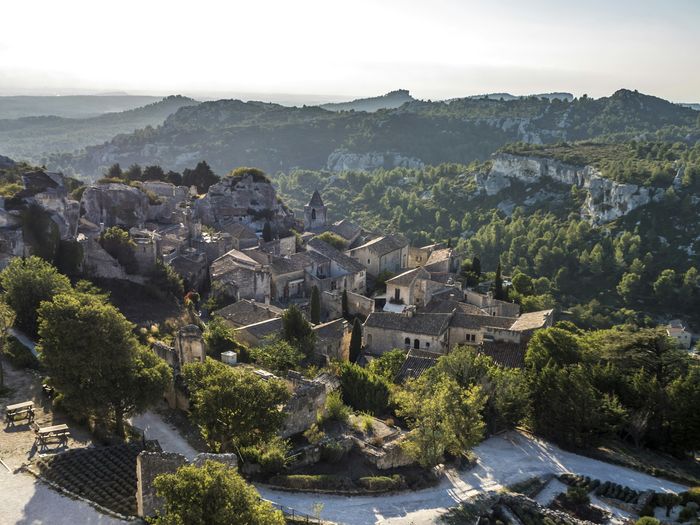
Provence
The good life, distilled — lavender, hilltop villages, Roman ruins, and rosé under the plane trees.
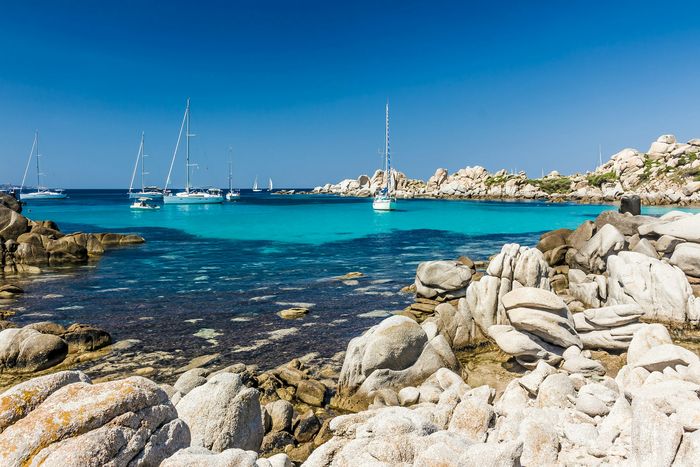
Corsica
A mountain range in the sea — France’s wildest island, where the Alps meet Caribbean-clear water.
Compare France
If you like France, also consider

Greece
Ruins in the morning, a swim by noon, taverna until dark.

Japan
Extraordinary food, culture, and cities. Nothing quite prepares you for it.
Mexico
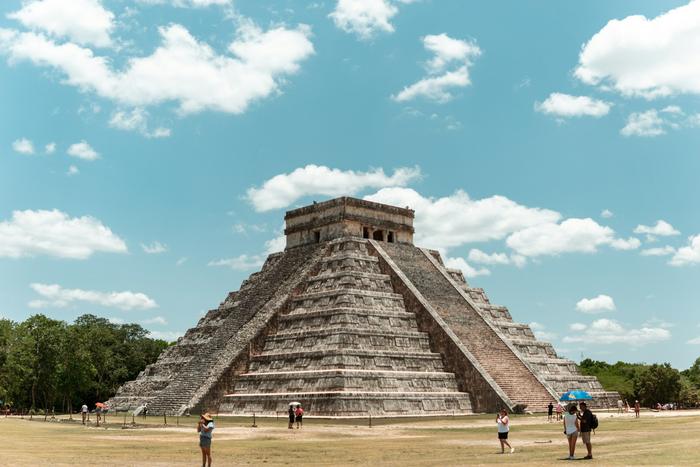
Mexico City is world-class. Add the coast, ruins, and food culture.
Thailand
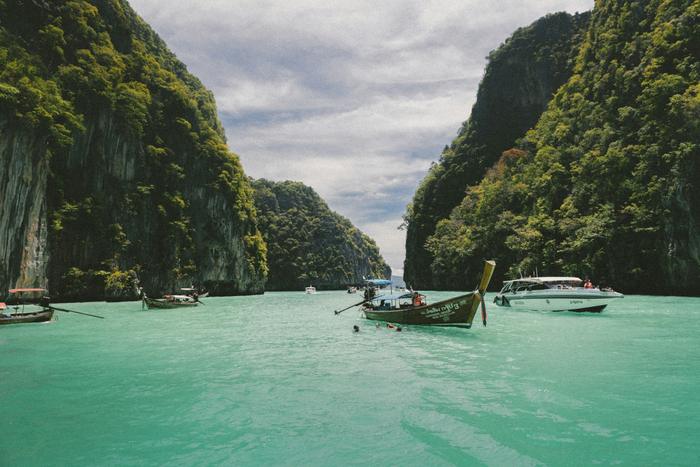
The complete package for warm-climate travel.
Not sure where to go
Take the 5-minute quiz
Answer a few honest questions and get matched to destinations that actually fit how you travel.
Start the quiz