Poland
Europe's best-value city break, with the history to match.
- January: fine
- February: avoid
- March: fine
- April: fine
- May: peak
- June: peak
- July: peak
- August: peak
- September: peak
- October: fine
- November: avoid
- December: fine
Two of Central and Eastern Europe’s great-value destinations, with different centres of gravity. Poland is the cities-and-history one — Kraków and Warsaw, the weight of the 20th century, superbly restored old towns, strong value and an easy, card-friendly feel. Romania is the wilder, more rural one — the Carpathian mountains, the castles and medieval Saxon towns of Transylvania, painted monasteries, and a rougher, more romantic edge.
Europe's best-value city break, with the history to match.
The most atmospheric, least touristed corner of Europe — at a fraction of the price.
Read our full guides about Poland and Romania.
Emphasised where they differ. Muted rows are much the same either way.
| Poland | Romania | |
|---|---|---|
| Best time | May–September | May, June, September, October |
| Climate | cold | mild |
| Budget | Good value by Western-European standards — priced in złoty, very card-friendly | Even cheaper — one of Europe’s best-value countries, priced in lei |
| Trip length | 1–2 wks | 1–2 wks |
| Visa | Schengen — visa-free for most Western passports (90 days). | EU member; visa-free for most Western passports under Schengen rules (Romania joined the Schengen area in 2025). Verify before travel. |
| Currency | PLN (Złoty), roughly 4 PLN ≈ 1 USD. | RON (Romanian Leu) — not the euro, despite EU membership. |
| Language | Polish. English is common among younger people and in cities. | Romanian, a Romance language. English is widely spoken by younger people and in cities. |
| Tap water | Tap water safe. | Tap water safe in cities. |
| Safety | Very safe. | Very safe with low violent crime; the main annoyance is taxi overcharging. |
General guidance — visas, safety, and health change, so check your government's travel advisory and the official sources before you go.
The split
Both are great-value Eastern Europe — but one is cities and heavy history, the other mountains, castles and rural romance.
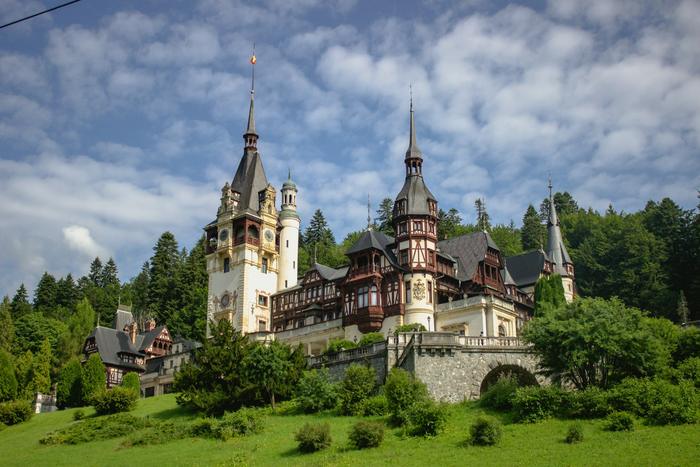
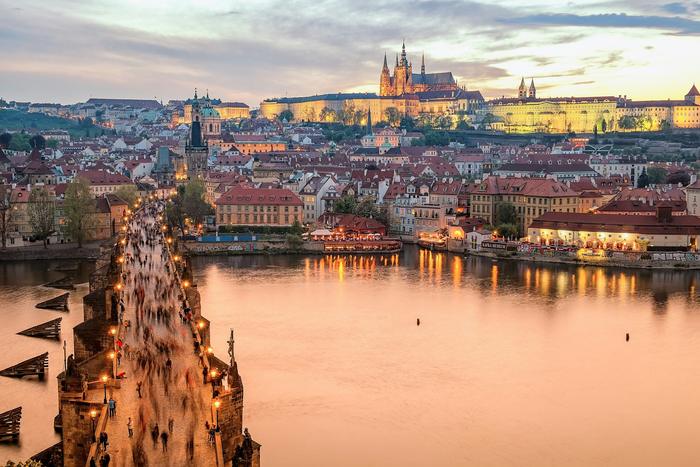
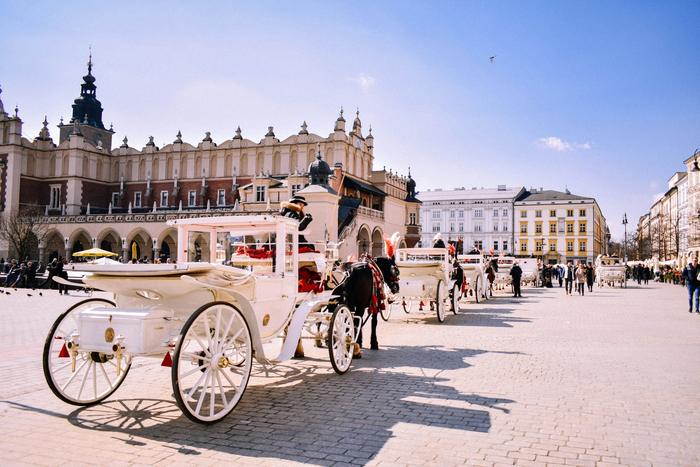
Poland is the cities-and-history one — Kraków’s medieval core and Warsaw’s painstakingly rebuilt Old Town, the weight of the 20th century at Auschwitz, Gdańsk on the Baltic — an easy, card-friendly country that’s strong value and built around its urban heritage. Romania is the wilder one: the Carpathian mountains, the castles and fortified Saxon towns of Transylvania, the painted monasteries of Bucovina, and a rougher, more romantic, more rural feel at even lower prices.
The operational detail — Poland’s rail network, Auschwitz booking and złoty economy; Romania’s mountain-pass seasons, Transylvania logistics and leu pricing — lives on the two guides: Poland, know before you go and Romania, know before you go. This page is the head-to-head.
The real difference
The trade: Poland offers restored cities and historical weight; Romania offers wild landscape and medieval atmosphere.
Poland wins on cities and history. It strings together great urban centres and the most resonant 20th-century history in Europe, all easily reached by train and absorbed with minimal friction — a polished, rewarding, city-led trip at a fair price.
Romania wins on scenery and romance. Its draw is the Carpathians and Transylvania — castles, Saxon towns, mountain passes and a wilder rural texture — experienced at Europe’s lowest prices, with a little more effort to travel. Choose the restored-cities trip, or the wild-mountains-and-castles one.
Who suits which
Both are superb value — but one leans cities and history, the other mountains and castles.
| If you want… | Poland | Romania |
|---|---|---|
| Great cities and old towns | Wins. Kraków, Warsaw, Gdańsk | Good, but scenery leads |
| Mountains and wild landscape | Tatras in the south | Wins. The Carpathians |
| Castles and medieval towns | Historic cores | Wins. Transylvania |
| Weighty 20th-century history | Wins. Auschwitz and more | Present, but not the focus |
| Rock-bottom prices | Very good value | Wins. Cheaper still |
| Easy, card-smooth travel | Wins. Rail and contactless | A car helps for the best bits |
Doing both
Not a tidy single loop — pick the texture you want.
They aren’t immediate neighbours and don’t join into one neat circuit, so combining them is a longer-trip idea rather than a natural route — most travellers choose one: restored cities and heavy history, or wild mountains and castle country. If you’re comparing the wider region, Poland also lines up against the Adriatic (see Croatia vs Poland) and Romania against its Balkan neighbour (see Romania vs Serbia).
What we leave out
Exact prices beyond the structural comparison — both are cheap and move with season — so the figures here are the shape of the difference, not a quote; the country guides carry the live detail. The entry mechanics (EES now live, ETIAS expected 2027) and each currency are covered on the guides rather than restated here.
Which of the two is the better bet for each month of the year, scored on how well the season suits each place.
Paris is only the opening act — wine country, the Alps, and two coastlines.
The benchmark for food, history, and beauty.
Ruins in the morning, a swim by noon, taverna until dark.
Food, beaches, and three or four cities that each justify the trip.
The ski and alpine benchmark — every other mountain range is measured against this.
Geysers, glaciers, northern lights, hot springs.
The best value city in Western Europe.
The most concentrated mountain scenery in Europe — and you'll pay for it.
Still undecided
Three matches. Often answers comparison questions for you.
Start the quiz