Romania
The most atmospheric, least touristed corner of Europe — at a fraction of the price.
Romania is a self-drive through the last genuinely medieval-feeling corner of Europe. You link the fortified Saxon towns of Transylvania — Brașov, Sibiu, Sighișoara — with hilltop citadels and fairy-tale castles, then throw the car over the Carpathians on roads that switchback into the clouds. Food and lodging are cheap enough that you stop counting, and half the appeal is a landscape of forested mountains and horse-cart villages that feels a comfortable century behind the West.
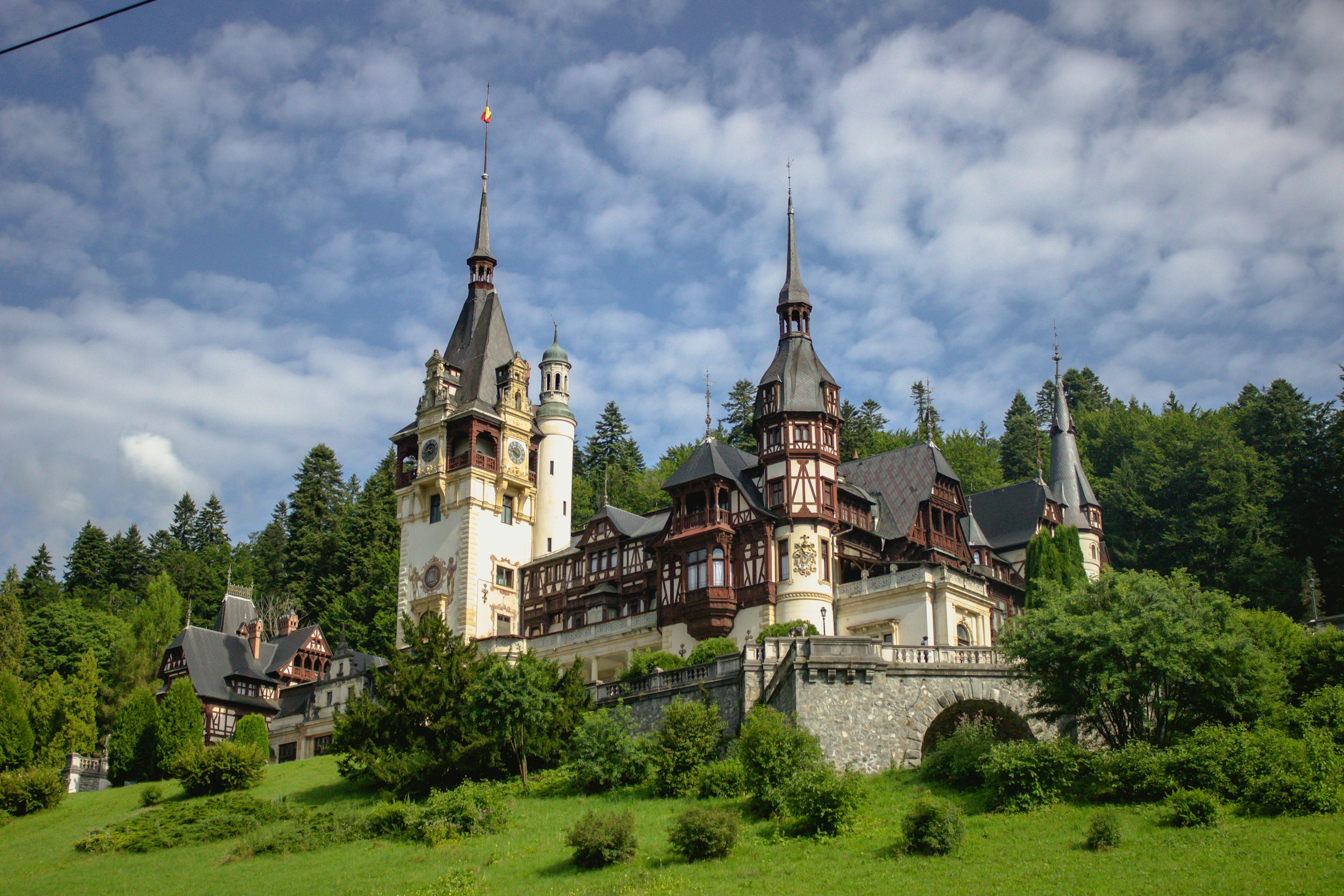
The trip that works is a loop by car through Transylvania: cobbled Saxon squares and colored townhouses in Sibiu and Brașov, the clocktower and crooked lanes of Sighișoara, hilltop citadels, and the Neo-Renaissance excess of Peleș Castle tucked into the pines. Between the towns you drive the Transfăgărășan and Transalpina — two of the best mountain roads anywhere, hairpinning over Carpathian passes — and stop for hikes where bears actually live. A hearty meal costs a few euros, a good guesthouse not much more, and the countryside of hay stacks, wooden churches, and horse-drawn carts is the real reason you came.
The honest part: Bucharest is grey and communist-heavy and most people can happily skip it beyond a look at the monstrous Palace of the Parliament. The "Dracula" marketing around Bran Castle is a tourist trap — a pretty castle with a thin vampire connection and thick crowds. Trains are slow and infuriating, so you really do want a rental car, and the finest mountain road, the Transfăgărășan, is only open roughly July to October. Accept all that and the trade-off is unbeatable: the most atmospheric, least touristed corner of Europe at a fraction of the price you'd pay a few borders west.
Highlights
-
Transylvania's Saxon towns
Brașov, Sibiu, and Sighișoara — fortified squares and colored townhouses, medieval and walkable.
-
Peleș & Bran Castles
Peleș is fairy-tale Neo-Renaissance; Bran trades on the "Dracula" myth, so temper expectations.
-
Transfăgărășan & Transalpina
Two of Europe's great mountain roads, switchbacking over the Carpathians. Open in summer only.
-
The Carpathians
Real wilderness for hiking, brown bears, and winter skiing.
-
Painted monasteries of Bucovina
Frescoed exterior walls in the far north, still vivid after five centuries.
-
Danube Delta
Europe's largest wetland — a maze of channels and one of the continent's great birding spots.
Practical info
- Visa
- EU member; visa-free for most Western passports under Schengen rules (Romania joined the Schengen area in 2025). Verify before travel.
- Currency
- RON (Romanian Leu) — not the euro, despite EU membership.
- Language
- Romanian, a Romance language. English is widely spoken by younger people and in cities.
- Safety
- Very safe with low violent crime; the main annoyance is taxi overcharging.
- Getting around
- A rental car unlocks Transylvania and the mountain roads. Trains are slow — intercity buses are better.
- Tap water
- Tap water safe in cities.
- Plug type
- Type C Type F 230V
- Money
- Cards widely accepted; carry cash for villages.
General guidance — visas, safety, and health change, so check your government's travel advisory and the official sources before you go.
Common questions
- When is the best time to visit Romania?
- Late spring and early autumn — May–June and September–October — are the sweet spot for Transylvania and the cities: warm, green, and far quieter than midsummer. The Carpathian hiking season runs roughly June–September, the Black Sea coast peaks June–August (and gets very hot), and December–March is reliable ski season in the mountains. But if the famous mountain roads are on your list, you need high summer (below).
- Is Romania in Schengen and does it use the euro?
- Romania is now a full Schengen member — air and sea borders opened in March 2024, land borders in January 2025 — so there are no internal checks arriving from another Schengen country, and the 90-days-in-180 rule applies. But it has not adopted the euro: the currency is the Romanian leu (RON), euros aren’t accepted for everyday payment, and adoption is years off.
- When is the Transfăgărășan open?
- Only for a summer window. The high alpine section of the Transfăgărășan (DN7C) is cleared of snow and opens around late June and closes in late October — in 2026 it reopened on 12 June — running daily roughly 07:00–21:00, with the exact dates set each year by the snowpack. The rival Transalpina, Romania’s highest road at 2,145m, runs on a similar window. Don’t plan a spring or autumn-shoulder trip around driving either.
- Is Bran really Dracula’s castle?
- No. Vlad the Impaler never owned or lived at Bran, and the castle appears nowhere in Bram Stoker’s novel — the Dracula association is pure later marketing layered onto a genuine 14th-century fortress. Vlad was likely born in Sighișoara and ruled from Wallachia; his nearest real stronghold was the ruined Poenari Citadel. Bran is well worth visiting on its own medieval merits — just not as the real Dracula’s home.
- Is Romania safe?
- Yes — it’s a low-crime country for travellers (the US rates it Level 1), with the usual petty-theft caution in Bucharest. The one genuinely Romanian hazard is wildlife: the Carpathians hold the largest brown-bear population in Europe outside Russia, and fatal encounters do happen. Never stop to feed or photograph bears by mountain roadsides, and be cautious around villages at dawn and dusk.
- Romania, Hungary or Bulgaria?
- Romania is the biggest and most varied — Transylvania’s Saxon towns and castles, the painted monasteries, the Carpathians and the Danube Delta — and among the cheapest countries in the EU. Hungary is more compact and city-led (Budapest carries it); Bulgaria is cheaper still, with a Black Sea coast and its own mountains. See Hungary vs Romania, Bulgaria vs Romania and Romania vs Serbia.
When to go
Shoulder season, and the mountain-road window
The cities and Transylvania are best at the edges of summer — but the famous high roads only open mid-year.
Crimson bars catch people out: the famous Transfăgărășan and Transalpina mountain roads only clear of snow for a summer window (the Transfăgărășan reopened on 12 June in 2026 and shuts again by late October), and winter flips the Carpathians to skiing. The cities and Saxon towns are loveliest in the May–June and September–October shoulders.
For Transylvania, the painted monasteries and the cities, aim for May–June or September–October: warm, green and quiet, before and after the Bran/Peleș/coast crowds and the lowland summer heat (Bucharest and the Black Sea can hit the high 30s in July–August). The Carpathian hiking season is roughly June–September; ski season at Poiana Brașov and Sinaia runs December–March.
The timing trap is the scenery drives: the Transfăgărășan and Transalpina only clear of snow for a summer window (broadly late June to late October), so a May or late-October trip may find the best part of them shut.
- you want the Transfăgărășan but it’s May or late OctoberSkipbanking on the high alpine section — it may be snow-closedGothe lower Transylvania roads and Saxon towns — or come July–September
- Bran Castle is a tour-bus crushSkipmidday at the "Dracula" castle in peak summerGoarriving early, or the quieter, wilder ruined Poenari (a stronghold Vlad did use)
- the lowland summer heat is brutal (Bucharest, the coast)SkipJuly–August in the baking southGothe cool Carpathians and Transylvanian highlands, or the shoulder months
Getting in
In Schengen, but still on the leu
Romania joined the EU’s border-free zone recently — the euro is a separate, slower story.
Romania became a full Schengen member in two steps — air and sea borders in March 2024, land borders in January 2025 — so visa-exempt visitors (US, UK, Canada, Australia) get the shared Schengen 90-days-in-180 allowance. The EU’s biometric Entry/Exit System is now fully deployed, and the separate ETIAS authorisation is not yet required (now expected to phase in during 2027). The currency remains the leu: cards work in cities, but carry lei for markets, rural transport and tips, and don’t expect euros to be accepted.
Getting around
Rent a car for the good bits
Trains are slow and buses do the heavy lifting — but Transylvania really wants a car.
The state railway (CFR) is scenic but slow and much reduced, though new trains now run the Bucharest–Brașov main line over the Carpathians; buses and minibuses (maxitaxi) are the practical intercity workhorse, and low-cost flights link the big cities. But the Romania most people come for — the Saxon towns, the mountain passes, Maramureș, the Bucovina monasteries — is really a road trip, and a car earns its keep despite rough secondary roads, horse carts and slow trucks. Build the itinerary around the Transfăgărășan’s summer opening if that drive is on your list.
| Mode | Good for | Note |
|---|---|---|
| Rental car | Transylvania, the mountain roads, Maramureș | The way to see the best of Romania |
| Trains (CFR) | Bucharest–Brașov over the Carpathians | Scenic; new trains on the main line, slower elsewhere |
| Maxitaxi / bus | The practical intercity workhorse | Covers where the trains don’t |
| Low-cost flights | Bucharest ↔ Cluj / Timișoara | For the long diagonal hops |
The Romania most people come for — Saxon towns, mountain passes, the painted monasteries — is a road trip, so a car earns its keep despite rough secondary roads, horse carts and slow trucks. Bucharest (Henri Coandă/OTP) is the main gateway and the metro covers the capital. Checked October 2026.
Rent a car for the good bits. The state railway (CFR) is scenic but slow and much reduced — the new Bucharest–Brașov trains over the Carpathians are the exception — so while buses and maxitaxi minibuses handle city-to-city, the Transylvanian back-country (the Saxon villages, the Transfăgărășan, Maramureș’s wooden churches) really needs your own wheels. Note the famous mountain roads, the Transfăgărășan and Transalpina, open only roughly July to October.
Castles & the capital
Castles, citadels and a communist colossus
Romania’s built headline sights run from a fairy-tale royal palace to the heaviest building on earth.
Heaviest building on earth Bucharest’s Palace of the Parliament
The built highlights cluster in and around Transylvania. Peleș Castle at Sinaia is the stunner — a Neo-Renaissance royal palace of the 1870s, one of the first in Europe with its own electricity — while Bran, marketed the world over as "Dracula’s castle" (it wasn’t his; see the culture section), is a handsome 14th-century fortress on the mountain road. Sighișoara is a lived-in medieval citadel and a UNESCO site; the Saxon cities of Brașov (the Gothic Black Church, Council Square) and Sibiu (a European Capital of Culture) anchor the region.
In Bucharest, the one unmissable sight is the Palace of the Parliament, the monstrous centrepiece of Ceaușescu’s 1980s rebuild. And scattered across the Transylvanian countryside are the fortified Saxon churches — a UNESCO group, with Viscri the famous one since King Charles bought a house in the village.
Where to go
Saxon towns, painted churches, wild delta
Romania’s highlights are scattered — pick a couple of regions rather than racing the whole country.
Transylvania is the headline — the Saxon cities, castles and the mountain gateway at Brașov — and most first trips pair it with Bucharest as the entry point. With more time, Maramureș is deep rural Romania, with eight UNESCO-listed wooden churches and the painted tombstones of the Merry Cemetery; the Bucovina painted monasteries carry extraordinary 15th–16th-century exterior frescoes; and the Danube Delta — Europe’s best-preserved wetland, with 320-plus bird species — is explored by boat from Tulcea. Pick two or three regions, not all of them.
| Region | What it’s for | Good to know |
|---|---|---|
| Transylvania | Saxon towns, castles and the mountains | Brașov, Sibiu, Sighișoara, Bran — the core |
| Bucharest | The capital — the Palace, "Little Paris", nightlife | The entry hub; a day or two |
| The Carpathians | Hiking, skiing, the Transfăgărășan drive | Bear country; the high roads are summer-only |
| Maramureș | Deep rural Romania and its wooden churches | The Merry Cemetery; UNESCO churches |
| Bucovina | The painted monasteries (Voroneț) | Exterior frescoes, UNESCO — the north-east |
| The Danube Delta | Europe’s best-preserved wetland, by boat | From Tulcea; an ARBDD permit required |
The food
Pork, polenta and sour soups
Hearty, cheap, Balkan-meets-Central-European — and one of the world’s oldest wine cultures.
Romanian cooking is hearty, cheap and generous — pork, cabbage, polenta (mămăligă) and sour soups (ciorbă). The national dish is sarmale, cabbage rolls stuffed with spiced pork and rice, and the everyday grill staple is mici, skinless minced-meat rolls eaten with mustard and beer. Finish on papanași, warm sweet-cheese doughnuts under sour cream and jam.
To drink, Romania has one of the oldest wine traditions on earth (Cotnari and Murfatlar are the regions to look for), and the fierce home-distilled plum brandy — țuică or the stronger pălincă — is the mark of a welcome. It all costs a fraction of Western Europe.
| Dish | What it is | Note |
|---|---|---|
| Sarmale | Cabbage rolls of minced pork and rice | The national dish, with mămăligă |
| Mici (mititei) | Skinless grilled minced-meat rolls | The beer-garden and grill staple |
| Ciorbă | A sour soup, soured with borș (fermented bran) | The comfort bowl — tripe or vegetable |
| Mămăligă | Polenta, with sheep cheese and sour cream | The peasant staple, everywhere |
| Papanași | Fried sweet-cheese doughnuts, cream and jam | The dessert to finish on |
| Țuică / pălincă | Strong (often double-distilled) plum brandy | The welcome shot — go gently |
Romanian food is hearty and cheap, built on pork, cabbage, polenta and sour soups. The wine tradition is one of the world’s oldest (6,000-plus years), with Cotnari and Murfatlar the names to know; homemade pălincă can top 50%.
Culture
A Latin island, Orthodox and recent
A Romance-speaking country among Slavic neighbours, with its communist past close to the surface.
Not Dracula’s castle the myth that sells a million tickets
Romania is a Romance-language island — Romanian descends from Latin, marooned among Slavic and Hungarian neighbours — which gives the culture a distinct, surprisingly familiar texture for Western visitors. It is strongly Orthodox Christian (the painted monasteries, the Easter calendar), with proud Saxon and Hungarian minorities in Transylvania and a deep rural tradition still living in Maramureș.
The recent past is close to the surface: the 1989 revolution that ended Ceaușescu’s rule — and the dictator’s execution that Christmas Day — is within living memory, and Bucharest tells that story plainly. Hospitality is warm, and the welcome often comes with a shot of țuică.
For LGBTQ+ travellers: same-sex activity was decriminalised in 1996 and fully legalised in 2002, but Romania recognises neither same-sex marriage nor civil partnerships, and society remains conservative under a strong Orthodox influence. The big cities, especially Bucharest and Cluj, are more relaxed; discretion is the usual advice elsewhere.
Good to know
Cheap, bear country, and a delta permit
The practical footnotes — value, wildlife, and one piece of paperwork.
Romania is among the cheapest countries in the EU, and the value is broad — food, drink, transport and lodging all sit well below the EU average. It’s a low-crime, Level 1 country, with the usual petty-theft caution in Bucharest. Cards work in cities; carry lei (Romania is in Schengen but not the euro) for markets and rural areas, and tip around 10% in cash. Tap water is generally safe in the cities, and the single emergency number is 112.
Two genuinely Romanian specifics. The Carpathians hold the largest brown-bear population in Europe outside Russia (estimates range from around 6,000 upward — enough that a cull was approved in 2024 after a fatal attack), so never stop to feed or photograph bears by mountain roadsides. And the Danube Delta, Europe’s best-preserved wetland, requires an ARBDD access permit, bought in Tulcea or at SelfPay kiosks and carried while you’re on the water.
Compare Romania
If you like Romania, also consider

France
Paris is only the opening act — wine country, the Alps, and two coastlines.
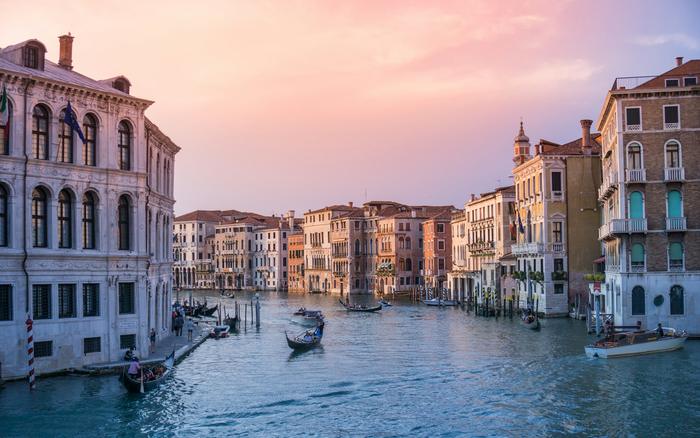
Italy
The benchmark for food, history, and beauty.

Greece
Ruins in the morning, a swim by noon, taverna until dark.
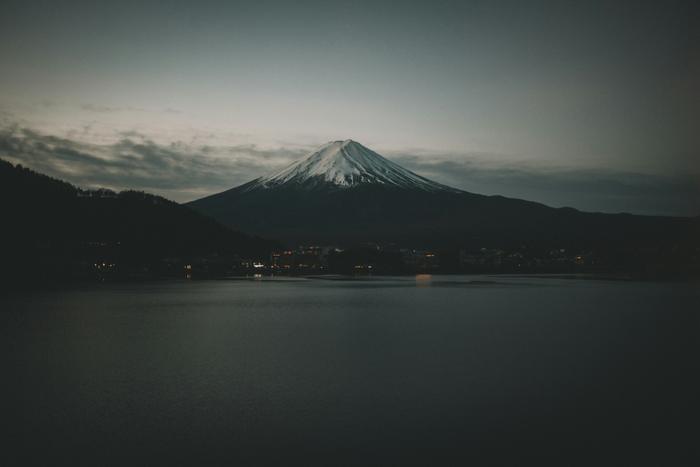
Japan
Extraordinary food, culture, and cities. Nothing quite prepares you for it.
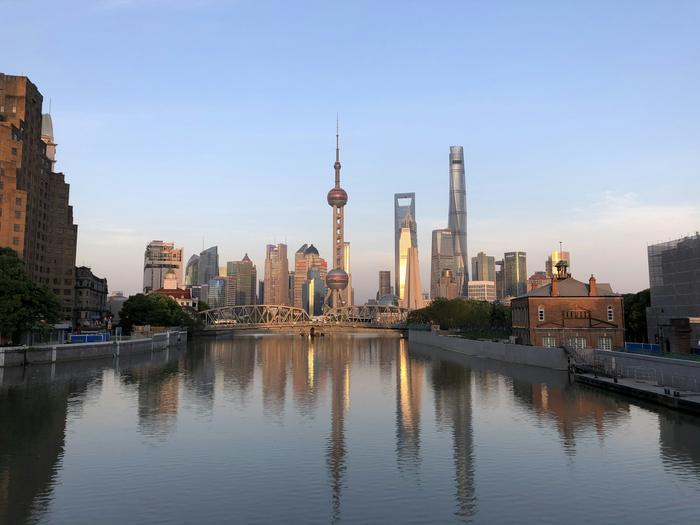
China
Ancient history and hypermodern cities at a scale that's hard to grasp until you're there.
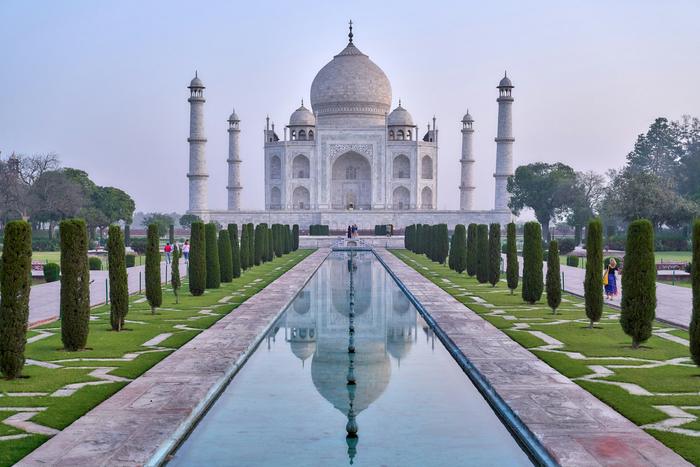
India
Overwhelming, beautiful, and utterly unlike anywhere else.
Not sure where to go
Take the 5-minute quiz
Answer a few honest questions and get matched to destinations that actually fit how you travel.
Start the quiz