Greece vs Southern Portugal

Two southern-European beach trips with opposite seas. Greece is warm-water island-hopping wrapped around ancient ruins — the Aegean, whitewashed islands, swimming that lasts into autumn. Southern Portugal is an Atlantic driving trip: the Algarve’s golden cliff coves and the Alentejo’s cork, wine and hill towns inland — dramatic, but with a genuinely cold sea.

Southern Europe

Greece

Ruins in the morning, a swim by noon, taverna until dark.

Best time to visit
  1. January: avoid
  2. February: avoid
  3. March: fine
  4. April: peak
  5. May: peak
  6. June: peak
  7. July: fine
  8. August: avoid
  9. September: peak
  10. October: peak
  11. November: fine
  12. December: avoid
Peak Fine Avoid
Western Europe

Southern Portugal

Atlantic beaches, excellent food and wine, slow pace.

Best time to visit
  1. January: fine
  2. February: fine
  3. March: peak
  4. April: peak
  5. May: peak
  6. June: peak
  7. July: fine
  8. August: fine
  9. September: peak
  10. October: peak
  11. November: fine
  12. December: fine
Peak Fine Avoid

Read our full guides about Greece and Southern Portugal.

Side by side

Emphasised where they differ. Muted rows are much the same either way.

Greece Southern Portugal
Best time April–June, September, October March–June, September, October
Climate warm mild
Budget Mid-priced — island-hopping and the famous isles (Santorini, Mykonos) run dear in peak Good value out of season — the money goes on the car, fuel and wine; summer doubles Algarve lodging
Trip length 1–4 wks 1–3 wks
Visa Schengen — visa-free for most Western passports (90 days). Portugal (Schengen) — visa-free for most Western passports (90 days). Verify before travel.
Currency EUR (€) EUR (€).
Language Greek. English widely spoken. Portuguese. English widely spoken in tourism.
Tap water Tap water safe in mainland; bottled on smaller islands. Tap water is safe.
Safety Very safe. Very safe.

General guidance — visas, safety, and health change, so check your government's travel advisory and the official sources before you go.

The split

Warm islands, or a cold-sea cliff-coast

Two southern beach trips — one is warm-water islands and ruins, the other an Atlantic driving loop.

Warm vs cold seathe waterSwimmable Aegean into autumn, or a bracing Atlantic
Islands vs drivinghow you travelFerries between isles, or a car around coast and interior
Ruins vs winethe inland drawAncient sites, or the Alentejo’s cork and cellars

Greece is warm-water island-hopping and ancient ruins: the Aegean, whitewashed islands, swimming into autumn, classical sites between beaches. Southern Portugal is an Atlantic driving trip: the Algarve’s golden cliff coves and the Alentejo’s cork, wine and hill towns — dramatic coast, a genuinely cold sea, and a car rather than a ferry. Warm islands, or a cliff-coast-and-wine loop.

The operational detail — Greece’s ferries and site tickets, Southern Portugal’s tolls, Benagil rules and cold-Atlantic reality — lives on the two guides: Greece, know before you go and Southern Portugal, know before you go. This page is the head-to-head.

Who suits which

Who each actually suits

Warm-islands or cold-sea-cliffs — so these rarely invert.

If you want…GreeceSouthern Portugal
Warm-water swimming into autumnWins clearly. The AegeanCold Atlantic
A cliff-coast driving tripIsland ferries insteadWins clearly. The Algarve loop
Ancient ruinsWins. Classical sites everywhereRoman Évora, but fewer
Island-hoppingWins. Built for itA mainland region
Wine country and cork plainsIsland wines, smallerWins. The Alentejo
Emptier, cheaper off-season coastIslands quiet off-seasonWins. Great in May/Sept

Doing both

An either/or across the Mediterranean

Opposite corners — pick one.

Greece and Southern Portugal sit at opposite ends of southern Europe with no easy link, so combining them means a flight, and each fills its own trip — they’re better as an either/or. Both are in Schengen, so any combined time draws on the same 90/180 allowance, and both reward the warm shoulder seasons. Choose by the sea and the style: warm island-hopping with ruins, or a dramatic Atlantic driving loop with wine.

What we leave out

What we deliberately leave out

Exact prices and the moving pieces — Greece’s ferry and island-season rates, Southern Portugal’s tolls and Algarve tourist taxes — change within a season, so the figures here are the shape of the gap, not a quote; the guides carry the live detail, including the EES/ETIAS border changes that apply to both.

Greece or Southern Portugal, month by month

Which of the two is the better bet for each month of the year, scored on how well the season suits each place.

Which to choose

Choose Greece if:

  • You want warm-water island-hopping and ancient ruins — the Aegean, the Cyclades.
  • Swimming in a warm sea into autumn is the whole point.
  • Island-boat logistics and classical history appeal more than a road trip.

Choose Southern Portugal if:

  • You want a cliff-coast-and-wine driving trip — the Algarve and the Alentejo.
  • Dramatic Atlantic coves and inland wine country beat island-hopping.
  • You don’t mind a cold sea for emptier, cheaper, less-touristed coast.

Common questions

Is the sea warmer in Greece or Southern Portugal?
Greece, decisively — the Aegean is warm and swimmable well into autumn, which is much of its appeal. Southern Portugal is the Atlantic, and it’s cold even in August (low-20s°C on the south coast, colder on the surf-west around Sagres). For warm-water swimming, Greece is the clear winner; Portugal’s coast is for drama and surf more than lounging in the water. See the Greece and Southern Portugal guides.
Which is better for the sheer beauty of the coast?
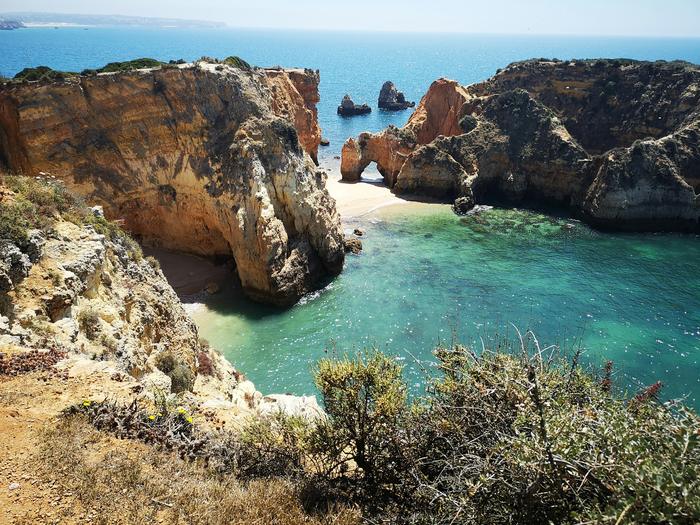
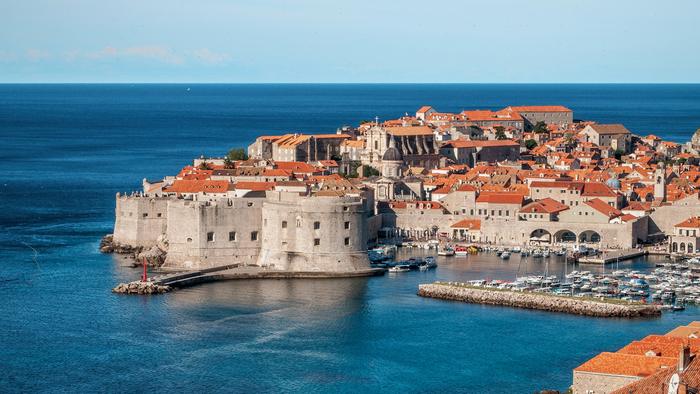
Both are stunning, differently. Greece’s beauty is islands and the Aegean — whitewashed towns, blue domes, island-hopping. Southern Portugal’s is golden cliffs, sea stacks and grottoes around Lagos and the wild end-of-Europe coast at Sagres. Island archipelago, or dramatic mainland cliff-coast.
Island-hopping or a road trip?
That’s the core split. Greece is about ferries between islands, each with its own character, and ancient ruins between swims. Southern Portugal is a driving trip — fly into Faro, rent a car, and loop the Algarve coast and the inland Alentejo wine country. Boats and islands, or a car and a coast-plus-interior.
Which is better value?
Broadly similar, with timing key. Greek island-hopping and the famous isles (Santorini, Mykonos) run dear in peak summer; Southern Portugal is good value out of season but doubles Algarve lodging in July–August. Shoulder season flatters both. In Portugal your spend is mostly the car, fuel and wine; in Greece it’s ferries and the islands you choose.

Still undecided

Take the quiz

Three matches. Often answers comparison questions for you.

Start the quiz