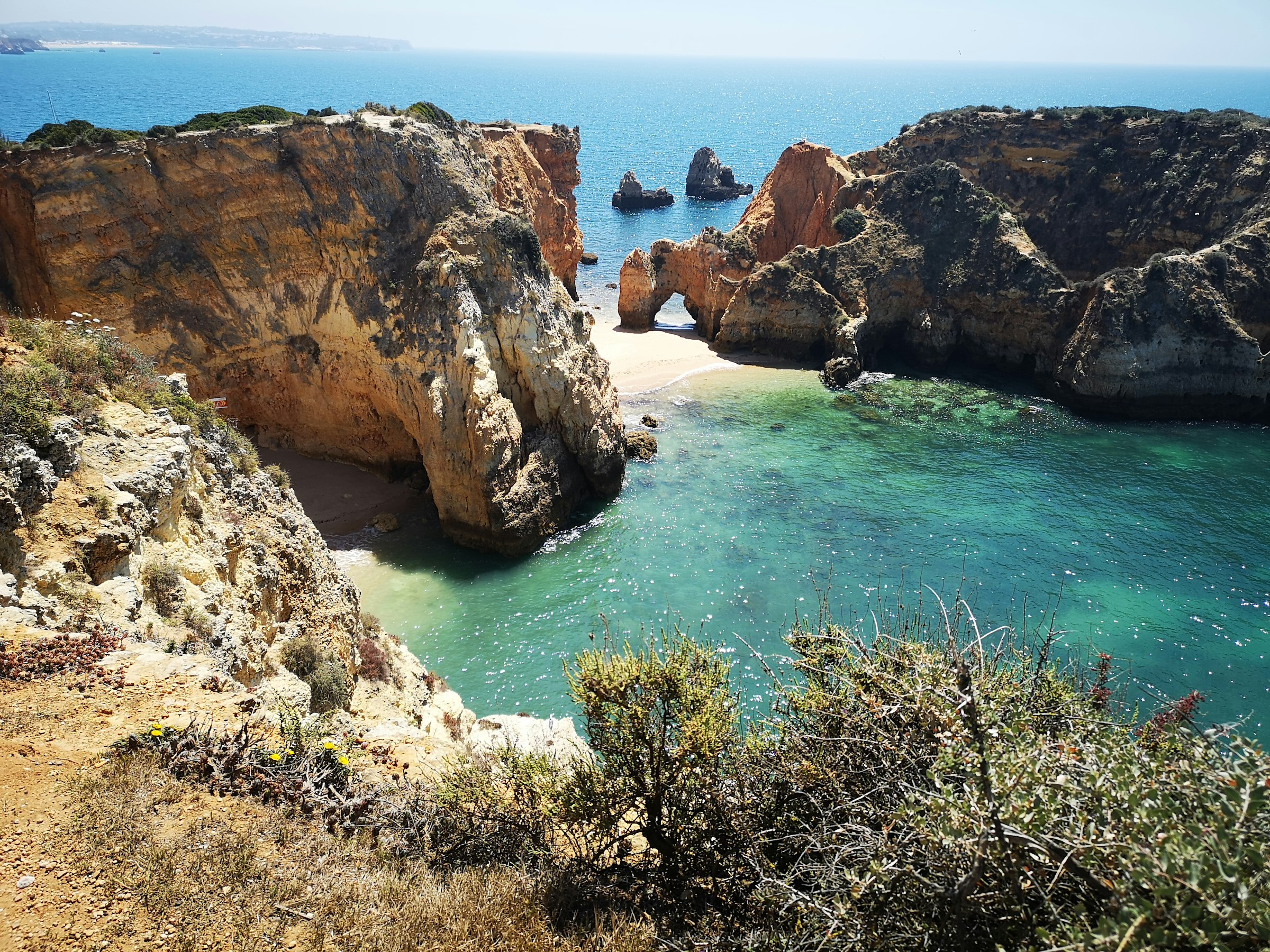
Southern Portugal
Atlantic beaches, excellent food and wine, slow pace.
The Algarve is the obvious draw, but the Alentejo above it is what makes Southern Portugal worth a real trip. Cork forests, white-washed villages, some of the best wine in Europe outside the famous regions, beaches that get wilder the further west you go. Warm without being oppressive.
Fly into Faro or Lisbon and rent a car the same day — this is a driving trip. A good week splits between the western Algarve (Lagos for the cliff coves, Sagres for surf and the end-of-Europe sunsets) and two nights inland in the Alentejo, eating black pork and drinking reds from the plains around Évora. Beaches fill the days; long dinners are the event. Outside high summer, your money mostly goes on the car and the wine.
The catch is the Algarve in July and August: packed beaches, doubled prices, and a strip of package resorts around Albufeira that could be anywhere. The Atlantic is cold — this is not Greek-island swimming, even in summer. Public transport is thin, so non-drivers will struggle. Skip the strip, come in May, June, or September, and you get the same cliffs with better restaurants and half the stress.
Highlights
-
Lagos & the western Algarve
Cliff coves, surf beaches, and the most striking coastline.
-
Comporta
Quiet stretch an hour south of Lisbon — pine forests and empty beach.
-
Évora & Alentejo wine
Roman temples, walled towns, and serious wine country.
-
Sagres
The end of Europe — surf, cliffs, sunsets.
Practical info
- Visa
- Portugal (Schengen) — visa-free for most Western passports (90 days). Verify before travel.
- Currency
- EUR (€).
- Language
- Portuguese. English widely spoken in tourism.
- Safety
- Very safe.
- Getting around
- Hire a car — distances are easy and public transport thin in the south.
- Tap water
- Tap water is safe.
- Plug type
- Type C Type F 230V
- Money
- Cards everywhere.
General guidance — visas, safety, and health change, so check your government's travel advisory and the official sources before you go.
Common questions
- Do I need a visa for the Algarve?
- As part of Portugal and Schengen, US, UK, Canadian and Australian visitors are visa-free for 90 days in any 180. The biometric EES is live; ETIAS is not yet in force (expected 2027). The currency is the euro. See entry.
- What’s the must-see beach?
- Praia da Marinha, the postcard cliff-and-cove beach, and the famous Benagil sea cave — a domed cave with a hole in its roof, reached by boat, kayak or SUP. See beaches & cliffs.
- Do I need a car?
- For the cliff beaches and coves, yes — the train links the towns but not the beaches. Crucial warning: the A22 motorway uses electronic-only tolls (no booths), a notorious rental-car trap, so arrange a toll device. See getting around.
- Where’s quieter than Albufeira?
- The resort-and-nightlife hub is Albufeira; for calm, head to Tavira in the traditional east, windswept Sagres, or the wilder Alentejo coast to the north. See towns and the Alentejo coast.
- When should I go?
- Spring (April–June) and autumn (September–October) are ideal — warm and quiet. Summer is hot, crowded and priciest; winter is mild and popular for golf. See when to go.
- Is it cheap?
- Cheaper than much of Western Europe, though the Algarve is dearer than inland Portugal in peak summer. English is widely spoken, and the seafood is superb value. See food & culture.
Entry
Schengen, euro, sun
Standard Portuguese entry — the new bit is the border tech.
Southern Portugal is part of Portugal and the Schengen Area, so US, UK, Canadian and Australian visitors enter visa-free for up to 90 days in any 180, on the euro. The EU’s biometric EES is now live, while ETIAS isn’t yet in force (expected 2027), so it’s not required at present.
The gateway is Faro airport (FAO), very well connected by budget airlines across Europe, which makes the Algarve one of the continent’s easiest and cheapest sun escapes to reach.
Allow a little time for EES enrolment on first entry, and re-check ETIAS nearer travel since its date keeps slipping (not required for now). Faro’s budget-airline links make it a cheap arrival — but book summer flights and cars early, when demand peaks.
The Algarve
Portugal’s golden south
Ochre cliffs, hidden coves and sun almost all year.
~300 days sun the Algarve — Portugal’s golden south coast
The Algarve is Portugal’s famous south — a coast of golden cliffs, turquoise coves and reliable sunshine that draws sun-seekers and golfers in their millions. It’s the country’s most developed resort region, but the geography keeps it varied: honey-coloured cliffs and hidden beaches in the centre, flat lagoon islands in the east, and a wild Atlantic surf coast in the west.
That mix means you can tailor the trip — buzzy resort, quiet fishing town or surf village — all within an hour or two’s drive along the same sunny shore. It’s also one of Europe’s great golf destinations, with a string of championship courses strung behind the coast, and a long, mild shoulder-and-winter season that keeps it busy well beyond the summer peak.
Decide early which Algarve you want: the central cliffs-and-coves stretch (Lagos–Carvoeiro) for the classic beaches, the east (Tavira) for quiet and tradition, or the west (Sagres/Costa Vicentina) for surf and wildness. They’re close together, but they feel like different holidays.
Beaches & cliffs
Coves, a sea cave and surf
The Algarve’s headline — some of Europe’s loveliest beaches.
Benagil Cave the domed sea cave with a hole in its roof
The beaches are why most people come, and the central Algarve has a run of genuinely world-class ones. Praia da Marinha is the cliff-framed icon; the nearby Benagil sea cave, with its collapsed-roof skylight, is the most-photographed natural sight, best seen on a boat or kayak trip. Around Lagos, the sculpted stacks and grottoes of Ponta da Piedade are a kayaking dream.
For a different mood, the Atlantic Costa Vicentina on the west coast is cooler, windier and wilder — the surf coast around Sagres and Arrifana — while Albufeira concentrates the resorts and nightlife.
| Spot | What | Note |
|---|---|---|
| Praia da Marinha | The postcard cliff-and-cove beach | On the Seven Hanging Valleys trail |
| Benagil Cave | A domed sea cave with a roof "eye" | By boat/kayak — don’t swim in unguided |
| Lagos (Ponta da Piedade) | Rock arches and grottoes | Plus the Camilo and Dona Ana beaches |
| Costa Vicentina | The wild, windy surf west | Sagres and Arrifana |
Albufeira is the big resort-and-nightlife hub; Praia da Rocha the high-rise beachfront at Portimão.
Towns
Lagoons, castles and the end of Europe
Beyond the beaches: Moorish towns and an Atlantic cape.
The Algarve’s towns give the coast its character. Faro, the capital and airport city, fronts the Ria Formosa lagoon and its barrier-island beaches; Tavira, further east, is the quieter, more traditional Algarve of saltpans and a Roman-Moorish bridge, with the Ilha de Tavira sands offshore.
Inland, Silves broods under its red Moorish castle (once the Algarve’s capital), and out at the wild southwest tip, Sagres and Cape St Vincent mark the literal end of mainland Europe — a dramatic, lighthouse-topped headland where the Age of Discovery began.
| Town | What | Note |
|---|---|---|
| Faro | The capital & airport; Ria Formosa lagoon | Barrier-island beaches offshore |
| Tavira | The quieter, traditional eastern Algarve | Saltpans; the Ilha de Tavira beach island |
| Silves | A red-sandstone Moorish castle | The former Moorish Algarve capital, inland |
| Sagres | The windswept "end of Europe" | Cape St Vincent, the SW tip of the mainland |
Lagos combines Age-of-Discovery history with the best single cluster of beaches.
Alentejo coast
The wilder coast to the north
Quieter, emptier sand — the Algarve’s low-key neighbour.
Above the Algarve, the Alentejo coast is a wilder, far less developed stretch of Atlantic Portugal — a draw for those who find the Algarve too built-up. Fashionable, low-key Comporta has its pine-backed dunes near Lisbon; Vila Nova de Milfontes and Zambujeira do Mar are relaxed coastal villages further south.
Linking it all is the Rota Vicentina, whose cliff-top Fishermen’s Trail is one of Europe’s great coastal walks, running down the wild shore toward Sagres. The water here is colder and the surf bigger than the sheltered south, and development is light — this is the coast for walkers, surfers and anyone wanting the Algarve’s sun without its crowds.
Getting around
Fly to Faro, then drive
Easy to reach — with one electronic-toll trap.
The Algarve is wonderfully easy to reach — Faro airport is a short, cheap flight from much of Europe — and once there, the east–west Algarve train line links the main towns (Lagos through Faro to Tavira). But the trains don’t reach the cliff coves, so a car is really needed to explore the beaches and the west coast.
The one trap for drivers is the A22 (Via do Infante) motorway, which uses electronic-only tolls with no booths — rental cars need a transponder or prepaid arrangement, or you risk fines arriving later. Confirm the toll setup with your rental company.
When to go
Spring and autumn over high summer
Sun almost always — but the shoulders are sweetest.
Around 300 days of sun a year. Spring and autumn are the sweet spots — warm, sunny, quieter and cheaper. Summer is hottest and most crowded; winter is mild (popular for golf). The sea runs ~15°C in late winter to ~21°C in Aug–Sep, and is cooler and rougher on the west coast.
With sun almost guaranteed, the Algarve works much of the year, but the spring (April–June) and autumn (September–October) shoulders are the sweet spots — warm, sunny, swimmable and far quieter and cheaper than the summer (July–August) peak, when it’s hot, crowded and dear.
Winter is mild rather than warm (daytime mid-teens), drawing golfers and long-stayers, though some beach businesses wind down. The Atlantic stays cool — swimmable mainly June–October, and chillier on the exposed west coast.
Food & culture
Seafood, piri-piri and Moorish roots
Great value on a plate — and an Arab past in the names.
The food is a highlight and a bargain: fresh grilled fish and sardines, the shellfish-and-pork cataplana cooked in its hinged copper pan, piri-piri chicken, and the almonds and figs of the hinterland, rounded off with a pastel de nata. For somewhere in Western Europe, it’s remarkable value.
Culturally, the Algarve wears its Moorish past lightly but visibly — in the name itself (al-Gharb, "the west"), the castles of Silves, the whitewashed, chimney-topped towns — overlaid today with a large British and expat presence that makes it very easy for English-speaking visitors.
- Beaches and resortsSkipthe crowded summer peakGospring or autumn on the central Algarve
- Quiet and traditionalSkipbusy AlbufeiraGoTavira in the east, or the Alentejo coast
- Surf and a wild coastSkipthe sheltered south onlyGothe Costa Vicentina (Sagres, Arrifana)
| On the table | What | Note |
|---|---|---|
| Cataplana | Shellfish stew in a hinged copper pan | The Algarve’s signature dish |
| Grilled fish & piri-piri | Fresh sardines, peri-peri chicken | Simple and superb |
| Price level | Cheaper than much of W. Europe | Pricier than inland Portugal in summer |
| Pastéis de nata | Custard tarts, everywhere | With local almonds and figs |
Moorish heritage lingers in the place names (al-Gharb → Algarve), the castles and the whitewashed towns.
Eat the seafood — it’s the region’s great-value pleasure, best at a simple grill away from the main tourist strips. Lean on the English-speaking ease for logistics, but venture inland or east (Silves, Tavira) for a more authentically Portuguese Algarve beyond the resort coast.
Compare Southern Portugal

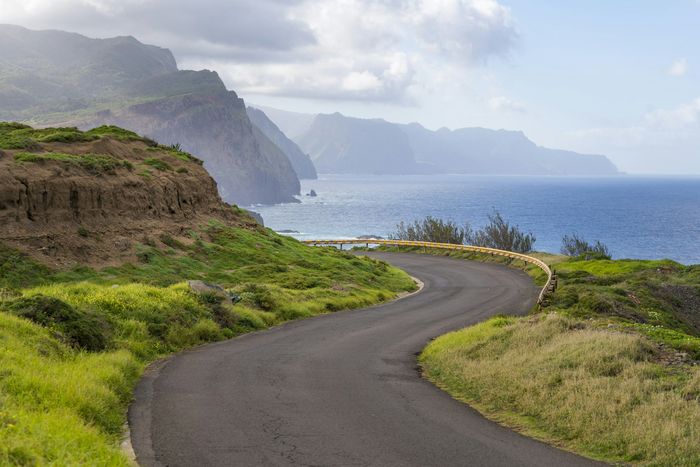
If you like Southern Portugal, also consider
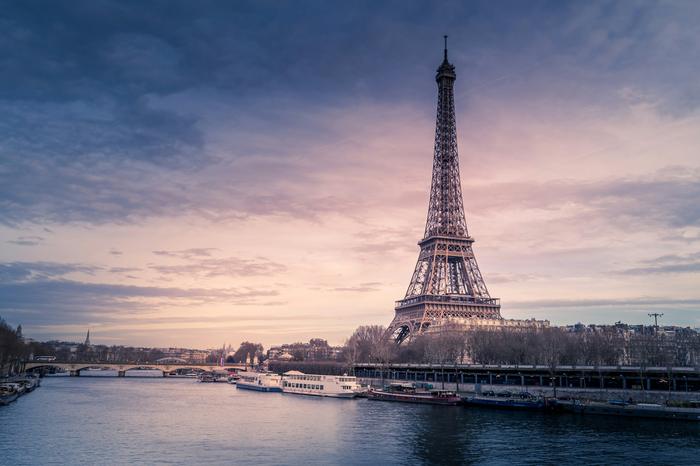
France
Paris is only the opening act — wine country, the Alps, and two coastlines.
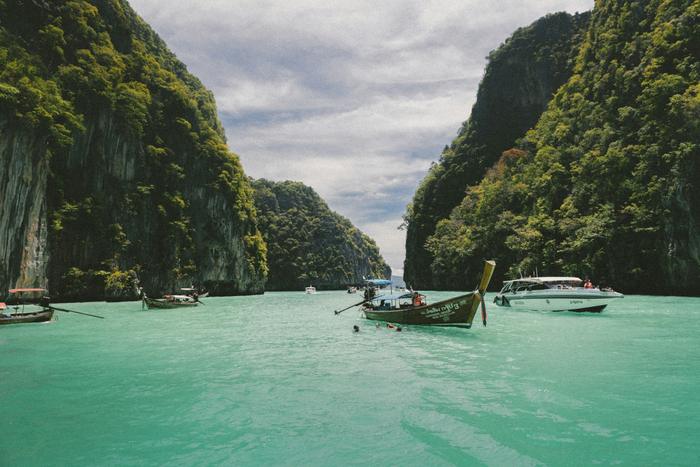
Thailand
The complete package for warm-climate travel.
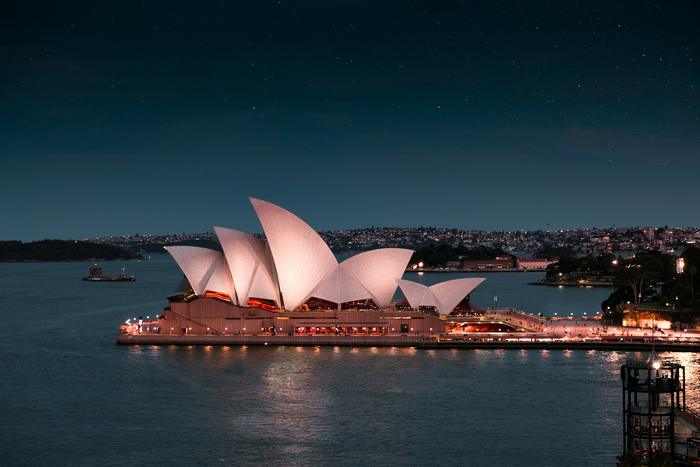
Australia
Vast, varied, relaxed. Reef, Sydney, and proper wilderness in one.
Bali, Indonesia
Warm, affordable, endlessly deep — beach, wellness, and culture in one place.
Not sure where to go
Take the 5-minute quiz
Answer a few honest questions and get matched to destinations that actually fit how you travel.
Start the quiz