Greece vs Portugal

Two of Europe’s great-value sun trips, facing different seas. Greece is a Mediterranean archipelago wrapped around the ancient world — islands, ruins and ferries. Portugal is a compact Atlantic country of cities, beaches and surf — Lisbon and Porto, the Algarve, and the Douro — easy to tour and consistently cheap.

Southern Europe

Greece

Ruins in the morning, a swim by noon, taverna until dark.

Best time to visit
  1. January: avoid
  2. February: avoid
  3. March: fine
  4. April: peak
  5. May: peak
  6. June: peak
  7. July: fine
  8. August: avoid
  9. September: peak
  10. October: peak
  11. November: fine
  12. December: avoid
Peak Fine Avoid
Western Europe

Portugal

Europe’s sunny western edge — Lisbon’s hills, Porto’s port, Algarve cliffs, and the best value in the west.

Best time to visit
  1. January: fine
  2. February: fine
  3. March: fine
  4. April: peak
  5. May: peak
  6. June: peak
  7. July: peak
  8. August: peak
  9. September: peak
  10. October: peak
  11. November: fine
  12. December: fine
Peak Fine Avoid

Read our full guides about Greece and Portugal.

Side by side

Emphasised where they differ. Muted rows are much the same either way.

Greece Portugal
Best time April–June, September, October April–October
Climate warm mild
Budget Great value, with a real backpacker floor — islands, hostels, ferries One of Western Europe’s better-value countries — cheaper than Spain or France
Trip length 1–4 wks 1–2 wks
Visa Schengen — visa-free for most Western passports (90 days). Portugal (Schengen) — visa-free for most Western passports (90 days). Verify before travel.
Currency EUR (€) EUR (€).
Language Greek. English widely spoken. Portuguese; English widely spoken in tourism.
Tap water Tap water safe in mainland; bottled on smaller islands. Tap water is safe.
Safety Very safe. Very safe; watch for pickpockets on Lisbon’s trams and in tourist crowds.

General guidance — visas, safety, and health change, so check your government's travel advisory and the official sources before you go.

The split

Islands and ruins, or an Atlantic mainland

Both are great-value European sun — but one is an archipelago, the other a drivable country.

Islands vs mainlandthe shape of eachFerry-hop the Aegean, or loop a compact Atlantic country
Ruins vs citieswhat each is really forThe ancient world, or Lisbon, Porto and the Douro
Both great valuethe moneyGreece has the backpacker floor; Portugal the easy mid-range

Greece is a Mediterranean archipelago with the ancient world attached: the Acropolis, Delphi, Olympia, and distinct island groups (the Cyclades, the Ionian, the Dodecanese) reached by ferry and flight. Portugal is a compact Atlantic country: Lisbon and Porto, the Algarve’s beaches and surf, the Douro wine valley — all drivable in one loop, and consistently cheap. Islands and antiquity, or a mainland of cities, coast and wine.

The operational detail for each — Greece’s island logistics and cruise tax, Portugal’s tolls and high-speed-rail timeline — lives on the two guides: Greece, know before you go and Portugal, know before you go. This page is the head-to-head.

Who suits which

Who each actually suits

They answer different holidays — so these rarely invert.

If you want…GreecePortugal
Islands and ferry-hoppingWins clearly. The Aegean and IonianA mainland country, not islands
The ancient worldWins clearly. Acropolis, Delphi, OlympiaRoman and Moorish traces, lighter
A compact drivable loopBoats and flights between islandsWins. Cities, coast and wine by road
Atlantic surfCalm Mediterranean swimmingWins. Real surf and dramatic coast
A shoestring island circuitWins. Hostels and cheap ferriesGreat value, but mainland-style
City breaks with food and wineAthens and ThessalonikiWins. Lisbon, Porto, the Douro

Doing both

An either/or across southern Europe

Opposite ends of the map — pick one.

Greece and Portugal bracket southern Europe with no easy direct link, and each comfortably fills its own trip, so they’re better treated as an either/or than a combination — you’d connect by a flight through a hub. Both are in Schengen, so any combined time draws on the same 90/180 allowance, and both peak in the same warm shoulder seasons. The decision is really islands-and-ruins versus an Atlantic mainland loop.

What we leave out

What we deliberately leave out

Exact prices beyond the structural comparison — both are eurozone countries where rates move within a season, so the figures here are the shape of the gap, not a quote; the country guides carry the live detail, including Greece’s cruise tax and Portugal’s tourist taxes and toll mechanics.

Greece or Portugal, month by month

Which of the two is the better bet for each month of the year, scored on how well the season suits each place.

Which to choose

Choose Greece if:

  • You want islands and the ancient world — the Acropolis, Delphi, the Cyclades, ferry-hopping.
  • A sea-and-ruins trip, with distinct island groups to choose between, appeals.
  • You like the idea of a backpacker-friendly island circuit.

Choose Portugal if:

  • You want a compact, drivable country of cities, coast and wine — Lisbon, Porto, the Algarve, the Douro.
  • Atlantic surf and a mainland road-trip appeal more than island-hopping.
  • You’d rather one easy loop than choosing between scattered islands.

Common questions

Is Greece or Portugal cheaper?
Both are among Western Europe’s better-value sun destinations and run close. Greece has the genuine backpacker floor — island hostels, cheap ferries, inexpensive mainland villages — while Portugal is consistently cheaper than Spain, France or the UK with the comfort of fixed, straightforward pricing. Day-to-day it’s a wash; Greece edges the shoestring end, Portugal the easy mid-range.
Is Greece or Portugal better for a first trip?
Portugal for an easy, compact tour — a drivable mainland of cities, coast and wine you can loop without ferries or hard choices. Greece for islands and antiquity, but it asks you to pick island groups and plan boats and flights between them. Mainland ease, or island-and-ruins variety.
Which has better beaches, Greece or Portugal?
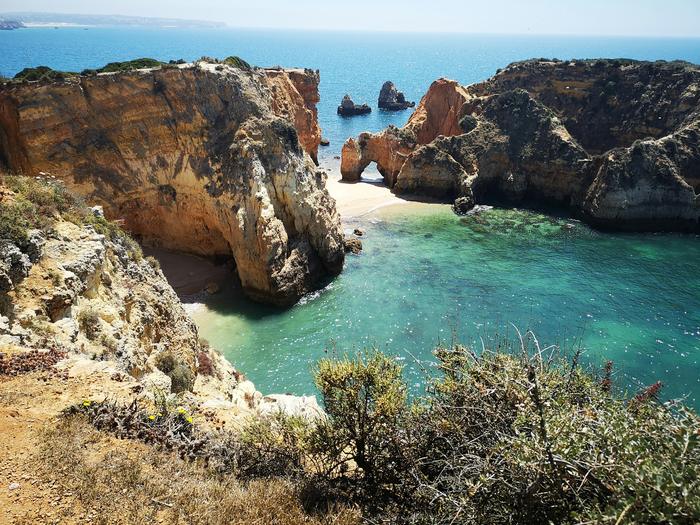
Different kinds. Greece’s are island beaches — coves and bays scattered across the Aegean and Ionian, reached by ferry. Portugal’s are Atlantic — the Algarve’s cliffs and long strands, cooler water and real surf. For warm, calm island swimming, Greece; for dramatic Atlantic coast and surf in one drivable region, Portugal.
Should I combine Greece and Portugal?
They sit at opposite ends of southern Europe with no easy direct link, and each fills its own trip, so they’re more an either/or than a pairing — you’d connect by a flight via a hub. Both are in Schengen, so days in each count toward the same 90/180 allowance. Choose by what you want: islands and ruins, or an Atlantic mainland loop.

Still undecided

Take the quiz

Three matches. Often answers comparison questions for you.

Start the quiz