Two Arab-world neighbours on the Mediterranean, at very different weights. Egypt is the bucket-list heavyweight — the Pyramids, the new Grand Egyptian Museum, the temples of the Nile, world-class Red Sea diving, a civilisation-scale trip that needs real planning. Tunisia is the gentler, cheaper break — Carthage and Roman ruins that rival Italy’s, a blue-and-white coast, a slice of Sahara with the Star Wars sets, and package beaches, all in a small country you can see in a week. One is the archaeological trip of a lifetime; the other an easy, good-value sampler that asks far less of you.
Cheaper on the ground since the 2024 float — but a bigger, longer, costlier trip, and the site fees stack up
Very good value — a short, affordable break, with a closed dinar you change on arrival
Trip length
1–3 wks
1–2 wks
Visa
E-visa or visa-on-arrival for most nationalities (30 days).
Visa-free for most Western passports (90 days). Verify before travel.
Currency
EGP (Egyptian Pound). Roughly 49 EGP ≈ 1 USD.
TND (Tunisian Dinar).
Language
Arabic. English in tourism but limited otherwise.
Arabic and French; little English spoken.
Tap water
Tap water not safe.
Drink bottled water.
Safety
Tourist routes are safe with police presence. Hassle/baksheesh is constant.
Tourist areas and the main sights are fine with normal caution, but check government advisories and avoid the remote southern and western border regions near Libya and Algeria.
Both are North African and ancient — but one is a once-in-a-lifetime heavyweight, the other a compact, affordable sampler.
Heavyweight vs compactthe scale of the tripA multi-stop epic across the country, or a relaxed one-week break
Pharaohs vs Romethe history on offerThe Pyramids and the Nile, or Carthage and the Roman ruins
Planning vs easythe effort it asksEgypt needs a real itinerary and patience; Tunisia is low-effort and cheap
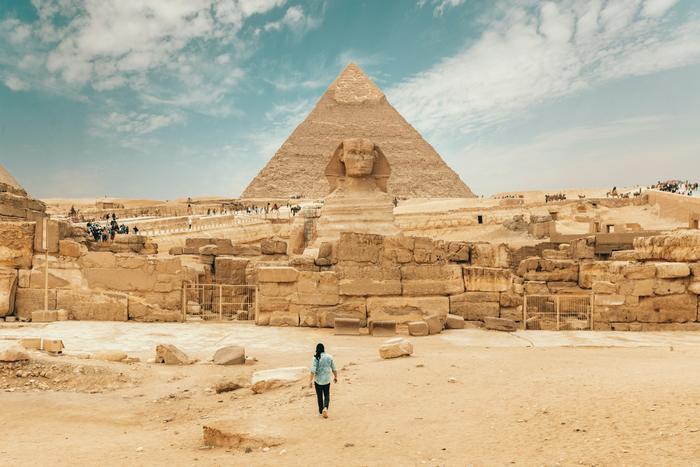
Egypt is the bucket-list heavyweight. The Pyramids and the Grand Egyptian Museum at Giza, the open-air pharaonic city of Luxor, the Nubian Nile at Aswan and the colossi of Abu Simbel, a slow cruise between them, and world-class Red Sea diving at the end — it is a civilisation-scale trip, and it rewards the planning and the budget it demands. Nothing in Tunisia, or almost anywhere, competes with the sheer wonder of it.
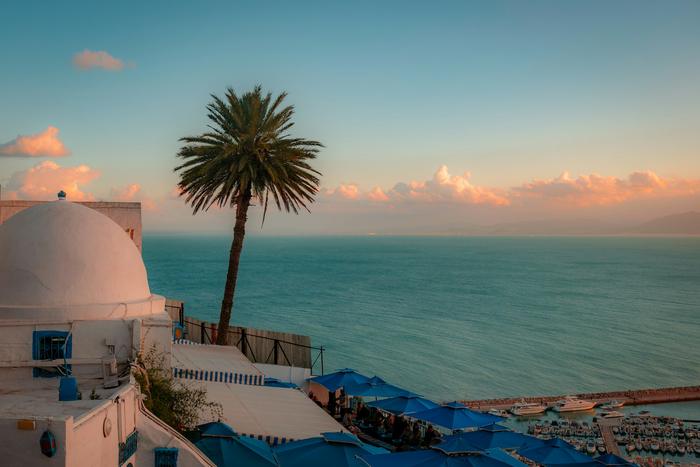
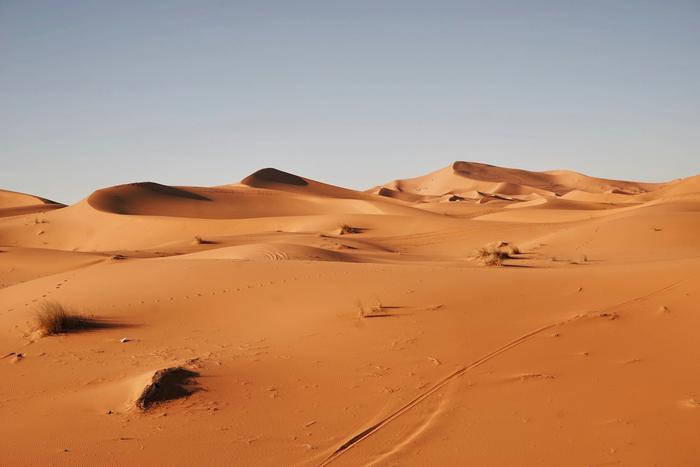
Tunisia is the gentler, cheaper break. Carthage and the blue-and-white village of Sidi Bou Said above the gulf, Roman ruins that genuinely rival Italy’s with a fraction of the crowds, the Star Wars sets out in the Sahara, and classic Mediterranean resort beaches — all in a small country you can see properly in a week, in a relaxed mainstream corridor, for not much money. It asks far less of you than Egypt does.
The operational detail — Egypt’s visa and the Nile logistics, Tunisia’s closed dinar and its advisory geography — lives on the two country guides: Egypt, know before you go and Tunisia, know before you go. This page is the head-to-head.
Entry & money
One needs a visa and dollars; the other waves you in
Entry is the first real split: Egypt is a paid visa and a sliding pound; Tunisia is visa-free with a currency you can’t take home.
Egypt: ~US$30 visae-visa (visa2egypt.gov.eg) or visa-on-arrival in USD cash, 30-day stayRising to US$33 on 1 Jan 2027; a free 15-day “Sinai-only” stamp covers just the South Sinai resorts
Tunisia: 90 days freevisa-free for US/UK/EU/Canada/Australia, passport valid for the stayAn onward ticket and accommodation can be asked at immigration
The money catchEgypt’s pound floats and slides; Tunisia’s dinar is closedCarry USD/EUR cash either way — for Egypt’s visa and baksheesh, and to change on arrival in Tunisia
Egypt makes you pay to get in, but not much. Most Western nationals need a visa — an e-visa in advance from the official visa2egypt.gov.eg portal, or a visa-on-arrival sticker paid in US dollars cash — both around US$30 for a 30-day single entry in 2026, rising to US$33 on 1 January 2027. The one shortcut is the free “Sinai-only” stamp if you are only going to the South Sinai Red Sea resorts (Sharm el-Sheikh, Dahab, Nuweiba, Taba), valid up to 15 days — but it does not cover Cairo, Luxor or mainland Egypt.
Tunisia simply lets you in. It is visa-free for up to 90 days for the main Western passports, with an onward ticket and accommodation occasionally requested at the border. The catch is the money, not the entry: the Tunisian dinar is a closed, non-convertible currency you cannot buy abroad or legally take out. You change hard currency on arrival, keep the official receipts to reconvert the leftovers, and spend the rest before you fly home.
Carry hard-currency cash for both, for different reasons. In Egypt you want US dollars or euros in exact bills for the visa-on-arrival and the near-constant baksheesh; the pound floated in 2024 and has slid to around EGP 53 to the dollar, which made the country markedly cheaper for hard-currency visitors. In Tunisia you change money in small batches on arrival and keep the slips, because reconversion on exit is capped and needs those official receipts (an ATM slip will not do) — the rule of thumb is to run your dinars down before the airport.
When to go
Both get fierce in summer — but on different clocks
Egypt is a winter country for the Nile and the pyramids; Tunisia runs on spring and autumn, with a summer beach coast alongside.
40°C+Upper Egypt and both countries’ deserts in high summer
Heat is the shared enemy, but it lands differently. In Egypt the whole headline circuit — Luxor and Aswan on the Nile — is punishing from June to August (Aswan averages around 42°C), so the comfortable window is October to April, peaking December–February; only the Red Sea, moderated by the water, stays pleasant year-round. In Tunisia the coast is a proper summer beach season, but the Sahara interior is brutal in June–August, so the ideal all-country window is the shoulder seasons. Both throw a hot, dusty wind — Egypt’s spring khamsin, Tunisia’s chergui.
MAMJJASOND
Egypt — cool season for the Nile and pyramidsOct – Apr
Oct – Apr
Tunisia — spring, ideal countrywideMar – May
Mar – May
Tunisia — autumn, ideal countrywideSep – Nov
Sep – Nov
Egypt — Upper Egypt and the desert 40°C+Jun – Aug
Jun – Aug
Tunisia — coast beach season, desert brutalJun – Aug
Jun – Aug
Crimson bars are each country’s sweet spot. Egypt’s ideal window wraps the new year — the Oct bar is only half of it, running on to April. Egypt’s Red Sea resorts work year-round regardless; Tunisia’s coast is genuinely a summer destination, while its Sahara needs the cooler months. Ramadan (roughly 8 Feb–9 Mar 2027) shortens daytime hours in both — sites stay open, evenings come alive.
Egypt is a winter trip. Come October to April: warm days, cool evenings, and the Nile temples bearable rather than a trial. December to February is the busy, priciest peak. Summer turns Upper Egypt ferocious, so unless you are only diving the Red Sea, the cool season is the whole game. The spring khamsin can throw dust and haze over a few days at a time.
Tunisia is a two-speed year. Spring (March–May) and autumn (September–November) are comfortable countrywide and the right choice for mixing the Roman sites, the Sahara and the coast. High summer is prime beach season on the Mediterranean shore, but the desert south is unforgiving, so save the Chott el Djerid and the dunes for the shoulders. Winter is mild on the coast with cold desert nights.
History
Pharaohs in a class of their own; Rome without the queues
Both are ancient-history trips — but they are different leagues and different eras, and the gap is honest.
5,000+ objectsTutankhamun’s complete treasure, together for the first time since 1922
The Grand Egyptian Museum by the Giza pyramids opened fully in November 2025 and now shows the entire Tutankhamun collection — over 5,000 objects — in one place, alongside Khufu’s solar boats. That, plus the Pyramids, the Valley of the Kings and the Nile temples, is a world-icon draw nothing else matches. Tunisia’s answer is superb but Roman and Carthaginian: the El Djem amphitheatre at roughly 35,000 seats rivals the Colosseum, Dougga is the best-preserved Roman town in North Africa, and you can often have them nearly to yourself.
This is where the two part most clearly. Egypt is the pharaohs — a civilisation-scale draw unmatched anywhere, strung along the Nile from Giza through Luxor and Aswan to Abu Simbel in the far south, linked by cruise. The classic first trip pairs Cairo with the Luxor–Aswan stretch, taking in the riverside temples of Edfu and Kom Ombo on the way.
Tunisia is Rome and Carthage — and it is seriously good, just a layer below the world-icons. For anyone who loves classical sites, El Djem, Dougga and Bulla Regia justify the trip on their own, and the near-total absence of crowds is a genuine pleasure that Egypt’s big sites cannot offer. It is a different kind of history day: unhurried, uncrowded, and much lighter on the nerves.
Era & highlight
Egypt
Tunisia
The headline sight
The Pyramids and Sphinx at Giza, plus the Grand Egyptian Museum and the complete Tutankhamun treasure
Carthage by the sea, the El Djem amphitheatre, and the blue-and-white village of Sidi Bou Said
The ancient city
Luxor — Karnak, the Valley of the Kings, Hatshepsut’s temple — an open-air pharaonic city
Dougga, a near-complete Roman town on a hillside, and the underground villas of Bulla Regia
The great museum
The GEM at Giza, now the headline antiquities museum
The Bardo in Tunis, one of the world’s finest Roman-mosaic collections (reopened Sep 2023)
The crowds
Busy and heavily touted at the marquee sites
Often nearly empty — you rarely queue
Egypt is in a class of its own for pharaonic antiquity and sheer scale; Tunisia offers excellent Roman and Carthaginian ruins on a smaller, quieter, easier trip. For the greatest ancient sights on Earth, Egypt; for Rome without the queues, Tunisia.
Beaches & diving
World-class reefs, or an easy Mediterranean shore
Both have a coast — but they serve different beach trips entirely, and only one is a diving destination.
Year-roundthe Red Sea — Egypt’s coast runs on a different calendar to the Nile
Egypt’s Red Sea coast is a world-class dive and snorkel destination, warm and moderated by the water even when Upper Egypt bakes — the famous reefs and wrecks are the draw, and it works all year. Tunisia’s Mediterranean coast is a different proposition: the package-holiday heart of the country, pairing beaches with historic medinas at Sousse and Monastir, plus the island of Djerba with its deep Jewish heritage and the ancient El Ghriba synagogue. Lovely for an easy beach week; not a diving trip.
Egypt: the Red SeaSharm el-Sheikh, Hurghada and Dahab — world-class diving and snorkellingWarm and workable year-round; the one part of Egypt that is a summer destination too
Tunisia: the MedHammamet, Sousse, Monastir and the island of DjerbaA classic summer beach-and-medina coast — pleasant rather than spectacular underwater
Different tripsreef diving versus package sun-and-sandEgypt for what’s below the water; Tunisia for an easy, cheap beach week
For diving, Egypt wins outright. The Red Sea — Sharm el-Sheikh and Dahab in South Sinai, Hurghada on the mainland — is among the best warm-water diving anywhere, and it tacks neatly onto the end of a Nile trip for a few days of reef time. It is also the one corner of Egypt that stays comfortable through the summer, so it can anchor a beach holiday in its own right.
For an easy Mediterranean beach break, Tunisia is the simpler answer. Hammamet on Cap Bon and the Sahel resorts of Sousse and Monastir pair cheap sun-and-sand with a UNESCO medina and an airport each; Djerba adds an island version with its whitewashed Houmt Souk and the pilgrimage synagogue of El Ghriba. The water is pleasant rather than remarkable below the surface — this is sunbathing and swimming, not diving.
Cost
Both are cheap — but cheap in different ways
Neither is expensive, yet the shape of the spend is not the same: Egypt’s fees stack up, Tunisia’s money comes with rules.
Egypt is cheap per item but costly per trip. The 2024 float halved the pound against the dollar and made day-to-day spending a bargain for hard-currency visitors, but the state has been raising foreigner site-entry fees to compensate, and the sightseeing is where the money goes. Every pharaonic site runs a modest base ticket plus paid extras for the star tombs (Tutankhamun’s, the lavish Seti I) and once for photography — so the real per-site spend sits well above the headline. Add a Nile cruise, domestic flights, and baksheesh at every turn, and a proper Egypt trip is simply a bigger outlay.
Tunisia is cheap and stays cheap. Food, transport and hotels are all low-cost by European standards, the sites are inexpensive, and a one-week itinerary does not balloon. The only real wrinkle is the closed dinar, which is a logistics quirk rather than a cost — change in small batches, keep the slips, and run it down before you fly.
What it costs
Egypt
Tunisia
On the ground
Markedly cheaper since the 2024 float — a mid-range meal runs US$15–30, water costs cents
Cheap by European standards — food, transport and lodging all low-cost
The hidden cost
Layered site fees: a base ticket, then paid extras for the marquee tombs and photography
None to speak of — small site fees, the occasional camera-permit surcharge
The money friction
Near-constant baksheesh (small tips) at every site and service
The closed dinar — change on arrival, keep receipts, spend it before leaving
The total trip
Bigger and longer, so the overall bill is higher despite low prices
A short week stays genuinely affordable end to end
Exact prices move — Egypt’s site fees rise most years and the EGP keeps sliding, Tunisia’s dinar logistics shift — so treat these as the shape of the difference, not a quote. The live detail sits on the country guides.
A deliberate omission on this page: exact daily prices. Egypt’s fees and the EGP rate, and Tunisia’s dinar reconversion rules, all move faster than a comparison page can stay accurate, and a stale figure is worse than none — so the budget here is the structural difference, with the live numbers kept on the two country guides. Carry small notes in both countries: Egyptian pounds for baksheesh and layered tickets, dinars for souk haggling and camera-permit surcharges.
Getting around
A river cruise and flights, or shared taxis and a short drive
Egypt’s distances mean a cruise, a sleeper train and domestic flights; Tunisia is compact enough to drive, or ride louages.
Egypt’s geography sets the trip. The country strings out along the Nile, so the classic way to link Luxor and Aswan is the three- or four-night river cruise — the most relaxing way to do Upper Egypt, calling at the temples of Edfu and Kom Ombo. To reach Luxor from Cairo you take the overnight Abela sleeper train or fly EgyptAir in about an hour; in Cairo itself, use Uber or Careem and skip the wheel entirely.
Tunisia you can almost hold in your hand. The north runs on louages — shared taxis that leave when full, the cheap intercity backbone — and slow SNCFT trains, with the TGM light rail making the Carthage and Sidi Bou Said day effortless. For the Sahara, take a guided 4x4 rather than driving the desert tracks yourself, or fly into Tozeur or Djerba to turn an eight-hour road into an hour.
The journey
Egypt
Tunisia
The signature trip
The Nile cruise, Luxor to Aswan over 3–4 nights via Edfu and Kom Ombo
A guided 4x4 into the Sahara for the Star Wars sets and the Chott el Djerid
The long hops
The overnight Abela sleeper train, or EgyptAir flights — Cairo to Luxor is far
Cheap, slow SNCFT trains and louages (shared taxis) link the northern towns
The day-trip
Uber or Careem in Cairo — don’t self-drive the legendary traffic
The TGM light rail does the Carthage and Sidi Bou Said day with no fuss
The scale
A country you cover by air and river — distances are long
Small enough to drive the highlights, or fly south to Tozeur or Djerba to save the haul
Egypt is a long country you cross by cruise, sleeper train and plane; Tunisia is compact enough to cover by train, shared taxi and a short internal flight. Both reward leaving the driving to someone else.
A practical note for each. In Egypt, book the Great Pyramid interior and the Nile cruise ahead in the October–April peak, when they sell out; there is no direct Cairo–Abu Simbel flight, so go via Aswan. In Tunisia, expect frequent police checkpoints heading south — carry your passport and cooperate, it is routine — and draw cash on the coast before the Sahara, where ATMs thin out.
Safety
Same advisory tier, same honest read: it’s geographic
Both sit at the same risk level, and in both the “do not travel” labels cover remote border zones, not the tourist corridor.
Level 2both at the US “exercise increased caution” tier — the same as much of southern Europe
The warnings are about specific places, not the trip you’d take. In Egypt the “do not travel” zones are North Sinai (an active insurgency, quite separate from the safe South Sinai resorts), the Western Desert near the Libya border, and the Sudan-border area — while Cairo, Giza, Luxor, Aswan, the Red Sea and the South Sinai resorts operate normally and are heavily secured. In Tunisia they cover only narrow strips within about 16 km of the Algeria and Libya borders (bar the towns of Tabarka and Ain Draham) and a few interior mountains; the whole resort-and-sights corridor sits outside them.
The honest version for both: the mainstream route is fine, and the alarming headlines are about places you would never go. Egypt and Tunisia both sit at the US “exercise increased caution” level — the same tier as France or Spain — and in each the key is geography. Egypt’s heavily-secured Nile-and-Red-Sea circuit is a world away from the North Sinai insurgency and the desert border zones; Tunisia’s coast and sites are entirely outside its narrow border-strip and mountain “do not travel” areas.
Tunisia carries one extra wrinkle: a state of emergency runs through 31 December 2026, granting extra powers, so steer clear of any demonstrations. The 2015 attacks heavily hardened tourist security there, which is visible at the Bardo and the main sites. In both countries, re-read the current advisory close to travel, since alerts are episodic and travelling against official advice can void your insurance.
The day-to-day reality differs more than the advisory does. Egypt’s real friction is hassle rather than danger — persistent touts, constant baksheesh, pushy vendors at the big sites, and some unwanted attention toward women travellers; a firm “la, shukran” and small notes ready for genuine tips go a long way. Tunisia is noticeably more relaxed on the ground: ordinary petty risks like taxi overcharging, frequent but routine security checkpoints, and little of Egypt’s relentless site-gate pressure.
Who suits which
Who each actually suits
On several of these the answer inverts — the heavyweight loses, and the easy option wins.
If you are…
Egypt
Tunisia
After the greatest ancient sights on Earth
Wins outright. The Pyramids, the Nile temples, the GEM and the Tutankhamun treasure — a world-icon draw
Excellent Roman ruins, but a rewarding layer rather than a wonder
Wanting a short, cheap, low-effort break
A bigger trip that needs an itinerary, a budget and patience
Wins. A relaxed week, affordable end to end, sights close together
A diver or serious snorkeller
Wins. The Red Sea is world-class and warm year-round
Pleasant Med beaches, but not a diving destination
Travelling with history-weary company
Intense — a lot of touted, crowded, layered-ticket sites
Wins. Uncrowded ruins, plus beaches and a desert day to break it up
Chasing a once-in-a-lifetime epic
Wins. Civilisation-scale, the trip you remember for good
A lovely sampler, but not life-list stuff
After an easy taste of the Sahara
Deserts exist, but they are remote and far from the circuit
Wins. The dunes, oases and film sets are close and accessible
Doing both
Not a natural pair — pick one
These two don’t combine the way neighbours should: there’s no tourist land route, and they pull in opposite directions.
Despite both being North African and Arab, Egypt and Tunisia are not a natural two-in-one. They are a long way apart at opposite ends of the region, share no practical land route for tourists, and combining them means flying between them for no real thematic payoff — the pharaonic epic and the easy coast break don’t build on each other. Almost everyone picks one for a given trip.
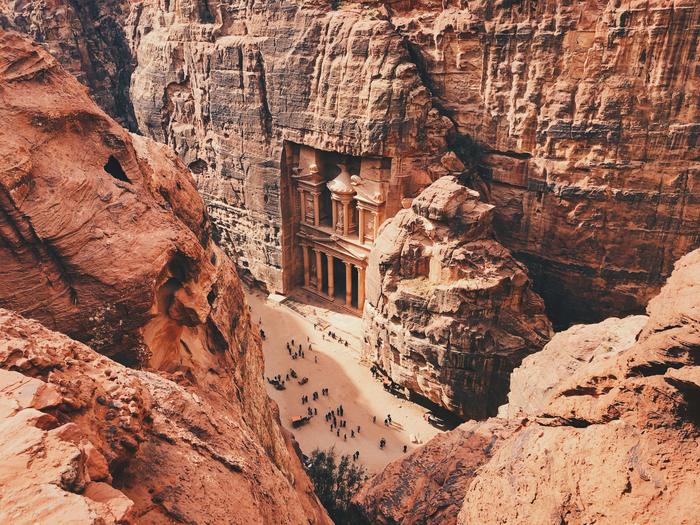
If you want a second country that actually complements either, look sideways. Egypt pairs far more naturally with Jordan — Petra and Wadi Rum a short hop away (see Egypt vs Jordan) — while Tunisia sits comfortably alongside the wider Mediterranean and Maghreb (see Morocco vs Turkey and Greece vs Turkey).
If you genuinely must see both on one trip, treat them as two separate holidays flown back to back, not a loop — a full Egypt itinerary (Cairo, the Nile, the Red Sea) runs well over a week on its own, while Tunisia is a tidy week, and squashing them together shortchanges the one that deserves the time. Better to give Egypt its full run now and keep Tunisia for an easy future break.
What you give up
What each choice costs you
Every pick has a price. Here’s what you walk away from by choosing one over the other.
Choose Egypt and you give up ease. You take on a real itinerary, a bigger budget, long internal journeys, and the relentless hassle and baksheesh at the big sites — plus a season that pins you to the cooler months for everything except the Red Sea. The reward is that there is nothing like it: you are buying the single most monumental trip in the region, and you accept the friction as the price of the pyramids.
Choose Tunisia and you give up the wonders. You forgo the Pyramids, the Nile and world-class diving for Roman ruins, a package-beach coast and a desert taste — a genuinely good trip, but a sampler, not a life-list epic. What you get back is everything Egypt makes hard: a short, cheap, low-stress week in a relaxed corridor, with uncrowded sites and no need for a grand plan.
The clean way to decide: if the Pyramids, the Nile and ancient Egypt are a reason to travel in themselves — and you have the time, budget and patience the trip demands — go to Egypt and don’t dilute it. If you want a sunny, affordable, easy week with good history on the side and no logistics to sweat, go to Tunisia. The deciding question isn’t which is “better” — it’s whether you’re here for the trip of a lifetime or a very good holiday.
Egypt or Tunisia, month by month
Which of the two is the better bet for each month of the year, scored on
how well the season suits each place.
A short, cheap, easy Mediterranean break is the goal, not a grand itinerary.
You’d take uncrowded Roman ruins and a blue-and-white coast over pharaonic epics.
You want beaches, with a taste of the Sahara and the Star Wars sets, without the planning.
You value a relaxed trip with little hassle — Tunisia is far gentler on the ground.
Common questions
Is Egypt or Tunisia better for ancient history?
Both are rich, but they’re different leagues and eras. Egypt is in a class of its own — the Pyramids and Sphinx, the Grand Egyptian Museum with the complete Tutankhamun treasure, the Valley of the Kings and the Nile temples are a civilisation-scale draw unmatched anywhere. Tunisia’s history is superb but Roman and Carthaginian — Carthage, the El Djem amphitheatre, Dougga, Bulla Regia — a rewarding layer rather than a world-icon, with the bonus that you’ll rarely queue. For the pharaohs and the greatest ancient sights on Earth, Egypt; for excellent Roman ruins on a smaller, easier, uncrowded trip, Tunisia.
Which is the easier, cheaper trip?
Tunisia — it’s compact, affordable and low-effort, a country you can genuinely enjoy in a week, with resort beaches and ancient sites close together in a relaxed mainstream corridor. Egypt is bigger, more intense and needs more planning (and more budget) to link Cairo, Luxor, Aswan and the Red Sea, with persistent hassle at the big sites — though the 2024 currency float made it noticeably cheaper on the ground. For an easy, cheap short break, Tunisia; for a once-in-a-lifetime epic, Egypt. The Egypt and Tunisia guides carry the cost detail.
Which has the better beaches and diving?
They serve different beach trips. Egypt’s Red Sea (Sharm el-Sheikh, Hurghada, Dahab) is world-class for diving and snorkelling and warm year-round. Tunisia’s Mediterranean coast (Hammamet, Sousse, Djerba) is a classic summer beach-and-medina shore — pleasant rather than spectacular underwater. For diving, Egypt clearly; for an easy, cheap Mediterranean beach week, Tunisia.
Do the entry and money rules differ?
Yes, sharply. Egypt requires a visa for most Western nationals (e-visa or visa-on-arrival, around US$30, rising to US$33 in January 2027) and uses the Egyptian pound, which slid after the 2024 float, making it cheaper for hard-currency visitors — though site fees and baksheesh add up. Tunisia is visa-free for 90 days, but its dinar is a closed currency you can’t buy abroad or take out (change on arrival, keep receipts, reconvert before leaving). The specifics live on the Egypt and Tunisia guides.
Are they safe, and can I combine them?
Both have a safe mainstream tourist corridor and both sit at the US “exercise increased caution” (Level 2) tier, with “do not travel” labels reserved for specific zones — North Sinai and the desert borders in Egypt, the Algeria/Libya border strips and a few interior mountains in Tunisia (Tunisia also has a state of emergency through end-2026, so avoid protests). Check the current advisories on each guide. They don’t share a tourist land route, so a combined trip means flying between two distant countries for little payoff — most people choose one. Egypt pairs more naturally with Jordan.