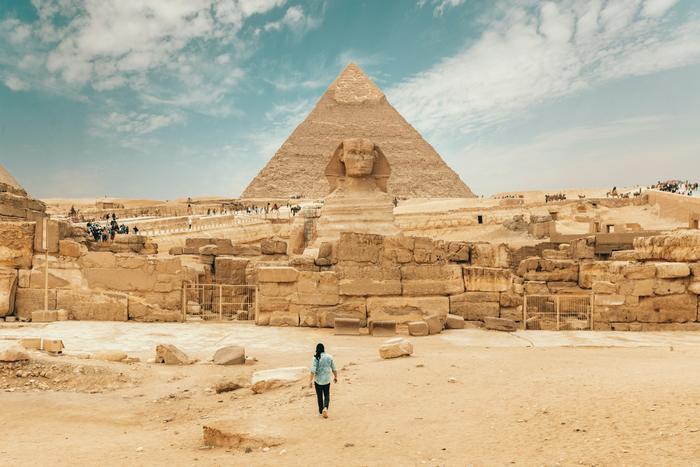
Egypt
The pyramids and Luxor — unmatched ancient sites.
- January: peak
- February: peak
- March: peak
- April: fine
- May: fine
- June: avoid
- July: avoid
- August: avoid
- September: fine
- October: peak
- November: peak
- December: peak
Two trips built on ancient history and the Red Sea, at very different stages of tourism. Egypt is the established bucket-list — the Pyramids, the new Grand Egyptian Museum, the temples of the Nile and world-class Red Sea diving, cheap and well-trodden. Saudi Arabia is the newly-opened giant — only issuing tourist visas since 2019, with the spectacular Nabataean tombs of AlUla, vast deserts, its own Red Sea coast and ambitious new developments, still finding its tourism feet and pricier. One is a classic, affordable ancient-Egypt trip; the other a fresh, big-budget frontier.
The pyramids and Luxor — unmatched ancient sites.
Newly open, and the most surprising trip in the region right now.
Read our full guides about Egypt and Saudi Arabia.
Emphasised where they differ. Muted rows are much the same either way.
| Egypt | Saudi Arabia | |
|---|---|---|
| Best time | October–March | October–March |
| Climate | warm | warm |
| Budget | Cheap for hard-currency visitors since the 2024 float — site fees stack up | Pricier — a newer, less competitive tourism scene |
| Trip length | 1–3 wks | 1–2 wks |
| Visa | E-visa or visa-on-arrival for most nationalities (30 days). | eVisa or visa-on-arrival for most Western passports. |
| Currency | EGP (Egyptian Pound). Roughly 49 EGP ≈ 1 USD. | SAR (Riyal), pegged at roughly 3.75 SAR ≈ 1 USD. |
| Language | Arabic. English in tourism but limited otherwise. | Arabic. English in cities and tourism, and growing fast. |
| Tap water | Tap water not safe. | Stick to bottled water. |
| Safety | Tourist routes are safe with police presence. Hassle/baksheesh is constant. | Very safe; a conservative country, so follow local customs and dress codes. |
General guidance — visas, safety, and health change, so check your government's travel advisory and the official sources before you go.
The split
Both are built on ancient history and the Red Sea — but one is a classic, cheap, well-trodden trip, the other a newly-opened, pricier frontier.
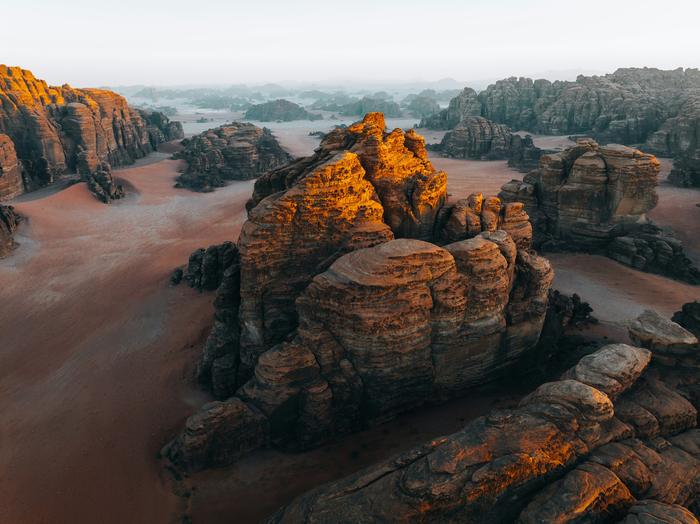
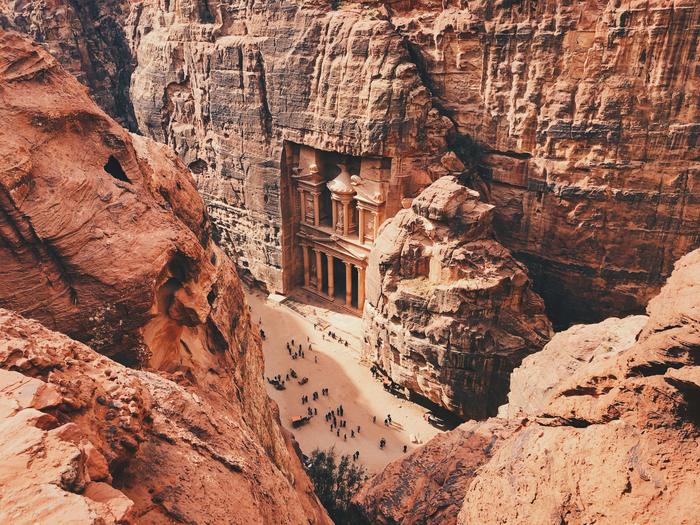
Egypt is the established bucket-list — the Pyramids, the new Grand Egyptian Museum, the temples of the Nile and world-class Red Sea diving, cheap and well-trodden. Saudi Arabia is the newly-opened giant: only issuing tourist visas since 2019, with the spectacular Nabataean tombs of AlUla, vast deserts, its own Red Sea coast and ambitious new developments, still finding its tourism feet.
The operational detail — Egypt’s visa, the GEM, the Nile logistics and the Sinai safety line; Saudi Arabia’s fast-evolving tourist visa, conduct rules and new sites — lives on the two guides: Egypt, know before you go and Saudi Arabia, know before you go. This page is the head-to-head.
The real difference
The trade: Egypt offers the greatest ancient sights, cheaply and easily; Saudi Arabia offers a stunning, uncrowded frontier.
Egypt wins on sights, ease and value. Its wealth of world-famous monuments, established Nile-and-Red-Sea tourism and low prices make it the classic, accessible choice — accepting the crowds and hassle at the big sites.
Saudi Arabia wins on freshness and space. AlUla is a jaw-dropping, uncrowded marvel, and the country offers the appeal of somewhere newly-opened — at higher prices, with newer infrastructure and conduct norms to respect. Choose the established bucket-list, or the fresh frontier.
Who suits which
Both are ancient-and-Red-Sea trips — but one leans classic, cheap and famous, the other new, uncrowded and pricier.
| If you want… | Egypt | Saudi Arabia |
|---|---|---|
| A wealth of famous ancient sights | Wins. Pyramids, Nile, GEM | AlUla, fewer but stunning |
| An uncrowded single marvel | Busy sites | Wins. AlUla |
| Established, easy, cheap travel | Wins. Well-trodden | Newer, pricier |
| World-class affordable diving | Wins. The Red Sea resorts | Developing coast |
| Somewhere newly-opened | Long-established | Wins. Tourist visas since 2019 |
| Relaxed day-to-day norms | Wins. More relaxed | Conservative, relaxing for tourists |
Doing both
Short flights link them — a longer trip can pair them.
Egypt and Saudi Arabia are neighbours across the Red Sea, linked by short flights, so a longer trip could pair Egypt’s classic sights with AlUla and the Saudi desert — separate itineraries, so allow time. Each also compares with the region (see Egypt vs Tunisia, Egypt vs Morocco and Saudi Arabia vs UAE).
What we leave out
Exact prices beyond the structural comparison — Egypt’s site fees and the EGP rate, Saudi Arabia’s newer tourism costs — all move, so the figures here are the shape of the difference, not a quote; the country guides carry the live detail. Each country’s fast-changing specifics (Egypt’s GEM pricing and security alerts, Saudi Arabia’s evolving visa, conduct rules and new developments) are covered on its guide, to be checked before you commit, rather than restated here.
Which of the two is the better bet for each month of the year, scored on how well the season suits each place.
The original safari, plus an Indian Ocean coast to land on afterward.
Cape Town, safari, and wine country in one self-drive trip.
Serengeti, a volcanic crater full of animals, Kilimanjaro, and Zanzibar — in one country.
The largest sheet of falling water on Earth, with a town on either side.
Still undecided
Three matches. Often answers comparison questions for you.
Start the quiz