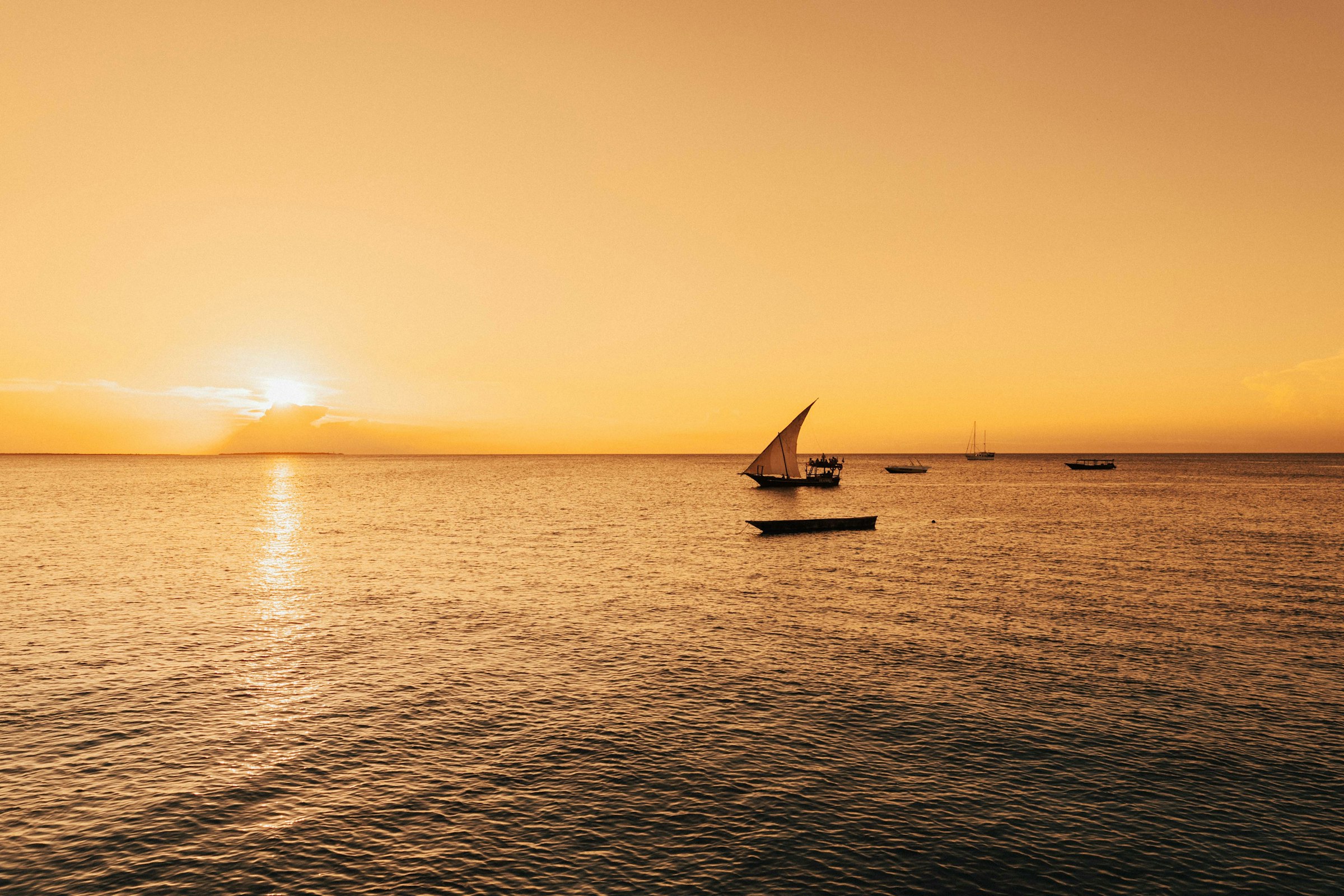
Zanzibar
The classic wind-down after a Tanzanian safari — beaches, spice, and a Swahili trading city.
Zanzibar is what you do after the game drives: swap the dust and the 5am wake-ups for powder-white sand, warm turquoise water, and slow days. Most people fly in from a mainland safari, plant themselves on the north coast, and spend the mornings snorkelling and the afternoons doing nothing at all. But there's a real place underneath the resort veneer — a spice island with a thousand years of Arab, Indian, and African trade written into its streets.
The rhythm is simple. Base yourself around Nungwi or Kendwa on the north tip, where the beaches are wide, the swimming is good, and the tide barely matters — this is the postcard Indian Ocean. Give a day to Stone Town: get lost in the maze of coral-stone alleys, poke around the spice and fish markets, trace the darker history of the slave trade and the lighter one of Freddie Mercury's birthplace. Take a spice-farm tour to see where the cloves and cinnamon come from, and get out on the water for a dhow cruise and a snorkel off Mnemba Atoll, the best reef within reach.
The honest part: location makes or breaks this trip. The east-coast beaches have enormous tides that drain the sea out to the horizon at low water and pile up seaweed, so unless you specifically want kitesurfing at Paje, the north coast is the safer bet. It's a conservative Muslim society, so cover shoulders and knees once you're off the sand and out of the resort — swimwear stays on the beach. Stone Town is small and you'll exhaust the sights in a day or so. But that's the trade-off, and it's a good one: genuine Indian Ocean postcard beaches and a fascinating, layered Swahili trading city, and both of them pair perfectly with a mainland safari.
Highlights
-
Nungwi & Kendwa
The north-coast beaches — the best swimming and the least brutal tide. Base here.
-
Stone Town
A UNESCO maze of Swahili-Arab-Indian streets, spice-trade history, and Freddie Mercury.
-
Mnemba Atoll
The island’s best snorkelling and diving, out over clear water off the northeast.
-
Spice farm tour
Cloves, cinnamon, nutmeg, vanilla — the crops that made the island rich, straight off the tree.
-
Jozani Forest
The only place to see the endemic red colobus monkeys, up close on the boardwalks.
-
Paje
The east-coast kitesurfing strip — steady wind, big tides, a younger scene.
Practical info
- Visa
- Visa required for most passports; available on arrival or as an e-visa. Verify before travel.
- Currency
- TZS (Tanzanian Shilling). USD common for tours.
- Language
- Swahili and English.
- Safety
- Safe with normal precautions. Note it is a conservative Muslim society — dress modestly away from the beach.
- Getting around
- Taxis and pre-arranged transfers get you around the island.
- Tap water
- Stick to bottled or filtered water.
- Plug type
- Type D Type G 230V
- Money
- Carry cash (USD or TZS); cards work at hotels but little else.
General guidance — visas, safety, and health change, so check your government's travel advisory and the official sources before you go.
Common questions
- What do I need to enter — and what’s the new insurance fee?
- Two separate things. The Tanzania visa covers Zanzibar: most nationalities pay ~US$50 for a single-entry e-visa, but US citizens must buy the US$100 multiple-entry visa. Second, since October 2024 Zanzibar charges a mandatory inbound travel insurance from the state insurer ZIC — about US$44 an adult, US$22 a child (3–17), valid up to 92 days, bought at visitzanzibar.go.tz before you fly and checked on arrival. The full breakdown is in the entry section.
- Which coast should I stay on for swimming?
- The north tip — Nungwi or Kendwa — stays swimmable at every tide. The east coast (Paje, Jambiani, Matemwe) has a huge tidal range that drains the sea hundreds of metres out at low water. It is a question of tide, not season.
- Is the east-coast “seaweed” a season I can avoid?
- No. It is a permanent daily low-tide feature — exposed seagrass and the island’s commercial seaweed farms — not a sargassum bloom that comes and goes, so no amount of timing changes it. Base on the north if you want open water at all hours.
- Is Zanzibar safe right now?
- For a beach trip, yes. The US eased Tanzania to Level 2 on 16 October 2026 (from the Level 3 raised after the October 2025 mainland election), and the UK flags only the far-southwest Mozambique-border region. Zanzibar itself stayed calm throughout. See the safety section.
- What’s the cheapest way between the mainland and Stone Town?
- The Azam Marine fast ferry from Dar es Salaam — about two hours, ~US$35 in tourist economy. The 15–20-minute flight from ~US$55 is barely dearer and far quicker if your onward connection is tight.
- Can I pay in US dollars and by card?
- Dollars are widely accepted provided the notes are 2009 series or newer — older bills are refused. But it is largely a cash economy: card acceptance is limited and surcharged, and ATMs can run dry. Carry notes, in Tanzanian shillings and dollars.
Entry & insurance
Two fixed costs gate arrival
A visa and — since October 2024 — a compulsory insurance policy both have to be in hand before you land.
| Arrival cost | Who it applies to | Price | Detail |
|---|---|---|---|
| Tanzania e-visa | Most nationalities | US$50 | Single-entry, 90-day validity; apply 3–4 weeks ahead |
| Tanzania visa | US passport holders | US$100 | Multiple-entry is compulsory — the single-entry e-visa is barred |
| ZIC insurance | Every visitor, per adult | US$44 | Valid up to 92 days; the state policy, not your own |
| ZIC insurance | Child aged 3–17 | US$22 | Under-3s are exempt |
| Yellow fever | Arrivals from an endemic country | Certificate | Not required coming direct from Europe or North America |
Read from the Tanzania e-visa portal and visitzanzibar.go.tz in October 2026. Visa-on-arrival still functions at Zanzibar’s airport but means queuing; the e-visa is the clean route. Fees are set by the government and change — re-check before you travel.
The insurance is the part people miss. It is not optional and your own travel policy does not substitute — it is a separate ZIC product bought on the government portal, and it is checked as a condition of entry. Buy it before you fly, keep the confirmation on your phone, and build both it and the visa into the budget rather than the room rate.
Coast & tides
North for swimming, east for the wind
Where you stay is the trip — and the deciding factor is the tide, not the season.
3–4 m the spring tidal range on the east coast
- A swim-and-laze weekSkipthe east coast, where the sea empties at low tideGoNungwi or Kendwa on the north tip — deep water at every tide
- KitesurfingSkipthe sheltered northGoPaje and Jambiani — steady cross-shore wind over a huge flat lagoon
- Diving and snorkellingSkipbasing far from the reefGoMatemwe, facing Mnemba Atoll — the best reef within easy reach
- Quiet and good valueSkipthe Nungwi resort stripGoJambiani or Bwejuu — fishing villages at guesthouse prices
If you do base on the east, read a tide table before you book a swim or a dive. The range swings from roughly 3–4 metres at spring tides to under a metre at neaps, so the hours of usable water move through the fortnight — a resort pool is doing more work here than the brochure implies.
Getting around
Transfers, dala-dalas and the mainland hop
There is no self-drive culture and no rail — you move by transfer, by local minibus, or across the water.
| Route | How | Time | Typical cost |
|---|---|---|---|
| Airport → Nungwi | Taxi / private transfer | 1h–1h20 | US$35–60 per vehicle |
| Stone Town ↔ Nungwi | Dala-dala (local minibus) | ~2h | ~US$1 |
| Dar es Salaam ↔ Stone Town | Azam Marine fast ferry | ~2h | US$35 tourist economy |
| Stone Town ↔ Dar es Salaam | Domestic flight | 15–20 min | from US$55 |
| Stone Town ↔ Arusha (safari) | Domestic flight | ~1h15 | from US$84 |
Fares read from operator and aggregator portals in October 2026; transfer prices are per vehicle and aggregator “first-class” quotes run much higher. Carriers on the short hops include Auric Air, Coastal Aviation, Precision Air and ZanAir.
The dala-dala is the cheap, slow, crowded option — you pay the conductor during the ride, so carry small notes, and luggage costs extra. Private transfers and taxis are the norm for the airport run; agree the fare before you set off, as meters are not used. On the ferry, non-residents pay a fixed tourist fare (about US$35 economy, more for VIP class) while East Africans pay a lower shilling rate — if you are quoted in shillings as a visitor, you are being quoted the wrong tariff.
When to go
The dry windows, and what the sea does
Two dry spells bracket the year; the long rains are the one stretch to avoid.
27–29°C sea temperature, year-round
The second good window is December–February — hot, mostly dry, and the whale-shark season off Mafia Island to the south (peak late Dec to mid-Feb). The crimson bar is the stretch to plan around.
Aim for the long dry season, June to October — lower humidity, reliable sun, and the prime beach window — or the short dry spell, December to February, which is hotter but just as good on the sand. The long rains of March to May are the wettest months, April and May heaviest, and some east-coast hotels simply close; the short rains around November are lighter and often shoulder-season value.
One cultural date to hold in mind: Zanzibar is a conservative Muslim society, and Ramadan falls around 8 February to 9 March in 2027. Beach resorts carry on largely as normal, but in Stone Town and the villages many local eating places cut daytime hours or close.
Off the beach, dress modestly — shoulders and knees covered — year-round, and more so during Ramadan; swimwear stays on the sand. This is a courtesy that matters in Stone Town and the fishing villages, not a formality.
Stone Town & sights
A day of history, a day on the water
Beyond the beach, the island earns a couple of days — the UNESCO old town, the reef, and the forest in the middle.
Give Stone Town a day and a half: the coral-stone alleys, the spice and fish markets, the old slave-trade sites and the Forodhani night-food gardens, plus Freddie Mercury’s birthplace for the pilgrims. On the water, the dhow cruise and snorkel off Mnemba Atoll is the standout — the clearest water and best reef within reach of the north coast — and a spice-farm tour inland shows where the cloves still grow. Jozani Forest, in the island’s middle, holds the endemic red colobus.
None of it is dear by Indian Ocean standards; the spend is the room, the transfers and the fixed entry costs, not the activities themselves.
| Sight | What it is | Entry |
|---|---|---|
| Stone Town | The UNESCO maze of Swahili-Arab-Indian coral-stone alleys, markets and old slave-trade sites | Free to wander |
| Old Slave Market & Cathedral | Christ Church (1879), built on the last slave market, plus the underground holding chambers | ~US$5 |
| Mnemba Conservation Area | The island’s best reef — snorkel or dive by boat off Matemwe | US$10 (new from Sep 2025; US$25 “special area”) |
| Jozani Forest | The one place to see the endemic red colobus monkeys | ~US$12 |
| Spice farm | A tour of the clove and cinnamon that made the island rich | ~US$25–45 |
| Sunset dhow cruise | A group sail off Stone Town at dusk | ~US$35–50 |
Prices read from operator and official reporting in October 2026; the Mnemba marine fee is from the September 2025 revision (non-East-African rate). Several figures are operator-quoted rather than from an official tariff — treat as a guide, and re-check on booking.
The House of Wonders (Beit al-Ajaib), Stone Town’s landmark palace, partly collapsed in December 2020 and remains closed, under Omani-funded reconstruction with no confirmed reopening date. Don’t build a day around going inside it — admire the façade from Forodhani and move on.
Money & cash
A cash island, with 2009-or-newer dollars
Plan to carry notes: cards are the exception here, not the rule.
Zanzibar runs largely on cash. The currency is the Tanzanian shilling, but US dollars are widely accepted for tourist services — hotels, tours, park fees — so long as the notes are 2009 series or newer; older or torn bills get waved away. Keep a mix of both, in small denominations.
Cards work only at larger hotels and a handful of Stone Town restaurants, usually with a surcharge, and the ATMs in Stone Town and at the airport can be empty. Local SIMs (Airtel, Vodacom, Halotel, Zantel) are cheap and sold at the airport on production of a passport; data is very affordable, which makes transfers and tours easy to arrange on the move.
Draw and carry enough cash for a few days at a time — the combination of a largely cashless home routine and a cash-only island catches people out on arrival, when the first transfer, the insurance check and the first meal all want paying before you have found a working ATM.
The safari wind-down
Zanzibar as the end of a bigger trip
Most people arrive off a mainland safari — the island is the decompress, not the whole holiday.
The archetypal trip plants you on the north coast for powder sand and warm, flat water after a week in the parks. Three or four nights on the beach is the usual dose — enough for a Stone Town day, a spice tour and a dhow trip, with the rest given over to doing very little.
If you are building the whole trip around Zanzibar instead, come in through Dar es Salaam — the fast ferry or the short flight — and give the mainland a day or two at either end. Either way, the island reads best as the soft landing: the logistics above (visa, insurance, cash, transfers) are the only parts that need real planning.
Internal flights on the safari-to-beach routes run light aircraft with strict luggage limits — commonly 15 kg in soft bags. If you are flying Arusha–Zanzibar, pack for the plane, not the resort; a hard suitcase can be refused at check-in.
Safety
The one genuinely live thing to check
Day-to-day risk is ordinary — the moving piece is the mainland advisory, and it has just eased.
Zanzibar stayed calm through the unrest that followed the Tanzanian general election of 29 October 2025, but the advisories are worth a last-minute look because they move. The US State Department eased Tanzania to Level 2, “Exercise Increased Caution”, on 16 October 2026, down from the Level 3 it had raised after the election; a Level 3 now applies only to the far-south-west border with Mozambique (Cabo Delgado), for terrorism. The UK FCDO likewise warns only against travel within about 20 km of that border and treats Zanzibar as normal.
For a beach-and-Stone-Town trip the real risks are the ordinary ones — petty theft, sun and sea, road safety on the transfers. Confirm the current US level before you book, since it is the one piece that genuinely changes; everything else on this page is settled.
If you follow the news and see headlines about “Tanzania,” remember the mainland-versus-islands split: the election flashpoints were on the mainland, Zanzibar is a semi-autonomous archipelago that carried on operating normally, and the advisories draw exactly that distinction.
Compare Zanzibar

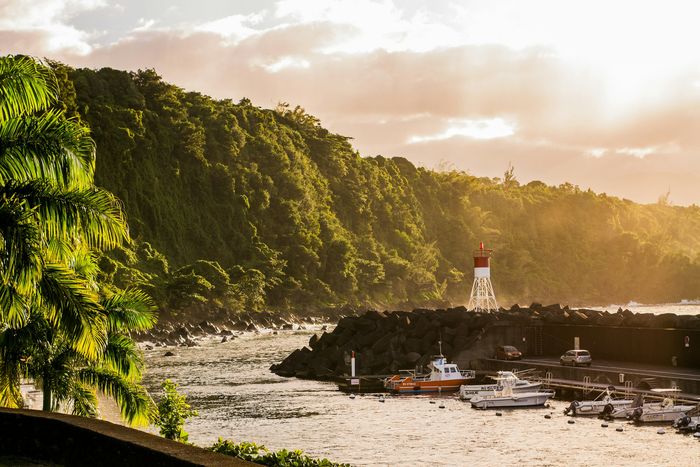
If you like Zanzibar, also consider

United Arab Emirates
Dubai and Abu Dhabi: superlatives, desert, and a stopover worth a few days of its own.
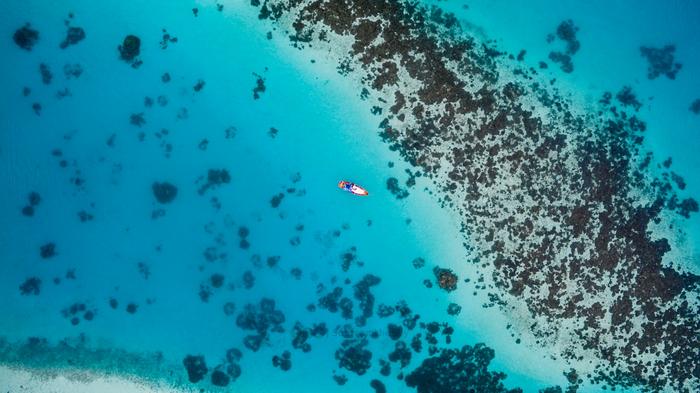
Maldives
One island, one resort, almost nothing to do. That is the point.

Greece
Ruins in the morning, a swim by noon, taverna until dark.

Spain
Food, beaches, and three or four cities that each justify the trip.
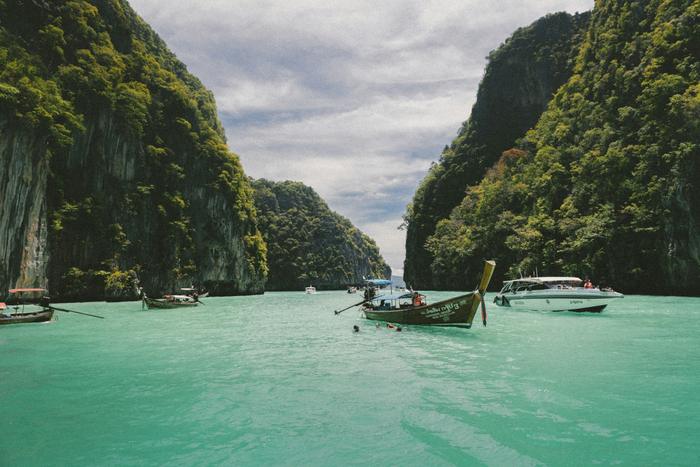
Thailand
The complete package for warm-climate travel.
Not sure where to go
Take the 5-minute quiz
Answer a few honest questions and get matched to destinations that actually fit how you travel.
Start the quiz