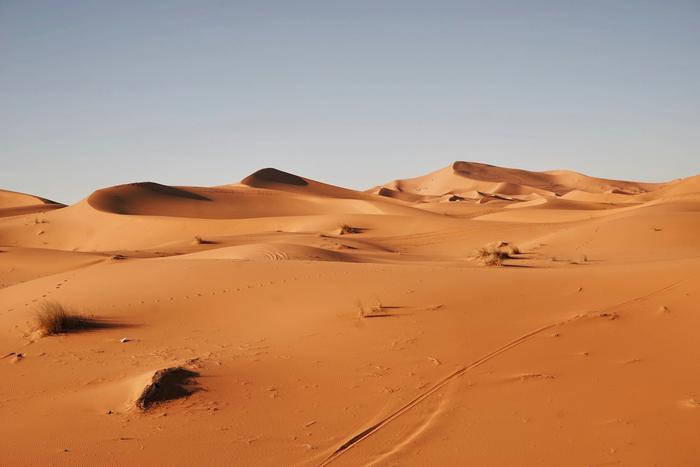
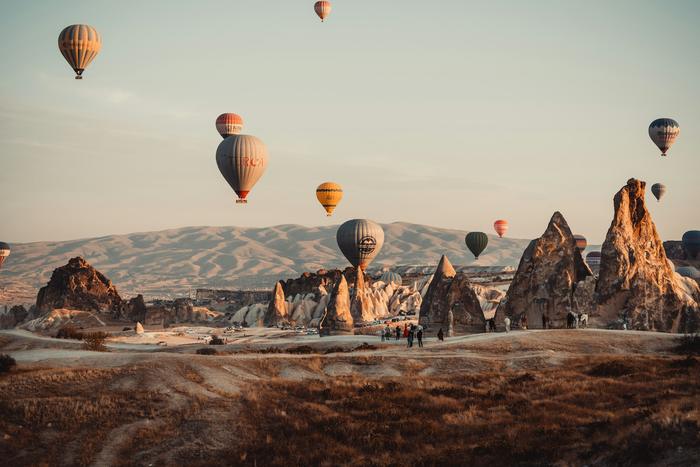
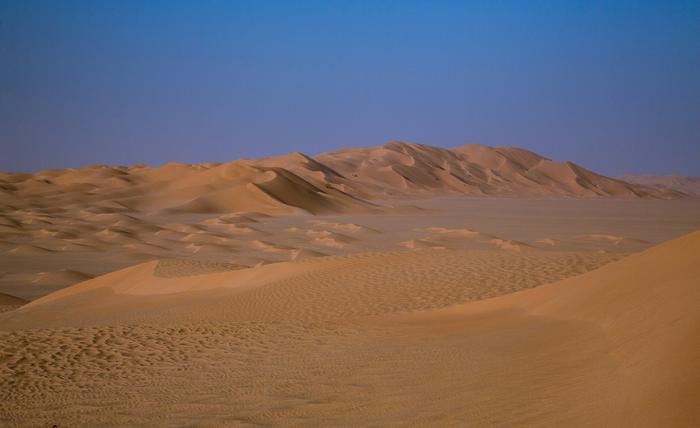
Two of the great bazaar-and-history trips, on different continents and in different registers. Morocco is the North African crossroads — the labyrinthine medinas of Marrakech and Fez, the High Atlas, and real Sahara dunes, compact, cheap on the ground and sensory to the point of overwhelming. Turkey is the Europe-meets-Asia giant — Istanbul straddling two continents, the fairy chimneys of Cappadocia, Greco-Roman ruins and a long Mediterranean-Aegean coast, far bigger, more varied and smoother to travel. Both are hot, hospitable, good value and built on centuries of trade; one is a tight loop you can bargain your way around, the other a country you fly across.
Both are exotic yet accessible, both are outstanding value, and both straddle cultures — but they feel different on the ground. Morocco is sensory overload close to Europe: the labyrinthine medinas of Marrakech and Fez, the Sahara, the Atlas Mountains, and riad courtyards, with a hustle that's part of the experience. Turkey is broader and smoother to travel.
Choose Morocco for an intense, atmospheric desert-and-medina trip a short hop from Europe — it's the more immersive shock to the senses. Choose Turkey for a fuller mix with easier logistics: Istanbul straddling two continents, Cappadocia's surreal valleys, a long Mediterranean coast, and Roman ruins like Ephesus, plus some of the best food anywhere. Morocco is the more intense escape; Turkey is the more varied, better-rounded journey.
Side by side
Emphasised where they differ. Muted rows are much the same either way.
Both wave you in — then handle money very differently
Ninety days visa-free either way in 2026 — the real split is the currency: a dirham you can’t take home, or a lira that slides as you watch.
90 daysvisa-free for the main Western nationalities to both countriesMorocco: 6 months’ passport validity (US rule); Turkey: 60 days beyond your stay, ~150 for a full visit
Closed vs openthe dirham can’t be bought abroad; the lira trades freelyMorocco: change on arrival, keep receipts, reconvert before you fly out
Not Schengenneither country touches your Schengen clockTurkey is explicitly outside it — useful when stringing a longer European trip together
Entry is easy on both sides. Morocco gives US, UK, EU, Canadian and Australian tourists 90 days visa-free, and the electronic AEVM pre-authorization it has been piloting does not apply to those nationalities — there is no form to file at the border. Turkey’s visa map recently moved the same way: US, UK and almost all EU citizens have long entered visa-free, and Canada became visa-free in 2023 and Australia in 2026, so the old e-Visa advice for them is out of date. The one Turkish holdout is the Republic of Cyprus, which now needs a visa in advance. Mind the two passport rules, which differ: Morocco effectively wants six months’ validity, while Turkey only needs 60 days beyond your stay — not the “six months” airlines tend to quote.
The money is where they genuinely diverge. Morocco runs a closed dirham (MAD): you can’t reliably buy it before you fly, so you change hard currency on arrival, keep the receipts, and reconvert what’s left before departure — only a small amount may legally leave the country. It sits near 10 MAD to the dollar and has been weakening, so ignore older, stronger figures. Turkey’s lira trades freely but is the opposite problem: high inflation means any price you read online goes stale within months, and the rate was around 49.5 to the dollar in late 2026. Both are cash-first in the bazaars and take cards in hotels and modern shops.
Both are Muslim-majority and both treat alcohol the same way in practice: legal but deliberately low-key. In Morocco you’ll find it in licensed hotels, bars and a screened supermarket section, with public drinking frowned on; in Turkey it’s legal but heavily taxed — the duty rose again in January 2026 — so a drink can cost more than the meal beside it. Bargaining is expected in the souks and bazaars of both, and a few words of the local language go a long way: French is widely used across Morocco’s tourist trade, Turkish in Turkey’s.
When to go
The same two sweet spots — but summer splits them
Spring and autumn win in both countries. The difference is what summer does: Morocco’s interior bakes, while Turkey’s coast is simply peak-hot and busy.
40°C+Marrakech & Fez in July–August — why Morocco’s summer is an inland problemThe Sahara at midday can exceed 45–50°C; the Atlantic at Essaouira runs ~10°C cooler
Year-roundboth have a season-proof anchor cityIstanbul works cold and grey in winter; Morocco’s south is pleasant by day in winter, the desert’s own best window
FMAMJJASO
Ramadan 2027 (Morocco slows by day; Turkey barely affected)≈8 Feb – 9 Mar
≈8 Feb – 9 Mar
Spring — the sweet spot for bothMar – May
Mar – May
Morocco: inland & Sahara bakeJun – Aug
Jun – Aug
Turkey: Aegean & Med coast peak — hot, crowded, dearJul – Aug
Jul – Aug
Autumn — the other sweet spot for bothSep – Oct
Sep – Oct
Crimson bars are the windows to aim for on both sides. Turkey’s coast stays swimmable from mid-May to late October; Morocco’s own desert season is October–April, when the dunes are warm by day and cold at night.
The headline advice is identical: come in spring (roughly March–May) or autumn (September–October) and both countries are near their best — mild, uncrowded and cheaper than peak. What diverges is the failure mode of summer. In Morocco the problem is inland heat: Marrakech and Fez routinely top 40°C and the Sahara can hit 45–50°C at midday, which is no place to trek, so the summer move is to flip the desert for the breezy Atlantic coast. In Turkey summer isn’t dangerous, just peak — July and August are hot, crowded and dear on the Aegean and Mediterranean coast, which is precisely when a beach trip wants to be there anyway.
Both also hold a card that beats the calendar. Istanbul runs year-round, a fully functional winter city; Morocco’s south and desert are a winter destination in their own right, pleasant by day with near-freezing desert nights. And Ramadan (roughly 8 February to 9 March in 2027) lands unevenly: it visibly slows daytime Morocco, where local eateries close and the pace drops before the evenings come alive, but barely touches Turkey’s secular tourist areas, where restaurants and bars stay open throughout.
The headline
A loop you bargain around, or a country you fly across
Morocco is a compact circuit of contrasts — cities, mountains and dunes within a few hours of each other. Turkey is a far bigger, more varied canvas you cover in hops.
~750 kmIstanbul to Cappadocia — just one internal leg of a Turkey trip
Turkey is far larger than it looks on a Mediterranean map: Istanbul to Cappadocia is around 750 km, to the Aegean coast 500-plus, so most trips fly between the highlights rather than loop. Morocco’s classic circuit is tighter by comparison — Marrakech, the imperial cities and the Atlas sit within a few hours of each other, and even the big haul, Marrakech to the Merzouga dunes, is a single 550+ km drive you fold into one 3-day loop.
Compact vs vastthe scaleA tight cities-mountains-dunes loop, or a two-continent country you fly across
Intense vs variedthe textureSensory medinas and hard bargaining, or a broader spread of world-icon sights
Desert vs coastthe landscapeThe Sahara and the High Atlas, or a long Mediterranean-Aegean shore
Morocco’s pitch is concentration. Within one manageable loop you get the UNESCO medinas of Marrakech and Fez, the High Atlas, the kasbahs of the desert road and real Sahara dunes at Erg Chebbi — a vivid, in-at-the-deep-end trip where the faux-guide hustle and the bargaining are part of the texture rather than a flaw. It’s cheap once you’re on the ground and it rewards a traveller who wants depth over breadth.
Turkey’s pitch is range. Istanbul alone — a Byzantine cathedral-turned-mosque, an Ottoman palace and a 4,000-shop covered bazaar in a single district, spanning two continents — rivals any city in the world, and then the country keeps going: the lunar valleys and dawn balloons of Cappadocia, the Greco-Roman grandeur of Ephesus and the travertines of Pamukkale, and a long coast of beaches and gulet cruises. The trade is that you can’t see it in a loop; you fly between the pieces.
The operational detail behind both — Morocco’s closed dirham and Ramadan rhythms, Turkey’s transport and inflationary lira — lives on the two guides: Morocco, know before you go and Turkey, know before you go. This page is the head-to-head.
Cost & value
Both are a bargain — until you reach the ticket desk
Daily spending is cheap in both. The split is where the money goes: Morocco’s sight fees are modest and in dirham; Turkey’s flagship monuments are deliberately priced in euros.
€25 vs ~€13the signature monument, each country’s headline sight
Hagia Sophia’s upper gallery costs foreigners a fixed €25, insulated from the lira; Morocco’s show-stopper equivalent, the guided tour of Casablanca’s Hassan II Mosque, is about 130 DH — roughly €13. It’s the pattern in miniature: Turkey’s marquee sights are euro-priced at rich-world rates, while Morocco’s stay in soft local dirham. The food and hotels beneath them are a bargain in both.
€5–11a casual meal in Turkey — the cheap half of its ledgerA local beer €4–7; mid-range Istanbul hotels €100–180
~10 MADto the US dollar in Morocco, and weakeningA cash economy in the souks; cards in hotels often add ~5%
€165Turkey’s nationwide Museum Pass — rising to €185 on 1 Apr 2027It pays off only on a busy itinerary; it skips Hagia Sophia and the Basilica Cistern
On the everyday ledger these two are twins: eating, sleeping and moving around are genuinely cheap in both, propped up by a weak lira in Turkey and low local prices in Morocco. The paradox is Turkey’s monuments. The state prices its headline sights in euros to insulate them from inflation, so the tickets bite even as the country stays cheap — and a Museum Pass only earns its keep on a packed itinerary, with the two sights visitors most expect (Hagia Sophia’s gallery and the Basilica Cistern) left off it.
Morocco inverts this. Its sight fees are modest and in dirham — a palace here, a madrasa there, and the greatest “sight” of all, the Jemaa el-Fna and the souks, is free to wander. The cost that needs planning isn’t the prices but the closed-dirham logistics: changing on arrival, keeping receipts and reconverting before you leave. Across a far bigger country, Turkey also simply costs more to traverse (see getting around).
Morocco
Turkey
Everyday spend
Cheap — souks, taxis and tips in cash
Cheap — a weak lira makes food and hotels a bargain
Currency
Closed dirham: change on arrival, reconvert before leaving
Freely traded lira, but high inflation stales prices fast
Headline sights
Modest, in dirham (Majorelle ~170 DH, Hassan II tour ~130 DH)
Euro-priced and steep (Hagia Sophia €25, Ephesus €40)
The free star turn
Jemaa el-Fna & the Fez medina — free to wander
The Bosphorus commuter ferries — a cruise for a transit fare
Crossing the country
Short and cheap — a compact loop
Adds up — internal flights across a vast country
Read off the two country guides in October 2026 and deliberately kept structural, not a quote. Morocco’s dirham sight fees and Turkey’s euro tickets both move — Turkey’s on a known 1 April 2027 rise — so treat every figure here as the shape of the difference and confirm live prices on Morocco and Turkey before you budget.
Getting around
A bullet train and shared taxis, or flights across a giant
Morocco moves you by train and grand-taxi around a tight circuit; Turkey’s scale means domestic flights do the heavy lifting between highlights.
2h10Tangier to Casablanca on Al Boraq — Africa’s only high-speed train
Morocco’s north runs on Al Boraq, the first high-speed line in Africa (Tangier–Rabat–Casablanca at up to 320 km/h), with an extension toward Marrakech under way for ~2029 ahead of the 2030 World Cup. Turkey counters with sheer reach: its own high-speed YHT train links Ankara and Istanbul, but with highlights 500–750 km apart, the real network is domestic flights — Turkish Airlines, Pegasus and AJet, roughly €35–90 and 80–90 minutes a hop.
Morocco is a surface-travel country. The ONCF rail network links the main cities — Casablanca to Marrakech in under three hours — and CTM and Supratours coaches fill the gaps, while shared grands taxis run fixed intercity routes (six to a car, paid per seat) and metered petits taxis work inside the cities. The one weak link is that there’s no fast train between Marrakech and Fez (a 6½–7-hour haul via Casablanca), so many people fly the hour instead. The Sahara is the deliberate exception to all of it: a multi-day guided journey, not a quick hop.
Turkey is a fly-between-the-pieces country. It’s far larger than the map suggests, so most itineraries plan on internal flights rather than one loop, with the cheap, excellent intercity coaches and the YHT high-speed train covering the overland legs. In Istanbul itself an Istanbulkart (under a euro a ride) covers metro, trams, funiculars and the Bosphorus ferries — a sightseeing cruise at commuter prices. A hire car earns its keep only for Cappadocia’s valleys and the coast.
Leg
Morocco
Turkey
The fast rail backbone
Al Boraq: Tangier–Casablanca ~2h10
YHT: Ankara–Istanbul ~4¼h (~€18)
The shared-ride staple
Grands taxis — fixed routes, per seat
Intercity coaches — cheap and excellent
The long domestic hop
Marrakech–Fez: fly ~1h, or 6½–7h by train
Istanbul–Cappadocia: fly ~80–90 min (~€35–90)
The slow, deliberate journey
Marrakech–Merzouga: 550+ km, 8–10h guided
Cappadocia & the coast valleys: hire a car
Inside the hub city
Petits taxis — metered, agree it first
Istanbulkart — metro, trams and Bosphorus ferries
Each hub has its own gotcha. In Morocco, agree a petit-taxi fare or insist on the meter before you get in, and from Marrakech’s Menara airport the fixed-fare counter runs about 100 DH into the medina. In Turkey, mind Istanbul’s two airports — the main IST on the European side and low-cost SAW on the Asian side are 80–90 km apart, so never book a tight self-transfer between them.
Culture & history
Maghreb and Berber, or Byzantine and Ottoman
Both are crossroads civilisations built on trade — but they sit at different crossroads, with different layers underneath.
Morocco is the Maghreb crossroads, where Arab and Amazigh (Berber) culture meet Saharan trade routes and a strong French-colonial overlay. Everyday speech is Darija, Arabic and Amazigh are the official tongues, and French runs through the tourist trade and the signage. The texture is sensory and close-up: the call to prayer over the Jemaa el-Fna, the dye-pits of the Fez tanneries, mint tea and hard bargaining in the souk. The country reads as one deep, continuous culture rather than a stack of empires.
Turkey is the Byzantine-and-Ottoman crossroad, the hinge between Europe and Asia, and its history is literally layered — a Greco-Roman city like Ephesus, a Byzantine cathedral that became an Ottoman mosque in Hagia Sophia, a sultans’ palace at Topkapı, all within reach of each other. It’s constitutionally secular but Muslim-majority, and the feel is grander and more monumental than Morocco’s intimate medina intensity. Both share the bazaar, the mosque etiquette (modest dress, shoes off, hair covered for women) and a deep tradition of hospitality — the glass of tea pressed on you is genuine in both.
On food the two rhyme without repeating. Morocco is tagine, couscous, pastilla and street grills, eaten with the right hand and washed down with sweet mint tea; Turkey is mezze, kebabs, pide, the Aegean’s olive-oil vegetables and endless glasses of çay. Both are strong, affordable, meat-and-bread-forward cuisines with a sweet tooth — and in both, the market stall is as much the experience as the restaurant.
Medinas & icons
Atmospheric labyrinths, or blockbuster monuments
Morocco’s icons are atmospheric — a square, a tannery, a walled maze. Turkey’s are monumental — a cathedral, a palace, an ancient city.
Morocco wins on medinas and atmosphere. Fez el-Bali is a UNESCO site and reputedly the world’s largest car-free urban area, a genuine labyrinth with the storied Chouara tanneries viewed from the leather terraces above; Marrakech layers the Jemaa el-Fna, the souks, the Bahia Palace, the Ben Youssef Madrasa and the Jardin Majorelle; and the blue-washed hill town of Chefchaouen is pure walking and photography. These are places you wander and absorb rather than queue to enter.
Turkey wins on world-icon sights. A single Istanbul district holds Hagia Sophia, the Blue Mosque, Topkapı Palace and its Harem, the Grand Bazaar and the subterranean Basilica Cistern, and the country adds the Greco-Roman Ephesus, the white travertines of Pamukkale and the cave churches of Cappadocia. The spread of blockbuster, bucket-list monuments is broader — the trade-off is that the biggest ones are ticketed, euro-priced and busy.
The draw
Morocco
Turkey
Labyrinthine medinas & souks
Wins. Fez el-Bali and the Marrakech souks
The Grand Bazaar — grand, but one of fewer
A single great world city
Marrakech’s buzz and the Jemaa el-Fna
Wins. Istanbul, across two continents
Blockbuster ancient monuments
Atmospheric more than monumental
Wins. Hagia Sophia, Ephesus, Pamukkale
A famous photo backdrop
Blue Chefchaouen, the tanneries
Wins. Dawn balloons over Göreme
Free, wander-at-will star turns
Wins. Jemaa el-Fna & the medinas
Blue Mosque and the Bosphorus ferries
Desert & coast
Real Sahara and the Atlas, or a long warm coast
This is the cleanest split of all: Morocco is a cities-mountains-desert trip; Turkey adds a genuine beach-and-sailing half.
3-day loopMarrakech into the Sahara — Morocco’s signature, which Turkey can’t match
The classic 3-day, 2-night loop from Marrakech crosses the High Atlas on the Tizi n’Tichka pass, stops at the earthen ksar of Aït Benhaddou and the Dadès and Todra gorges, and ends with a camel trek into the tall Erg Chebbi dunes at Merzouga. There is no Turkish equivalent — real Sahara is Morocco’s alone. Turkey’s answer is the other direction entirely: a long swimmable coast.
Morocco owns the desert and the mountains. Beyond the imperial cities the land turns cinematic — the kasbah road to Merzouga, the remoter 4x4-only Erg Chigaga, and the High Atlas, where Jbel Toubkal (4,167 m, the highest peak in North Africa) is a two-day climb from Imlil with a licensed guide. Its coast is the windswept Atlantic at Essaouira — a UNESCO-walled port and a windsurf-and-kitesurf magnet — rather than a classic beach holiday. This is a trip for dunes, gorges and medinas, not for lying on the sand.
Turkey owns the coast. Its long Aegean and Mediterranean shore — Bodrum, Fethiye, Ölüdeniz, Antalya — is a major beach-and-sailing destination in its own right, where a wooden-gulet “blue cruise” is the signature experience and paragliders launch over the Blue Lagoon. And it still has the surreal landscape card in Cappadocia, the lunar valley of fairy chimneys, cave hotels and underground cities. So Turkey offers both a beach dimension and a weird-landscape one; Morocco concentrates on desert and mountain instead.
A word on effort. Morocco’s landscapes are a commitment — the Sahara is 550+ km and 8–10 hours from Marrakech, and Toubkal needs a licensed guide (enforced since 2019) — so give them the days they need rather than rushing. Turkey’s coast and Cappadocia are easier to reach once you’ve taken the internal flight, but spread far apart, which is exactly why you fly.
Who suits which
Who each one actually suits
On several of these the answer inverts — the country that wins overall is the wrong one for your particular trip.
Read down the column and the pattern is clear. Morocco is the pick for desert, medinas and a compact, sensory, bargain-driven trip close to Europe; Turkey is the pick for Istanbul, blockbuster range and a beach half, with smoother logistics across a much bigger country. The inversions are the useful part: Turkey wins overall on variety and ease, yet if what you came for is real Sahara, Morocco wins and it isn’t close.
If you want…
Morocco
Turkey
Real desert and high mountains
Wins clearly. The Erg Chebbi dunes and the High Atlas have no Turkish equal
Cappadocia is surreal, but it isn’t Sahara
A great world city and blockbuster sights
Marrakech buzzes, but is atmospheric more than monumental
The Atlantic at Essaouira is windswept surf, not a beach holiday
Wins clearly. The Aegean and Turquoise coast
A short, intense hop from Europe
Wins. A compact loop, a few hours from southern Europe and exotic at once
Easy to reach too, but a far bigger country to tour
Smooth, low-effort logistics
Rougher edges — grands taxis, faux guides, closed-dirham cash
Wins. More developed infrastructure and internal flights
Bucket-list variety in one country
A focused cities-mountains-desert trip
Wins. City, ruins, weird landscape and coast in one
Doing both
Close on the map, but a flight apart
They face each other across the Mediterranean — yet they’re not a natural single trip, and most people pick one.
One flightMorocco to Turkey — not a border crossing, a continent change
Unlike neighbours you can ferry between, Morocco and Turkey sit on different continents at opposite ends of the Mediterranean. Combining them means a flight and two separate trips bolted together, not one loop — so almost everyone chooses one for a given holiday, since each delivers the full bazaar-and-history experience on its own.
If you’re torn, the honest answer is to choose, not combine. These aren’t a pair you string together like Mediterranean islands — they’re two complete trips on different continents, and each gives you the East-meets-West, medina-and-monument experience in full. Each also compares far more naturally with its own neighbours than with the other: weigh Turkey against Greece, and read the operational detail for either on the Morocco guide and the Turkey guide.
If you genuinely want both on one longer run, treat them as bookends rather than a circuit — a focused week on Morocco’s Marrakech-Atlas-Sahara loop, then a flight to a separate week built around Istanbul and one other Turkish region. Don’t try to see all of either; both reward depth over a dash.
What you give up
What each choice costs you
Every pick has a price. Here’s what you quietly surrender by choosing one over the other.
Choose Morocco and you give up range and a coast. There’s no Istanbul-scale world city, no long swimmable shoreline, and no Greco-Roman monument circuit — and the texture that makes it vivid, the faux-guide hustle and the hard bargaining, is also the thing that tires some travellers out. You trade breadth and polish for intensity, desert and a tight, cheap loop.
Choose Turkey and you give up real desert and medina immersion. There’s no Sahara, no equivalent of losing yourself in Fez el-Bali, and the biggest sights are euro-priced and busy; the scale that gives Turkey its variety also means you fly between the highlights and the trip costs more to traverse. You trade concentration and that in-at-the-deep-end feel for variety, a coast and smoother logistics.
One thing neither choice gives up: value or warmth. Both are good-value, hospitable, hot-country trips built on the bazaar and centuries of trade — you’re not choosing between a cheap country and an expensive one, or a friendly one and a cold one. You’re choosing between a compact North African immersion and a sprawling two-continent giant. Prices and seasonal facts on both move, so treat anything time-sensitive here as worth a re-check before you travel.
Morocco or Turkey, month by month
Which of the two is the better bet for each month of the year, scored on
how well the season suits each place.
Istanbul, Cappadocia and a long warm coast top your list — you want world-icon sights and variety.
You want a beach-and-sailing component, which Morocco’s windswept Atlantic can’t really give you.
Smoother infrastructure and internal flights suit you better than grands taxis and medina haggling.
You’d rather one country do city, ancient ruins, weird landscape and coast than focus on desert and medinas.
Common questions
Is Morocco or Turkey more “exotic”?
Both are crossroads cultures, but Morocco feels rawer and more intense — the medinas of Fez and Marrakech, the call of the Sahara, the hard bargaining and the faux-guide hustle make it a sensory, in-at-the-deep-end experience. Turkey is exotic but more polished and European-facing, with Istanbul’s grandeur, smoother infrastructure and an easier on-ramp. For a compact North African immersion, Morocco; for the East-meets-West wonder with easier logistics, Turkey.
Which has the bigger headline sights?
Turkey, clearly. It has the broader spread of world-icons — Istanbul (Hagia Sophia, the Blue Mosque, the Grand Bazaar) straddling two continents, the surreal valleys and dawn balloons of Cappadocia, and ancient Ephesus and Pamukkale. Morocco’s icons are more atmospheric than monumental — the Jemaa el-Fna, the Fez tanneries, the dunes of Merzouga, Aït Benhaddou. For blockbuster sights and variety, Turkey; for atmosphere and real desert, Morocco.
Which is cheaper, and do the money rules differ?
Both are good value, and the rules differ in a way worth planning for. Morocco is cheap on the ground but runs a closed dirham — you can’t buy it abroad and must reconvert leftovers before leaving. Turkey is inexpensive to eat and sleep thanks to a weak lira (though high inflation moves prices and its flagship monuments are euro-priced and steep). Across a far bigger country, Turkey also costs more to traverse. The country guides carry the live detail: Morocco and Turkey.
Which is better for a beach holiday?
Turkey, without question. Its long Mediterranean and Aegean coast — the Turquoise Coast, Bodrum, Antalya, Ölüdeniz — is a major beach-and-sailing destination, swimmable from mid-May to late October, with gulet “blue cruises” as the signature. Morocco’s coast is the windswept Atlantic at Essaouira, which is about wind and surf rather than classic beach days. Morocco is a cities-mountains-desert trip; if you want sun and sea, go to Turkey.
Can I combine them into one trip?
You can, but most people shouldn’t. They sit on different continents at opposite ends of the Mediterranean, so combining them means a flight and two separate trips rather than one loop. Each delivers the full bazaar-and-history experience on its own, so a given holiday is usually better spent going deep on one. If you do both, treat them as bookends — a week on Morocco’s Marrakech-Atlas-Sahara loop, then a flight to a week around Istanbul and one other Turkish region.