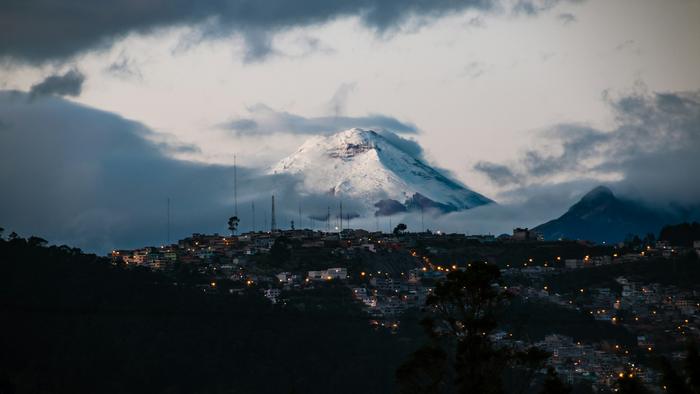
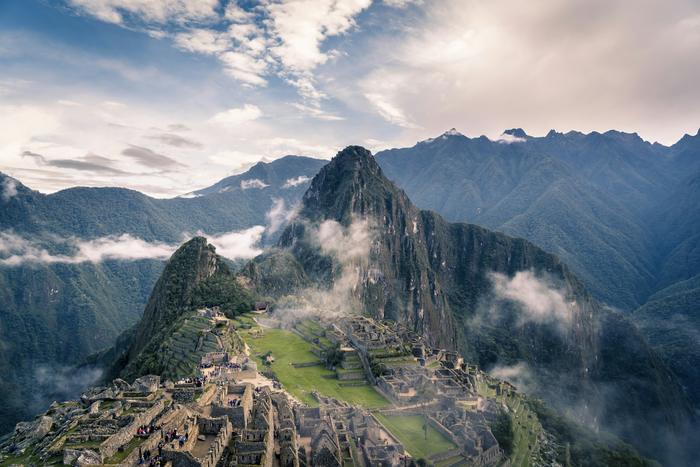
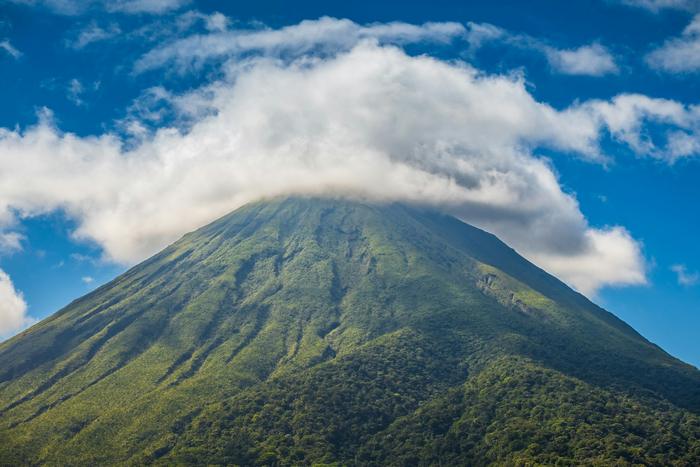
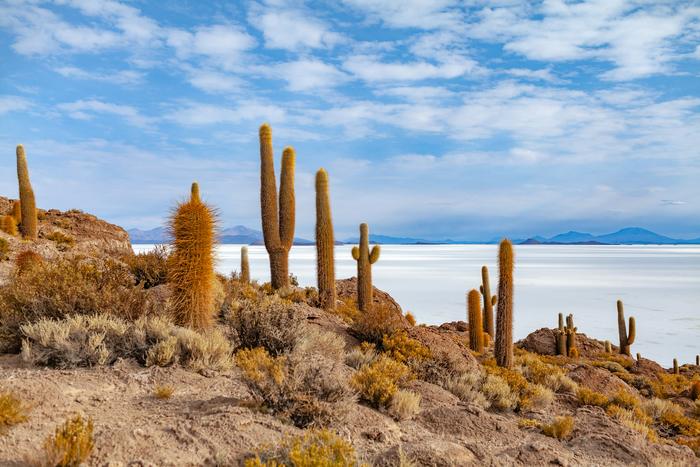
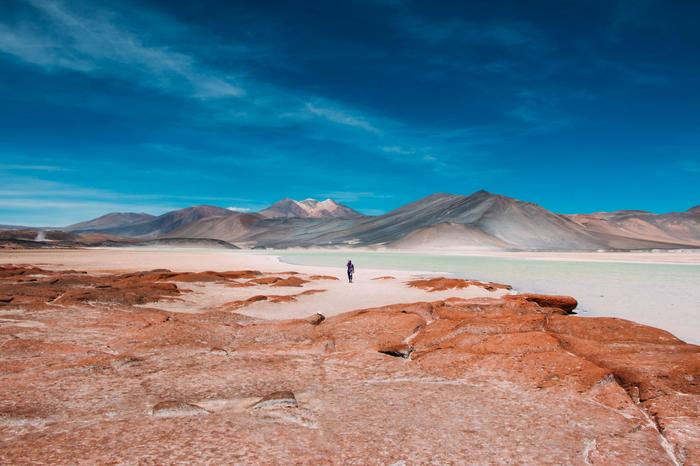
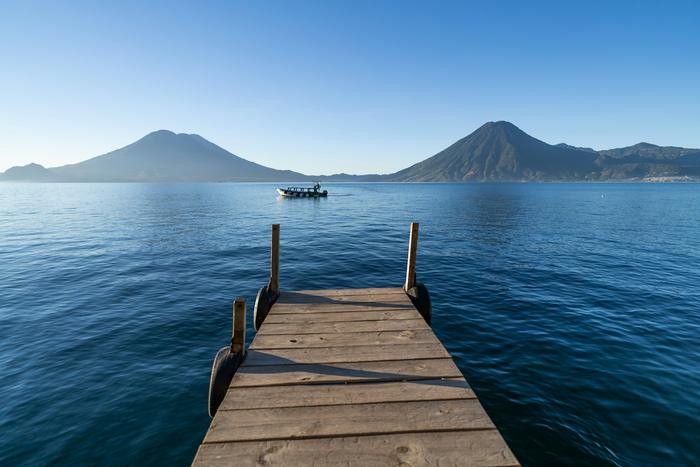
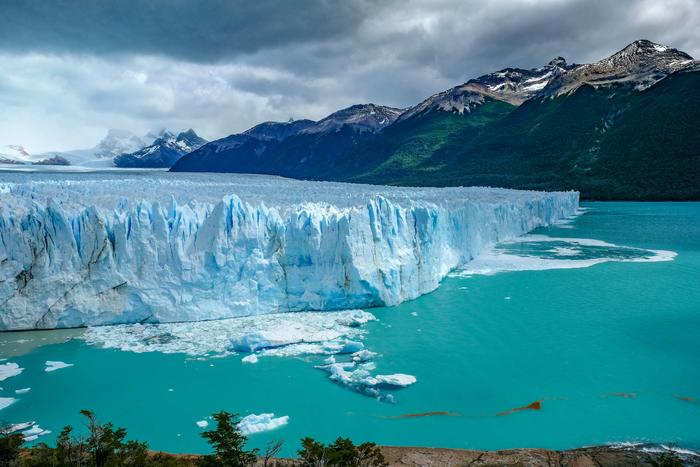
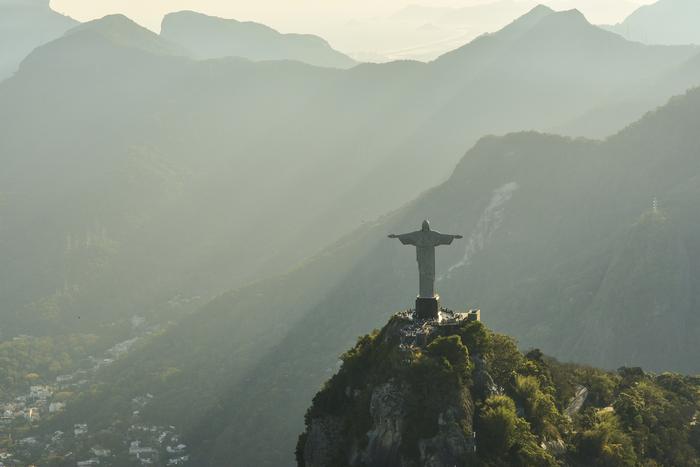
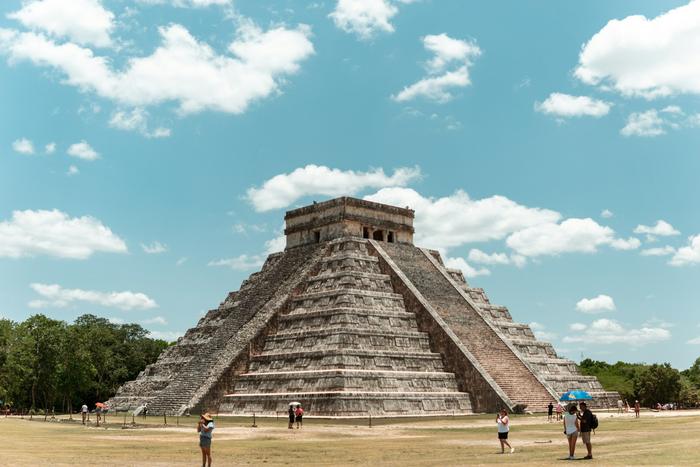
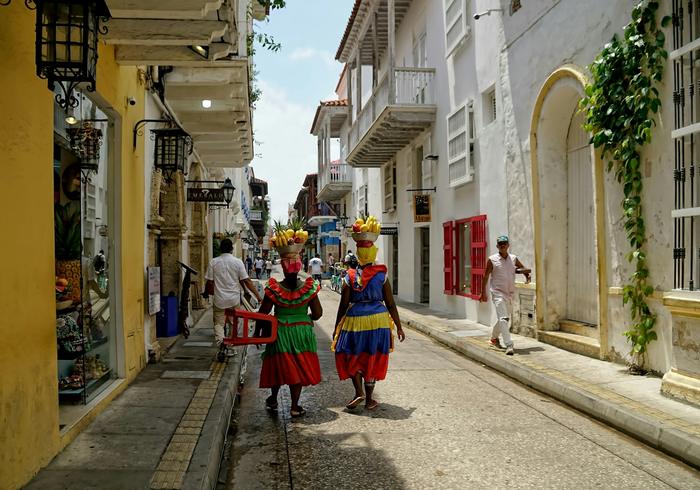
Two Andean neighbours, two different ambitions. Ecuador is compact and relatively easy — the Andes, the Amazon, the Pacific coast and, above all, the Galapagos packed into a small country that even uses the US dollar. Peru is bigger and more demanding, built around the Inca heartland: Machu Picchu, Cusco and the Sacred Valley, reached across long distances and real altitude, and backed by one of the world’s great kitchens.
Both Andean, both with Amazon and altitude — but one is compact and wildlife-led, the other bigger, ruin-led and built around food.
4 worlds · 1 small countryEcuador’s compact draw against Peru’s spread
Ecuador fits the Andes, the Amazon, the Pacific coast and the Galapagos into a country you can cross in short hops — the Galapagos its singular crown. Peru answers with reach rather than compactness: the Cusco–Machu Picchu core, Lima and its kitchens on the coast, Lake Titicaca and Arequipa in the south, and Amazon jungle at Puerto Maldonado or Iquitos — a country you fly across, not drive.
Wildlife vs ruinswhat each is really forThe Galapagos, or Machu Picchu and the Incas
Compact vs vastthe scaleShort hops, or flying between regions
Dollars vs solesthe moneyEcuador uses the US dollar; Peru runs mostly on cash soles
Ecuador is the compact one — the Andes, the Amazon, the Pacific coast and the Galapagos all within a small country, with the US dollar as currency and distances short enough to mix ecosystems without long transits. Its crown is the Galapagos, a wildlife experience with no equal: fearless, close-up animals found nowhere else on Earth. Peru is the bigger, grander journey, built around the Inca heartland — Machu Picchu, Cusco and the Sacred Valley — reached across long distances and the real altitude of the highlands, and underpinned by Lima’s world-ranked kitchens.
Ecuador wins on wildlife and ease. The Galapagos is the headline, and the rest of the country backs it with short-distance variety and the convenience of the dollar — the lower-friction trip, and for a wildlife lover no contest. Peru wins on the icon and the depth of place. Machu Picchu is a genuine once-in-a-lifetime sight, and Cusco, the Sacred Valley and the wider Inca story give Peru a cultural weight — reinforced by Lima, a dining capital in its own right — that Ecuador can’t match. The price is scale and logistics. One trip is wildlife and variety made easy; the other is a grander, more demanding pilgrimage to a world icon.
The operational detail — Ecuador’s security picture and Galapagos logistics, Peru’s Machu Picchu tickets, altitude and protest-and-blockade volatility — lives on the two guides: Ecuador, know before you go and Peru, know before you go. This page is the head-to-head.
Entry & money
Ninety days in — dollars or soles
Entry is easy on both sides. The money is the first real difference: Ecuador hands you a currency you already carry.
90 daysvisa-free for US, UK and EU visitors — both countriesThe standard tourist allowance on each; no visa to arrange
US dollarEcuador’s official currency since 2000Dollar-holders need no exchange at all; carry cash for remote areas
Soles (S/)Peru’s currency, roughly 3.3–3.5 to the dollarCards in cities; cash rules markets, small towns and tips
Both countries wave most Western visitors in visa-free for 90 days, so neither needs a visa arranged ahead. The practical gap is the wallet. Ecuador has been dollarised since 2000, which means a US or dollar-holding traveller arrives already carrying the local currency — no exchange, no mental conversion, and the cash-only Galapagos airport fees paid in notes you already hold. Peru runs on the sol, at roughly 3.3–3.5 to the US dollar; cards work in city hotels and bigger restaurants, but cash in soles rules markets, small towns, tips and trail fees, and you’ll get a better rate paying in soles than dollars.
Paperwork is light either way. Ecuador stamps the 90 days on arrival; Peru’s immigration card (the TAM) is now digital, generated automatically when your passport is scanned at the border, so there’s no form to keep. Neither requires a yellow-fever certificate to enter, but the jab is recommended for the Amazon lowlands in both — Ecuador’s eastern provinces and Peru’s jungle — so sort that well before you fly.
Ecuador
Peru
Visa-free stay
90 days for most Western visitors
90 days for most Western visitors
Currency
US dollar — no exchange for dollar-holders
Sol (S/), ~3.3–3.5 per USD — cash-led
Entry record
90-day stamp on arrival
Digital TAM, auto-generated at the border
Yellow fever
Not required; advised for the Amazon
Not required; advised for the Amazon
Cash, where it matters
Remote highlands, Amazon, Galapagos fees
Markets, small towns, tips, trail fees
When to go
A dry-season Andes, and islands on their own calendar
Peru’s highlands set one firm window; Ecuador refuses a single season because none of its four worlds shares one.
JFMAMJJASOND
Peru — dry Andean season (Cusco, the valley, Machu Picchu, the treks)May – mid-Oct
May – mid-Oct
Peru — Inca Trail closed for maintenanceall February
all February
Ecuador — highlands clear and dry, best for hikingJun – Sep
Jun – Sep
Ecuador — Galapagos warm/wet: calm seas, best snorkellingDec – May
Dec – May
Ecuador — Galapagos dry “garua”: choppy, but peak marine lifeJun – Nov
Jun – Nov
Amazon (both) — hot and humidYear-round
Year-round
Crimson bars are the ones that catch people out. Peru’s whole classic circuit runs on the May–October dry season, and the Inca Trail shuts every February for maintenance. Ecuador has no island-wide season — its Galapagos "garua" months look worse on paper (cooler, misty, choppier) yet bring the peak marine life. The warm Galapagos season straddles New Year, so its bar (shown Jan–May) actually runs Dec–May.
Peru is the simpler calendar. The highlands set it: the dry season, May to September–October, is the window for Cusco, the Sacred Valley, Machu Picchu and the treks, with clear skies and open trails. The wet season (November–April) muddies the mountains, and the classic Inca Trail closes for the whole of February for maintenance, reopening 1 March — the citadel itself stays open, reached by train. A twist most people miss: while the mountains shine, Lima and the coast sit under the garua, a grey fog, from about May to October.
Ecuador won’t be pinned to one season because it is really four countries. The highlands (Quito, the Avenue of the Volcanoes, Cuenca) are clearest and best for hiking June–September; the Amazon is hot and humid year-round; the Pacific coast is sunniest December–May, yet it’s the cooler June–September stretch that brings humpback whales past Puerto Lopez. And the Galapagos runs on its own two seasons — warm and calm December–May for snorkelling, cool and choppy June–November for whale sharks and big marine life. Choose the region you’re centring the trip on, and let it pick the month.
Altitude
Soroche, and where it actually bites
Both countries take you high — but Peru pushes higher for longer, and the sight everyone comes for is lower than the city you land in.
2,340 mMachu Picchu sits lower than Cusco (≈3,400 m)
The counter-intuitive truth about Peru: Machu Picchu (≈2,340 m) is nearly a kilometre lower than Cusco (≈3,400 m), and Puno on Lake Titicaca is higher still at ≈3,800 m. Fly straight into Cusco and most of your early malaise is the city’s altitude, not the ruins. Ecuador’s highland hub, Quito, sits a notch lower at 2,850 m — real altitude, but gentler than a trip pinned to Cusco.
Altitude is a planning factor on both, not a footnote — and it’s heavier on the Peru side. Quito, Ecuador’s capital and the usual base for the volcanoes, stands at 2,850 m; it needs a night or two to adjust before going higher to Cotopaxi or Quilotoa, but much of an Ecuador trip (the coast, the Amazon, the Galapagos at sea level) is low. Peru’s classic circuit lives higher for longer: Cusco at about 3,400 m, the Sacred Valley around 2,800 m, and Lake Titicaca near 3,800 m.
Soroche — altitude sickness — typically arrives 6 to 12 hours after you land in Cusco, and it ignores fitness. The practical moves are the same in both countries: give yourself a day or two before any hard walking, acclimatise lower first (in Peru, the Sacred Valley; in Ecuador, don’t climb straight from Quito), hydrate hard, and skip alcohol and strenuous exercise for the first 48 hours. Mate de coca eases mild symptoms in the Peruvian highlands, and many travellers start acetazolamide a couple of days ahead on a doctor’s say-so.
What it costs
Both affordable — until the headline
Day to day, each is good value. The budget-breaker is different on each side: islands in Ecuador, logistics in Peru.
USD 200Galapagos national-park fee, foreign adultsUSD 100 under-12s; doubled Aug 2024; cash on arrival
S/64Machu Picchu adult entry, standard circuits≈US$19; students and 3–17s S/32; mountain climbs S/112
On the ground both countries are cheap by Western standards — meals, local buses and small hotels are good value in each, and Peru in particular is strong value for food and lodging. What dominates the budget is the one thing you came for, and it sits in a different place.
In Ecuador it’s the Galapagos. Beyond the airfare from Quito or Guayaquil, foreign adults pay a USD 200 national-park entry fee (USD 100 under-12, doubled in August 2024) plus a USD 20 transit-control card, both in cash — and a cruise or island-hopping tour on top. The islands routinely cost more than the entire mainland trip combined. In Peru it’s the logistics around the icon: domestic flights that do the heavy lifting across a big country, the train that is the only way in to Machu Picchu for most visitors, and the timed entry ticket itself.
The big spend
Ecuador
Peru
What dominates the budget
The Galapagos — fees, flights and a tour
Flights across the country + the Machu Picchu train and ticket
Fixed fee you can’t avoid
USD 200 park fee + USD 20 transit card (cash)
S/64 timed entry (S/112 for the mountain climbs)
Everyday costs
Cheap on the mainland; dollar-simple
Good value — meals, buses and lodging inexpensive
Where it bites
One region (the islands) carries most of the cost
Spread across transport you book repeatedly
We keep exact daily figures and tour prices off this page on purpose — Galapagos cruises and Machu Picchu logistics move within a season, and a stale number is worse than none. The shape of the difference is the durable part: Ecuador concentrates the big cost in the islands, Peru spreads it across flights and the Machu Picchu machinery. The live detail lives on the country guides.
Getting around
Short hops, or flying the distances
Ecuador you can largely move around overland; Peru is big enough that flights save days and the key train must be booked.
Ecuador is small, and it travels like it. A cheap, comprehensive long-distance bus network is the mainland backbone, Quito and Guayaquil are about an hour apart by air, and the whole highland–Amazon–coast circuit sits within short transits. The one stretch you can’t drive is the Galapagos: it’s reached only by flights from Quito or Guayaquil to Baltra (for Santa Cruz) or San Cristobal, and once there you’re on a cruise or island-hopping by passenger speedboat and small plane.
Peru is big and slow overland, so domestic flights do the heavy lifting. Lima–Cusco is the workhorse route — about 90 minutes in the air against a 22–25 hour road haul — flown by LATAM, Sky and JetSMART through Lima’s new Jorge Chavez terminal. For Machu Picchu the train is the only way in for most visitors: PeruRail and Inca Rail run year-round, mostly from Ollantaytambo (about 1h45 down to Machu Picchu town), and seats need booking well ahead in the June–August peak. There is no broad national passenger railway otherwise.
Hop
Country
How
Note
Quito – Guayaquil
Ecuador
Flight ~1h, or long-distance bus
The two main gateways, close together
Mainland – Galapagos
Ecuador
Flight to Baltra or San Cristobal
The only way to the islands; then boats
Across the mainland
Ecuador
Cheap, comprehensive long-distance buses
Slow but everywhere — short distances
Lima – Cusco
Peru
Flight ~1h30 (vs 22–25h by road)
The core route — fly it
Cusco – Machu Picchu
Peru
~2h car to Ollantaytambo + 1h45 train
No road to the town; train only, book ahead
Cusco – Puerto Maldonado
Peru
Flight ~45 min
For the Tambopata Amazon lodges
Flight times are block times on the main carriers; road and rail figures are typical scheduled times. Indicative only — checked October 2026. The headline contrast holds: Ecuador rewards overland travel over short distances, while Peru is a fly-between-regions country where the Machu Picchu train is a fixed booking.
Food & culture
Comfort cooking, and a world kitchen
Both eat well and cheaply — but Peru’s gastronomy is a reason to go in itself, in a way Ecuador’s honest, hearty cooking isn’t.
A dining capitalLima is ranked among the world’s great food cities
Peru’s edge on the plate is real and well-earned: Lima is a globally ranked dining destination, home to kitchens that regularly place among the world’s best, built on ceviche, a deep larder of Andean ingredients and Nikkei and Chifa fusion traditions. Food alone draws travellers to Peru. Ecuador’s cooking is excellent and characterful — but it’s a pleasure of the trip, not the headline.
Ecuador’s table is comfort cooking done well. The coast leans on seafood — tangy ceviche (often shrimp, with plantain chips or popcorn) and encebollado, the onion-dressed fish soup that doubles as the national hangover cure — while the highlands turn hearty with hornado (market roast pork), llapingachos (cheesy potato cakes), locro de papa and the traditional cuy (roast guinea pig). The quiet star is cacao: Ecuador grows some of the world’s finest aromatic "fino de aroma" beans, so single-origin chocolate is a genuine highlight.
Peru is a food destination in its own right. Lima’s kitchens sit among the most celebrated on the planet, and the country’s ceviche, its Andean larder and its Nikkei (Japanese–Peruvian) and Chifa (Chinese–Peruvian) fusion traditions reward a trip planned partly around eating. On the cultural side the two run close — both carry strong living indigenous heritage, Kichwa in Ecuador’s highlands and Quechua across Peru — but Peru’s Inca depth and its dining scene give it the louder cultural pull.
Ecuador
Peru
The signature
Ceviche, hornado, llapingachos, cuy
Ceviche, lomo saltado, anticuchos, causa
The quiet pride
Fine "fino de aroma" cacao and single-origin chocolate
A globally ranked restaurant scene led by Lima
Fusion traditions
Coastal–highland, largely home-grown
Nikkei (Japanese) and Chifa (Chinese) fusion
Why it matters here
A pleasure of the trip
A reason to take the trip
Both countries eat cheaply and very well. The difference is weight: Ecuador’s food enriches a wildlife-and-variety trip, whereas Peru’s gastronomy — Lima above all — is itself a headline draw.
Safety
Two different things to watch
Neither should put you off — but the risk is a different shape on each side, and both move, so check the live advisory before you book.
Ecuador’s concern is security, and it’s geographically concentrated. Narco-gang violence pushed coastal and port cities and the northern border into the highest travel-advisory tiers — parts of Guayaquil, Esmeraldas and several coastal provinces, plus the 20 km zone along the Colombian border — and a rolling state of emergency with overnight curfews was in force through 2026, which can disrupt roads and airport access at short notice. Crucially, the mainstream tourist circuit — Quito, Cotopaxi, Banos, Cuenca and the Galapagos — sits outside the top warnings. As of late 2026 the US rated Ecuador Level 2 overall, with Level 3–4 pockets on the coast and border; the UK FCDO advised against all-but-essential travel to the named coastal provinces and the border zone.
Peru’s concern is political, not criminal in the tourist core. The "do not travel" zones advisories name — the VRAEM and the far-northern Colombian-border jungle — are nowhere near the Inca circuit, and the US State Department (Level 2 overall, reissued September 2026) explicitly notes that Cusco, the Sacred Valley, the Inca Trail and Machu Picchu are not in them. The everyday risk is ordinary: petty theft and scams in Lima and Cusco, and tap water you shouldn’t drink in either country. The bigger issue is recurring protests and road-and-rail blockades, concentrated in the southern Andes and the Cusco corridor, which can strand travellers with little notice.
State the honest version to yourself before you go. For Ecuador, re-check the security advisory and any active state of emergency — it moves, and it decides whether coastal routing is wise. For Peru, re-check the protest and blockade picture in the days before travel and build in slack, because a blockade can cut Machu Picchu access on short notice (as the September 2025 bus-concession strike did). The tiers and decrees on both sides change frequently, so treat any figure here as a prompt to read the live page, not a fixed fact.
Who suits which
Who each actually suits
On several of these the answer inverts — the country that wins overall loses for you.
If you want…
Ecuador
Peru
World-class wildlife
Wins. The Galapagos, unmatched
Excellent Amazon, but not the draw
A world-icon ruin
No equivalent
Wins. Machu Picchu and the Incas
Short distances, less hassle
Wins. Compact, dollar-simple
Big country — you fly between regions
Food as a reason to travel
Characterful, but a side pleasure
Wins. Lima among the world’s great kitchens
The gentlest money and paperwork
Wins. The US dollar, already in your pocket
Cash soles, fine but a step more friction
To keep altitude lower
Easier. Much of the trip is low; Quito 2,850 m
Cusco 3,400 m, Titicaca 3,800 m — higher, longer
A famous bucket-list journey
Quieter on the radar
Wins. The classic South America trip
Amazon rainforest
Excellent, accessible
Excellent, accessible
Doing both
Neighbours that pair well
A shared border and easy flights make combining them realistic — with enough time.
A shared borderand direct flights between the hubs
Ecuador and Peru adjoin, and their gateways connect easily by air — so a Galapagos add-on to a Peru itinerary, or Machu Picchu bolted onto an Ecuador trip, is a common Andean combo rather than a logistical project. The catch is time, not distance: each country is substantial, and the Galapagos especially is a trip within a trip.
Ecuador and Peru share a border and connect easily by air, so pairing them is a well-trodden route — a Galapagos add-on to a Peru trip, or Machu Picchu added to an Ecuador one. Each is substantial, though, and the Galapagos in particular is a trip within a trip, so a combined holiday wants a few weeks to avoid feeling rushed. With only a week or so, choose the headline — the wildlife or the ruins — and commit to it. If you’re weighing the wider region, Peru also lines up against its larger neighbours (see Argentina vs Peru and Bolivia vs Peru).
If you do combine them, front-load the bookings that sell out. On the Peru side that’s the timed Machu Picchu ticket and, if you want it, the capped Inca Trail permit (released six to eight months ahead); on the Ecuador side it’s the Galapagos flights and cruise or lodge. Pin those first and build the rest of the itinerary around what you can actually get, rather than the other way round.
What you give up
What you give up either way
Neither choice is free. Each closes a door the other leaves open — know which one you’re shutting.
Choose Ecuador and you give up the icon. There is no single human-made sight on the level of Machu Picchu, no Cusco or Sacred Valley, and none of the Inca depth that makes Peru a pilgrimage — and you trade down a notch on food, since Lima has no Ecuadorian equal. What you gain is the Galapagos, genuine ease and short distances, and the dollar’s simplicity.
Choose Peru and you give up the easy wildlife spectacle and the low-friction trip. The Amazon is superb but it isn’t the Galapagos, and the journey asks more of you: bigger distances flown rather than driven, higher and longer altitude, timed tickets to plan, and a protest picture to watch. What you gain is the continent’s signature sight, a world kitchen and a trip with more weight to it.
Two things this page deliberately leaves out, as the country guides carry them live. First, exact prices — Galapagos tours and Machu Picchu logistics move within a season, so a figure here would be stale before you travelled. Second, the fast-moving volatiles: Ecuador’s security advisories and state of emergency, and Peru’s protests, blockades and Machu Picchu ticketing. Treat anything time-sensitive on this page as a prompt to re-check on the Ecuador guide and the Peru guide before you commit.
Ecuador or Peru, month by month
Which of the two is the better bet for each month of the year, scored on
how well the season suits each place.
Machu Picchu and the Inca world are the whole reason to go — a genuine bucket-list icon with Cusco and the Sacred Valley behind it.
You’ll take on bigger distances and altitude for the continent’s signature sight.
Food is central to the trip — Lima’s world-ranked kitchens make Peru a destination for eating in its own right.
You want the grander, more famous South American journey, and you’ll plan the tickets and treks ahead to get it.
Common questions
Is Ecuador or Peru better for a first trip to South America?
It depends what you came for. Peru is the classic first-timer’s choice because Machu Picchu and the Inca heritage are the continent’s signature sights — but it’s a bigger country with long distances, serious altitude in Cusco (around 3,400 m), and a timed Machu Picchu ticket system to navigate. Ecuador is the easier introduction: compact, with the Andes, Amazon and coast close together, the US dollar as currency, and the Galapagos as its crown. For the icon, Peru; for an easier, wildlife-led first trip, Ecuador.
Which has the better wildlife, and which the bigger must-see sight?
They split cleanly. Ecuador wins on wildlife because of the Galapagos — there is simply nothing else like it, and it’s the single best reason to choose Ecuador. Peru wins on the headline human-made sight: Machu Picchu is one of the most famous places on the planet, backed by Cusco, the Sacred Valley and a deep Inca story. Both have superb, accessible Amazon rainforest and high-Andes species, so the real choice is wildlife spectacle versus world-icon ruin.
Which is cheaper, and where does the money actually go?
Both are affordable on the ground — meals, buses and small hotels are good value in each. The difference is where the big money lands. In Ecuador it’s the Galapagos: a national-park entry fee plus flights and a tour that together can cost more than the rest of the trip combined. In Peru it’s the logistics around the icon — domestic flights across a big country, the train to Machu Picchu and the timed entry ticket. We keep exact figures off this page because they move within a season; the country guides carry the live detail.
Which is easier to travel, and how does altitude compare?
Ecuador is easier. It’s far smaller, so distances are short and you can sample the Andes, Amazon and coast without long transits, and the US dollar removes the money friction. Peru is big enough that you fly between regions, and Cusco’s altitude needs acclimatising to. Both involve altitude — Quito sits at 2,850 m, Cusco at about 3,400 m — but Peru pushes higher for longer, with Puno on Lake Titicaca near 3,800 m. Counter-intuitively, Machu Picchu itself (around 2,340 m) is lower than Cusco, so many people feel better at the ruins than in the city they fly into.
Can I combine Ecuador and Peru?
Yes — they share a border and pair well, and plenty of travellers add the Galapagos to a Peru trip (or Machu Picchu to an Ecuador one) since the flights connect easily. Each is substantial, though, and the Galapagos in particular is a trip within a trip, so give a combined itinerary a few weeks. If you only have a week or so, pick one headline — the ruins or the wildlife — and do it properly. Both reward checking the current situation before travel: Ecuador for security advisories, Peru for protests and blockades.