United States
A continent pretending to be a country — cities, deserts, and the best national parks anywhere.
The United States is less one destination than a dozen. New York and the great cities for urban trips, the Southwest for desert and canyon country, California for coast and food, the national parks for wilderness on a scale most of the world can't match. Distances are large and a car is usually essential, so pick a region rather than trying to see it all.
Treat it as several trips and pick one. A city week in New York needs no car and barely a plan. The Southwest loop — Las Vegas out to Zion, Bryce, and the Grand Canyon — is the best road trip on the continent. California strings San Francisco, Big Sur, and Yosemite into ten days. The money goes on hotels, the rental car, and tipping; park lodges and campsites book out months ahead, so commit early.
The downsides are structural: distances devour time, public transport barely exists outside a handful of cities, and costs have climbed — a mid-range hotel plus 20% tips adds up fast. The marquee parks are mobbed in summer, and several now require timed-entry reservations. Travellers who want trains, compact itineraries, and walkable old towns will fight the country the whole way. Come instead for scale: wilderness, cities, and variety with no real equivalent anywhere.
Highlights
-
New York City
Dense, fast, and endlessly walkable. The benchmark American city.
-
The Southwest
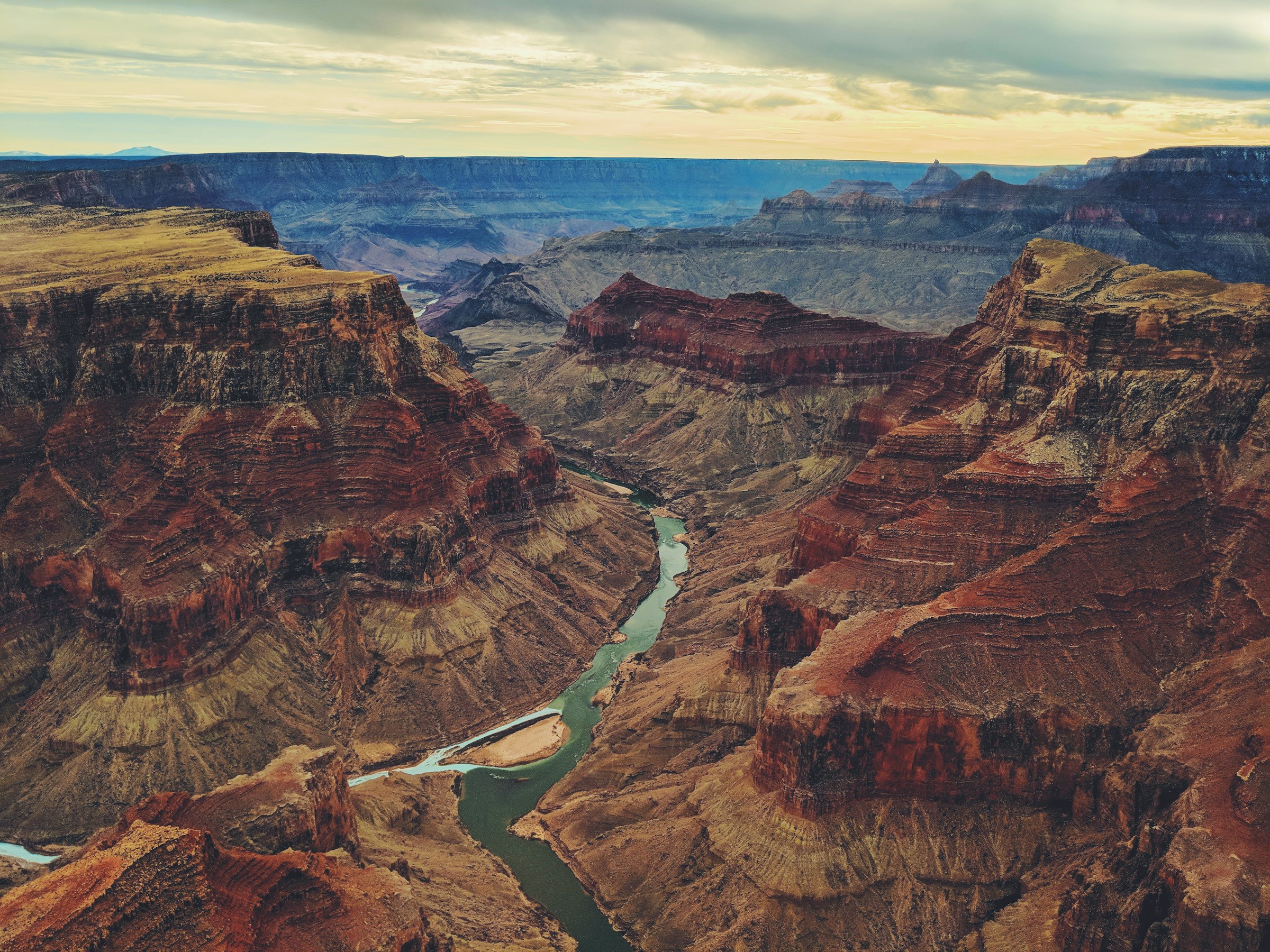
Grand Canyon, Utah's parks, and road trips through red rock.
-
California
San Francisco, Big Sur, Yosemite, and the Pacific Coast Highway.
-
National parks
Yellowstone, Zion, Yosemite — among the best protected wilderness on earth.
-
New Orleans
Food, music, and a culture that feels like nowhere else in the country.
Practical info
- Visa
- ESTA visa waiver for most Western passports (90 days). Apply before travel.
- Currency
- USD ($)
- Language
- English.
- Safety
- Generally safe; varies sharply by city and neighborhood.
- Getting around
- A car is essential outside the big cities. Domestic flights cover the distances.
- Tap water
- Tap water safe.
- Plug type
- Type A Type B 120V
- Money
- Cards accepted everywhere; tipping is expected and adds 15–20%.
General guidance — visas, safety, and health change, so check your government's travel advisory and the official sources before you go.
Common questions
- How much is ESTA, and where do I apply?
- The ESTA fee is now about US$40 (US$40.27, rising to US$40.62 on 16 October 2026) — not the old US$21, which a 2025 law overhauled. Apply only at the official site, esta.cbp.dhs.gov; countless reseller sites charge big markups for the identical authorisation. It’s valid two years (or until your passport expires), allows multiple entries with stays up to 90 days, and covers Visa Waiver Program nationalities (the UK, most of the EU, Japan, South Korea, Australia and others). Non-VWP nationalities instead need a B-2 visitor visa.
- Is there a new $250 visa fee I need to pay?
- Probably not, if you travel on ESTA. A new US$250 “Visa Integrity Fee” was added in October 2025 — but it applies to people who need an actual non-immigrant visa (tourist B-2, student, work), not to ESTA/Visa Waiver travellers staying 90 days or less. VWP visitors are exempt; only those from non-waiver countries who must obtain a B-2 pay it. If you qualify for ESTA, it doesn’t touch you.
- Are the national parks more expensive for foreign visitors now?
- Yes, from 2026. A new US$100-per-person international surcharge applies at the 11 busiest parks — Grand Canyon, Yosemite, Zion, Yellowstone, Grand Teton, Glacier, Bryce, Rocky Mountain, Sequoia & Kings Canyon, Acadia and Everglades — on top of the standard ~US$35-per-vehicle entry. A nonresident annual America the Beautiful pass is US$250 (the resident pass stays US$80). Visiting three or more of those marquee parks, the pass usually wins — see the park-fees section.
- Do I need timed-entry reservations for the parks?
- It depends on the park and it changes yearly, so always check nps.gov per park. For 2026 several big parks dropped timed entry — Yosemite, Arches, Glacier and Mount Rainier have no reservation this season (arrive early instead) — but Rocky Mountain still requires timed-entry permits, and Zion’s Angels Landing needs a permit by lottery. The full park-by-park table is in the reservations section.
- Do I need a car, and how big are the distances?
- Outside a handful of transit cities (New York, Chicago, Washington, Boston, San Francisco) a car is essential — the Southwest loop, Big Sur and almost every park require driving. And the distances are continental: New York to California is about six hours by air versus roughly five days driving, so you fly the long legs and pick one region. Amtrak is limited and slow except the Northeast Corridor (Acela links New York, Washington and Boston usefully).
- What catches visitors out on cost?
- Two habits. Tipping is high and creeping — ~18–22% at restaurants, plus touch-screen prompts at counters — and sales tax is added at the register, varying by state and city (from zero to ~10%+), so the sticker price is never the final price. And the non-negotiable: travel/health insurance. US medical costs are extreme and there’s no safety net for visitors; an ER visit or evacuation can run to tens of thousands of dollars.
Entry & ESTA
ESTA, now around $40
Visa-waiver travellers need an ESTA (~$40) from the official site — a new $250 visa fee doesn’t touch them.
Visa Waiver Program nationalities (the UK, most of the EU, Japan, South Korea, Australia and others) enter on an ESTA, which now costs about US$40 — up from the old US$21 after a 2025 overhaul — and is valid two years for multiple 90-day stays. Apply only at esta.cbp.dhs.gov; the lookalike reseller sites simply overcharge. Travellers from non-waiver countries instead need a B-2 visitor visa, which now carries a new US$250 Visa Integrity Fee — but that fee does not apply to ESTA travellers.
A factual note on the border: entry is always at the CBP officer’s discretion even with a valid ESTA or visa, and officers are legally permitted to search electronic devices at ports of entry. This is uncommon for ordinary tourists, but worth knowing.
Park fees
The parks got pricier for foreigners
From 2026 a $100-per-person surcharge hits the 11 busiest parks — and a $250 nonresident pass can undercut it.
$250 vs $80 nonresident vs resident annual national-park pass
The rough rule: at US$100 per person per park, the surcharge overtakes the US$250 nonresident pass at about the third marquee park, so a multi-park Southwest or Rockies trip usually comes out ahead on the pass — a single-park trip does not.
The 11 surcharge parks are Grand Canyon, Yosemite, Zion, Yellowstone, Grand Teton, Glacier, Bryce Canyon, Rocky Mountain, Sequoia & Kings Canyon, Acadia and Everglades. Hundreds of other national-park-system sites charge only the standard entry (or nothing), and US residents see no change. The exact interaction between the pass and the surcharge is the one piece still settling — confirm on nps.gov for the specific parks on your route.
Reservations
Timed entry: which parks, this year
Reservations shift season to season — several big parks dropped them for 2026, a few kept them.
Turning up without the right reservation can mean being turned away at the gate — but the list changes every year, so this is a 2026 snapshot to confirm on nps.gov, not a permanent rule.
| Park | 2026 timed entry | How to book |
|---|---|---|
| Rocky Mountain | Required (timed-entry permit) | recreation.gov, released in advance + next-day blocks |
| Zion — Angels Landing | Permit by lottery | recreation.gov seasonal + day-before lottery; shuttle on the scenic drive |
| Yosemite | Dropped for 2026 | No reservation — arrive early; expect queues |
| Arches | Dropped for 2026 | No reservation — arrive before ~8am or late afternoon |
| Glacier | Dropped for 2026 | No vehicle reservation — Going-to-the-Sun road busy midday |
| Mount Rainier | Dropped for 2026 | No reservation this season |
A 2026-season snapshot; the National Park Service resets these annually and mid-season. Always check the specific park page on nps.gov before you travel, and book permits, campsites and in-park lodges on recreation.gov.
In-park lodges (Yosemite’s Ahwahnee, the Grand Canyon rim lodges, Yellowstone’s Old Faithful Inn) book out 6–13 months ahead and are the hardest part of the whole trip to secure — reserve them before flights if a specific lodge matters to you.
The regions
A dozen trips — pick a region
Not one destination but many; the map shows the cities and the landmark clusters, and they don’t combine in a week.
Treat the US as several trips and pick one. A city week in New York needs no car and barely a plan. The Southwest loop out of Las Vegas is the standout road trip. California strings San Francisco, Big Sur and Yosemite together. The marquee parks deliver wilderness at a scale few countries match — but they’re scattered across a continent, so the one thing that doesn’t work is trying to see them all.
| Base / region | Suits | Car needed |
|---|---|---|
| New York (+ Northeast) | A city week; Washington and Boston are an easy Acela train away | No |
| San Francisco / California | SF, Big Sur and Yosemite in ~10 days — the classic coast-and-parks loop | Yes (for Big Sur / Yosemite) |
| Las Vegas (Southwest loop) | The best drive on the continent: Zion, Bryce and the Grand Canyon | Yes |
| Chicago / New Orleans | A city-and-culture trip — walkable cores, music and food | No / light |
Driving & distances
Fly the long legs, drive the region
Outside the transit cities you must drive — and within a region the distances still devour the day.
6 h vs 5 days New York to California — by air versus by car
| Drive | Distance | Typical time |
|---|---|---|
| Las Vegas – Grand Canyon (South Rim) | ~450 km | ~4h30 |
| Las Vegas – Zion | ~260 km | ~2h45 |
| San Francisco – Yosemite | ~310 km | ~4h |
| Los Angeles – Las Vegas | ~430 km | ~4h (far worse on peak weekends) |
| New York – Washington | ~360 km | ~4h drive / ~3h by Acela train |
Approximate free-flow figures for orientation, not live routing — holiday-weekend traffic on LA–Las Vegas and the park gateways is routinely much worse. Confirm on a maps app close to the day.
Car-free works in exactly five places: New York, Chicago, Washington, Boston and San Francisco, where transit is good enough to skip a car entirely. Everywhere else — the Southwest, Big Sur, nearly every national park — you need to drive. Amtrak exists but is slow and limited; the one genuinely useful rail is the Northeast Corridor (Acela: New York–Washington–Boston).
When to go
Summer is peak — and the high roads are shut in spring
A climate chart says May is lovely; it doesn’t tell you the high-country roads are still closed.
Crimson bars are the traps: the marquee parks are mobbed Jun–Aug, and the scenic high-country roads (Tioga Pass, parts of Glacier and Rocky Mountain) often stay snow-closed into June, so a May trip can’t drive them.
The best weather-and-crowd balance is the shoulder seasons — May and September–October — not high summer, when the big parks are mobbed and lots fill by mid-morning. But shoulder has a catch: the high-country roads open late. Yosemite’s Tioga Pass, the Going-to-the-Sun road in Glacier and the Trail Ridge road in Rocky Mountain are often still snow-closed well into June, so a late-spring trip can see the valleys but not the heights.
In the southeast and Florida, factor the hurricane season (June–November). And winter closes much of the high country entirely while opening its own season — ski country, and the desert parks (Death Valley, Joshua Tree) at their most comfortable.
Crowd swaps
When the headline park is mobbed, swap it
The famous parks hit capacity; a short hop away sits a near-identical landscape with a fraction of the crowd.
The crowds concentrate on a handful of named sights, not the landscapes themselves — so the fix is the same as it is for a Sardinian beach in the wind: move a short distance and the pressure drops away. The state parks and the second-tier national parks are frequently the better day out in peak season.
- Grand Canyon South Rim is a scrumSkipthe South Rim in peak summerGothe North Rim — higher, cooler, far quieter (but seasonal, typically mid-May to mid-Oct)
- Zion is full and shuttle-queuedSkipmidday Zion CanyonGoCapitol Reef, or Snow Canyon State Park near St George — same red rock, little traffic
- Arches has a queue at the gateSkipArches mid-morningGoCanyonlands (Island in the Sky) and Dead Horse Point, minutes away
- Yosemite Valley is gridlockedSkipthe Valley floor middayGoSequoia & Kings Canyon, or Lassen — giant trees and granite without the crush
Good to know
Tips, tax-at-the-register, and insurance
The practical footnotes — high tipping, sales tax added on top, and medical costs that make insurance non-negotiable.
The currency is the US dollar, cards are accepted almost everywhere, and two cost habits catch visitors out. Tipping is high and still creeping: ~18–22% at full-service restaurants, plus touch-screen prompts (often preset at 18/20/25%) now appearing at counters and takeaways — check the preset and whether it’s on the pre-tax total. And sales tax is added at the register, varying by state and city (from zero to ~10%+), so the sticker price is never the final price; hotels add their own taxes and sometimes resort fees.
The one non-negotiable: travel/health insurance. US medical costs are extreme and there’s no safety net for visitors — an ER visit or an evacuation can run to tens of thousands of dollars — so proper cover is essential, not optional, for this trip.
Rough tipping map beyond restaurants: bars ~$1–2 a drink, taxis/rideshare ~15%, housekeeping a few dollars a night, and nothing expected at counter-service you’d tip on a card prompt — those are discretionary despite the screen.
Explore more of United States
Compare United States
If you like United States, also consider
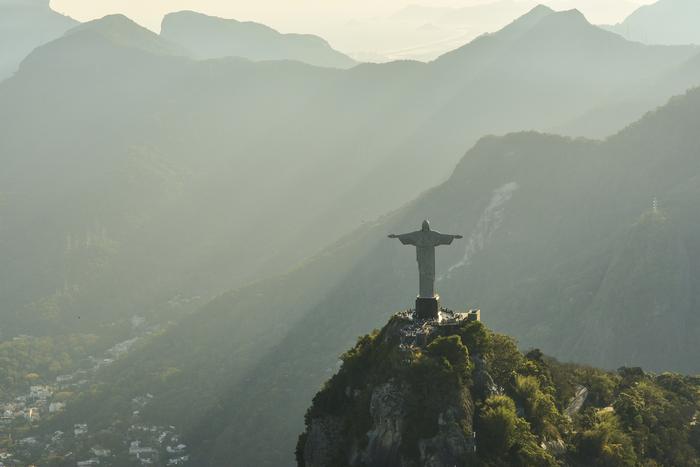
Brazil
A continent of a country. Pick two or three things and commit.

France
Paris is only the opening act — wine country, the Alps, and two coastlines.
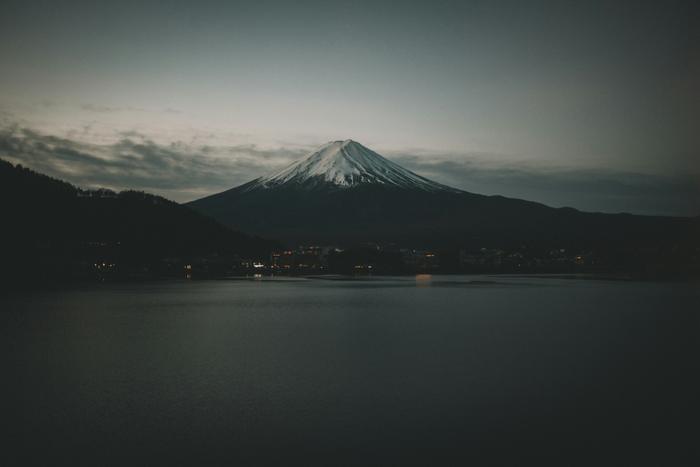
Japan
Extraordinary food, culture, and cities. Nothing quite prepares you for it.
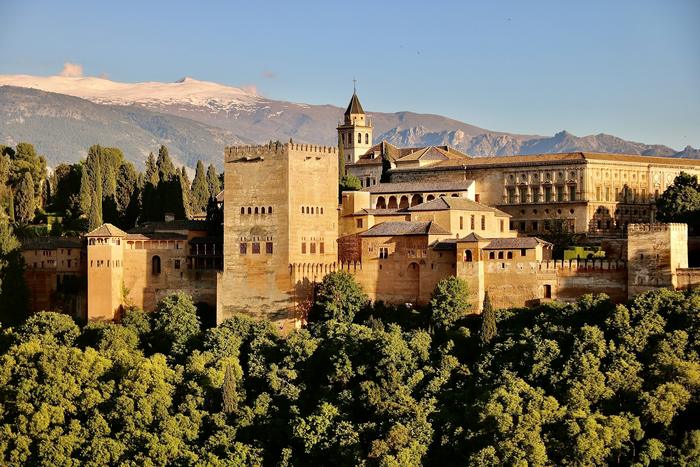
Spain
Food, beaches, and three or four cities that each justify the trip.
Not sure where to go
Take the 5-minute quiz
Answer a few honest questions and get matched to destinations that actually fit how you travel.
Start the quiz