Bahamas
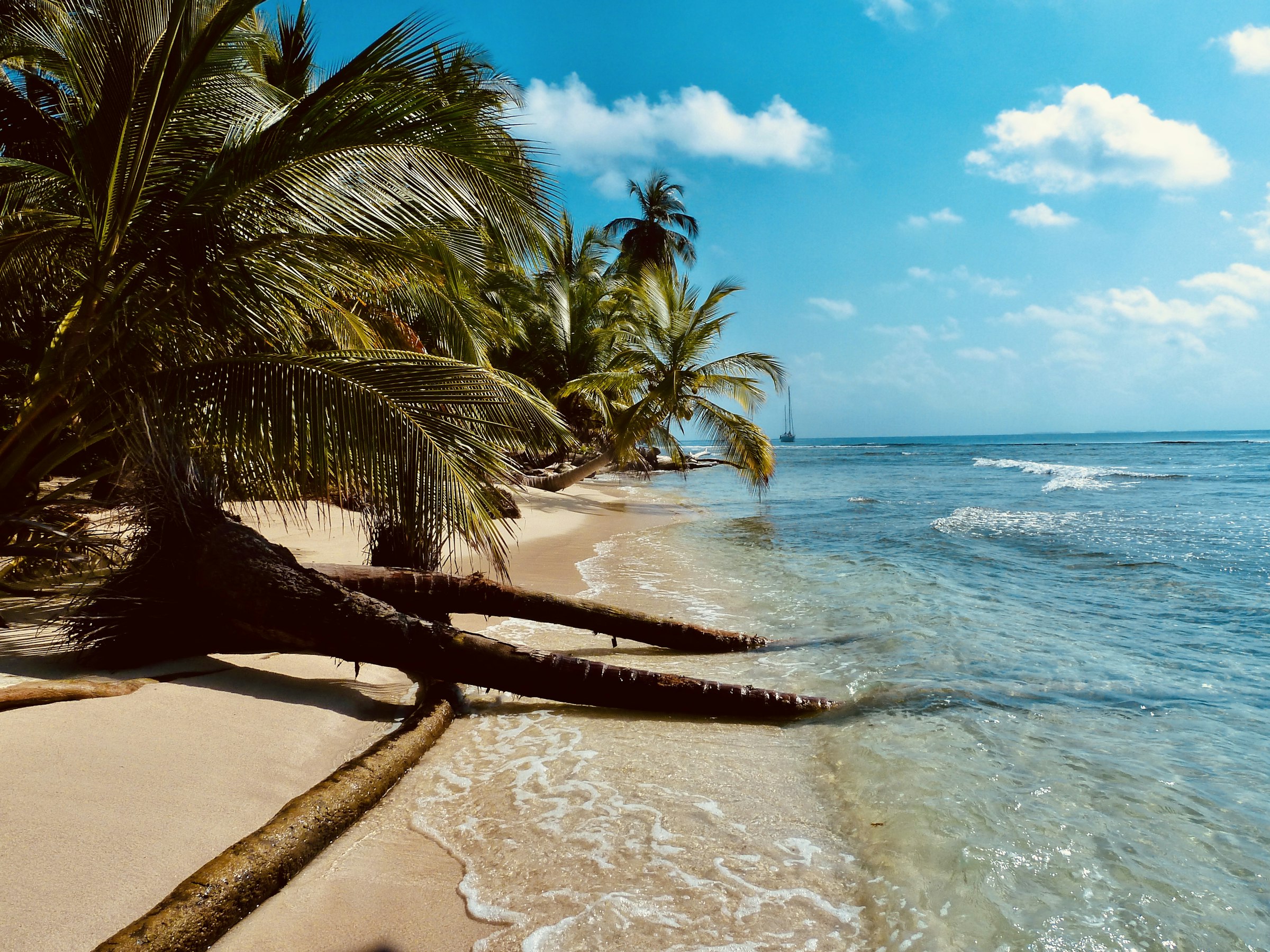
Seven hundred islands of impossibly clear water, from cruise-port Nassau to the empty Out Islands.
The Bahamas is really two trips. There's Nassau and Paradise Island — cruise ships, mega-resorts, casinos, easy and busy — and then there are the Out Islands, a scatter of quiet cays where the water turns colours you won't quite believe and the pace drops to nothing. The draw everywhere is the sea: some of the clearest, palest, most swimmable water in the Atlantic, close enough to Florida for a weekend.
If you want ease, Nassau delivers resorts, beaches, and a short flight from the US, and Atlantis on Paradise Island is a self-contained water-park world. But the Bahamas gets special once you leave it. The Exumas are the postcard: a 120-mile chain of uninhabited cays, sandbars that appear at low tide, the swimming pigs of Big Major Cay, and the underwater grotto from a Bond film. Harbour Island off Eleuthera has famous pink-sand beaches and a barefoot-luxe village; Andros is the world's third-largest barrier reef and a diver's blue-hole playground. Island-hopping is by small plane or boat, and that friction is exactly what keeps the Out Islands empty.
The honest part: it's expensive, and not always in proportion to what you get — Nassau in particular can feel like paying resort prices for a cruise-crowd experience, and food is pricey and often unremarkable because so much is imported. The Out Islands are the reward but take effort and money to reach, with limited dining and few 'sights' beyond the water itself. Hurricane season (June to November, peaking August to October) is a real risk. Come in the dry winter-to-spring window, prioritise the Exumas or Eleuthera over the capital, and the water alone justifies the trip.
Highlights
-
The Exumas
A chain of empty cays: swimming pigs, sandbars, iguanas, and the clearest water in the country.
-
Harbour Island
Pink-sand beaches and a barefoot-chic village off Eleuthera — the prettiest small island in the Bahamas.
-
Nassau & Paradise Island
The easy hub: resorts, the Atlantis water world, forts, and the straw market — busy but simple to reach.
-
Andros
The largest, wildest island — the world’s third-longest barrier reef and a maze of inland blue holes to dive.
-
Blue holes & diving
Vertical underwater sinkholes and reef walls make the Bahamas one of the Caribbean’s top dive destinations.
-
Eleuthera
A long, thin island of pink beaches, pineapple farms, and the Glass Window Bridge between ocean and sound.
Practical info
- Visa
- Visa-free for most Western passports (stays up to 90 days). Verify before travel.
- Currency
- Bahamian Dollar (BSD), pegged 1:1 to USD; US dollars accepted everywhere.
- Language
- English (official).
- Safety
- Resorts and Out Islands are safe; parts of Nassau outside the tourist strip warrant normal city caution at night.
- Getting around
- Small planes and boats connect the islands; Nassau has taxis. No car needed on most Out Islands.
- Tap water
- Bottled or filtered water advised, especially on the smaller islands.
- Plug type
- Type A Type B 120V
- Money
- Cards at resorts; carry cash on the Out Islands where card acceptance is patchy.
General guidance — visas, safety, and health change, so check your government's travel advisory and the official sources before you go.
Common questions
- When is the best time to visit the Bahamas?
- Mid-December to mid-April is the dry, breezy high season — warm days, low humidity, little rain — and also the priciest and busiest, peaking over Christmas and New Year. Hurricane season runs June to the end of November, with the real risk concentrated in August–October. The sweet spots are the shoulders: late April into June, and late November — good weather, thinner crowds and softer rates, before or after the storm peak. The sea is warm year-round, from about 23°C in January to 30°C in August.
- What do you need to enter the Bahamas?
- For US, UK and EU visitors it’s visa-free for a tourist stay (British passport holders get 30 days, extendable up to eight months; US travellers need a valid passport and proof of onward travel). The pandemic-era Travel Health Visa is gone — no health form or test. You still fill a paper immigration card on arrival; a new online Digital Arrival Card (BDAC) began a voluntary pilot in 2026 but isn’t yet required. A genuine perk: Nassau and Freeport have US pre-clearance, so you clear US immigration before flying home and land stateside as a domestic arrival. The air departure tax (~US$29) is normally built into your airfare.
- How do you get around the islands?
- The Bahamas is an archipelago and no single hub reaches everything. Nassau (New Providence/Paradise Island) and Freeport (Grand Bahama) are the gateways; the Out Islands — Exuma, Eleuthera and Harbour Island, the Abacos, Andros, Long Island, Bimini — each need their own flight or boat, usually routed back through Nassau. Short hops run on Bahamasair and charter operators; Bahamas Ferries and the slow, cheap mail boats link the islands by sea. Driving is on the left. Plan island by island rather than assuming a day trip reaches the famous spots.
- Is the Bahamas safe?
- The crime that drives the travel advisories is heavily concentrated in Nassau and Freeport — Nassau’s "Over the Hill" area south of Shirley Street is specifically flagged (the US rates the country Level 2) — while the Out Islands are generally very low-crime. The advisory also warns that boating and watercraft are poorly regulated, with some unlicensed, uninsured jet-ski and boat operators; rent from established, insured operators and treat water activities with care. Keep normal city caution in Nassau; the Out Islands feel like a different, quieter country.
- Is the Bahamas expensive?
- Yes — it’s one of the pricier Caribbean destinations. Almost everything is imported, there’s a 10% VAT, and Nassau, Paradise Island and Harbour Island carry resort-level prices for food and lodging. The currency is the Bahamian dollar, pegged one-to-one to the US dollar since 1966, and US dollars are accepted everywhere interchangeably, so Americans need not change money. The Out Islands can be cheaper for food, but the signature resorts and tours are the real spend.
- Which island should I pick — and how does the Bahamas compare?
- For a first trip, Nassau/Paradise Island is the easy, do-everything base, but the Bahamas at its best is an Out Island: the Exumas for the swimming pigs and sandbars, Eleuthera and Harbour Island for pink sand, the Abacos for sailing, Andros and Bimini for fishing and diving. Against its neighbours it’s pricier and more spread-out than most single-island Caribbean trips. See Bahamas vs Turks & Caicos, Bahamas vs Jamaica and Bahamas vs the Dominican Republic.
When to go
Dry-season peak, and the hurricane window
A clear high season in winter, a storm season to plan around in late summer, and two quiet shoulders in between.
Crimson bars are the catch — the storm window, concentrated in August–October. The dry Dec–April high season (shown from January) has the best weather and the highest prices; the late-April–June and late-November shoulders are the value sweet spots. The sea never gets cold.
The high season is mid-December to mid-April — reliably warm and dry, with low humidity and steady trade winds — and it’s also the busiest and most expensive stretch, peaking hard over the Christmas–New Year holidays. Hurricane season runs 1 June to 30 November, but the genuine risk is concentrated in August to October; outside that peak a storm is possible but not the norm.
The best value is in the shoulders — late April into June, and late November: the weather is still good, the crowds have thinned and rates ease, while the worst of the storm window is either not yet open or already closing. If you travel in the late-summer peak, build in flexibility and watch the forecasts.
- the winter high season is packed and dearSkipChristmas–New Year in Nassau at peak ratesGothe late-April–June shoulder — same weather, thinner crowds, softer prices
- a hurricane threatens in late summerSkipa rigid August–September bookingGoflexible fares and insurance, or the May–June and late-November shoulders
- Nassau feels overbuilt and cruise-crowdedSkipjudging the Bahamas by downtown NassauGoan Out Island — the Exumas, Eleuthera or Abaco are a quieter, different country
Entry
Visa-free — and the health visa is long gone
A simple entry for most visitors, with one myth to retire and a genuine US-flyer perk.
For US, UK and EU visitors the Bahamas is visa-free for a tourist stay — British passport holders get 30 days, extendable up to eight months; US travellers need a valid passport and proof of onward travel. The pandemic-era Travel Health Visa was abolished in 2022 and hasn’t returned: there’s no health form, test or online health registration, despite older articles that still describe one. You still complete a paper immigration card on arrival; the online Digital Arrival Card (BDAC) is a voluntary pilot, not yet mandatory.
The quietly useful fact is US pre-clearance at Nassau and Freeport: you clear US Customs and Border Protection before your flight leaves, and arrive in the States as a domestic passenger — no immigration queue on the far end. The air departure tax (about US$29) is almost always bundled into your ticket, so you rarely pay it separately.
Getting around
An archipelago with no single hub
The one structural fact that shapes every Bahamas itinerary: the islands don’t connect through one centre.
The Bahamas spreads across hundreds of islands and no one hub reaches them all. Nassau (New Providence and Paradise Island) and Freeport (Grand Bahama) are the gateways; the Out Islands — Exuma, Eleuthera and Harbour Island, the Abacos, Andros, Long Island, Bimini — each need their own flight or boat, and connections usually route back through Nassau rather than island-to-island.
Short hops run on Bahamasair and a web of charter and commuter operators (roughly US$125–150 one-way); Bahamas Ferries links the main islands by fast boat, and the slow, cheap mail boats from Nassau carry provisions and passengers to the Out Islands. Driving is on the left. The practical upshot: pick an island (or a Nassau base plus one Out-Island add-on) rather than assuming the famous sights are an easy day trip — the swimming pigs and Pink Sands are each a journey of their own.
| Link | How | Note |
|---|---|---|
| Into the country | Fly to Nassau (NAS) or Freeport (FPO) | US pre-clearance at both airports |
| To the Out Islands | Bahamasair / charter, usually via Nassau | ~US$125–150 a hop; no island-to-island roads |
| By sea | Bahamas Ferries fast boats; slow mail boats | Ferries to Harbour Island, Eleuthera, Exuma, Abaco |
| On the islands | Taxis and jitneys in Nassau; golf carts on the cays | Driving is on the left |
No road links any two islands — every Out-Island leg is a flight or a boat, and connections route back through Nassau rather than hopping island-to-island. Mail boats are the slow, cheap, local way; Bahamas Ferries the fast one. Checked October 2026.
The itinerary mistake people make is treating the icons as day trips from a Nassau hotel. They aren’t: the swimming pigs are about 90 miles (a two-hour speedboat each way) from Nassau, and Harbour Island’s Pink Sands is its own flight — so "doing" them from the capital means long, expensive charter days. Decide what you actually came for, base on that island (Staniel Cay/George Town for the Exumas, Harbour Island for pink sand), and budget each Out-Island hop as a ~US$125–150 flight routed through Nassau.
The islands
Nassau, or the other 699
The capital does everything at once; the Out Islands each do one thing beautifully.
Nassau, on New Providence, is where most people land — the cruise wharf, the mega-resort Atlantis on Paradise Island, Cable Beach, and the pirate-era Queen’s Staircase and forts. It’s busy and built-up, and for many it’s the whole trip; for everyone else it’s the gateway to somewhere quieter.
The Out Islands are the Bahamas most people are picturing: the Exumas for the pigs, iguanas and sandbars; Eleuthera and Harbour Island for pink sand; the Abacos for sailing between cays (rebuilding well since Hurricane Dorian flattened them in 2019); and Andros and Bimini for bonefishing, blue holes and some of the best wall diving in the Atlantic.
| Island | What it’s for | Good to know |
|---|---|---|
| New Providence (Nassau) | The capital, cruises, Atlantis, Cable Beach | Busiest and most developed; the main gateway |
| The Exumas | The swimming pigs, cays, sandbars, the Sea Park | Via Staniel Cay or George Town, not a Nassau day trip |
| Eleuthera & Harbour Island | Pink-sand beaches and Dunmore Town | The chic, laid-back classic |
| The Abacos | Sailing, cays, Hope Town’s striped lighthouse | Rebuilt since Hurricane Dorian (2019) |
| Grand Bahama (Freeport) | Lucayan National Park, beaches | The second gateway; also Dorian-hit |
| Andros · Bimini · the south | Bonefishing, blue holes, big-game fishing, diving | The wild, least-developed Bahamas |
The big draws
Pigs, pink sand and blue holes
The signature experiences are scattered — and most are a boat ride, not a bus ride.
~50 pigs the swimming pigs of Big Major Cay
The icons are spread across the chain. In the Exumas: the swimming pigs, the James-Bond Thunderball Grotto, nurse sharks at Compass Cay, and the pristine Exuma Cays Land and Sea Park (a no-take reserve since 1985, which added visitor fees in 2026). Harbour Island’s Pink Sands — coloured by microscopic red shells — and Eleuthera’s Glass Window Bridge, where deep Atlantic blue meets shallow bank green, are the photogenic set pieces.
Further out, Andros holds the world’s greatest concentration of blue holes and a barrier reef roughly 140 miles long — one of the largest anywhere; Bimini is Hemingway’s old big-game-fishing haunt; and the Abacos’ candy-striped Elbow Reef Lighthouse (1862) is one of the last hand-cranked, kerosene-lit lighthouses on earth. In Nassau itself, Atlantis’s Aquaventure and marine habitat are the family headliner.
The food
Conch, grouper and the fish fry
A seafood cuisine built on one shellfish — and eaten best at a roadside stand.
Bahamian food is a seafood cuisine built on conch (pronounced "konk") — the big sea snail turns up as a fiery chopped-raw salad, as golden fritters and as "cracked conch," deep-fried. Beyond it are fried grouper, seasonal spiny lobster, and the inevitable peas ’n’ rice and johnnycake on the side.
The best way to eat is at a "fish fry" — a strip of casual local stands, the famous one being Arawak Cay in Nassau — washed down with a Kalik or Sands beer, a potent Sky Juice, or a Goombay Smash. Save room for guava duff.
| Dish | What it is | Note |
|---|---|---|
| Conch | The national food — salad, cracked, fritters | Conch salad is chopped raw to order |
| Fried grouper | The signature fish, with peas ’n’ rice | Often with johnnycake |
| Spiny lobster | "Crawfish" — grilled or in a salad | Season runs 1 Aug – 31 Mar |
| Peas ’n’ rice | Pigeon peas and rice — the ubiquitous side | With almost everything |
| Guava duff | A boiled guava-filled dessert roll | The sweet to seek out |
| Kalik / Sky Juice | The local beer; and a gin-coconut cooler | Sky Juice = coconut water, condensed milk, gin |
The place to eat it all is a "fish fry" — a cluster of local stands, most famously Arawak Cay on Nassau’s West Bay Street. Conch (say "konk") is in everything; spiny lobster is seasonal, closed through spring and early summer.
Culture
Junkanoo, church, and a relaxed pace
A proudly Bahamian culture — loudest at Junkanoo — with one note for some travellers.
Dec 26 & Jan 1 Junkanoo — the Bahamas on the street
The Bahamas has been independent since 1973 and is a Commonwealth country; English is the language, with a lilting Bahamian dialect, and it’s strongly Christian — churches are full on Sundays and the rhythm of life is unhurried and friendly. The cultural high points are the two Junkanoo parades over the Christmas season, an explosion of costume and goombay drumming that is the island’s soul on display.
For most visitors it’s one of the easiest, warmest places to travel. It’s worth knowing the social climate is conservative: same-sex activity has been legal since 1991, but same-sex marriage isn’t recognised and attitudes remain traditional.
A quiet practical note: the Bahamas keeps a reverent Sunday in many places, so on the smaller islands expect shops, and even some restaurants, to close — stock up on a Saturday if you’re self-catering on an Out Island, where supplies arrive by mail boat and run out.
Good to know
Pegged dollars, VAT, and the water warning
The practical money — and the one risk the advisories stress most.
Money is easy: the Bahamian dollar is pegged one-to-one to the US dollar and USD is accepted everywhere, so Americans need not change currency. There’s a 10% VAT (most unprepared groceries became zero-rated in 2026), and prices overall are high — nearly everything is imported. Tipping is US-style (15–20%), and tap water is safe in Nassau (desalinated) but best bottled on the rainwater-dependent Out Islands. Emergency numbers are 911 and 919.
The warning the advisories stress most isn’t street crime — it’s the water. Boat and jet-ski rentals are loosely regulated, with some uninsured, unlicensed operators and a record of accidents and assaults tied to them. Rent only from established, insured operators, insist on working safety gear, and treat a jet-ski or small-boat excursion with the same scrutiny as any adventure activity. Nassau’s violent crime, by contrast, is concentrated in specific districts well away from the resort and cruise areas.
Compare Bahamas
If you like Bahamas, also consider
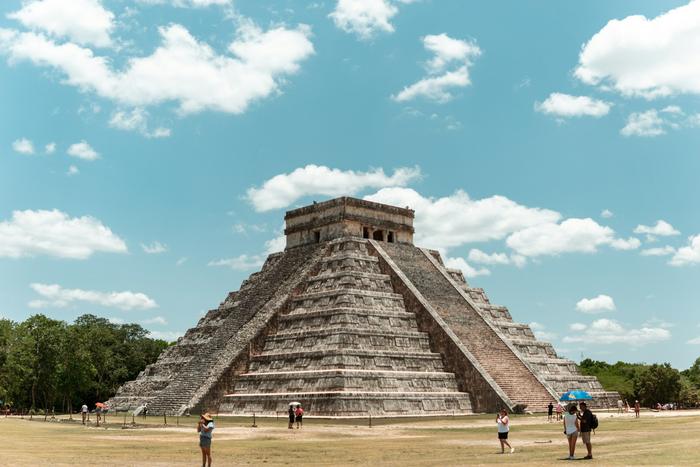
Mexico
Mexico City is world-class. Add the coast, ruins, and food culture.
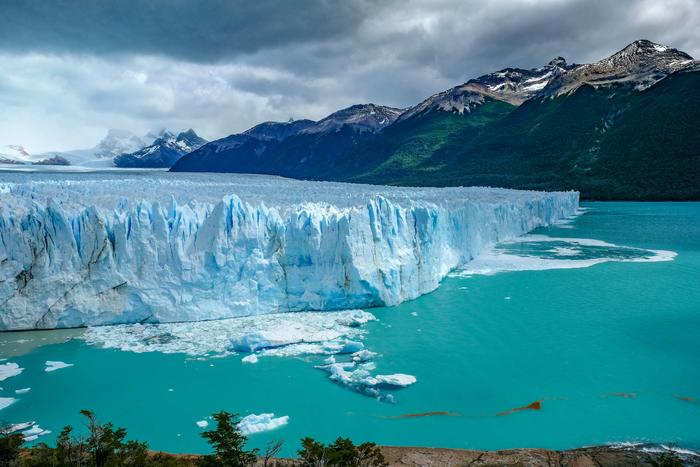
Argentina
Buenos Aires has the best steakhouses and nightlife in South America.

Greece
Ruins in the morning, a swim by noon, taverna until dark.
Spain
Food, beaches, and three or four cities that each justify the trip.
Thailand
The complete package for warm-climate travel.
Not sure where to go
Take the 5-minute quiz
Answer a few honest questions and get matched to destinations that actually fit how you travel.
Start the quiz