Mexico
Mexico City is world-class. Add the coast, ruins, and food culture.
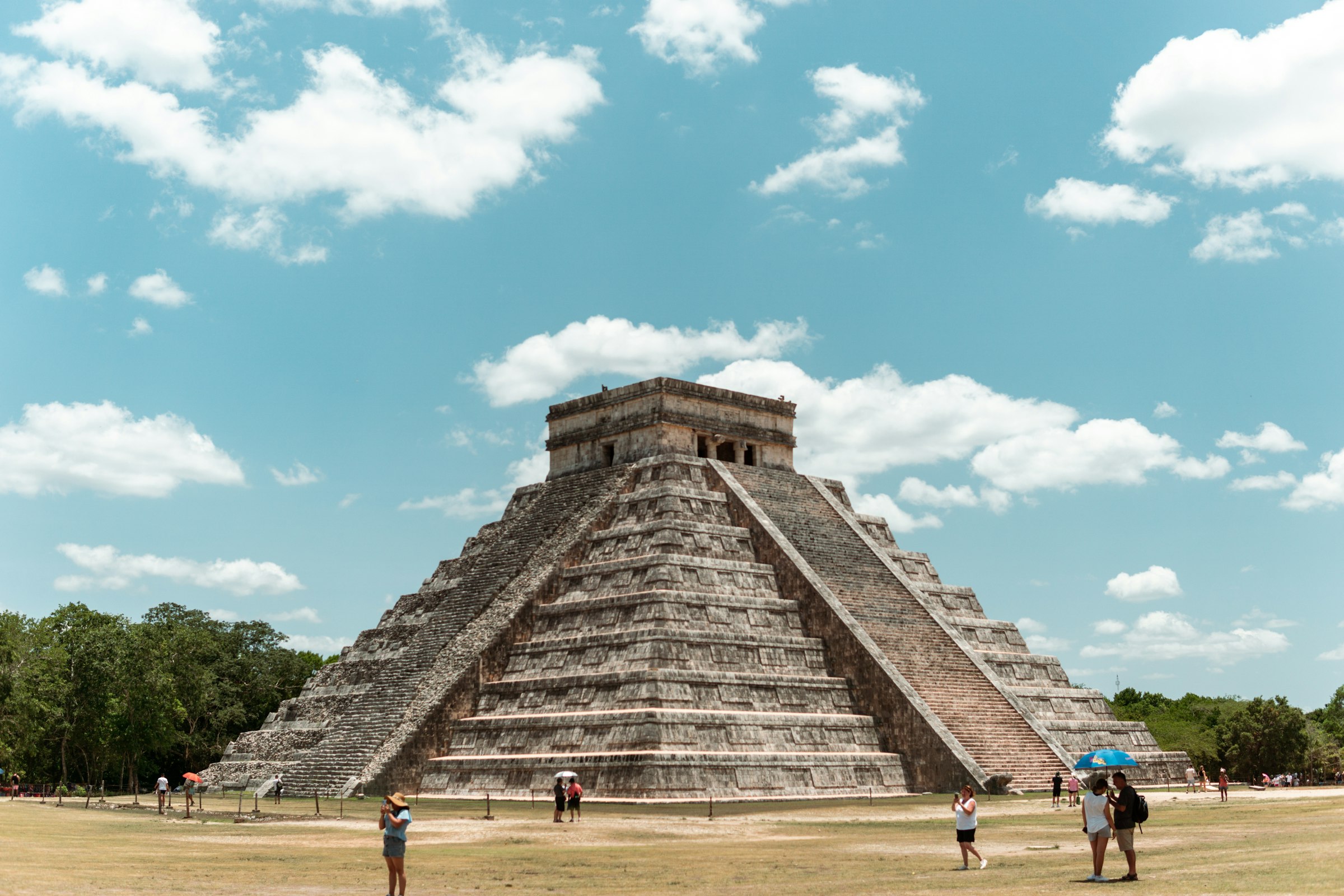
Mexico is one of the most underrated big-country trips in the world. Mexico City has become a top-five global food and design city. Add Oaxaca for crafts and mezcal, the Yucatan for ruins and cenotes, the Pacific coast for surf, and there is a year-long itinerary easily.
Give Mexico City a week minimum: tacos al pastor at street stands, slow mornings in Roma and Condesa, the anthropology museum, a day trip to Teotihuacan. Then fly or take an ADO bus to Oaxaca for mole and mezcal palenques, and finish on a coast — cenotes and ruins in the Yucatan, or surf at Puerto Escondido. Food and buses stay cheap; the money goes to domestic flights and the boutique hotels that have multiplied over the last decade.
The honest part: Tulum has priced itself into parody — beach-club minimums and taxi gouging without the charm it traded on — and Cancun's hotel zone could be anywhere. The country is enormous; cramming CDMX, Oaxaca, and the Yucatan into ten days means living in transit. Some Spanish is close to essential outside resort zones, and stomach trouble is common in week one. But the food culture and the prices forgive nearly everything.
Highlights
-
Mexico City
World-class food, neighborhoods like Roma and Condesa, easy to spend a week.
-
Oaxaca
Crafts, mezcal, mole, and Day of the Dead in early November.
-
Yucatan (Merida, Tulum)
Mayan ruins, cenotes, beach towns.
-
Puerto Escondido / Sayulita
Pacific surf — Escondido for serious waves, Sayulita for the easygoing party.
Practical info
- Visa
- Visa-free for most Western passports (180 days).
- Currency
- MXN (Peso). Roughly 20 MXN ≈ 1 USD.
- Language
- Spanish. English in tourism, less elsewhere.
- Safety
- Mostly safe in tourist destinations. Avoid certain border and cartel-heavy regions.
- Getting around
- Domestic flights and ADO buses are excellent.
- Tap water
- Tap water not safe to drink.
- Plug type
- Type A Type B 127V
- Money
- Cards in cities and tourism; cash in markets.
General guidance — visas, safety, and health change, so check your government's travel advisory and the official sources before you go.
Common questions
- Do you need a visa for Mexico, and how long can you stay?
- No visa for tourism if you hold a US, UK, EU, Canadian or Australian passport — you’re admitted on arrival. But the old habit of automatically stamping 180 days is gone: since a mid-2025 rule change, immigration officers grant the number of days that matches your stated trip, and travellers now report being given 30, 20, even 10. The tourist card (FMM) is digital at major airports — your days are recorded when your passport is scanned and the arrival fee is bundled into your airfare — so there’s no paper to keep, but you must check how many days you were actually granted before leaving immigration, because overstaying now carries a fine. Carry a return ticket; six months’ passport validity is an airline rule, not a Mexican one.
- Is Mexico safe to travel?
- It depends entirely on which Mexico — safety is rated state by state, not nationally. The six states the US flags “Do Not Travel” (Colima, Guerrero, Michoacán, Sinaloa, Tamaulipas, Zacatecas) are overwhelmingly not where tourists go, while the flagship destinations — Yucatán (Mérida, Chichén Itzá) at the safest Level 1, plus Quintana Roo (Cancún, Tulum), Mexico City, Oaxaca and Los Cabos at Level 2 — sit at the two mildest levels. A frightening headline about Sinaloa says nothing about Cancún. Use normal big-city sense: app cabs over street taxis, toll roads, no night driving between cities.
- When is the best time to visit, and what about sargassum and hurricanes?
- The dry season, November to April, is the best weather and the peak (priciest December–March); May to October is greener, cheaper and wetter. Two coastal catches: the Atlantic/Caribbean hurricane season runs 1 June–30 November, peaking mid-August to mid-October, and sargassum seaweed washes the Caribbean coast roughly March–October, heaviest June–August — 2026 broke the record. Tulum and Akumal are worst-hit; Isla Mujeres, Cozumel and the whole Pacific coast are largely spared. For a clean summer beach, pick accordingly.
- What is VisiTax, and what else will I be charged?
- VisiTax is Quintana Roo’s state tourist tax (Cancún, Playa, Tulum, Cozumel, Isla Mujeres) — about 283 pesos per person (~US$15), paid online at the official visitax.gob.mx, not at your hotel, giving a QR code that is now scanned at Cancún airport before you fly out. Around 20 lookalike sites overcharge — use only the .gob.mx one. Separately, the big archaeological sites charge foreigners far more than locals (Chichén Itzá is now about 676 pesos, the dearest in the country) — that’s official, not a scam — and cruise passengers pay a US$10 federal fee (rising to US$15 in July 2027).
- Can you drink the tap water in Mexico?
- No — not anywhere, as a rule. The water is often treated at source but recontaminated through old, leaky pipes (Mexico City loses around 40% to leaks), so stick to bottled or purified water. Showering and brushing your teeth are fine; be wary of ice and raw salads except at reputable places.
- Is Mexico cheaper than Costa Rica?
- Generally yes — Mexico spans a wider range, genuinely cheap at street-food-and-bus level and only pricey in the resort zones, while Costa Rica runs expensive for its region. Mexico also offers far more variety (ruins, colonial cities, two very different coasts). See our full comparison.
Entry & your days
No visa — but the 180-day default has ended
The stamp used to be a near-automatic 180 days. It isn’t any more — check what you’re given.
Tourists from the US, UK, EU, Canada and Australia need no visa and are admitted on arrival. At major airports the old paper tourist card (FMM) is now digital — your entry and authorised days are logged when your passport is scanned, and the arrival fee is bundled into your airfare, so there’s nothing to pay or carry. At land borders a paper form still applies, free for stays up to seven days and about 983 pesos (~US$54) beyond that.
The real change is the one nobody warns you about: Mexico stopped defaulting to 180 days in 2025. Officers now grant the length that matches your stated trip and ask about return tickets, accommodation and income — repeat and long-stay visitors get the most scrutiny. State your actual plans, carry proof of onward travel, and confirm the days you were given before leaving the immigration hall.
Safety
Read the advisory as a map, not a headline
Safety here is rated state by state — the no-go states are not where tourists go.
| Destination | State | US advisory |
|---|---|---|
| Mérida, Chichén Itzá | Yucatán | Level 1 — the safest |
| Cancún, Tulum, Cozumel | Quintana Roo | Level 2 |
| Mexico City | CDMX | Level 2 |
| Oaxaca | Oaxaca | Level 2 |
| Los Cabos | Baja California Sur | Level 2 |
From the US State Department advisory reissued 10 June 2026. The six “Do Not Travel” (Level 4) states — Colima, Guerrero, Michoacán, Sinaloa, Tamaulipas, Zacatecas — are cartel-conflict regions tourists don’t visit.
The UK Foreign Office (FCDO) draws its no-go areas differently — specific zones rather than whole states — and travelling against FCDO advice can void your travel insurance, so UK visitors should check their own government’s map, not just the US one. One to note for culture travellers: Pátzcuaro, a headline Día de Muertos town, sits in Michoacán, a Level 4 state.
When to go
Dry season, hurricanes and the seaweed calendar
The weather window is easy; the Caribbean’s storm and seaweed seasons are what decide your beach.
Crimson are the Caribbean-coast disruptors. The dry season (Nov–Apr) is the best weather and the priciest, peaking December–March; Semana Santa (around 21–28 March in 2027) is a big domestic-travel surge.
The dry season, November to April, is the best all-round weather and the peak — warm, low humidity, highest prices December to March. May to October is greener, cheaper and wetter, with afternoon storms. Mexico City sits at 2,240 m, so it stays mild year-round with cool nights and strong sun, and the altitude can take a day to adjust to.
For the culture, Día de Muertos (1–2 November, with Mexico City’s big parade on the preceding Saturday) is the headline date — book Oaxaca or Mexico City far ahead. The Guelaguetza in Oaxaca fills the last two Mondays of July, and Semana Santa (Holy Week) empties the cities onto the beaches.
The Caribbean coast
Sargassum decides which beach you actually get
The brown seaweed is now the dominant variable on the Riviera Maya — and it’s getting worse.
Record 2026 the worst sargassum year yet on the Caribbean coast
If a clean beach matters, the coast you choose matters more than the month. When the seaweed is in, locals simply move to the sheltered islands or switch coasts:
- Sargassum season (Jun–Aug) on the mainland Riviera MayaSkipTulum, Akumal and Playa del Carmen beaches — worst hitGoIsla Mujeres or Cozumel, and the islands’ leeward west sides, largely clear
- A clean summer beach anywhere in MexicoSkipthe open Caribbean shore entirelyGothe whole Pacific coast — Puerto Vallarta, Los Cabos, the Oaxacan coast — which sargassum never reaches
- Hurricane peak (Aug–Oct) on the CaribbeanSkiplocking in non-refundable beach weeksGoflexible bookings, or the drier interior — Mexico City, Oaxaca, the colonial Bajío
Where to go
A country of regions, not one trip
Mexico is vast and varied — pick a region or two and do them properly.
The first-trip regions sit far apart: Mexico City (world-class food, museums and Teotihuacán day-tripping), the Yucatán (Cancún and the Riviera Maya beaches, the Maya ruins of Chichén Itzá, colonial Mérida), Oaxaca (food, craft and the deepest culture), the Pacific at Puerto Vallarta, and Los Cabos at the tip of Baja. A week does one or two of these well — not the lot.
Because the distances are continental, you fly between regions (Aeroméxico, Volaris and Viva link the hubs; Mexico City–Cancún is about two hours) and use the bus or train within them. The combinations that work are the ones that share a corner: Cancún with the Yucatán, or Mexico City with Oaxaca and the Bajío.
Getting around
Fly the distances; the bus does the rest
The long-distance bus is better than the hyped train — and the cities run on app cabs.
For the south and east, ADO runs the quietly excellent coaches — comfortable, reserved-seat, air-conditioned — and the military checkpoints you pass are routine. The much-hyped Tren Maya is now fully open across all 34 stations and even reaches Cancún airport, but it isn’t yet dependable transport: delays are common and its stations often sit far from the sights (the “Chichén Itzá” stop is about 6 km from the ruins, in Pisté, needing a mototaxi). Treat it as a scenic ride, not your backbone.
| Route | Mode | Fare · time |
|---|---|---|
| Cancún – Tulum | ADO bus | ~175–420 MXN · 2½ h |
| Cancún – Mérida | ADO bus | ~300–430 MXN · 4 h |
| Cancún – Mérida | Tren Maya | ~520–720 MXN · tourist class |
| Mexico City – Cancún | Domestic flight | ~800–1,500 MXN · 2 h |
Indicative 2026 fares at about 18.4 pesos to the dollar. In Mexico City the Metro is a flat 5 MXN (cramped with luggage) and the Metrobús Line 4 is the luggage-friendly airport link at 30 MXN.
If you drive, do it in daylight, on the toll (cuota) roads, and keep clear of the “Do Not Travel” states. At Mexico City’s airport, use the authorised prepaid taxi booths or an app — street-hailed taxis are the one to avoid.
Sights, fees & money
Foreigner fees, cenotes and the card trap
Two-tier pricing is official — and the fees roughly doubled in January 2026.
~676 MXN Chichén Itzá for a foreigner — the dearest site in Mexico
The money traps matter more than the fees. Always pay in pesos and decline “charge in your home currency” — dynamic currency conversion runs roughly 5–15%, often 8%-plus — and withdraw from bank-branch ATMs rather than the standalone orange Euronet machines in the tourist zones, which charge the most and push conversion hardest. Tip in pesos, around 10–15%.
| Site | Foreigner price | Note |
|---|---|---|
| Chichén Itzá | ~676 MXN (~$37) | The dearest in the country (federal + state) |
| Tulum ruins | ~265 MXN (~$14) | All-in since Jul 2026 (zone + park + Jaguar Park) |
| Teotihuacán | ~210 MXN (~$11) | Pyramid of the Sun closed to climbing since 2020 |
| Palenque | ~320 MXN (~$17) | INAH fee plus a national-park charge |
Foreigner (INAH) fees roughly doubled on 1 January 2026, and two-tier pricing is official, not a scam. Cenotes are extra — 100–500 MXN, usually cash at the gate.
Cenote rule that catches people out: since 2021 Quintana Roo bans all sunscreen and insect repellent in cenotes — even “reef-safe” or biodegradable — to protect the water; you must shower before entering, and the fine is around 200 pesos or refused entry. And never drink cenote or tap water anywhere.
Good to know
Water, altitude and the practical basics
The small things that make a Mexico trip go smoothly.
Spanish is the language; English is common in the resort zones and tourism but limited elsewhere, so a few words go a long way. Plugs are US-style Type A/B at 127V, so North American devices fit; the emergency number is 911. Never drink the tap water (the problem is the pipes, not the treatment) — bottled or purified only, though showering and brushing teeth are fine.
Keep small-denomination pesos for tips, cenotes, markets and taxis, and remember Mexico City’s altitude (2,240 m): pace the first day, drink water, and go easy on the mezcal until you’ve adjusted. Weighing Mexico against another Latin-American beach-and-nature trip? See Costa Rica vs Mexico, measured.
Compare Mexico
If you like Mexico, also consider

France
Paris is only the opening act — wine country, the Alps, and two coastlines.
Italy
The benchmark for food, history, and beauty.
Japan
Extraordinary food, culture, and cities. Nothing quite prepares you for it.
Not sure where to go
Take the 5-minute quiz
Answer a few honest questions and get matched to destinations that actually fit how you travel.
Start the quiz