Bolivia vs Chile

Andean neighbours with opposite personalities. Bolivia is the cheapest, highest and rawest serious travel in South America — the Uyuni salt flats, La Paz in its canyon, thin infrastructure and real altitude. Chile is the long, developed, varied ribbon next door: the Atacama desert, wine valleys, lakes and the fjords and towers of Patagonia, all polished and much pricier.

South America

Bolivia

The cheapest serious travel on the continent — and the highest.

Best time to visit
  1. January: avoid
  2. February: avoid
  3. March: fine
  4. April: peak
  5. May: peak
  6. June: peak
  7. July: peak
  8. August: peak
  9. September: peak
  10. October: fine
  11. November: fine
  12. December: avoid
Peak Fine Avoid
South America

Chile

A 4,000km country of deserts, wine valleys, lakes, and southern fjords.

Best time to visit
  1. January: peak
  2. February: peak
  3. March: peak
  4. April: fine
  5. May: avoid
  6. June: avoid
  7. July: avoid
  8. August: avoid
  9. September: fine
  10. October: fine
  11. November: peak
  12. December: peak
Peak Fine Avoid

Read our full guides about Bolivia and Chile.

Side by side

Emphasised where they differ. Muted rows are much the same either way.

Bolivia Chile
Best time April–September November–March
Climate mild mild
Budget The cheapest serious travel on the continent — a cash economy amid 2026 shortages Much pricier — one of South America’s most developed and expensive countries
Trip length 2–4 wks 2–4 wks
Visa Visa-free for most Western passports (90 days). US citizens need a visa. Verify before travel. Visa-free for most Western passports (90 days). Verify before travel.
Currency BOB (Boliviano). CLP (Chilean Peso).
Language Spanish, Quechua, and Aymara. Limited English. Spanish. Limited English.
Tap water Tap water not safe. Drink bottled or filtered. Tap water generally safe in Santiago and major towns.
Safety Generally safe in tourism. Altitude and rough roads are the bigger risks. One of the safer countries in the region. Watch for petty theft in cities.

General guidance — visas, safety, and health change, so check your government's travel advisory and the official sources before you go.

The split

Cheap and raw, or long and polished

Andean neighbours, opposite in feel — one is high, cheap and rough, the other long, varied and developed.

Cheapest vs priceythe moneyThe cheapest on the continent, or one of the most expensive
Raw vs polishedhow each travelsAltitude and rough roads, or smooth, reliable infrastructure
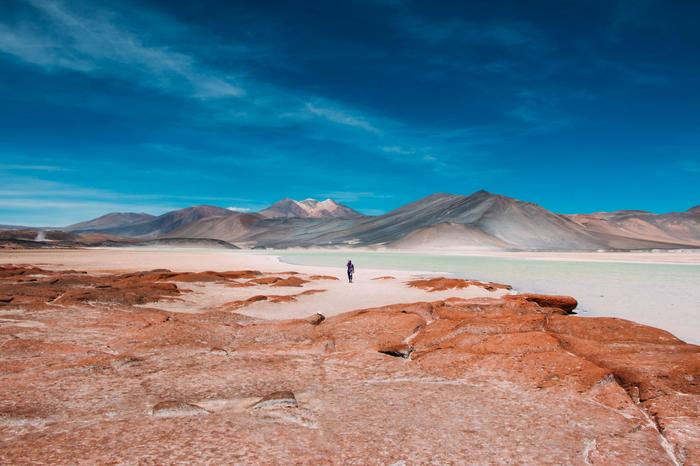
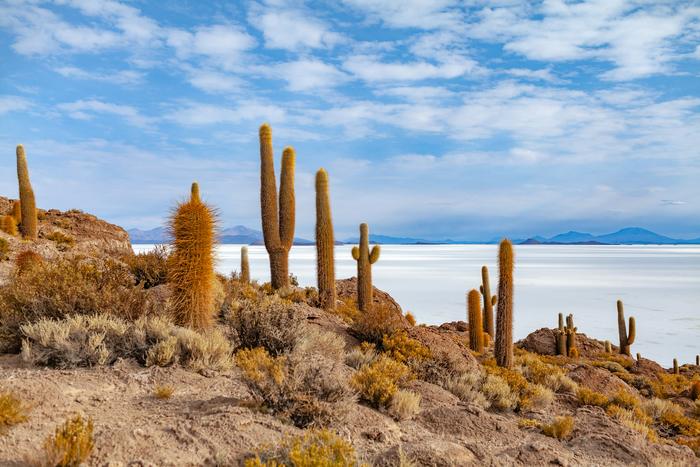
Salt flats vs 4,000kmwhat each is really forUyuni and La Paz, or Atacama–wine–lakes–Patagonia

Bolivia is the cheapest, highest, rawest trip on the continent: the Uyuni salt flats, La Paz in its canyon, the Andes, at rock-bottom prices and real altitude. Chile is the long, developed, varied ribbon: the Atacama, wine valleys, lakes and Patagonia down 4,000km of well-run country, much pricier and far smoother. Raw and cheap, or polished and varied.

The operational detail — Bolivia’s altitude, currency and 2026 disruptions, Chile’s distances and Patagonia seasons — lives on the two guides: Bolivia, know before you go and Chile, know before you go. This page is the head-to-head.

Who suits which

Who each actually suits

Cheap-and-raw or long-and-polished — so these rarely invert.

If you want…BoliviaChile
Rock-bottom costsWins clearly. The cheapest continent-wideAmong the priciest
Smooth, reliable travelRough and disrupted in 2026Wins clearly. Developed
Surreal salt flats and high AndesWins. Uyuni and La PazThe Atacama edges it
Range — desert, wine, lakes, PatagoniaNarrowerWins. 4,000km of variety
Patagonia’s towers and fjordsNot hereWins. Torres del Paine
Raw adventure over comfortWins. Reward over reliabilityComfortable and organised

Doing both

Salt flats into desert

A great border crossing links them.

These two pair through one of South America’s classic routes: the multi-day Uyuni 4x4 tour starts or ends at San Pedro de Atacama in Chile, so Bolivia’s salt flats and Chile’s driest desert join back to back. A natural combination is the Atacama plus the salar, perhaps extending into Chile’s wine country or Patagonia. Both are Southern Hemisphere, so plan around the same seasons — and respect the altitude, which is extreme on both sides of the border.

What we leave out

What we deliberately leave out

Exact prices and the moving pieces — Bolivia’s fast-shifting 2026 currency and fuel situation, Chile’s internal airfares and Patagonia-season rates — change within a season, so the figures here are the shape of the gap, not a quote; the country guides carry the live detail.

Bolivia or Chile, month by month

Which of the two is the better bet for each month of the year, scored on how well the season suits each place.

Which to choose

Choose Bolivia if:

  • You want raw, high-altitude adventure for very little — the salt flats, La Paz, the Andes.
  • Rough edges and thin infrastructure are a fair trade for the reward and the price.
  • Extreme altitude and surreal landscape are the whole appeal.

Choose Chile if:

  • You want range and polish — the Atacama, wine country, lakes, Patagonia.
  • Smooth infrastructure and reliability matter, and you’ll pay for them.
  • A long, varied, developed trip beats a cheap, raw one.

Common questions

Should I combine Bolivia and Chile?
Very naturally, via one of the continent’s great border crossings: the classic Uyuni 4x4 tour starts or ends at San Pedro de Atacama in Chile, linking Bolivia’s salt flats directly to Chile’s desert. Many trips run the Atacama and the salar back to back. Mind the altitude on both sides and Bolivia’s 2026 disruptions (see its guide); it’s a spectacular pairing of desert and salt.
Which is cheaper, Bolivia or Chile?
Bolivia, dramatically — it’s the cheapest serious travel on the continent, while Chile is among the most developed and expensive countries in South America. The trade is reliability: Chile’s infrastructure is smooth and predictable, Bolivia’s cheap but rough, with 2026 fuel shortages and blockades. See the Bolivia and Chile guides.
Which has the better landscapes?
Both are extraordinary, differently. Bolivia’s Uyuni salt flats and southwest lagoons are among the most surreal on earth, and La Paz’s canyon setting is unique. Chile stretches 4,000km through the Atacama, wine valleys, lakes and Patagonia — more variety, more polish. Surreal high-altitude intensity, or long, developed range.
Which is easier to travel?
Chile, clearly — it’s developed, reliable and well-organised, if spread over huge distances that mean internal flights. Bolivia is cheaper but demanding: serious altitude from day one, rough roads, and in 2026 recurring blockades and fuel shortages. Smooth and pricey, or cheap and rough.

Still undecided

Take the quiz

Three matches. Often answers comparison questions for you.

Start the quiz