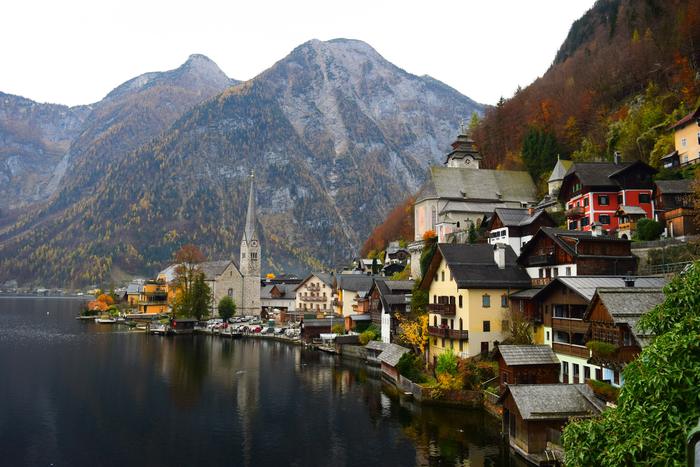
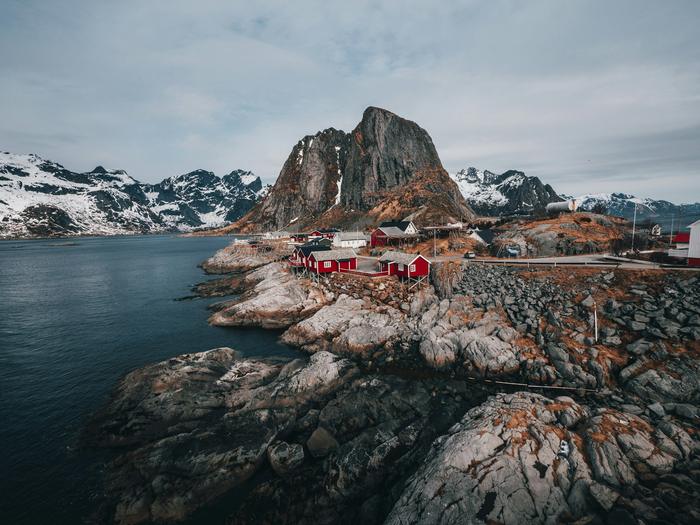
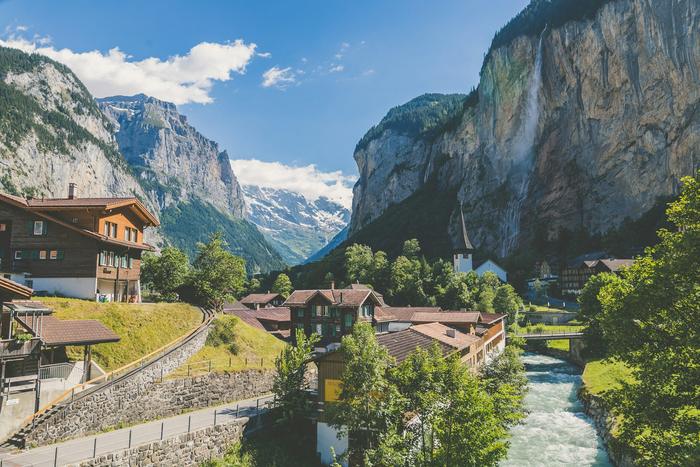
Two European mountain trips, and a wide gap in cost and character. Austria is the accessible, affordable one — Alps plus real cities in Vienna and Salzburg, superb rail, skiing in winter and hiking in summer, roughly a third cheaper than Switzerland with a genuine budget tier. Norway is the grander, wilder nature trip — fjords, scenic railways and the Arctic — but among the most expensive countries on earth, nearly four times the size, and long and slow to cover.
Affordable Alps-and-cities, or grand costly fjords
Both are mountain-and-nature trips in developed, rail-rich Europe — but one is accessible and affordable, the other grand, remote and very expensive.
Alps vs fjordsthe landscape on offerPeaks and lakes, or deep green fjords and the Arctic
Affordable vs top-tierthe cost gapAustria ~a third under Switzerland; Norway Iceland-tier
Cities vs wildernesswhere each leansVienna and Salzburg, or fjords and vast wild nature
Austria is the accessible, affordable mountain trip. The Tyrol and the Salzkammergut lakes come paired with genuinely great cities — Vienna and Salzburg — on an excellent rail network, with skiing in winter and hiking in summer. Crucially, it keeps a real budget tier (family Gasthöfe, supermarket lunches, sub-€25 advance train fares) that makes it roughly a third cheaper than Switzerland. Norway is the grand, wild nature trip. The fjords, the scenic railways and the coastal ships are among the most dramatic travel anywhere — but it is one of the most expensive countries on earth, nearly four times Austria’s size, nature-first rather than city-first, and slow to cross.
The genuine similarities are worth naming, because they are what make this a real choice rather than a false one: both are safe, high-trust, English-friendly countries with superb tap water and some of the best rail in Europe, both do dramatic mountains, and both are winter ski destinations and summer hiking ones. The differences are where the money and the character live, and everything below is about those. The deep operational detail — Austria’s vignette and alpine shoulder closures, Norway’s scenic-road seasons and the Vinmonopolet alcohol monopoly — sits on the two guides: Austria, know before you go and Norway, know before you go. This page is the head-to-head.
The landscape
Classic Alps, or fjords on a different scale
The same verdict as every comparison — but the scale of Norway is the fact people underestimate.
~4×Norway’s size against Austria
Mainland Norway is 323,808 km² to Austria’s 83,879 — close to four times the area — and it stretches more than 1,700 km north to south, a third of it inside the Arctic Circle. Austria is compact enough to cross in a morning’s train ride; Norway’s Oslo-to-Tromsø is a two-hour flight or a two-day drive. The scenery is spread out, which is why in Norway the journey is the sight and the distances dictate the trip.
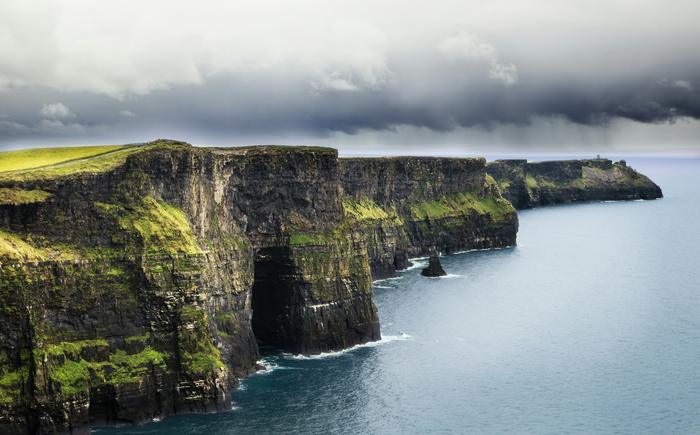
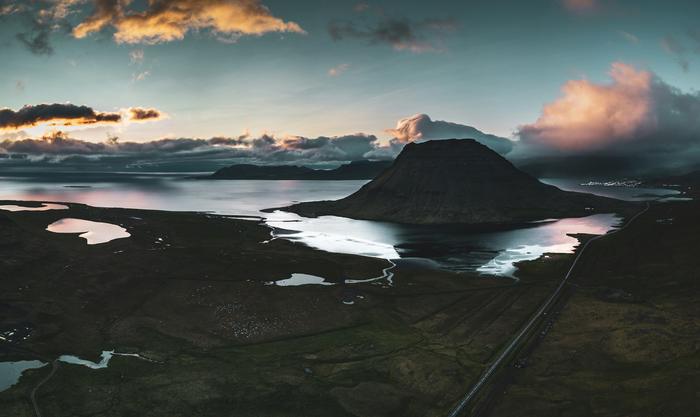
For sheer wow, Norway wins — the two UNESCO fjords (Geirangerfjord with its Seven Sisters falls, and the narrow Nærøyfjord off the vast Sognefjord) are among the most dramatic landscapes on earth, deep green water under 1,400-metre walls, and beyond them the Lofoten Islands and the Arctic. Austria’s Alps are classically beautiful and far more accessible, and they come with something Norway can’t match at the same scale: lakes and cultured cities within a short train ride of the peaks.
The trade is really about variety against grandeur. Austria packs mountains, lakes, Baroque towns and an imperial capital into a country you can cover in a week. Norway offers fewer registers but turns each one up: the fjords, then a thousand kilometres further the Arctic, with the midnight sun and the northern lights that Austria has no equivalent for at all.
Austria
Norway
The headline landscape
The Alps — the Tyrol, the Salzkammergut lakes
The fjords — Geirangerfjord, the Sognefjord
UNESCO natural / scenic draw
Hallstatt–Dachstein cultural landscape
Geirangerfjord & Nærøyfjord, inscribed 2005
The signature height
Grossglockner 3,798 m; Hochtor pass 2,504 m
Fjord walls rising ~1,400 m straight from the water
The set-piece
The Grossglockner High Alpine Road
The Seven Sisters waterfall, ~410 m
How far it reaches
Central Europe, close together
Over 1,700 km into the Arctic — Lofoten, North Cape
One honest caveat on the famous names. Norway is big and slow, so the fjord west, Oslo and the Arctic north are effectively three separate trips — few people do all three in one holiday, and trying is the classic mistake. Austria’s whole appeal is the opposite: the imperial east and the alpine west are a couple of hours apart on the same rail spine.
When to go
Two ski countries, one with a midnight sun
Both do winter and summer — but Norway adds a far-north light calendar that changes which season you book.
Year-roundAustria’s cities — Vienna, Salzburg, InnsbruckThe mountains close twice a year; the cities never do
May–SepNorway’s fjord windowScenic mountain passes shut the rest of the year
late Aug–Aprthe northern-lights seasonFar-north only (Tromsø) — Austria has no equivalent
MJJASOND
Austria — alpine hiking, open huts, lakesJun – mid-Sep
Jun – mid-Sep
Austria — ski season (glaciers longer)Dec – Apr
Dec – Apr
Norway — fjord season, scenic roads openMay – Sep
May – Sep
Norway — midnight sun (Tromsø)20 May – 22 Jul
20 May – 22 Jul
Norway — northern lights (far north)late Aug – Apr
late Aug – Apr
Crimson bars are the winter draws. Austria’s cities (Vienna, Salzburg, Innsbruck) run every month; its mountains switch off twice a year. Norway’s fjords are a summer product — the scenic passes shut in winter — while the northern lights need the dark months, so you rarely get both fjords and lights on one trip.
Austria works in two clean modes with the cities bridging them: summer (July–August) for hiking, lake swimming and open huts and lifts, winter (roughly December to mid-April) for skiing. Norway’s calendar is sharper. The fjords are a summer product — May to September, when the waterfalls peak with the snowmelt and the scenic mountain roads (Trollstigen and the National Scenic Routes) are open, roughly mid-May to October. Build a winter trip around fjord driving and you hit closed passes; build it around Tromsø and the Arctic — northern lights, skiing, dog-sledding — and it works.
The light is Norway’s genuinely unique card. Around Tromsø the midnight sun never sets from about 20 May to 22 July, and the polar night keeps the sun below the horizon from late November to mid-January; the lights run roughly late August to early April and are never guaranteed. Austria has nothing like it — but it has reliable, affordable, year-round city life that Norway’s remoter stretches don’t.
Each country has a season to avoid. Austria’s is the alpine shoulder dead zone — mid-April to late May, and November — when lifts have stopped, most mountain huts are shut and the Grossglockner road hasn’t reopened, though the cities run right through it. Norway’s is a winter fjord road-trip, which simply doesn’t work: the passes are closed, so winter means flying north to the Arctic instead. And pack for rain in Norway whatever the month — Bergen is the rainiest city in Europe, wet on some 240 days a year.
The cost
The value trip, or the eye-watering one
This is the decisive practical difference: Austria is affordable, Norway is Iceland-tier — and the budget is Norway’s number-one complaint.
~€10a draught beer in a Norwegian bar — shorthand for the trip
A Norwegian pint runs 100–130 NOK, against €3–5 in Austria. A mid-range dinner for two is 600–900 NOK, a hotel 1,400–2,300, and fuel, automatic road tolls and frequent fjord car-ferries all stack up on top. By Eurostat’s price-level index only Switzerland and Iceland are dearer in Europe. Austria, by contrast, runs about a third under Switzerland and keeps a genuine budget tier — the sharpest single contrast between the two countries.
~€10 vs €3–5a draught beer, Norway against AustriaThe cleanest everyday proxy for the whole gap
~37%Austria under Switzerland, like for likeA real budget tier Norway entirely lacks
VinmonopoletNorway’s only shop for wine and spiritsState-run, closed Sundays — why bar prices bite
Austria is the value mountain holiday. A mid-range day runs €80–130, top ski passes cluster at €62–80 where Zermatt starts higher, and the budget tier genuinely exists — Gasthöfe, supermarket lunches, cheap advance train fares. Norway is the splurge. It sits in the same top tier as Iceland across lodging, food and fuel, and the alcohol sting is structural: anything above supermarket-strength beer (4.7%) is sold only through the state Vinmonopolet shops, heavily taxed and closed on Sundays, which is why bar bills shock. The silent extras bite too — fjord car-ferries and road tolls bill automatically to foreign plates via AutoPASS, so they quietly stack up without your stopping to pay.
The honest summary: Norway rewards the money with scenery few places on earth can match, but you plan the budget before the itinerary. Austria gives you mountains, lakes and cities you can actually afford, which for many trips is the whole argument.
Like for like
Austria
Norway
Draught beer
€3–5
~€10 (100–130 NOK)
A sit-down meal
€15–20 a main
600–900 NOK for two
Mid-range hotel
€60–120
1,400–2,300 NOK
Wine & spirits
Any supermarket
State Vinmonopolet only, shut Sundays
The budget move
Gasthöfe, €24.90 advance train fares
Self-cater from Rema 1000 / Kiwi
Austrian figures are 2026 like-for-like against Switzerland; Norwegian figures read off operator and Norges Bank sources (NOK ~9.3/USD). Austria has a real budget tier — supermarket lunches, €3–5 beer, sub-€25 advance ÖBB "Sparschiene" fares — that Norway simply does not; in Norway the savings come from self-catering and skipping the bar.
Two blunting moves for Norway. If you drink, buy your duty-free allowance on arrival rather than at Vinmonopolet prices, and watch the motoring costs — tolls and the frequent fjord ferries add up invisibly. Note one quirk that cuts the other way: Norway is the world’s electric-car leader (95.9% of new cars sold in 2025 were fully electric), so EV hire is easy and fuel is less of a line than the tolls and ferries.
Entry & money
Both Schengen — but only one is in the EU
The border is the same; the currency and the small print are not.
Practically, entry is the same story for both: no visa for US, UK, Canadian or Australian tourists, 90 days in any 180 under Schengen, the EU’s biometric Entry/Exit System now live (fingerprints and a photo instead of a passport stamp), and the €20 ETIAS pre-authorisation still to come — so check it at booking time rather than assume. The one real difference at the border is invisible: because both are in Schengen, a flight between Vienna and Oslo has no passport control at all, which matters for anyone tempted to combine them.
The money is where they diverge. Austria uses the euro and is still, surprisingly, a cash country — roughly 85% of transactions are cash, so you carry notes for mountain huts, Heurigen and rural Gasthöfe. Norway uses the krone and is nearly the opposite: all but cashless, with the Vipps app everywhere, though international cards work fine throughout. Norway’s VAT is 25% with a tax-free refund for non-residents on larger purchases.
Austria
Norway
Bloc
EU member
Not in the EU — EEA & Schengen
Currency
Euro (€)
Norwegian krone (NOK, ~9.3/USD)
Border for most Westerners
Schengen — 90 days in any 180
Schengen — 90 days in any 180
EES biometric check
Live
Live since April 2026
ETIAS (€20, not a visa)
Expected to phase in from late 2026
Phasing in through 2027
Paying
Still a cash country (~85% cash)
Nearly cashless — Vipps, but cards work fine
A small 2026 wrinkle on the Norwegian side: from summer 2026 municipalities may levy an opt-in visitor tax of up to 3% on overnight stays and cruise passengers, so check whether your destination has adopted it. Austria’s equivalent fiddly cost is the motorway vignette (€106.80 a year, or €12.80 for 10 days) if you drive — buy it before you cross the border or risk an on-the-spot substitute toll.
Getting around
Compact rail, or journeys that are the sight
Both have superb trains — but in Austria the train gets you there, and in Norway the train is the there.
2h20 vs 2 daysVienna–Salzburg against Oslo–Tromsø
Austria is small and fast: the ÖBB Railjet links Vienna and Salzburg in about 2h20, twice an hour, walk-up from €24.90, and the main sights are close together. Norway is long and slow: Oslo to Tromsø is a two-hour flight or a two-day drive, and even the marquee fjord run, Oslo–Bergen, is a seven-hour rail crossing of the Hardangervidda plateau — which is the point, not the penalty.
Austria is easy and compact. ÖBB does the heavy lifting — the Railjet corridor needs no car, the Nightjet sleeper network reaches half of Europe, and a car only earns its keep for the Salzkammergut lakes and remote alpine valleys. You can plan a whole trip around short, frequent, cheap hops. Norway is a different problem. It is superb for the Nutshell route and city-to-city rail, but the fjords, Lofoten and the Arctic north are far apart and strung together by rail, coastal ship, fjord ferries and flights rather than one easy loop. For distance, Norwegians fly — Widerøe serves the small airports.
Austria
Norway
The rail backbone
ÖBB Railjet, Vienna–Salzburg ~2h20, twice an hour
Bergen Line, Oslo–Bergen ~7 hrs over the Hardangervidda
The signature journey
Nightjet sleepers across Europe
Norway in a Nutshell + the steep Flåm Railway
The water route
— (lakes, not transport)
Hurtigruten / Havila, Bergen–Kirkenes, 34 ports, ~7 days
Driving extras
Vignette + alpine tolls (Grossglockner €46.50)
AutoPASS auto-bills tolls & fjord ferries to foreign plates
Do you need a car?
No for cities; yes for the Salzkammergut lakes
No for the Nutshell; yes for Lofoten & the far north
Both rail networks are among Europe’s best, but they play different roles. Austria’s ÖBB is the backbone that makes a car optional for the cities and the main corridor. Norway’s trains, the Flåm Railway and the Hurtigruten coastal voyage are destinations in their own right — "Norway in a Nutshell" (Fjord Tours) packages the best of them into one car-free Oslo–Bergen run.
If you want the trip to be the journeys themselves — a scenic railway, a steep descent to a fjord, a week up the coast past 34 ports — Norway is unmatched and Austria doesn’t really compete; its rail is excellent but it’s transport, not the attraction. If you want to be somewhere different every day without a long transfer, that’s Austria.
Skiing & outdoors
Marquee ski resorts, or wilderness and right-to-roam
Both ski and both hike — but Austria has the linked mega-resorts and the après-ski, Norway the raw outdoors.
For a ski holiday, Austria wins clearly. From December to mid-April the summer hiking regions become marquee resorts — St Anton (part of the 305 km Ski Arlberg, unpretentious and hard-partying), Ischgl (the polished "Ibiza of the Alps"), plus Kitzbühel and Sölden — with lift passes meaningfully cheaper than Switzerland’s and an après-ski culture that is a real differentiator. Norway does ski, but it’s low-key cross-country and Arctic skiing, not a linked-resort-and-nightlife scene.
For raw outdoors, Norway answers back. Its summer flagship is the three famous fjord hikes above the Lysefjord and Hardangerfjord — serious, exposed, photograph-everyone-knows days — backed by the right to roam. Austria’s summer is gentler and more serviced: waymarked trails, mountain huts that feed you, cable cars that lift you from the city centre to 2,300 metres in twenty minutes on Innsbruck’s Nordkette.
Austria
Norway
Core ski season
Dec–Apr; Sölden & Hintertux glaciers longer
Winter in the Arctic and the interior
Marquee resorts
St Anton, Ischgl, Kitzbühel, Sölden
Smaller and scattered — no Alpine-scale linked areas
The biggest linked area
Ski Arlberg — 305 km of piste
Nothing on that scale
Top day pass
€62–80
Lower-key — skiing isn’t the headline draw
The après-ski scene
A genuine draw — Ischgl, St Anton
Not the point — wilderness skiing, cross-country
The summer flagship
Alpine hiking, open huts, lake swimming
The three fjord hikes — Preikestolen, Kjerag, Trolltunga
Austrian ski dates and €62–80 passes are 2026/27 operator figures; rates are dynamic. Norway’s outdoor identity is the fjord hikes and friluftsliv rather than a resort-and-après scene — the famous Preikestolen (~8 km, 4–5 h), Kjeragbolten (~12 km) and Trolltunga (~27 km) are serious summer mountain days, not lift-served runs.
Culture
Imperial cities and coffeehouses, or friluftsliv
Here the two genuinely invert: Austria’s culture is urban and imperial, Norway’s is the outdoors itself.
Since 2011Viennese coffeehouse culture is listed heritage
On Austria’s national intangible-heritage inventory since 2011: the ritual of a Melange, a newspaper on a wooden holder and a glass of water, nursed for hours. It’s shorthand for the whole Austrian register — Schönbrunn and the Hofburg, the Vienna Philharmonic’s New Year’s Concert, the Salzburg Festival, Mozart and the Strauss family. Austria does grand urban culture in a way Norway, for all its charms, does not.
Austria is the culture trip. Vienna is an imperial capital — Schönbrunn Palace (book the timed Palace Ticket, ~€42), the Hofburg, the Belvedere with Klimt’s "The Kiss" — wrapped in a living musical heritage and the Baroque counterpoint of Salzburg (Mozart, the fortress, the Sound of Music tour). The coffeehouse and the Heuriger wine tavern are destinations in themselves, and the Salzburg Festival books the city out every summer. This is a side of travel Norway barely competes on.
Norway’s "culture" is largely the outdoors. Its cities are smaller and nature-adjacent — Oslo has the MUNCH museum, the new National Museum, Vigeland Park and the walk-on Opera roof; Bergen has its UNESCO Bryggen wharf — but the defining national trait is friluftsliv, open-air life, and the seafood-and-New-Nordic table (brunost brown cheese, winter skrei, Oslo’s three-Michelin-star Maaemo). Austria for museums, music and Baroque squares; Norway for the culture of being outside.
Norway’s most striking cultural fact is a legal one: allemannsretten, the right to roam. You can walk, ski and wild-camp freely on uncultivated land without asking, as long as you stay 150 metres from any house and move on after a couple of nights — the legal face of friluftsliv, and something Austria, for all its alpine access, has no exact equivalent of. Austria’s counterpart quirk is small and urban: shops shut by law on Sundays, so stock up on Saturday.
Who suits which
Who each actually suits
On several rows the answer inverts — the country that wins overall loses for your particular trip.
Read down the column: Austria takes value, cities, compact travel and the ski scene; Norway takes raw grandeur, the great journeys and the Arctic light. The useful question is which of those your trip is actually about. Someone who wants to ski hard and cheaply, with a Baroque city on either end, is describing Austria exactly. Someone whose whole reason to go is a fjord at dawn or the lights over Tromsø will not be satisfied by Austria at any price.
If you want…
Austria
Norway
Mountains plus real cities
Wins clearly. Vienna and Salzburg with the Alps
Nature-first; the cities are smaller
The grandest, wildest scenery
Classically beautiful, but on a human scale
Wins. Fjords and the Arctic north
To keep the budget sane
Wins clearly. A real budget tier exists
Among the priciest countries on earth
Easy, compact travel
Wins. Excellent rail, short frequent hops
Long and slow — rail, ship, ferries, flights
Skiing with après-ski
Wins. St Anton, Ischgl, cheaper passes
Low-key Arctic and cross-country, not the scene
Scenic train and boat journeys as the point
Good rail, but it’s transport
Wins. The Nutshell, Flåm, Hurtigruten
The northern lights or the midnight sun
No equivalent at all
Wins. Tromsø and the Arctic
Doing both
Two trips, not one — but an easy flight apart
Not neighbours and not complementary — so this is about sequencing, not combining.
~2h15the direct Vienna–Oslo flight — yet still two separate trips
They aren’t far in flying time, and because both are in Schengen there’s no border control between them. But a short flight doesn’t make them one holiday: they sit in central versus northern Europe, with different climates and characters, and stringing them together just means two mountain trips back to back rather than a mountains-and-coast pairing that actually complements.
Austria and Norway don’t slot together the way a mountains-and-coast or a city-and-beach pair would — you’d simply be doing two nature-and-mountain trips in one go, with a long reposition in the middle. Norway’s expense is a further argument for giving it a dedicated holiday rather than tacking it onto a cheaper Austrian one, where the cost whiplash between the two is jarring. If you genuinely have the time and the budget, the sane shape is sequential and seasonal: Austria in winter for the skiing and the Christmas markets, Norway in summer for the fjords and the midnight sun — never the reverse, because a winter fjord trip hits closed passes and an Austrian summer misses the snow.
If you can only pick one, let the season decide as much as the money. A summer slot points to Norway (fjords open, midnight sun, scenic roads running) or to Austria’s hiking-and-lakes mode; a winter slot points firmly to Austria (affordable skiing, cities, markets) unless the northern lights are the specific dream, in which case it’s Norway’s Arctic — and not its fjords.
What we leave out
What we deliberately leave out
The same discipline as the country guides: no numbers we can’t keep honest.
Exact prices beyond the structural comparison. Austrian ski and hotel rates and Norwegian fares, fuel and ferries all move within a season, and the krone floats against the euro, so the figures here are the shape of the gap, not a quote — the country guides carry the live detail. The reliable, durable facts are the ones we lean on: Austria keeps a real budget tier and Norway doesn’t, and Norway sits two rungs above Austria on Europe’s price ladder.
Two things change year to year and are worth a re-check before you book: Austria’s alpine shoulder closures and its vignette and ski pricing, and Norway’s scenic-road opening dates (Trollstigen reopened in April 2026 after a two-year closure). EES is live for both and ETIAS is still phasing in, so confirm the entry rules at booking time rather than assume.
Anything seasonal on this page — ski dates, festival dates, scenic-road openings, the Norwegian visitor tax — is set annually, so treat it as worth a glance before you travel rather than a fixed promise.
Austria or Norway, month by month
Which of the two is the better bet for each month of the year, scored on
how well the season suits each place.
The fjords are the dream — Geirangerfjord, the Sognefjord, the scenic railways and coastal ships.
You want grand, remote wilderness over cities, and don’t mind a bigger, slower country.
You want the northern lights or the midnight sun, and you accept a top-tier budget for scenery few places match.
Common questions
Is Austria or Norway cheaper?
Austria, decisively. It’s mid-range by Alpine standards — roughly 35–40% under Switzerland — and has a genuine budget tier of Gasthöfe, supermarket meals and sub-€25 advance train fares. Norway sits in the world’s top price tier alongside Iceland: a draught beer is about €10, alcohol is sold only through state Vinmonopolet shops, and fuel, tolls and fjord ferries stack up. Norway is a far more expensive trip.
Is Austria or Norway better for scenery?
Different kinds of grandeur. Norway’s fjords — deep green water under snow peaks, the two UNESCO fjords, the Lofoten Islands and the Arctic — are among the most dramatic landscapes anywhere, and the scenic trains and coastal voyages are sights in themselves. Austria’s Alps are classically beautiful and far more accessible, paired with lakes and cultured cities. For sheer wow, Norway; for a balance of mountains and culture, Austria.
Is Austria or Norway easier to travel?
Austria — it’s compact, its ÖBB rail network is excellent (Vienna–Salzburg about 2h20, twice an hour), and the main sights are close together. Norway is nearly four times the size and long and slow: superb for the Norway-in-a-Nutshell rail route and city-to-city trains, but the fjords, Lofoten and the Arctic north are far apart, reached by rail, coastal ship, fjord ferries and flights rather than one easy loop.
When should I go to Austria vs Norway?
Austria works in two modes — summer (July–August) for hiking and lakes, winter (December–April) for skiing — with the cities year-round; avoid the alpine shoulder (mid-April to late May, and November) when lifts and mountain roads close. Norway’s fjords are a summer product (May–September, when the scenic mountain roads are open and the midnight sun is up north); winter is for the Arctic and the northern lights, not fjord road-trips, because the passes shut.
Should I do both Austria and Norway in one trip?
Not naturally. The Vienna–Oslo flight is only about two and a quarter hours and both are in Schengen, so there’s no border friction — but they sit in central versus northern Europe with different climates and characters, and they don’t complement each other the way a mountains-and-coast pairing would. Norway’s cost alone argues for giving it its own holiday. Pick the one that matches what you want — affordable Alps-and-cities, or grand, pricey fjords.