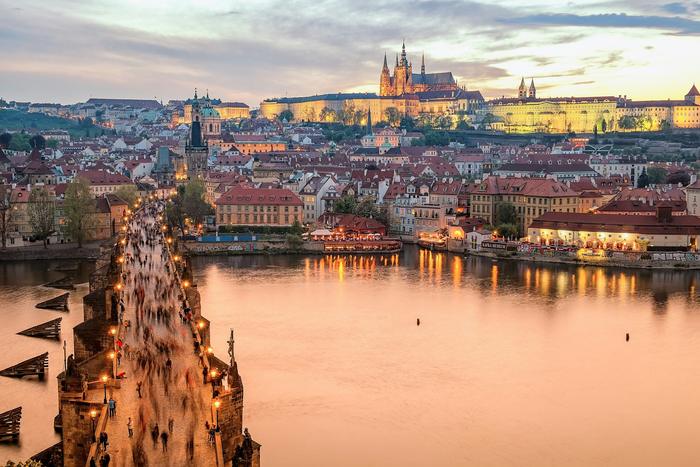
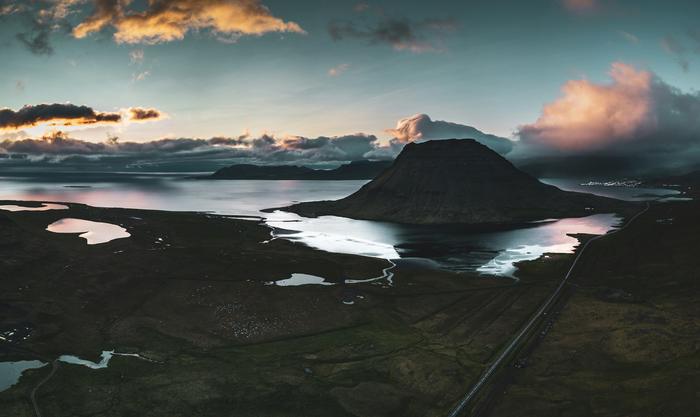
Two northern-European countries that look alike on paper — EU, Schengen, wealthy, four real seasons, superb trains, and neither of them cheap — and feel nothing alike on the ground. Austria is the Alpine heart of the continent: reliable skiing, summer mountains, and the imperial music-and-coffee-house culture of Vienna and Salzburg, compact and easy to reach. Sweden is the Nordic north: Stockholm across its islands, endless forest and lake, the midnight sun and aurora of Lapland, pricier and vast, split into two completely different seasons.
Both are developed, four-season, rail-rich and not cheap. The likeness ends there — one is central, compact and cultural, the other vast, remote and elemental.
Alps vs Arcticthe basic characterMountain resorts and imperial cities, or archipelago, forest and Lapland
~84k vs ~450k km²land area — Sweden is over five times the sizeAustria fits in a two-hour rail triangle; Sweden runs 1,500 km north to south
Culture vs naturewhat each leans onVienna and Salzburg, or the archipelago, right-to-roam wilderness and the aurora
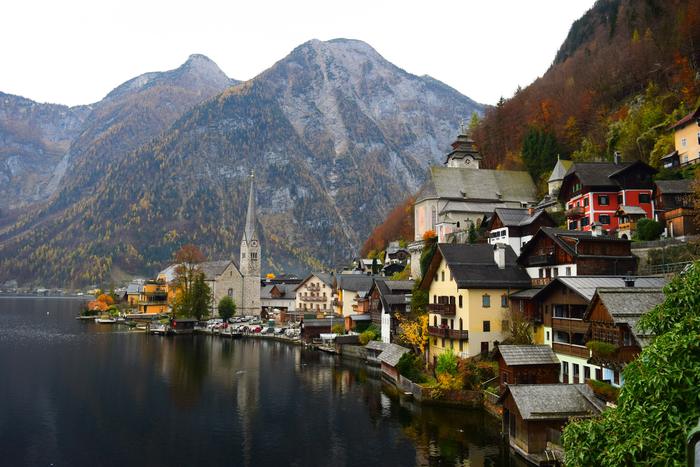
Austria is the Alpine heart of Europe. Reliable skiing and summer hiking in the mountains, and the imperial music-and-coffee-house culture of Vienna and Salzburg — all of it central, compact and stitched together by fast trains. You can hold the whole country in your head: cities on a two-hour rail spine, the Tyrol an hour or two beyond, nothing more than a short hop from anything else.
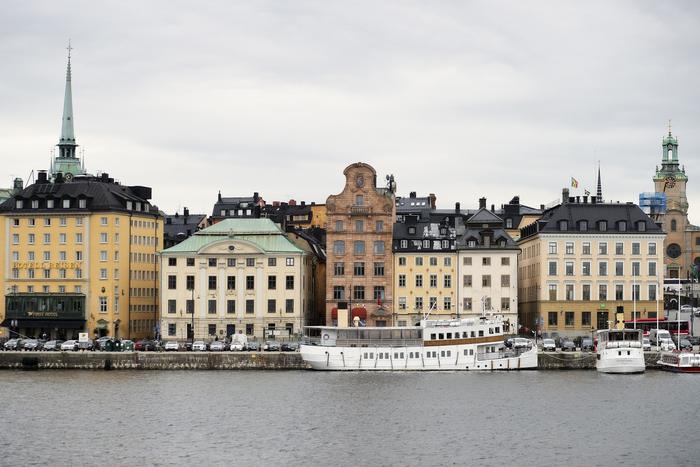
Sweden is the Nordic north. Stockholm spread across fourteen islands, a long Baltic coast, endless forest and lake, the design-minded ease of lagom — and, 1,000 km further up, the midnight sun and northern lights of Swedish Lapland. It is over five times Austria’s size and reaches past the Arctic Circle, so it is pricier, more remote, and split into two utterly different trips by the season you pick. The full operational detail lives on the two guides: Austria, know before you go and Sweden, know before you go. This page is the head-to-head.
Entry & money
Both Schengen — one euro, one krona you barely touch
Getting in is identical. Paying once you are there is where they part.
Euro vs kronaAustria is in the eurozone; Sweden keeps the SEKBoth EU and Schengen — but Sweden stayed out of the euro
~85% cash vs ~80% cardAustria still runs on cash; Sweden barely uses itCarry euro coins for Austrian huts; carry only a contactless card in Sweden
EES liveETIAS (€20) not required yet — Austria ~late 2026, Sweden ~2027Visa-free 90 days in any 180 for most Westerners
The border is the same story for both: EU members inside the Schengen Area, so visa-exempt visitors get the shared 90-days-in-180 allowance, and the EU’s biometric Entry/Exit System is now live — fingerprints and a photo, no more passport stamp. The ETIAS pre-authorisation (a €20 online registration, not a visa) is not required yet; it is expected to phase in from late 2026 for Austria and around 2027 for Sweden, so check at booking rather than assume.
The money is the real divergence. Austria uses the euro and is still, surprisingly, a cash country — roughly 85% of transactions are cash, and you carry euro notes and coins for mountain huts, Heurigen wine taverns, market stalls and small rural Gasthöfe. Sweden kept the krona (it is in the EU but outside the eurozone) and is one of the most cashless societies on earth: around 80% of retail is by card, the Swish app is near-universal, and many shops, cafés, museums and buses simply will not take notes and coins. Swedish VAT is a flat 25%.
One Swedish quirk worth planning around: anything stronger than 3.5% ABV is sold only through Systembolaget, the state alcohol-retail monopoly — minimum age 20, short hours (closing around 20:00 on weekdays, 15:00 on Saturdays, shut Sundays and holidays), supermarkets stocking only weak "folköl." Austria has no such rule: wine, beer and spirits are sold normally in any supermarket, though Sunday closing is the law there, so stock up on Saturday.
When to go
Two seasons each — but switched on at different times
Both reward the right month and punish the wrong one. The traps are completely different.
JJASOND
Austria — alpine hiking, lakes, open hutsJun – mid-Sep
Jun – mid-Sep
Austria — ski season (glaciers earlier/later)Dec – Apr
Dec – Apr
Austria — alpine shoulder, lifts & huts shutNov (and mid-Apr–May)
Nov (and mid-Apr–May)
Sweden — summer, archipelago & midnight sunJun – Aug
Jun – Aug
Sweden — aurora season in the northSep – Mar
Sep – Mar
Crimson bars catch people out. In Austria it is the alpine shoulder (November, and mid-April into late May), when lifts, huts and the Grossglockner road are shut; in Sweden it is the far north in late October–November, dark but not yet reliably snowy, and the fact that the aurora season (shown running past the chart into the new year) is the opposite half of the year from the midnight-sun summer.
Austria runs in two modes with a dead zone between. Summer (July–August) is for alpine hiking, lake swimming and open huts and lifts; winter (roughly early December to mid-April) is for skiing. The cities — Vienna, Salzburg, Innsbruck, Graz — function fully every month. The trap is the alpine shoulder: in November and again from mid-April into late May, the lifts have stopped, most mountain huts are closed until June, resort hotels shut for staff breaks, and the Grossglockner High Alpine Road has not reopened. A lakes-and-mountains trip in those weeks finds half of it closed.
Sweden’s two seasons are almost opposite halves of the year. Summer (June–August) is the archipelago, the long bright evenings and midsummer, with the midnight sun up north — in Kiruna the sun does not set from roughly 28 May to 16 July. Winter is the other Sweden: the aurora season runs September to March, with December–March giving the darkest skies and most reliable snow for Lapland, dog-sledding and the Icehotel (open December to April). You cannot have both on one trip — the midnight sun and the northern lights are six months apart.
The single date to respect in Sweden is Midsummer (the weekend around 20 June) — the biggest celebration of the year, but it shuts shops, restaurants and services from the Friday and strains transport. Glorious if you join a maypole celebration in Dalarna or the countryside; frustrating if you expected an ordinary open city weekend. Austria’s equivalent planning dates are the Salzburg Festival (17 July–30 August in 2026), which books the city out and surges rates, and Vienna’s Christmas markets, mid-November to Christmas.
Winter
Skiing, or the aurora — not the same winter
Both are winter destinations, for opposite reasons. One is piste time; the other is the Arctic.
€62–80a top-resort day pass in AustriaSt Anton €62–72, Kitzbühel €79.50; Ski Arlberg links 305 km of piste
Sep–MarSweden’s aurora season, best Dec–MarchAbisko and Kiruna at ~67–68°N, inside the auroral band
~90 minthe flight from Stockholm up to Kiruna for LaplandOr an overnight sleeper; the north is a deliberate journey
For actual skiing, Austria is not close to a contest. From December to mid-April it fields a dense, reliable, lift-linked network of marquee resorts — St Anton (part of the 305 km Ski Arlberg), the polished, clubby Ischgl, Kitzbühel of the Hahnenkamm downhill race, Sölden and Zell am See — all within a short hop of the cities, with an après-ski culture the quieter Swiss and Nordic resorts do not match.
Sweden’s winter is about the Arctic, not the piste. You go north for the aurora (realistic odds in Abisko and Kiruna, roughly September to March), for dog-sledding, and to sleep in the Icehotel. If piste time is the goal, Austria decides it; if the northern lights are the goal, that alone decides it for Sweden — Austria is far too far south to see them.
Winter is for…
Austria
Sweden
Downhill skiing
Wins clearly. A dense network of reliable Alpine resorts — St Anton, Ischgl, Kitzbühel, Sölden — close to the cities, Dec–Apr
A minor affair; downhill is a sideshow, not the reason you come
Northern lights
Too far south — essentially never
Wins. Abisko’s clear-sky microclimate over Lake Torneträsk is the go-to aurora base
The signature stay
A lift-linked ski village with real après-ski
The Icehotel at Jukkasjärvi, rebuilt from river ice each winter (Dec–Apr)
Other snow activities
Glacier skiing (Sölden, Hintertux) earlier and later in the season
Dog-sledding, snowmobiling, the Sami north, the polar night
Austrian day passes cluster at €62–80 against Switzerland’s CHF 89-plus, and the après-ski is a genuine draw. Sweden’s winter is the Arctic experience rather than the piste. Ski dates and aurora windows shift with the weather and the solar cycle — see the country guides.
Summer
Peaks and lakes, or islands and endless light
In summer the pull is just as split — mountains and culture against water and daylight.
18h vs ~15hmidsummer daylight: Stockholm against Vienna
Around midsummer Stockholm gets about 18 hours of daylight and a sky that never fully darkens; north of the Arctic Circle the sun does not set at all (Kiruna, late May to mid-July). Vienna, far to the south, gets a long but ordinary summer day of roughly 15–16 hours. That extra light is itself one of Sweden’s sights — the "white nights" and the midnight sun — where Austria’s summer draw is the mountains the light falls on.
Austria’s summer is peaks and culture. July and August open the high country — alpine hiking, mountain huts, cable cars like Innsbruck’s Nordkette lifting you from the city to 2,300 m in about 20 minutes, the Grossglockner road climbing to the 2,504 m Hochtor pass, and lake swimming in the Salzkammergut around the Wolfgangsee. Vienna and Salzburg run right through it, festival season at full tilt.
Sweden’s summer is water and light. The Stockholm archipelago — tens of thousands of islands on the city’s doorstep, reached by Waxholmsbolaget ferries — the long bright evenings, Gotland’s medieval Visby, and the midnight sun in the far north. The right-to-roam freedom of allemansrätten lets you walk, swim, camp a night and pick berries across open land. Austria is peaks-and-culture; Sweden is islands-and-daylight. Neither is wrong; they are simply different holidays.
Cost
Neither is cheap — but Sweden is dearer
This is one of the genuine similarities: both sit above the European norm. The gap is in how far above, and whether there is a budget floor.
Both above EU averagethe honest shared truth — with Sweden further above
Austria runs mid-to-high for Europe, on a par with its Alpine neighbours, and crucially keeps a real budget tier — family Gasthöfe, supermarket lunches, €3–5 beer, sub-€25 advance ÖBB saver fares. Sweden’s price level sits structurally above the EU average, with Lapland experiences and bar prices carrying a premium; its one consolation is that Stockholm is the cheapest of the Nordic capitals. Exact figures move within a season, so treat these as the shape of the difference, not a quote.
Both countries are expensive by European standards — that is the honest shared truth, not a point of difference. Where they split is the degree and the floor. Austria is mid-to-high, in line with its Alpine neighbours, and still has a budget tier you can actually drop into: a family Gasthof, a supermarket lunch, a €3–5 beer, an advance ÖBB "Sparschiene" fare under €25. A frugal day in Austria is genuinely possible.
Sweden is dearer and harder to do cheaply. Its price level is structurally above the EU average, bar and restaurant prices bite, and the headline Lapland experiences — the Icehotel, the aurora tours, the dog-sledding — carry a real premium. The saving grace is that Stockholm is the least costly of the Nordic capitals, so the city is softer on the wallet than Oslo or Copenhagen. If day-to-day value is the deciding factor, Austria edges it.
We keep exact daily figures off this page because they go stale within a season. The reliable rule: both are above the European norm, Sweden is the dearer, and only Austria has a genuine budget floor. Checked October 2026.
Getting around
Both have superb trains — one covers a country, one a continent’s worth of north
Shared strength, opposite scale: Austria’s rail knits a compact country; Sweden’s has to cross a vast one.
Austria is compact and rail-rich. ÖBB does the heavy lifting — the Railjet links Vienna and Salzburg in about 2h20, twice an hour, the main corridors need no car, and ÖBB runs Europe’s flagship Nightjet sleeper network. A car only earns its keep for the Salzkammergut lakes and remote alpine valleys. Switching bases is near-effortless, because nothing is far.
Sweden has the same quality of rail stretched over five times the land. SJ’s X2000 runs the populated southern spine fast — Stockholm to Gothenburg in about three hours, on to Copenhagen over the Öresund Bridge — and the Stockholm metro is itself a sight, "the world’s longest art gallery." But the far north is genuinely far: reaching Kiruna and Abisko means an overnight sleeper or a 90-minute flight. The trains are not the limitation; the distances are.
Journey
How
Note
Vienna – Salzburg (Austria)
ÖBB Railjet, ~2h20
Twice an hour; advance fares below €17
Stockholm – Gothenburg (Sweden)
SJ X2000 high-speed, ~3h
The fast, populated southern spine
Stockholm – Malmö / Copenhagen
SJ over the Öresund Bridge
Links on to Denmark
Stockholm – Kiruna / Abisko
Overnight sleeper, or a ~90-min flight
Lapland is a journey, not a day trip
Vienna / Salzburg – the Tyrol
Railjet along the main corridor
Switching bases is painless
Both rail systems are excellent — ÖBB with its Nightjet sleepers, SJ with the X2000. The difference is distance: Austria’s cities sit on a two-hour spine, while reaching Swedish Lapland from Stockholm means a night train or a short flight. Checked October 2026.
Two driving footnotes if you hire a car. In Austria, the motorways need a vignette (€106.80 a year, or €12.80 for 10 days) — skip it and you risk a ~€120 on-the-spot substitute toll — and several alpine specials charge their own toll on top, the Grossglockner road €46.50. In Sweden, winter tyres are mandatory December–March, and elk and reindeer are real collision hazards at dawn and dusk, especially up north.
Culture & food
The coffee house and the concert hall, or fika and clean design
Both have a national coffee ritual and a strong aesthetic — one imperial and ornate, the other minimal and egalitarian.
Melange vs fikatwo coffee cultures, opposite in spirit
Vienna’s coffeehouse culture has been listed heritage since 2011 — a Melange, a newspaper on a wooden holder, a glass of water, nursed for hours in a gilded room. Sweden’s fika is the democratic cousin: stopping properly for coffee and a cinnamon bun (the kanelbulle even has a national day, 4 October), a daily institution rather than a destination. Same drink, opposite temperament — ornate and imperial against understated and egalitarian. Swedes drink among the most coffee per head on earth, about 8 kg a year.
Austria’s culture is imperial and musical. Vienna wears its heritage everywhere — the Philharmonic’s New Year’s Concert from the Musikverein, the Vienna Boys’ Choir descended from a court choir of 1498, Mozart and the Strauss family woven through the streets, Salzburg’s festival and Baroque Altstadt. The table matches it: Wiener Schnitzel (by law veal), Tafelspitz, Apfelstrudel and Sachertorte, washed down with crisp Grüner Veltliner at a Heuriger wine tavern. It is comfort food from an empire.
Sweden’s culture is minimal and egalitarian. Two words unlock it — lagom ("just the right amount") and jantelagen (don’t think you’re better than anyone else) — and together they explain the design restraint the world buys as IKEA and H&M. The food is hearty and homely: köttbullar (meatballs with lingonberry), gravlax and pickled herring, crispbread, reindeer in the north, and the famously pungent surströmming dare. English is near-universal (around 89% speak it), so there is no language barrier.
A respectful note for Sweden’s north: the Sami, the indigenous people of Sápmi, have their own language, parliament (seated in Kiruna) and reindeer-herding culture — approach it as a living culture, not a photo op. And both countries are welcoming and progressive: same-sex marriage has been legal in Sweden since 2009 and Austria since 2019, with Stockholm Pride the largest in Scandinavia and Vienna’s Regenbogenparade one of Europe’s big Prides.
Where to base
Six compact Austrias, or a country you choose a corner of
In Austria you can string bases together; in Sweden you pick a region by season and commit.
Austria rewards pairing bases. Most trips put Vienna and Salzburg on the two-hour rail line with the Salzkammergut lakes between, add Innsbruck or the Tyrol for the mountains, and the Wachau or Graz for wine and a slower pace. It is compact and rail-rich, so moving on is painless — the only mistake is trying to do the alpine west and the imperial east in too few days.
Sweden you choose a corner of. You rarely do the whole country in one trip: it is the city-and-coast south (Stockholm, Gothenburg, Malmö, Gotland) or the Arctic north, picked by season. Swedish Lapland is a separate, deliberate journey, chosen for the midnight sun or the aurora — not somewhere you tack onto a Stockholm weekend. Scale is the real planning fact: over five times Austria’s size, reaching from the Baltic to beyond the Arctic Circle.
Base
Country
What it’s for
Vienna
Austria
Imperial capital — Schönbrunn, the Hofburg, the Belvedere, coffeehouses; on the rail spine
Salzburg + the Salzkammergut
Austria
Mozart and Baroque, the lakes gateway, Hallstatt (time it early or late)
Innsbruck / the Tyrol
Austria
The Alps up close — skiing, the Nordkette, city to mountain-top in 20 minutes
Stockholm + the archipelago
Sweden
The island capital — Gamla Stan, the Vasa Museum, the art-filled metro; most trips start here
Gothenburg / Malmö & the south
Sweden
Seafood, fika, the Öresund bridge to Copenhagen; the relaxed, foodie coast
Swedish Lapland (Kiruna / Abisko)
Sweden
A deliberate journey north — midnight sun in summer, aurora and the Icehotel in winter
Who suits which
Who each actually suits
On several of these the answer inverts — the thing one country does best is the thing the other cannot do at all.
If you want…
Austria
Sweden
Reliable downhill skiing
Wins clearly. A dense, close-at-hand Alpine resort network, Dec–Apr
Minor downhill; the north is for the aurora and Arctic activities
The northern lights or midnight sun
Too far south for either
Wins outright. Abisko and Kiruna at 67–68°N — the whole reason to go north
Imperial / classical-music culture
Wins. Vienna and Salzburg, the concert halls, the coffeehouses
Stockholm is handsome and design-rich, but a different, quieter vibe
Archipelago, forest and right-to-roam wilderness
Alpine and landlocked — mountains, not islands
Wins. The Stockholm archipelago and allemansrätten across lake and forest
Easy, central, well-connected, short trip
Wins. A two-hour rail triangle; nothing is far
The south is easy; the north is a remote, deliberate journey
A city break on a tighter budget
Edges it. A real budget tier and €3–5 beer
Dearer and cashless — though Stockholm is the cheapest Nordic capital
A once-in-a-lifetime, bucket-list trip
Superb, but reads as a classic European holiday
Wins. Lapland, the Icehotel and the aurora are the trip of a lifetime
Doing both
A short flight apart — and still two separate trips
Unlike neighbouring islands you can ferry between, these are a plane ride and a mood apart.
~2h15the direct Vienna–Stockholm flight
They are not logistically far — a direct flight of a little over two hours links the capitals, so stitching a few days of each together is physically easy. What makes "do both" rarely the right call is not distance but direction: Alpine-and-imperial against Nordic-and-northern, and in Sweden’s case a long onward haul to Lapland on top. Each fills its own holiday, and splitting one trip between them tends to shortchange both.
If you genuinely want both, the mechanics are fine: a short flight between the capitals, both on good rail at either end. But they pull in opposite directions — mountains and music one way, light and wilderness the other — and the parts of each that justify the trip (a week of skiing or city culture in Austria; the archipelago, or the long journey up to Lapland in Sweden) each want the whole holiday. Austria’s natural partner is Switzerland or the wider Alps (see Austria vs Switzerland); Sweden’s is its Nordic neighbours.
So the honest framing is a choice, not a combination. What you give up by picking Austria is the aurora, the midnight sun, the archipelago and the Arctic bucket-list — none of which Austria can offer. What you give up by picking Sweden is reliable Alpine skiing, the imperial-musical culture of Vienna and Salzburg, the central convenience, and the softer budget. Pick by season and by mood, and give it the trip.
What we deliberately leave off this page: exact prices beyond the structural comparison — ski passes, Lapland experiences and lodging all move within a season, and a stale price is worse than none. The country guides carry the live detail. And the seasonal windows that decide these trips — Austria’s ski dates and Grossglockner opening, Sweden’s aurora and midnight-sun windows and the Icehotel season — shift year to year, so re-check before you travel.
Austria or Sweden, month by month
Which of the two is the better bet for each month of the year, scored on
how well the season suits each place.
You want Nordic nature at the extremes — the midnight sun, or the northern lights of Lapland.
The Stockholm archipelago and right-to-roam wilderness appeal more than mountains.
A once-in-a-while bucket-list trip — Lapland, the aurora, the Icehotel — over central convenience.
You prefer understated design and an easy, English-speaking, near-cashless country, and the higher price is acceptable.
Common questions
Is Austria or Sweden more expensive?
Sweden, generally — its price level sits structurally above the EU average, and Lapland experiences and bar prices carry a premium (though Stockholm is the cheapest Nordic capital). Austria is mid-to-high for Europe and, unlike Sweden, keeps a real budget tier of Gasthöfe, supermarket meals and sub-€25 advance rail fares. Both are above the European norm; only Austria has a genuine budget floor. Note too that Austria runs on cash while Sweden is famously cashless, so pack euros for one and a contactless card for the other.
Is Austria or Sweden better for winter?
It depends what you want from winter. Austria is for actual skiing — a dense, reliable network of Alpine resorts close to the cities, Dec–Apr, with great après-ski. Sweden’s winter is the Arctic experience: the northern lights, dog-sledding and the Icehotel in Lapland, with downhill skiing a sideshow. For piste time, Austria; for the aurora and the Arctic bucket-list, Sweden.
Can you see the northern lights in either?
Only Sweden, realistically. The aurora is a northern-Lapland draw — Abisko and Kiruna at 67–68°N, roughly September to March — and Austria is far too far south to see it. If the lights are the goal, that alone decides it for Sweden. The flip side is Sweden’s summer midnight sun in the same far north, which Austria also cannot offer.
What is each for in summer?
Austria’s summer is peaks and culture — alpine hiking, mountain huts, cable cars and lake swimming in the Salzkammergut, with Vienna and Salzburg year-round. Sweden’s summer is water and light — the Stockholm archipelago, the long bright "white nights," the midnight sun up north, and the right-to-roam freedom of allemansrätten across lake and forest. Austria is peaks-and-culture; Sweden is islands-and-daylight.
Should I do both in one trip?
Not naturally. A direct flight of a little over two hours links Vienna and Stockholm, so it is physically easy, but they pull in opposite directions — Alpine culture versus Nordic nature — and Sweden adds a long onward haul to reach Lapland. Each fills its own holiday. Austria pairs better with Switzerland or the wider Alps, Sweden with its Nordic neighbours. Choose one by season and by mood, and give it the whole trip.