Italy
The benchmark for food, history, and beauty.
- January: fine
- February: fine
- March: fine
- April: peak
- May: peak
- June: peak
- July: fine
- August: avoid
- September: peak
- October: peak
- November: fine
- December: fine
Two of the Mediterranean’s great countries, and a classic dilemma. Italy is the art-and-history one — Rome, Florence and Venice, Renaissance masterpieces and ancient ruins, a food culture of fierce regional pride, and a warmth and chaos all its own. Spain is the cities-and-variety one — Barcelona, Madrid and Seville, flamenco and tapas, Moorish history and Gaudí, beaches and dramatically varied regions. Both are sunny, passionate and world-class; one leans art, ruins and romance, the other cities, culture and all-round variety.
The benchmark for food, history, and beauty.
Food, beaches, and three or four cities that each justify the trip.
Read our full guides about Italy and Spain.
Emphasised where they differ. Muted rows are much the same either way.
| Italy | Spain | |
|---|---|---|
| Best time | April–June, September, October | April, May, September, October |
| Climate | mild | mild |
| Budget | Moderate — Venice and the big cities cost most; the south is cheaper | Good value for Western Europe — cities and coast both affordable |
| Trip length | 1–4 wks | 1–4 wks |
| Visa | Schengen — visa-free for most Western passports (90 days). | Schengen — visa-free for most Western passports (90 days). |
| Currency | EUR (€) | EUR (€) |
| Language | Italian. English in cities and tourism, less in the south. | Spanish. English in cities and tourism, less elsewhere. |
| Tap water | Tap water safe and good. | Tap water safe. |
| Safety | Very safe. Pickpocketing in Rome, Naples, Florence. | Very safe. Pickpocketing in Barcelona and Madrid. |
General guidance — visas, safety, and health change, so check your government's travel advisory and the official sources before you go.
The split
Both are Mediterranean heavyweights — but one leans art, ruins and romance, the other cities, flamenco and all-round variety.
Italy is the art-and-history one — Rome, Florence and Venice, Renaissance masterpieces and ancient ruins, a food culture of fierce regional pride, and a warmth and chaos all its own. Spain is the cities-and-variety one: Barcelona, Madrid and Seville, flamenco and tapas, Moorish history and Gaudí, beaches and dramatically varied regions.
The operational detail — each country’s rail, cities and seasons — lives on the two guides: Italy, know before you go and Spain, know before you go. This page is the head-to-head.
The real difference
The trade: Italy offers unmatched art, ruins and romance; Spain offers great cities, nightlife and variety.
Italy wins on art, history and romance. Its concentration of world-icons — Rome, Florence, Venice, Pompeii — and its soulful, regional food make it the richer trip for culture and la dolce vita.
Spain wins on cities, nightlife and variety. Its great cities, flamenco-and-tapas culture, late-night energy and dramatically varied regions give it more all-round range — and it’s excellent value. Choose art-and-romance, or cities-and-variety.
Who suits which
Both are Mediterranean heavyweights — but one leans art and romance, the other cities and energy.
| If you want… | Italy | Spain |
|---|---|---|
| Renaissance art and ruins | Wins. Rome, Florence, Venice | Moorish and modern, superb |
| Vibrant late nightlife | La dolce vita | Wins. Madrid, Barcelona |
| Iconic pasta and pizza | Wins. The home of it | Tapas instead |
| Tapas and eating-out culture | Regional trattorias | Wins. The Spanish scene |
| Romance and art | Wins. Venice, Florence | Lively and varied |
| Value | Big cities pricey | Wins. A touch cheaper |
Doing both
Short flights and some rail link them — pair over two weeks.
Italy and Spain are near neighbours (the French Riviera links their coasts), connected by short flights and some rail, so a longer trip can pair Barcelona with Rome and Florence. Both are big, so allow two weeks or more. Each also compares with its neighbours (see Greece vs Italy, France vs Italy, France vs Spain and Greece vs Spain).
What we leave out
Exact prices beyond the structural comparison — Italy’s big-city premiums and Spain’s good value both move with season — so the figures here are the shape of the difference, not a quote; the country guides carry the live detail. The shared entry mechanics (both Schengen and eurozone) are covered on the guides rather than restated here.
Which of the two is the better bet for each month of the year, scored on how well the season suits each place.
The ski and alpine benchmark — every other mountain range is measured against this.
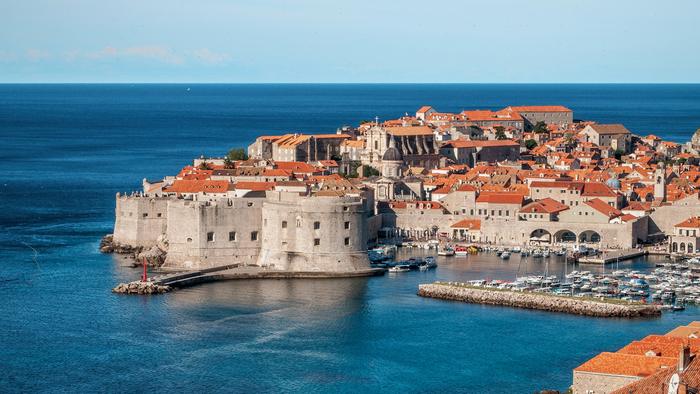
Dubrovnik, the Adriatic coast, ancient cities. Compact and beautiful.
Geysers, glaciers, northern lights, hot springs.
The most concentrated mountain scenery in Europe — and you'll pay for it.
The Alps done properly — skiing, hiking, and Vienna for the culture.
A long weekend in Copenhagen — design, cycling, and new-Nordic food.
Serious cities, river valleys, and the Alps in the south.
Budapest is the best-value great city in Europe.
Still undecided
Three matches. Often answers comparison questions for you.
Start the quiz