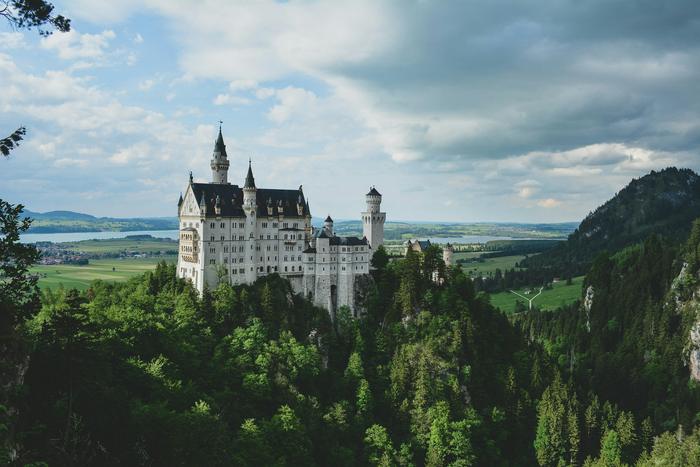
Czech Republic
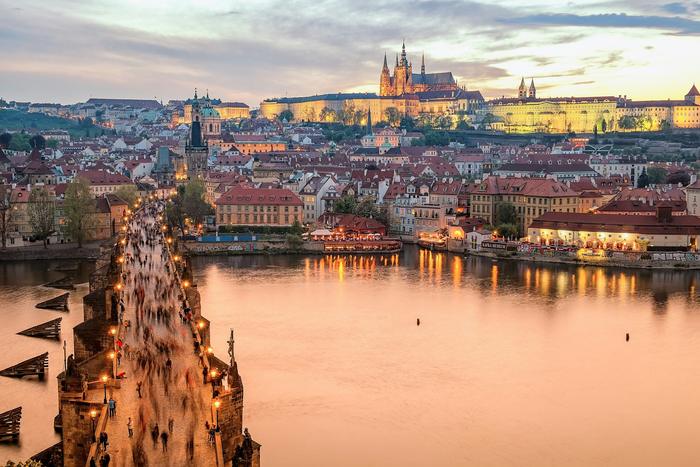
Prague earns the crowds. The rest of the country is the bonus.
- January: fine
- February: fine
- March: fine
- April: fine
- May: peak
- June: peak
- July: peak
- August: peak
- September: peak
- October: fine
- November: avoid
- December: fine
Both are European culture trips, but on different scales and budgets. Czechia is a compact, affordable central-European break — Prague and a fairy-tale town, beer and Christmas markets, cool-climate charm. Italy is the continent’s cultural and culinary heavyweight: Rome, Florence and Venice, endless art and history, coast and islands, and the food that defines it. One is an atmospheric short break; the other is close to inexhaustible.
Prague earns the crowds. The rest of the country is the bonus.
The benchmark for food, history, and beauty.
Read our full guides about Czech Republic and Italy.
Emphasised where they differ. Muted rows are much the same either way.
| Czech Republic | Italy | |
|---|---|---|
| Best time | May–September | April–June, September, October |
| Climate | mild | mild |
| Budget | Moderate — cheaper than Western Europe; central Prague has risen | Pricier — Venice, Florence and the Amalfi Coast are the costly poles |
| Trip length | 1–2 wks | 1–4 wks |
| Visa | Schengen — visa-free for most Western passports (90 days). | Schengen — visa-free for most Western passports (90 days). |
| Currency | CZK (Koruna), roughly 23 CZK ≈ 1 USD. | EUR (€) |
| Language | Czech. English in Prague tourism, less elsewhere. | Italian. English in cities and tourism, less in the south. |
| Tap water | Tap water safe. | Tap water safe and good. |
| Safety | Very safe; watch for pickpockets in central Prague. | Very safe. Pickpocketing in Rome, Naples, Florence. |
General guidance — visas, safety, and health change, so check your government's travel advisory and the official sources before you go.
The split
Both culture trips — but one is a short, affordable city break, the other the continent’s deepest cultural country.
Czechia is a compact, affordable central-European break — Prague above all, with fairy-tale towns, beer halls and Christmas markets, in a cool climate with no coast — ideal for a focused few days. Italy is the continent’s cultural and culinary heavyweight: Rome, Florence and Venice, layer upon layer of art and history, coast and islands, and a cuisine that defines the country — close to inexhaustible, and warmer and pricier with it.
The operational detail — Czechia’s koruna and exchange traps and its transport rules, Italy’s timed-ticket and city-access systems — lives on the two guides: Czechia, know before you go and Italy, know before you go. This page is the head-to-head.
The real difference
The trade: Czechia is a cheap, atmospheric short break; Italy is unrivalled art, food and variety.
Czechia wins on compact charm and value. Prague is a beautiful, walkable short-break city, the day trips are storybook, and it’s all cheap by Western-European standards — a cultured few days without the haul or the bill. It can’t pretend to Italy’s scale or its food.
Italy wins on depth and breadth. The art and history are unmatched, the food is a reason to travel in itself, and the variety — cities, coast, islands, regions each with their own character — sustains a long, rich trip. The cost is higher and the crowds bigger at the headline sights, but there’s simply far more of everything. Choose an affordable short break, or a deep, warm, wide-ranging journey.
Who suits which
Two culture trips — one compact and cheap, the other vast and rich.
| If you want… | Czechia | Italy |
|---|---|---|
| A compact, affordable city break | Wins. Prague and its day trips | Great cities, inside a bigger trip |
| Art and history on the grand scale | Charming, but modest | Wins. Rome, Florence, Venice |
| Food as a headline | Hearty; the beer leads | Wins. A global benchmark |
| Warm weather and coast | Cool, landlocked | Wins. Coast and islands |
| Tight-budget value | Wins. Cheap (mind the exchange traps) | Pricier, varies by region |
| A longer, varied holiday | Best kept short | Wins. Sustains a week or two |
Doing both
No natural single route — central Europe and Italy are a flight apart.
Combining them means two distinct holidays rather than one itinerary: central Europe and the Italian peninsula don’t join up into a sensible route. Decide by appetite — a short, affordable, atmospheric break, or a deep and varied Italian journey. Each compares more usefully with its neighbours: Czechia within central Europe, Italy across the Mediterranean (see Greece vs Italy and Italy vs Malta).
What we leave out
Exact prices beyond the structural comparison — Prague’s rooms and Italy’s seasonal city and coastal rates all move within a year — so the figures here are the shape of the difference, not a quote; the country guides carry the live detail. Both are Schengen (though Czechia uses the koruna, not the euro), with the same EES-now, ETIAS-soon entry picture — covered on the guides rather than restated here.
Which of the two is the better bet for each month of the year, scored on how well the season suits each place.
The ski and alpine benchmark — every other mountain range is measured against this.
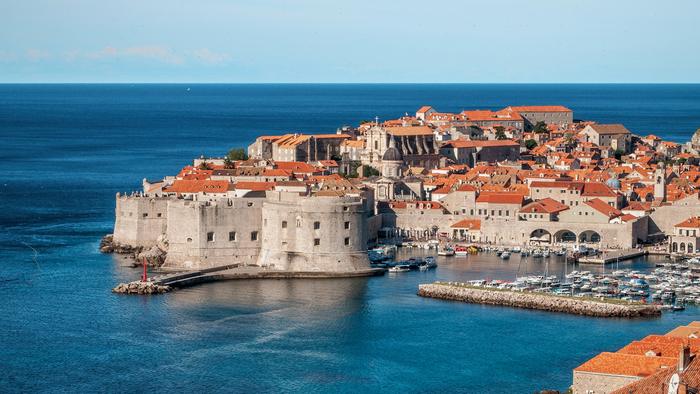
Dubrovnik, the Adriatic coast, ancient cities. Compact and beautiful.
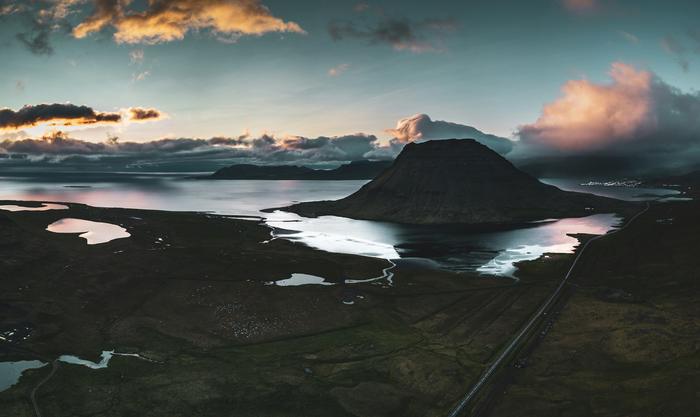
Geysers, glaciers, northern lights, hot springs.
The most concentrated mountain scenery in Europe — and you'll pay for it.
London, then the parts most visitors skip — Scotland, Wales, and the coast.
The Alps done properly — skiing, hiking, and Vienna for the culture.
A long weekend in Copenhagen — design, cycling, and new-Nordic food.
Serious cities, river valleys, and the Alps in the south.
Still undecided
Three matches. Often answers comparison questions for you.
Start the quiz