Germany
Serious cities, river valleys, and the Alps in the south.
Germany is efficient, varied, and easy to travel, and quietly one of Europe's best-value big trips. Berlin is one of the most interesting cities on the continent; Bavaria delivers Alps, beer halls, and fairytale castles; the Rhine and Mosel valleys are made for slow river travel. Christmas markets make December worth the cold. Otherwise, late spring through early autumn.
A first trip splits naturally between Berlin and Bavaria, with a Rhine or Mosel stop if you're driving or riding the slow trains along the river. Berlin days are museums, memorials, and long nights out; Munich days are beer gardens, the Englischer Garten, and an easy hop to Neuschwanstein or the Zugspitze. Costs stay moderate for Western Europe — it's Munich hotels and rail tickets bought at the last minute that sting.
Two warnings. Deutsche Bahn's reputation for punctuality is years out of date — build slack around long-distance connections. And Germany still loves cash: plenty of bakeries and pubs won't take your card, and shops close on Sundays. Cities outside the big names can feel functional rather than charming, so if you want nonstop visual romance, pick Italy. What Germany offers instead is depth — history handled seriously, and a beer culture nowhere else matches.
Highlights
-
Berlin
History, nightlife, and an edge no other German city has.
-
Bavaria & Munich
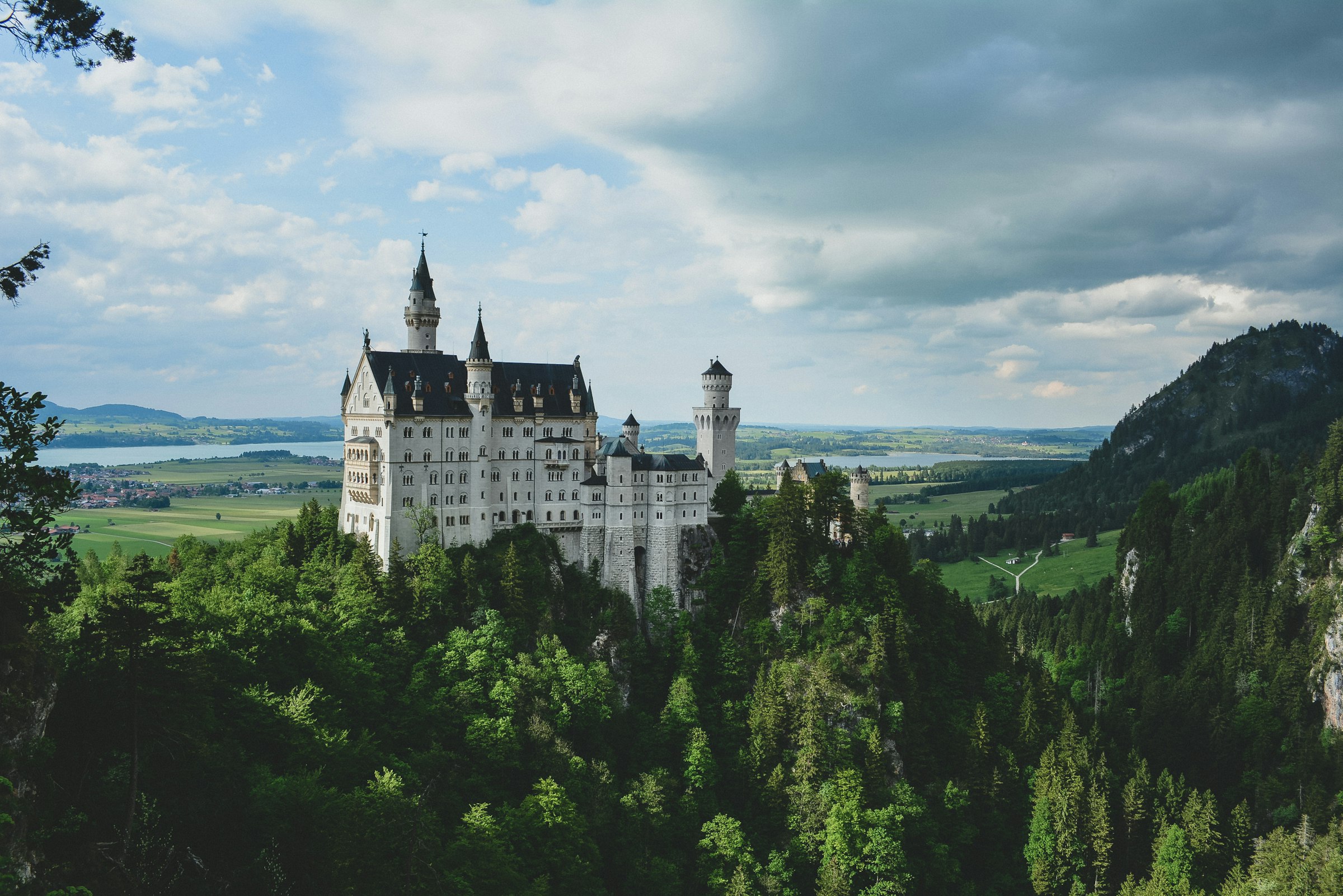
Beer halls, the Alps, and Neuschwanstein in the foothills.
-
The Rhine & Mosel
Castle-topped river valleys and Riesling vineyards.
-
Hamburg
The maritime north — harbour, warehouses, and a strong food scene.
-
The Black Forest
Dense woodland, spa towns, and the best driving roads in the country.
Practical info
- Visa
- Schengen — visa-free for most Western passports (90 days).
- Currency
- EUR (€)
- Language
- German. English widely spoken in cities.
- Safety
- Very safe.
- Getting around
- Deutsche Bahn trains and the autobahn make everything reachable. Cities have excellent transit.
- Tap water
- Tap water safe and good.
- Plug type
- Type C Type F 230V
- Money
- Cash still common — carry some; cards accepted in most places but not all.
General guidance — visas, safety, and health change, so check your government's travel advisory and the official sources before you go.
Common questions
- When is the best time to visit Germany?
- Summer (June to August) is the peak for the Alps, the Rhine and the beer gardens; May and September are milder and quieter. The two fixed dates to plan around are Oktoberfest in Munich — which is mostly in September (19 September–4 October in 2026) — and the Christmas markets, running from late November to 24 December. The seasonal section lays out the whole calendar.
- How do you get around Germany?
- Deutsche Bahn’s ICE network is fast and far-reaching, but delays are real and worsening — long-distance punctuality was about 60% on time in 2025, its worst on record — so leave buffer for connections. For regional and local transport the Deutschland-Ticket is a flat monthly pass (€63/month in 2026), though it does not cover ICE/IC long-distance trains. A car earns its keep for the Romantic Road, the Bavarian castles and the Black Forest. See trains & driving.
- Do you need to book Neuschwanstein Castle?
- Yes — entry is by timed guided tour only (about 30 minutes), and you should book online ahead (€21 plus a €2.50 fee). It sells out, with only a small daily remainder at the on-site ticket centre, and latecomers more than 15 minutes late are refused. Demand rose further after it became a UNESCO World Heritage Site in July 2025.
- Is Germany still a cash country?
- Notably, yes. Cash is accepted almost everywhere and many small places — bakeries, Imbiss stands, kiosks, family restaurants — take only cash, and there is no legal duty to accept cards. Carry euro notes. Watch too for the Pfand bottle deposit (€0.25 on most single-use bottles and cans), reclaimed at supermarket machines.
- Has anything changed at the big sights for 2026?
- Two things. Cologne Cathedral now charges tourists €12 (from July 2026) — it used to be free; worshippers still enter free by the north door. And Berlin’s Pergamon Museum stays closed — shut since 2023, it does not even partly reopen until 4 June 2027 — so don’t build a Museum Island day around it.
- What do you need to enter Germany?
- Germany is in Schengen and the eurozone, so visa-exempt visitors (US, UK, Canada, Australia and others) need no visa for stays up to 90 days in any 180. The EU’s biometric Entry/Exit System (EES) is live — in full operation since 10 April 2026 — so expect fingerprints and a facial photo on arrival instead of a passport stamp. The separate ETIAS authorisation is not yet required; it is expected in 2027.
Entry & borders
The border is biometric now — but there is no ETIAS yet
The EES is live; the much-trailed ETIAS is not. Two separate systems, and only one of them affects your 2026 trip.
The Entry/Exit System (EES) rolled out across the Schengen external border from 12 October 2025 and reached full operation on 10 April 2026. For non-EU short-stay travellers it replaces the inked passport stamp with a biometric record — four fingerprints and a facial image, logged electronically on each entry and exit, which is also what now counts your 90-in-180 days. First registration adds a few minutes at the booth; it is quicker once your file exists.
The ETIAS authorisation is a different, later thing, and it is not required as of October 2026 — the EU abandoned its "last quarter of 2026" target in mid-2026 and now points to 2027, with several months’ notice promised first. When it arrives it will cost €20, last three years or until the passport expires, and carry no fee for travellers under 18 or over 70 (who still must hold one).
Do not pay for "EES" or "ETIAS" on a third-party website in 2026 — EES needs no application at all, and ETIAS is not open yet, so any site charging for one now is a scam. ETIAS, when it launches, will be sold only through the official EU portal.
Trains & driving
Fast trains that run late, and a cheap nationwide pass
Deutsche Bahn is superb on paper — but delays are the national running joke, and the real money-saver is the regional ticket.
60.1% of long-distance ICE trains ran on time in 2025 — a record low
| Getting around | Cost | Note |
|---|---|---|
| Deutschland-Ticket | €63/mo | All regional & local transport nationwide; not ICE/IC; monthly, open to tourists |
| ICE / IC long-distance | from €17.99 | Super Sparpreis; sales open ~12 months ahead, cheapest seats first |
| City single (U-/S-Bahn, tram) | ~€3–4 | Or the Deutschland-Ticket covers every city for the month |
| Umweltplakette sticker | ~€12.50 | Foreign cars must buy one for city zones; €100 fine without |
| Autobahn | Free | No general speed limit on ~70%; advisory 130 km/h |
DB and city-transport fares, 2026. The Deutschland-Ticket is a rolling monthly subscription (cancel by the 10th to end it the next month) and can be bought by non-residents through the transit apps; it pays for itself in a few days of city travel.
Behind the wheel, two German specifics. The Autobahn still has no general speed limit on roughly 70% of its length — an advisory 130 km/h — though about 30% carries posted or variable limits, and the government has again ruled out a blanket cap. And every city centre is a low-emission zone: a foreign-registered car needs a green Umweltplakette windscreen sticker (about €12.50 from a TÜV station or online) to enter legally, or it is a €100 fine.
Booking the sights
One castle needs a slot, one cathedral now charges, one museum is shut
Germany’s headliners each have a 2026 catch — book one, pay at another, and skip a third entirely.
Neuschwanstein is the one to book. Ludwig II’s fairy-tale castle is entry-by-timed-tour only, roughly 30 minutes, and the online slots sell out — turn up without one in summer and you may not get in. Hohenschwangau below it and the other royal palaces are easier (see beating the crowds). In Berlin the Reichstag dome is free but needs advance online registration with your name, date of birth and a matching photo ID, and Museum Island is best pre-booked — though its most famous house, the Pergamon, is closed until June 2027.
| Sight | Book? | 2026 adult | Note |
|---|---|---|---|
| Neuschwanstein | Yes — tour only | €21 + €2.50 | 30-min timed guided tour; sells out online |
| Reichstag dome, Berlin | Yes — register | Free | Online registration + photo ID; name & DOB |
| Museum Island, Berlin | Recommended | €24 day ticket | Pergamon shut until Jun 2027 — don’t plan around it |
| Cologne Cathedral | Walk-up | €12 (new) | Tourist fee from Jul 2026; worship free; tower +€8 |
| Rhine castle cruise | On the day | from ~€15 | Rüdesheim–Koblenz, the UNESCO gorge; or the rail line |
Prices read off the official portals in October 2026; set annually, so re-check. Cologne’s cathedral charged tourists for the first time from July 2026 — the biggest 2026 change.
The free routes still exist where you look: the Reichstag dome costs nothing (just register ahead), Cologne’s cathedral stays free if you enter to pray by the north door, and the Upper Middle Rhine castles are best simply seen from the river or the train rather than toured. Note a dome maintenance closure 19–30 October 2026 (the roof terrace stays open).
Where to go
Nine very different Germanies
The Prussian, museum-and-nightlife north-east has little in common with Alpine, beer-hall Bavaria. Pick a region to its gateway and do it properly.
A week does one region, or two neighbours, well. The natural pairings are Munich with the Alps and the castles, Cologne with the Rhine, and Dresden with Leipzig across Saxony. The Romantic Road threads south from Würzburg to Füssen and ends, conveniently, right at Neuschwanstein.
| Region | Suits | Gateway |
|---|---|---|
| Berlin & the east | History, world-class museums and nightlife; Potsdam’s Sanssouci palaces nearby | Berlin (BER) |
| Bavaria & the Alps | Postcard Germany — Munich’s beer halls, Neuschwanstein and the Zugspitze (2,962 m) | Munich (MUC) |
| The Rhine Valley | River cruises past hilltop castles and the Loreley, Rüdesheim to Koblenz | Frankfurt (FRA) |
| The Black Forest | Hiking, spa towns like Baden-Baden, cuckoo clocks and cake | Stuttgart (STR) |
| Cologne & the Rhineland | The Gothic Dom, riverside life and Germany’s biggest Carnival | Cologne (CGN) |
| Hamburg & the north | The port, the UNESCO Speicherstadt and the Elbphilharmonie | Hamburg (HAM) |
| Saxony | Dresden’s rebuilt baroque, Leipzig’s music, and the crags of "Saxon Switzerland" | Dresden (DRS) |
| The Romantic Road | Walled medieval towns — Würzburg, Rothenburg — ending at the Bavarian castles | Frankfurt / Munich |
| The Mosel | Steep Riesling vineyards and Trier, Germany’s oldest city | Frankfurt (FRA) |
When to go
Summer peak, September beer, December markets
The calendar has three obvious moments — and Oktoberfest is mostly in September, which still surprises people.
Crimson bars are the ones worth planning a trip around — book lodging far ahead for both. Oktoberfest is mostly in September despite the name; the Christmas markets open the Monday before the first Advent Sunday (29 Nov in 2026). Carnival dates follow Easter.
Aim for summer (June–August) for the mountains, the Rhine and the beer gardens, with May and September milder and quieter. The two headline events are worth a trip in their own right — and need rooms booked months ahead, because prices jump and beds vanish. Oktoberfest runs 16 days ending on the first Sunday of October (19 September–4 October in 2026), so it is mostly September; it is free to enter, though table reservations in the big tents go far in advance.
The Christmas markets are the winter draw — Nuremberg’s Christkindlesmarkt and Dresden’s Striezelmarkt (running since 1434) both open on 25–27 November 2026 and close on the 24th, with Cologne, Munich and dozens more in the same window. For Carnival, Rosenmontag (16 February 2026) is the peak, loudest in Cologne, Düsseldorf and Mainz. One practical note: German states stagger their six-week summer school holidays, which spreads the Autobahn and resort load rather than concentrating it.
Beating the crowds
For every mobbed sight, a quieter twin
Germany’s most famous names draw the coaches — and the better experience is usually next door.
The headline sights concentrate the crowds, so trade down a rung and the day improves:
- Neuschwanstein is mobbedSkiptreating it as the only castleGoHohenschwangau right below it (furnished inside, same ticket office) or Linderhof — the one palace Ludwig II saw finished
- Oktoberfest is too much, or too dearSkipthe full Munich crushGoStuttgart’s Cannstatter Volksfest — the world’s second-biggest beer festival (25 Sep–11 Oct 2026), cheaper and far less international
- Rothenburg is a coach scrum by daySkipa midday day-tripGostaying overnight (it empties when the coaches leave), or Dinkelsbühl and Nördlingen — walled, medieval and quiet
- The Romantic Rhine is packed at the LoreleySkipthe busiest St. Goar stretchGothe Moselle — Cochem’s castle town and half-timbered Bernkastel-Kues, the same steep-vineyard scenery with fewer crowds
The one to actively route around is Berlin’s Museum Island: book a timed ticket, and know that the Pergamon — the Ishtar Gate and the great altar — is closed until June 2027 (and not fully reopened before about 2037). The "Pergamon: Das Panorama" show runs opposite in the meantime, and the Bode-Museum, Alte Nationalgalerie and the Gemäldegalerie are the quieter picks.
Costs & tax
Good value for a rich country — plus a city bed tax
Food, beer and regional rail are a bargain; the one rising line on the bill is the city tax on your room.
7.5% Berlin’s bed tax, charged on the room price
Germany is cheaper than its wealth suggests, especially for eating and for getting around: a bakery lunch, a beer-garden meal and a day of regional trains all cost little, and the Deutschland-Ticket turns a week of city transport into roughly €15. Hotels in Berlin and Munich are where the money goes, and the city bed tax adds to that — Berlin’s 7.5% being the steepest, most others around 5%.
Pay attention to cash: card acceptance has improved in cities, but plenty of bakeries, Imbiss stands, kiosks and small restaurants still take only cash, and nobody is obliged to accept a card. Draw euro notes and keep some on you — it is the single most common practical stumble first-time visitors make here.
Good to know
Shops shut Sundays, bottles have deposits, reds don’t get crossed
A handful of German habits trip visitors up — three of them genuinely catch people out.
Two can leave you hungry or stranded. Shops and supermarkets close on Sundays and public holidays by law (bakeries keep limited morning hours; station, airport and petrol-station shops are the exceptions), so do your food shopping by Saturday. And the Pfand deposit means your bottles and cans are worth money back — €0.25 on most single-use ones — returned at the supermarket machine for a voucher, not thrown away.
On manners: tipping is a round-up or about 5–10%, and you state the total you want to pay as the server takes the money rather than leaving coins on the table. Crossing on a red pedestrian light is frowned on (and fineable), especially near children; Ruhezeit quiet hours (22:00–06:00, and all day Sunday) mean no drilling or loud music; and recycling is taken seriously, with bins separated by type. Tap water is safe — ask for Leitungswasser, as restaurants default to bottled.
Germany is very safe, with low violent-crime risk for visitors. The main nuisance is pickpocketing in crowds and at the big transport hubs — Berlin Hauptbahnhof, Cologne’s main station and the square around the Dom — and at the Christmas markets and Oktoberfest. Keep your bag zipped and your valuables secure in a crush.
Compare Germany
If you like Germany, also consider

France
Paris is only the opening act — wine country, the Alps, and two coastlines.

Italy
The benchmark for food, history, and beauty.

Greece
Ruins in the morning, a swim by noon, taverna until dark.

Japan
Extraordinary food, culture, and cities. Nothing quite prepares you for it.
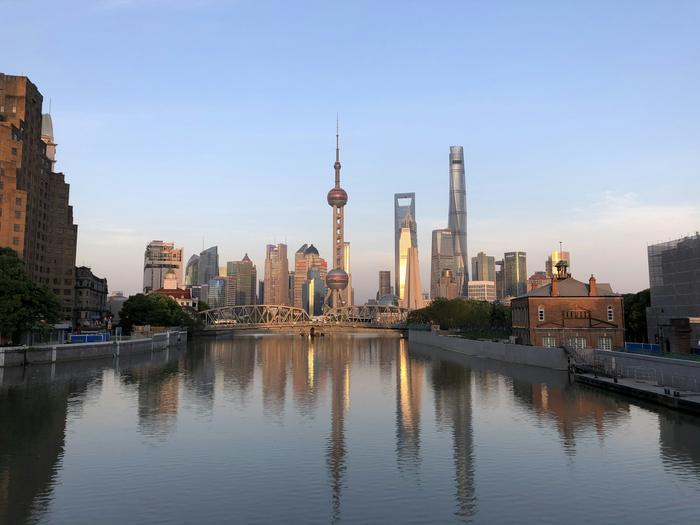
China
Ancient history and hypermodern cities at a scale that's hard to grasp until you're there.
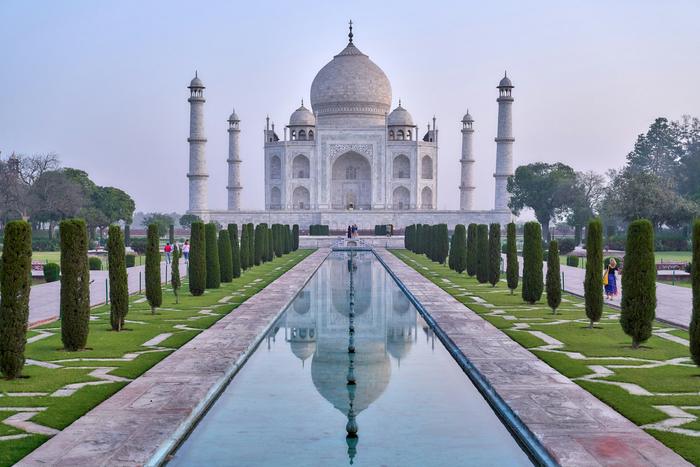
India
Overwhelming, beautiful, and utterly unlike anywhere else.
Not sure where to go
Take the 5-minute quiz
Answer a few honest questions and get matched to destinations that actually fit how you travel.
Start the quiz