Archipelago vs one islandthe basic shape of the tripFerry between Greek groups, or drive one Sicilian loop
Sea vs historywhere each leansIsland-hopping and swimming, or layered monuments
Both good valuethe thing they shareCheap by Western-European standards, Santorini aside
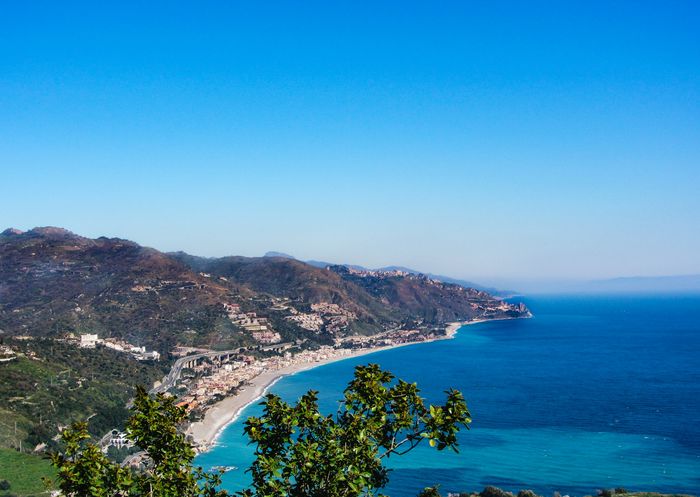
Greece is a country of islands: the Cyclades, the Dodecanese, the Ionian and Crete are separate spokes reached by ferry from Athens, not a chain, so you pick one group per trip — and the summer meltemi wind cancels sailings. It’s a sea-and-islands holiday with ancient sites woven through it. Sicily is one big island and the deepest layer-cake of history in the Mediterranean — Greek temples, Roman mosaics, Arab-Norman Palermo, Baroque Val di Noto — plus a live volcano in Etna, all cheaper than most of the Med and reached by car, since the trains are slow and patchy.
The operational detail for each — Greek ferry seasons and the meltemi, Sicily’s ZTL fines and Etna’s eruption status — lives on the two guides: Greece, know before you go and Sicily, know before you go. This page is the head-to-head.
Sicily concentrates the history. On one island you move through Greek temples at Agrigento, the Greek theatre and Ortigia at Siracusa, Roman mosaics at Villa Romana del Casale, Arab-Norman mosaics in Palermo and the golden Baroque of the Val di Noto — a density of layered civilisation you won’t match anywhere else in the Med, with a distinct Greek-Arab-Norman food culture to go with it, and all of it cheap. Greece spreads it out and adds the sea. The Acropolis and Delphi are on the mainland, the great island experiences are the hopping and the swimming, and the trip is as much about whitewashed villages and ferries as about ruins.
So the choice is concentration versus spread. Sicily is one island you dig into, by car, for history and food; Greece is an archipelago you move across, by ferry, for islands and sea with ancient sites threaded through.
Common questions
- Are the Greek temples better in Greece or Sicily?
- Both are extraordinary, and the surprise is that some of the best-preserved ancient Greek temples anywhere stand in Sicily, not Greece — the Valley of the Temples at Agrigento and the Greek theatre at Siracusa are among the great classical sites in the world, built when Sicily was part of Magna Graecia. Greece has the Acropolis, Delphi and far more besides, spread across the mainland and islands. For temples specifically, Sicily punches well above its billing.
- Is Greece or Sicily cheaper?
- Both are good value, with Sicily among the cheaper corners of the Med and Greece cheap day to day once you avoid Santorini and Mykonos. They’re close; Sicily edges it on food and lodging, and has no single luxury outlier the way Greece has those two islands. Either is a value trip by Western-European standards.
- Is Greece or Sicily easier to get around?
- Greece runs on ferries from Athens, with the island groups as separate spokes that connect through Athens rather than to each other — so you pick one group per trip, and the summer meltemi can cancel sailings. Sicily is one island, but its trains are slow and patchy, so you drive — watching the ZTL camera zones in Palermo, Catania and Ortigia, which fine automatically. Neither is effortless; Greece asks you to plan ferries, Sicily asks you to drive.
- Can you visit a volcano in Greece or Sicily?
- Sicily is the one for that — Mount Etna is Europe’s most active volcano and it’s erupting now (a flank eruption began on 1 January 2026), reached by cable car and 4×4 with a guide, with ash occasionally closing Catania airport. Greece’s volcanic drama is Santorini’s caldera, which is scenery rather than a climb. For an active volcano you can go up, Sicily.
- Should I do both Greece and Sicily in one trip?
- They don’t pair naturally — there’s no easy direct hop between them, and each is a full trip of its own: Greece an island-hopping holiday, Sicily a drive around one dense island. Pick by what you want — ferries and the sea, or one island packed with history and food — and give it the whole trip.