Bosnia & Herzegovina vs Serbia

Two cheap, visa-free Balkan neighbours, both outside the EU — but different trips. Bosnia is the more layered and dramatic: Ottoman bazaars, the Mostar bridge, raw 1990s history and steep mountains. Serbia is the bigger, more developed draw: Belgrade’s famous nightlife and river clubs, a fast train north, and western mountain country.

Southern Europe

Bosnia & Herzegovina

East meets West in one small, absurdly cheap country layered with living history.

Best time to visit
  1. January: fine
  2. February: avoid
  3. March: fine
  4. April: fine
  5. May: peak
  6. June: peak
  7. July: fine
  8. August: peak
  9. September: peak
  10. October: fine
  11. November: avoid
  12. December: fine
Peak Fine Avoid

Eastern Europe

Serbia

The Balkans’ best night out — grilled meat, rakija, and river clubs, in Europe’s most underrated capital.

Best time to visit
  1. January: avoid
  2. February: avoid
  3. March: fine
  4. April: peak
  5. May: peak
  6. June: peak
  7. July: peak
  8. August: peak
  9. September: peak
  10. October: fine
  11. November: avoid
  12. December: avoid
Peak Fine Avoid

Read our full guides about Bosnia & Herzegovina and Serbia.

Side by side

Emphasised where they differ. Muted rows are much the same either way.

Bosnia & Herzegovina Serbia
Best time May, June, August, September April–September
Climate mild mild
Budget Very cheap — among the lowest-cost countries in Europe Very cheap — notably below Western and Central Europe across the board
Trip length 1–1 wks 1–1 wks
Visa Visa-free for most Western passports (90 days). Verify before travel. Visa-free for most Western passports (90 days). Verify before travel.
Currency BAM (Convertible Mark), pegged to the euro; euros are often accepted. Serbian Dinar (RSD); euros accepted in some places.
Language Bosnian/Croatian/Serbian (Latin and Cyrillic scripts). English among younger people and in tourism. Serbian; English widely spoken by younger people and in Belgrade.
Tap water Tap water safe. Tap water is safe.
Safety Very safe today; be mindful that landmine-clearance signs still exist off marked paths in a few rural areas. Safe; ordinary city precautions and awareness of taxi overcharging.

General guidance — visas, safety, and health change, so check your government's travel advisory and the official sources before you go.

The split

Layered and dramatic, or big and buzzing

Two cheap Balkan neighbours — but one is history and mountains, the other a big nightlife capital.

History vs nightlifewhat each leans onOttoman/war layers, or Belgrade after dark
Raw vs developedthe texture of the tripAtmospheric and rough, or bigger and smoother
Both cheap, both visa-freewhat they shareOutside the EU; neither on the euro

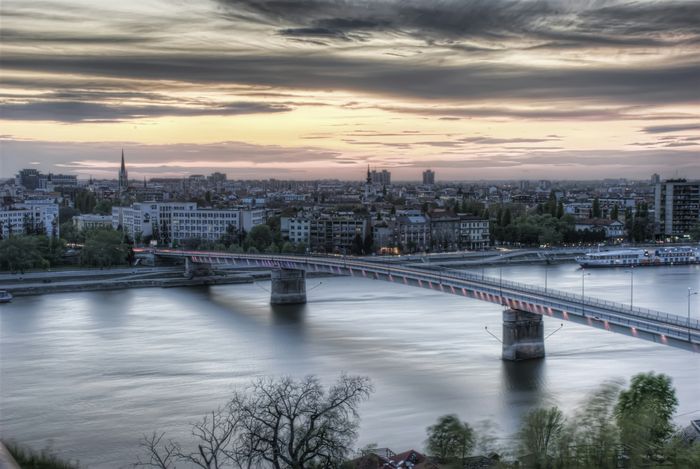
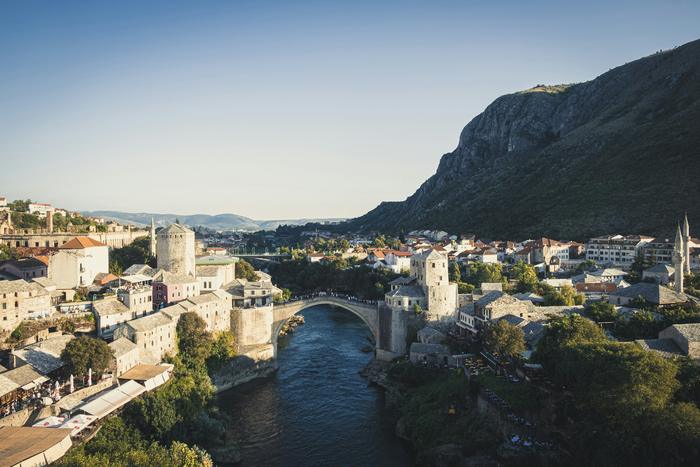
Bosnia is the more layered and dramatic. Sarajevo’s Ottoman bazaar and Austro-Hungarian streets, the rebuilt bridge at Mostar, the sobering history of the 1990s, and steep mountains all around — a rawer, more atmospheric, more moving trip. Serbia is the bigger, more developed draw. Belgrade is one of Europe’s great nightlife cities, built on its floating river clubs; a modern fast train runs north to Novi Sad; and western Serbia has its own mountain country. Both are cheap, visa-free and outside the EU.

The operational detail — the entry picture, Serbia’s rail and nightlife, each country’s regions — lives on the two guides: Bosnia, know before you go and Serbia, know before you go. This page is the head-to-head.

Depth vs buzz

Moving history, or big-city energy

The real trade: Bosnia is deeper and more dramatic, Serbia is bigger and more energetic.

Bosnia wins on depth. Few places pack as much history into a small, walkable space — Ottoman, Habsburg and war, with Mostar and Sarajevo as the set pieces — set against dramatic mountains. It feels rawer and less polished, which is part of the appeal. Serbia wins on energy. Belgrade’s nightlife is a genuine European draw, the capital is bigger and more developed, and the fast train and western mountains add range. One is a moving, atmospheric trip; the other a higher-tempo, big-city one.

So choose by mood. For layered history and mountain drama, Bosnia. For nightlife and a bigger, more developed base, Serbia.

Who suits which

Who each actually suits

Both cheap and Balkan — but one is history-and-mountains, the other nightlife-and-city.

If you want…BosniaSerbia
Layered history and atmosphereWins. Ottoman, Habsburg, 1990sPresent, but not the main event
Big-city nightlifeSarajevo is lively, not largeWins clearly. Belgrade and the splavovi
Dramatic mountains close byWins. Steep and ever-presentWestern Serbia, a bit further out
A more developed, smoother tripRawer, rougher edgesEdges it. Bigger, more infrastructure
Rock-bottom pricesTies. Among Europe’s cheapestTies. Among Europe’s cheapest
A fast train between citiesBuses onlyWins. The Belgrade–Novi Sad line

Doing both

They combine naturally

Neighbours linked by direct buses — a pairing, not an either/or.

You don’t have to choose: Bosnia and Serbia are neighbours, with direct buses between Belgrade and Sarajevo, and a Balkans trip taking in both — often alongside Croatia, Montenegro or Albania — is a classic overland route. If time forces one, pick by whether you want layered history and mountains or big-city nightlife.

What we leave out

What we deliberately leave out

Exact prices beyond the structural comparison — both are cheap, and lodging and transport move within a season, so the figures here are the shape of the difference, not a quote; the country guides carry the live detail. Both sit outside the EU and Schengen with visa-free access for most — status language can shift with accession, so check the guides before you travel.

Bosnia & Herzegovina or Serbia, month by month

Which of the two is the better bet for each month of the year, scored on how well the season suits each place.

Which to choose

Choose Bosnia & Herzegovina if:

  • You want layered history — Ottoman, Austro-Hungarian and the 1990s war.
  • Mostar’s bridge, Sarajevo’s old town and steep mountains draw you.
  • A rawer, more atmospheric, less-polished trip appeals.

Choose Serbia if:

  • You want a big, energetic capital — Belgrade’s nightlife and river clubs.
  • A more developed, higher-tempo trip with a fast train north suits you.
  • Western Serbia’s mountains and a bigger-city base appeal.

Common questions

Is Bosnia or Serbia cheaper?
Both are among the cheapest countries in Europe, and the difference is marginal — food, lodging and transport are low in each, well below Western and Central Europe. Neither uses the euro (Bosnia the convertible mark, Serbia the dinar), and both are broadly cash-friendly. You won’t choose between them on price.
What is each really for?
Bosnia is the more layered and atmospheric: Sarajevo’s Ottoman-and-Austro-Hungarian old town, the rebuilt Mostar bridge, sobering 1990s war history, and dramatic mountains — a rawer, more moving trip. Serbia is the bigger, more developed draw, centred on Belgrade’s energetic nightlife and splavovi river clubs, with a modern fast train to Novi Sad and mountain country in the west. Bosnia for depth and drama; Serbia for big-city buzz.
Are Bosnia and Serbia in the EU or Schengen?
Neither. Both are EU candidates but outside the EU and the Schengen Area, so each is a full border crossing and neither uses the euro. Most Western travellers enter both visa-free for 90 days. (Serbia requires tourist registration, which hotels handle for you.)
Which has better nightlife?
Serbia, clearly — Belgrade is one of Europe’s great nightlife cities, built on its floating river clubs (splavovi) and a year-round late scene. Bosnia’s Sarajevo has a lively café and bar culture but nothing on Belgrade’s scale. If nightlife is a priority, Serbia wins it outright.
Should I do both in one trip?
Yes — they’re neighbours and combine naturally overland, with direct buses between Belgrade and Sarajevo. A Balkans trip taking in both (and often Croatia, Montenegro or Albania alongside) is a classic route. If you only have time for one, choose by whether you want layered history and mountains or big-city energy.

Still undecided

Take the quiz

Three matches. Often answers comparison questions for you.

Start the quiz