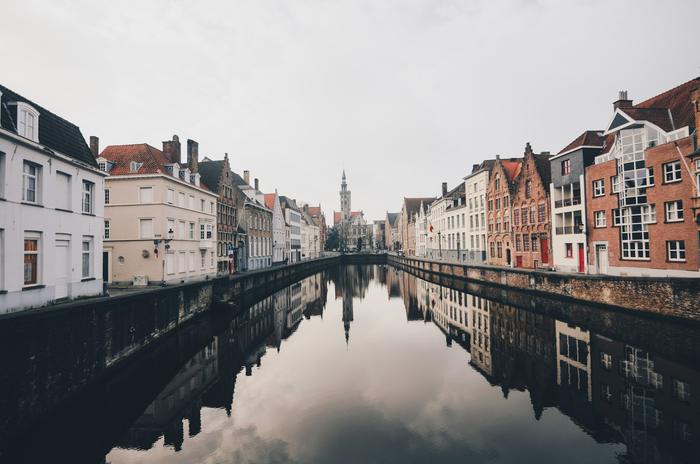
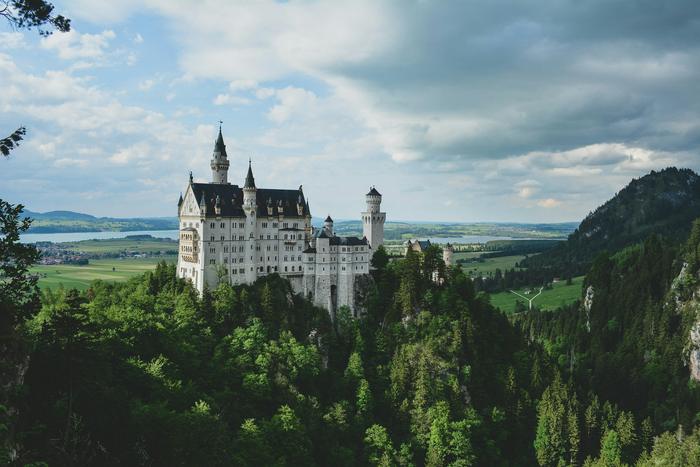
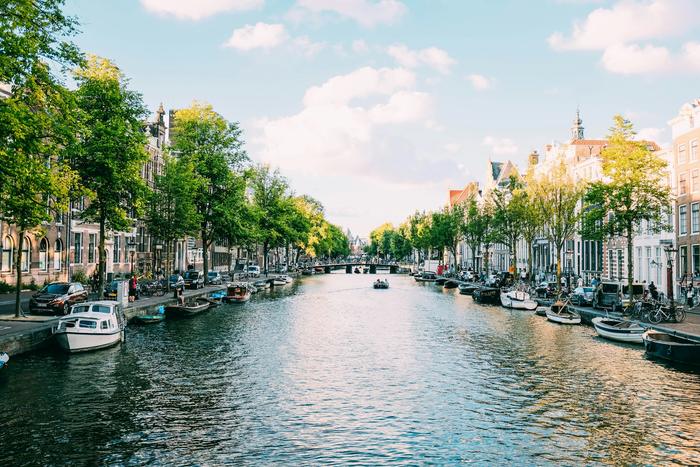
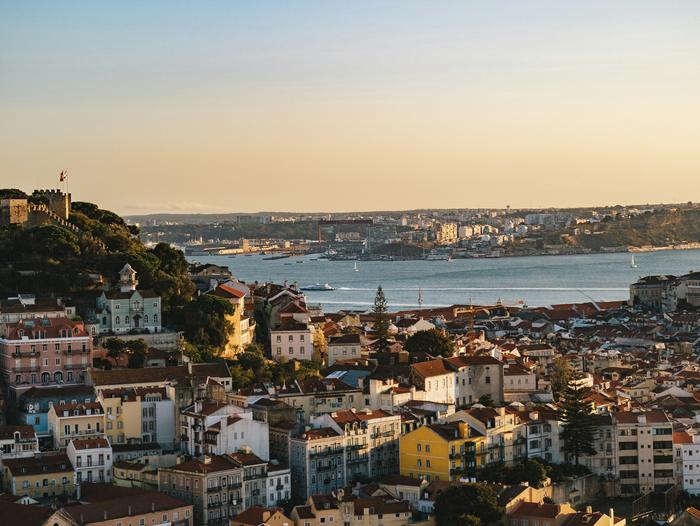
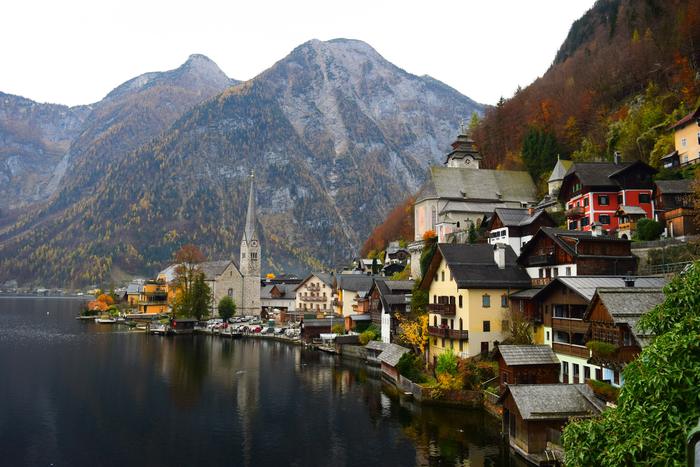
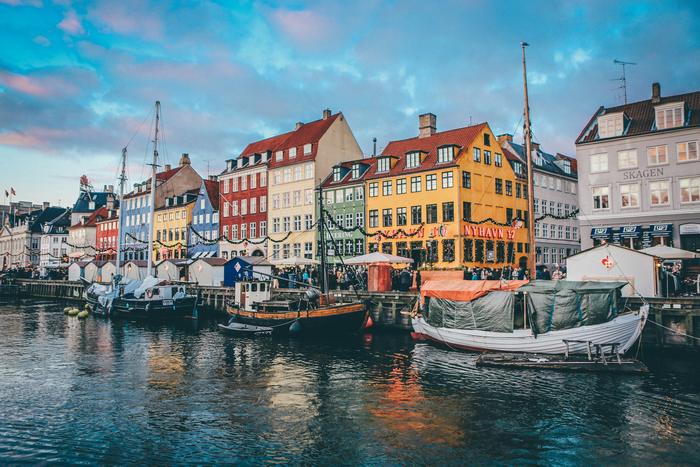
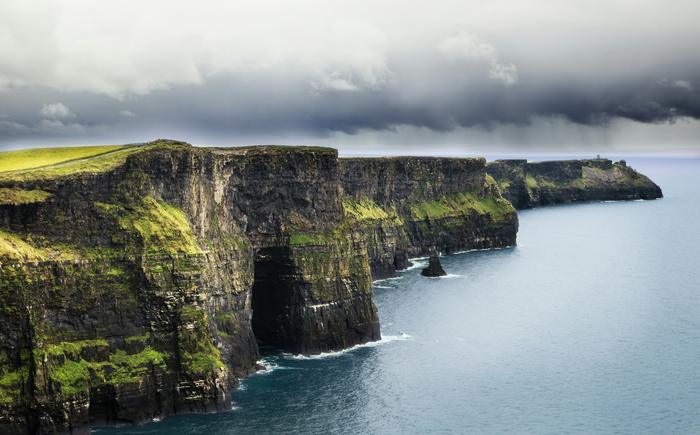
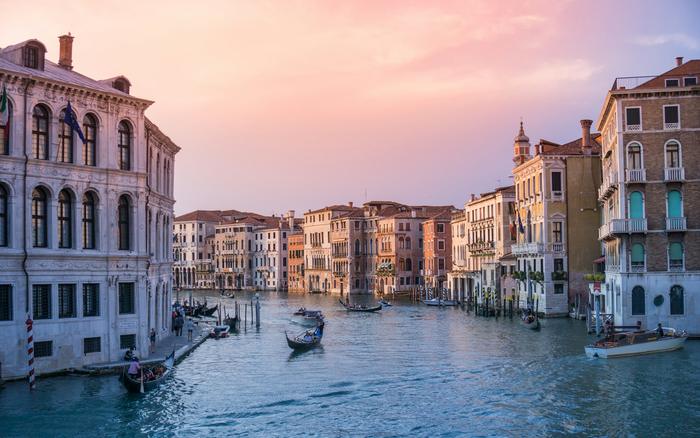
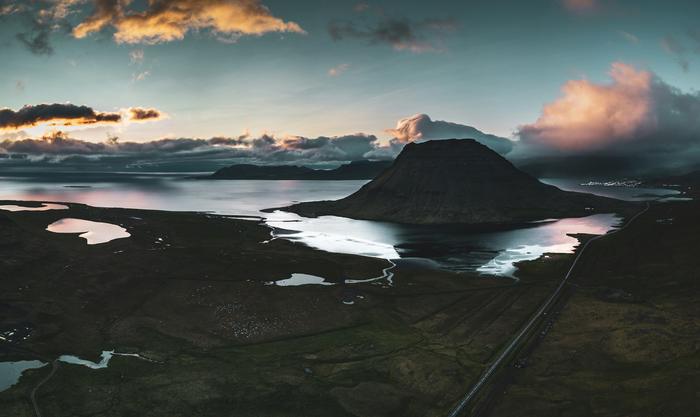
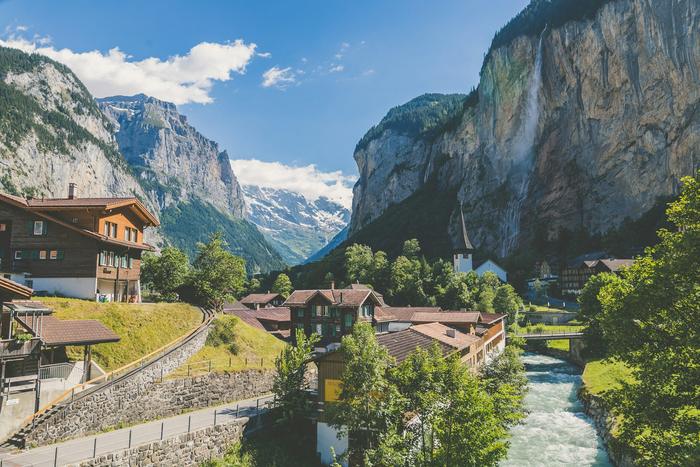
Two neighbouring beer-and-history trips of wildly different size. Belgium is a compact long weekend of medieval cities — Bruges, Ghent, Brussels, Antwerp — done entirely by train, with world-class beer, chocolate and waffles. Germany is a vast, varied country of cities, castles, mountains, wine valleys and beer halls that rewards a week or a fortnight and, in places, a car.
Both are beer-and-history neighbours under the same grey sky — the real split is size: a compact city hop versus a whole varied country.
Days vs weekshow long each one wantsBelgium in a long weekend; Germany over a week or a fortnight
Car-free vs car helpshow you get aroundBelgium entirely by dense rail; Germany wants a car for the castles
Both: great beerthe thing they shareTwo of the world’s foremost beer cultures, poured very differently
Belgium is the compact long weekend. Bruges, Ghent, Brussels and Antwerp — medieval squares, canals, Van Eyck, a UNESCO-listed beer culture and arguably the best chocolate on earth — all sit within about 90 minutes of each other by frequent train, so three or four days cover them with no planning and no car. It is one of the easiest short breaks in Europe to execute.
Germany is the big, varied country. Metropolises, fairy-tale castles, the Rhine gorge, the Alps, the Black Forest, wine valleys and the great beer halls, spread across nine very different regions that each reward their own visit. A week does one region, or two neighbours, properly; a fortnight is not hard to fill. The two trips do not really compete — they answer different questions.
The operational detail for each — Belgium’s dense SNCB rail and the Ghent Altarpiece restoration, Germany’s Deutschland-Ticket, Oktoberfest dates and Cologne Cathedral’s new paid entry — lives on the two guides: Belgium, know before you go and Germany, know before you go. This page is the head-to-head.
Scale and time
One is a city hop; one is a country
The decision is less about taste than how much time you have — and the size gap is larger than people expect.
~11.7×Germany’s land area against Belgium’s
Germany covers about 357,600 km² to Belgium’s 30,500 — getting on for twelve Belgiums — with a population of roughly 84 million against 11.7 million. Belgium is small enough to cross by train in a couple of hours; Germany is Berlin to Munich, a country-length journey. That single fact drives almost everything below: how long to go, whether you need a car, and how much you can realistically see.
Belgium rewards the short, low-effort trip. It is small, the trains are dense and frequent, and the four headline cities cluster so tightly that you can base in one and day-trip the rest without changing hotels — a near-perfect long weekend of beer, chocolate, waffles and medieval streets with almost no logistics.
Germany rewards time and a plan. Even the obvious highlights — Berlin, Bavaria and Neuschwanstein, the Rhine, Munich, the Alps — are strung across a large country; the fast trains run late often enough that you leave buffer, and the best castle and scenic routes want a car. Trying to "do Germany" in a few days means picking one city or region. So let time decide: a few days points to Belgium; a week or more opens up Germany — or pair them, since they are neighbours.
Belgium
Germany
Land area
~30,500 km²
~357,600 km² (about 11.7×)
Sensible trip length
A long weekend — 3–4 days
A week per region; a fortnight is easy
Headline places
Four cities, ~90 min apart
Nine regions across a large country
How you get around
Train only — a car is pointless
Train for cities; a car for castles and scenery
The shape of it
See it all, comfortably
Pick a slice and do it properly
When to go
Same grey weather — so go for the calendar
Neither has a reliable summer the way the Mediterranean does, so you time both trips to events, not sun — and the headline events sit at opposite ends of the year.
AMJJASOND
Spring — mild, fewer crowds (both)Apr – May
Apr – May
Best weather such as it is (both)May – Sep
May – Sep
Belgium — Ghent Festival & TomorrowlandJuly
July
Germany — Oktoberfest, Munich19 Sep – 4 Oct
19 Sep – 4 Oct
Christmas markets (both; Germany’s are iconic)late Nov – 24 Dec
late Nov – 24 Dec
Both countries are mild, grey and often wet, so spring (April–May) and early autumn are the sweet spots in each. The crimson bars are the two moments worth planning a whole trip around — Munich’s Oktoberfest (mostly September) and the Christmas markets — both of which send room prices up and beds scarce, so book well ahead.
Belgium’s calendar peaks in summer and at Christmas. The Ghent Festival runs ten days in July, Tomorrowland takes over Boom across the last two July weekends, the UNESCO-listed Carnival of Binche lights up Mardi Gras, and from late November the Christmas markets fill the squares of Bruges, Brussels, Ghent and Antwerp with mulled wine and lights. Spring brings the bulb fields and the Ghent Floralies.
Germany’s two fixed dates are the reason many people go. Oktoberfest in Munich is 16 days ending on the first Sunday of October — 19 September to 4 October in 2026, so mostly September despite the name, and free to enter — and the Christmas markets, from Nuremberg’s Christkindlesmarkt to Dresden’s Striezelmarkt (running since 1434), open in the last week of November and close on the 24th. Both are worth a trip in their own right, and both need rooms booked months out.
If Christmas markets are the draw, this is one place the two genuinely diverge. Belgium’s are compact, atmospheric and walkable — four of them within a long weekend. Germany’s are the global archetype: dozens of them, centuries old, in cities across the country, and the single strongest reason to visit Germany in December rather than any other month.
Trains & driving
Both superb by rail — but one needs no car at all
Belgium and Germany are two of Europe’s great train countries. The difference is that in Belgium the train is enough; in Germany it gets you to the cities and then a car earns its keep.
60.1%of German long-distance ICE trains ran on time in 2025 — a record low
Down from 62.5% in 2024, and the worst year Deutsche Bahn has recorded, with a €23bn-in-2026 network rebuild meaning more construction detours before it improves — so do not build tight connections onto an ICE. Belgium has no equivalent problem: the SNCB network is short-hop and dense, Brussels–Ghent is about 35 minutes, and when every city is an hour apart a late train barely dents the day.
~90 minthe far end of Belgium’s entire tourist coreBrussels–Ghent ~35 min, Brussels–Antwerp ~41, Brussels–Bruges ~1h
€63 / moGermany’s Deutschland-Ticket — all regional & local transportNot valid on ICE/IC; open to tourists through the transit apps
Belgium is the easier car-free trip, full stop. The SNCB/NMBS network is one of the densest in Europe, the country is small, and the classic Bruges–Ghent–Brussels–Antwerp circuit runs on dozens of trains a day. Pick one base — Ghent is central, lively and cheaper than Bruges — and day-trip the rest. A car only helps for the forested Ardennes in the south.
Germany is superb by rail too, with a caveat. The ICE is fast and far-reaching and the cheap, flat-fare Deutschland-Ticket makes a week of city and regional travel cost around €15, but long-distance punctuality is poor and worsening, so you leave buffer for connections. And rail thins out exactly where Germany is most scenic — the Bavarian castles, the Romantic Road, the Black Forest — so for those a hire car earns its keep in a way it never does in Belgium.
Belgium
Germany
The network
SNCB/NMBS — dense, frequent, short hops
Deutsche Bahn — fast ICE, but delays are the national joke
Typical link
Brussels–Ghent ~35 min; whole core within ~90 min
Berlin–Munich ~4h by ICE; regions far apart
The money-saver
Short distances keep fares low
Deutschland-Ticket — €63/mo, all regional transport, not ICE/IC
Do you need a car?
No — a car is genuinely pointless
Helps for the Romantic Road, Bavarian castles, Black Forest
International hub
Brussels-Midi — Eurostar to Paris, Amsterdam, Cologne, London
Frankfurt, Cologne, Munich on the European high-speed grid
Behind the wheel in Germany, two specifics catch visitors out. The Autobahn still has no general speed limit on roughly 70% of its length (advisory 130 km/h), and every city centre is a low-emission zone — a foreign-registered car needs a green Umweltplakette windscreen sticker (about €12.50) to enter legally, or it is a €100 fine. Belgium asks none of this of you, because you will not be driving.
Cost
Both eurozone, both mid-range — cost won’t decide it
Two Western-European countries, one currency, broadly comparable prices. The structural differences are small — and neither is the deciding factor between them.
One currencyboth eurozone, both mid-to-higher Western-European
There is no exchange-rate game to play and no budget-versus-luxury chasm between them. Germany offers genuinely good value for a wealthy country — bakeries, Imbiss stands and beer gardens are cheap, and the Deutschland-Ticket turns a week of regional transport into about €15 — while Belgium’s compact geography keeps intercity travel cheap simply because the distances are short. We keep exact day-rates off this page because they go stale within a season; the country guides carry the live detail.
On the ground, the one behavioural difference worth knowing is cash. Belgium is thoroughly card- and contactless-friendly; Germany, famously, is not — plenty of bakeries, Imbiss stands, kiosks and small restaurants take only cash, and there is no legal duty to accept a card, so you carry euro notes in a way you never need to in Brussels or Bruges.
The other is the city bed tax. German cities now levy an Übernachtungsteuer on your room — Berlin’s is the steepest at 7.5%, most others around 5% — billed on top of the rate. Belgium’s city taxes are modest by comparison. Neither moves the overall verdict: cost is simply not where these two separate.
Belgium
Germany
Overall level
Mid-to-higher Western-European
Good value for a wealthy country
Transport
Cheap — distances are short
Cheap regionally — Deutschland-Ticket ~€15/week
Eating cheaply
Frites, waffles, a café beer
Bakeries, Imbiss, beer gardens
The rising line
City breaks concentrate cost in lodging
City bed tax — Berlin 7.5%, most others ~5%
Cash or card?
Card- and contactless-friendly throughout
Still a cash country — many places take only cash
Beer & food
Two great beer countries, poured completely differently
This is the thing they most obviously share — and the way each does it is the clearest small portrait of the whole trip: Belgian variety versus German ritual.
~1,500distinct Belgian beers, each in its own branded glass
Belgium makes around 1,500 beers — the five Trappist monastery ales (Chimay, Orval, Rochefort, Westvleteren, Westmalle), the wild-fermented sour lambics and gueuze of the Brussels valley — and its beer culture was inscribed on UNESCO’s Intangible Cultural Heritage list in 2016. Germany’s tradition is the opposite impulse: the lager-and-wheat-beer hall, the Reinheitsgebot purity ethos dating to 1516, and Oktoberfest. Belgium for variety and complexity; Germany for the hall-and-festival experience.
Belgium punches absurdly above its size at the table. The beer is the crown — poured, famously, into its own branded glass for each brand — and the chocolate is the other headline: the filled praline was invented in Brussels by Neuhaus in 1912, and chocolatiers are everywhere. Add frites from a frituur (eaten from a paper cone with mayonnaise), the dense sugary Liège waffle from a street cart, and the national plate of moules-frites, and you can eat and drink superbly for not very much.
Germany’s food is regional and hearty rather than refined, and the beer is an experience you go to — the hall, the garden, the festival tent — more than a list you work through. Both are world-class; which you prefer is temperament. If "a quiet café and forty beers to try" sounds better than "a thousand-seat hall and a brass band", that alone points you to Belgium.
A tiny etiquette note that works in both and delights locals in each: in Belgium, order a beer by name — asking simply for "a beer" marks you out, since each comes in its own glass. In Germany, keep cash for the beer garden and the market stall, and state the total you want to pay as the server takes the money rather than leaving coins on the table.
The sights
Medieval canal cities, or castles and mountains
The scenery is the cleanest contrast of all — Belgium is townscape, Germany is range.
4 citiesBelgium’s headline set — all walkable, all intactBruges, Ghent, Brussels, Antwerp
9 regionsGermany’s very different GermaniesBerlin, Bavaria, the Rhine, the Black Forest, Saxony and more
2,962 mthe Zugspitze — Germany’s highest pointBelgium’s highest is the Signal de Botrange, 694 m
Belgium’s sights are a compact set of world-class townscapes. Bruges’ medieval centre is a UNESCO site of canals and gabled streets you can wander free, with an 83-metre belfry to climb; Ghent holds Van Eyck’s Adoration of the Mystic Lamb in St Bavo’s Cathedral (the upper panels are off-site under restoration until about spring 2027); Brussels centres on the UNESCO Grand-Place and the Atomium, with Horta’s Art Nouveau and the Magritte Museum; Antwerp adds Rubens, diamonds, fashion and its cathedral-like station. The quieter pilgrimage is the WWI battlefields around Ypres, where the Last Post has sounded under the Menin Gate every night since 1928.
Germany’s sights are spread and varied by design. Ludwig II’s fairy-tale Neuschwanstein and the Romantic Road’s walled towns, the Rhine gorge of hilltop castles and the Loreley, Berlin’s world-class museums (minus the Pergamon, shut until June 2027), Cologne’s Gothic Dom, Dresden’s rebuilt baroque, the spa towns of the Black Forest and the Zugspitze in the Alps. You cannot see them in one trip — you choose a region. That is the whole difference in a sentence: Belgium is a set you complete, Germany is a menu you order from.
Germany’s two 2026 booking catches are worth flagging because Belgium has nothing like them. Neuschwanstein is entry-by-timed-tour only (about 30 minutes, €21 + €2.50, sells out online), and Cologne Cathedral now charges tourists €12 from July 2026 (free for worship via the north door). Belgium’s big sights are mostly walk-up, free or a few euros — Ghent’s altarpiece is the one to book ahead.
Who suits which
Who each actually suits
Same region, same love of beer — but on several of these the answer inverts, and the country that wins overall loses for your particular trip.
The pattern is consistent: Belgium wins on ease, compactness and the medieval-city-plus-beer-plus-chocolate package; Germany wins on range, scenery, castles and festivals. If your instinct is "a relaxed long weekend where everything is close and sorted", that is Belgium even though Germany is the larger, more famous destination. If it is "I want cities and mountains and castles and I have the time", Germany, even though Belgium is the easier trip.
If you want…
Belgium
Germany
A short city break
Wins clearly. Four cities in a few days, car-free
Too big to do justice in a weekend
Variety and range
Compact and focused — one kind of place
Wins clearly. Cities, Alps, castles, wine, coast
A car-free trip
Wins. Everything by dense, short-hop rail
Workable for cities; a car helps for the castles
Medieval canal cities
Wins. Bruges and Ghent, largely intact
Lovely old towns, but not canal cities
Fairy-tale castles & mountains
Not its thing — the highest point is 694 m
Wins. Neuschwanstein, the Rhine, the Alps
The best beer
Ties. ~1,500 varieties, UNESCO-listed
Ties. Beer halls, lager, Oktoberfest
Chocolate & waffles
Wins. The praline’s birthplace
Fine, but not a headline
Big festivals
Tomorrowland and the Ghent Festival
Wins. Oktoberfest and the great Christmas markets
A first, easy trip to Europe
Wins. No planning, no car, nothing to decode
Rewarding, but needs a plan and some logistics
Entry
Identical on entry — Schengen, euro, the new biometric border
Here the two are the same country for practical purposes: both Schengen, both eurozone, both now running the EU’s biometric border, with ETIAS still to come.
Schengen + euroboth — no visa for short stays, one currency90 days in any 180 for US / UK / CA / AU visitors
EES livethe biometric entry/exit system runs in bothIn full operation since 10 Apr 2026 — fingerprints and a photo on arrival
ETIAS ~2027the €20 authorisation is not yet required anywhereNothing to arrange for a 2026 trip to either country
Both countries are in Schengen and the eurozone, so visa-exempt visitors (US, UK, Canada, Australia and others) breeze in for 90 days in any rolling 180 with no visa and pay in euros throughout. The EU’s biometric Entry/Exit System (EES) is now fully deployed — in full operation since 10 April 2026 — so expect a fingerprint-and-photo registration on arrival instead of a passport stamp, which is also what now counts your 90-in-180 days. First registration adds a few minutes; it is quicker once your file exists.
The separate ETIAS authorisation is not yet required and is expected to phase in during 2027 at a €20 fee. Because both countries sit inside Schengen, crossing the Belgian–German border itself involves no checks at all — which is exactly what makes the combined trip below so frictionless.
Do not pay for "EES" or "ETIAS" on a third-party website in 2026. EES needs no application at all, and ETIAS is not open yet, so any site charging for one now is a scam — ETIAS, when it launches, will be sold only through the official EU portal. This applies identically to Belgium and Germany.
Doing both
Neighbours — so you may not have to choose
Plenty of people asking "which one?" are really asking "can I do both?" — and because they share a border, you easily can.
~1h45Brussels to Cologne by direct high-speed train
About 1h45–2h, direct, with Aachen and Cologne sitting right on the Belgian frontier — so a combined Flanders-and-Rhineland trip flows naturally: Bruges and Ghent, then Brussels, then Cologne and the Rhine Valley. Both are Schengen and eurozone, so there is no border friction and one currency throughout. If a long weekend in Belgium leaves you wanting more, Germany is the obvious extension — or the other way round.
The classic pairing writes itself. Start in Belgium for the compact medieval-cities-and-beer weekend — Bruges, Ghent, Brussels — then hop the high-speed line to Cologne in under two hours and pick up Germany’s Rhineland: the Dom, a Rhine castle cruise from Rüdesheim to Koblenz, and onward to wherever your time allows, be it Bavaria or the Mosel. It is one of the most natural Belgium-plus-Germany itineraries in Europe, and it never needs a car until you leave the cities.
Because both are in Schengen, the frontier is invisible: no checks, no currency change, no roaming cliff. The only planning is which German region to add, since Germany is too big to tack all of it onto a Belgian weekend — pick the Rhineland or Bavaria and leave the rest for another trip.
If you are flying in from outside Europe, note that Brussels-Midi is a Eurostar hub with fast trains to Paris, Amsterdam, Cologne and London, and Germany’s Frankfurt, Cologne and Munich are all on the high-speed grid. So the combined trip can be booked as a single rail journey rather than two separate flights — land in one country and let the train carry you into the other.
What you give up
What each one costs you
Every choice is also a loss. Here is what you forgo by picking each — stated plainly, because the brochures never do.
Choose Belgium and you give up range. There are no mountains, no fairy-tale castles, no Alpine scenery and no great river gorge — the highest point in the country is 694 m, and the whole thing is over in a few days. If you want variety, nature or a trip that fills a fortnight, Belgium will feel slight, and you will wish you had gone bigger. It is a brilliant long weekend, not a grand tour.
Choose Germany and you give up ease. It needs a plan, often a car, and a tolerance for ICE delays and a cash-first economy; you cannot see it all, so you accept seeing a slice. The compact, nothing-to-decide charm of the Belgian circuit — four jewels an hour apart, done entirely by train — is exactly what a German trip cannot offer, because the country is too big to be effortless.
One thing neither page quotes is exact prices beyond the structural shape above — both are eurozone countries where lodging, dining and rail fares move within a season, so a stale figure is worse than none. The volatile items in particular: Germany’s Deutschland-Ticket price and Oktoberfest dates, Cologne Cathedral’s new paid entry, Berlin’s Pergamon closure, and the Ghent Altarpiece restoration. Check the two country guides before you travel.
Belgium or Germany, month by month
Which of the two is the better bet for each month of the year, scored on
how well the season suits each place.
You want variety and a longer trip — cities, the Alps, castles, the Rhine, wine valleys, the coast.
Fairy-tale castles and mountain scenery are what you came for — Neuschwanstein, the Romantic Road, the Zugspitze.
Festivals are part of the plan — Oktoberfest, or the great Christmas markets.
You have a week or a fortnight and want to go deep into one or two regions.
Common questions
Is Belgium or Germany better for a short trip?
Belgium, clearly. It is tiny and train-dense, so Bruges, Ghent, Brussels and Antwerp all sit within about 90 minutes of each other and a long weekend covers them comfortably, car-free. Germany is about 11.7 times the size and rewards a week or more; trying to "do Germany" in a few days means picking one city or region. For a short break, Belgium; for a fuller trip, Germany.
Can you travel both without a car?
Belgium entirely — its dense SNCB/NMBS rail network makes a car pointless for the classic circuit. Germany’s cities and main corridors are well served by Deutsche Bahn too (with the caveat that ICE delays are common and worsening — about 60% on time in 2025), but a car genuinely helps for the Romantic Road, the Bavarian castles and the Black Forest, where rail thins out. Belgium is the easier car-free trip by a distance.
Which has better beer, Belgium or Germany?
A genuine toss-up between two of the world’s great beer cultures. Belgium’s is UNESCO-listed — Trappist ales, sour lambics, gueuze, around 1,500 varieties, each with its own glass. Germany’s is the beer-hall and lager tradition, the Reinheitsgebot purity ethos from 1516, and Oktoberfest. Belgium for variety and complexity; Germany for the hall-and-festival experience. Pick by temperament, not quality.
Which is cheaper, Belgium or Germany?
They are broadly comparable — both Western-European and mid-to-higher, both eurozone, so there is no exchange game and no budget-versus-luxury chasm. Germany offers good value for a wealthy country, especially on food (bakeries, Imbiss, beer gardens) and the cheap Deutschland-Ticket for regional transport; Belgium’s compact geography keeps intercity travel cheap because distances are short. Cost is not the deciding factor between them — and note Germany is still a cash country while Belgium is card-friendly.
Should I combine Belgium and Germany?
Easily — they border each other. Brussels to Cologne is about 1h45–2h by direct high-speed train, and Aachen and Cologne sit right by the Belgian frontier, so a Flanders-plus-Rhineland trip is natural: Bruges and Ghent, then Brussels, then Cologne and the Rhine Valley. Both are Schengen and eurozone, so there is no border friction and one currency throughout. If a Belgian weekend leaves you wanting more, Germany is the obvious extension.