Belgium
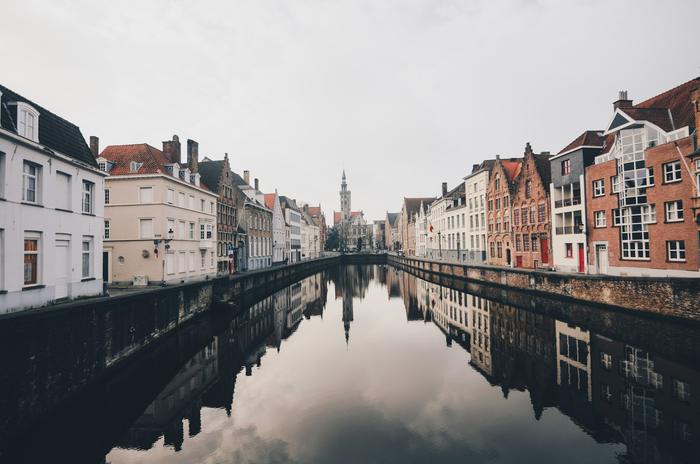
Canals, beer, and Flemish art, all an easy train ride apart.
- January: avoid
- February: avoid
- March: fine
- April: fine
- May: peak
- June: peak
- July: fine
- August: fine
- September: peak
- October: fine
- November: avoid
- December: fine
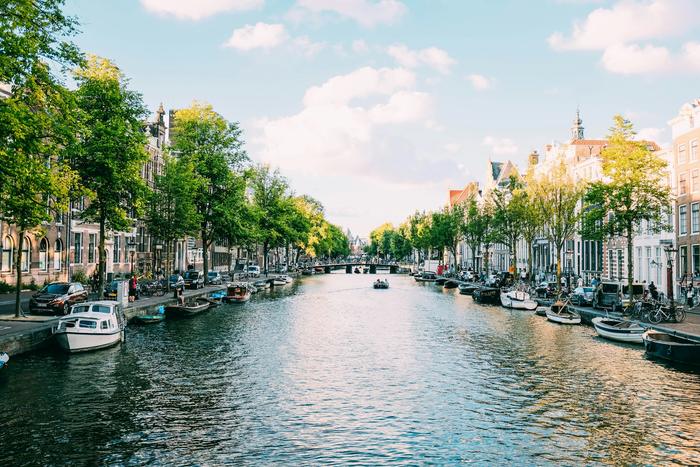
Neighbours so alike they’re easy to confuse — flat, cool, compact Low Countries of canals, beer and art, all a short train apart. Belgium is the quieter, cheaper one, with the medieval charm of Bruges and Ghent and the best beer and chocolate in Europe. The Netherlands is busier and more iconic: Amsterdam’s canals and museums, a bike-and-train ease, and the tulips in spring.
Canals, beer, and Flemish art, all an easy train ride apart.
Amsterdam, then the cities and coast most visitors never reach.
Read our full guides about Belgium and Netherlands.
Emphasised where they differ. Muted rows are much the same either way.
| Belgium | Netherlands | |
|---|---|---|
| Best time | May, June, September | April–September |
| Climate | mild | mild |
| Budget | Mid — normal Western-European city prices, though beer and frites stay cheap | Higher — Amsterdam accommodation is brutal (12.5% tourist tax + 21% hotel VAT from Jan 2026) |
| Trip length | 1–1 wks | 1–2 wks |
| Visa | Schengen rules apply: 90 days visa-free for most Western passports. Verify before travel. | Schengen — visa-free for most Western passports (90 days). |
| Currency | EUR (€). | EUR (€) |
| Language | Dutch, French, and German. English widely spoken. | Dutch. English near-universal. |
| Tap water | Tap water safe to drink. | Tap water safe and good. |
| Safety | Safe overall; usual big-city pickpocket caution in Brussels stations. | Very safe. Watch for bikes — they have right of way and use it. |
General guidance — visas, safety, and health change, so check your government's travel advisory and the official sources before you go.
The split
Near-twin Low Countries — one is calmer medieval charm, the other a busier, famous city trip.
Belgium is the quieter, cheaper one: the medieval charm of Bruges and Ghent, the grit and art of Brussels and Antwerp, and the best beer and chocolate in Europe. The Netherlands is busier and more iconic: Amsterdam’s canals and world-class museums, a bike-and-train ease across Rotterdam, Utrecht and Haarlem, and the tulips in spring. Calmer medieval charm, or a famous, frictionless city trip.
The operational detail — Belgium’s rail links and prices, the Netherlands’ OVpay, hotel VAT and Amsterdam over-tourism rules — lives on the two guides: Belgium, know before you go and Netherlands, know before you go. This page is the head-to-head.
Who suits which
Quieter-and-cheaper or busier-and-iconic — a close call that still splits.
| If you want… | Belgium | Netherlands |
|---|---|---|
| Medieval charm, fewer crowds | Wins clearly. Bruges, Ghent | Busier, overrun centre |
| The iconic canal city | Lovely, but smaller | Wins clearly. Amsterdam |
| Best beer, chocolate, food | Wins. A genuine draw | Weaker on cuisine |
| World-class museums | Good art | Wins. Rijksmuseum, Van Gogh |
| The lower bill | Wins. Normal prices | Amsterdam is dear |
| Tulips in spring | Not the draw | Wins. Keukenhof and the fields |
Doing both
Neighbours, a short train apart.
These two pair as easily as any in Europe: the train between them is quick (Amsterdam–Brussels is around two hours), so a single Low Countries loop — Amsterdam and a Dutch city, then Bruges, Ghent and Brussels — is effortless. Both are in Schengen, so combined time draws on the same 90/180 allowance, and both reward spring-to-autumn (grey and damp otherwise). Canals, beer and art, back to back.
What we leave out
Exact prices and the moving pieces — Belgium’s city rates, the Netherlands’ hotel VAT and Amsterdam tourist tax — change within a season, so the figures here are the shape of the gap, not a quote; the guides carry the live detail, including the EES/ETIAS border changes that apply to both.
Which of the two is the better bet for each month of the year, scored on how well the season suits each place.
The benchmark for food, history, and beauty.
Ruins in the morning, a swim by noon, taverna until dark.
Food, beaches, and three or four cities that each justify the trip.
The ski and alpine benchmark — every other mountain range is measured against this.
Dubrovnik, the Adriatic coast, ancient cities. Compact and beautiful.
Prague earns the crowds. The rest of the country is the bonus.
Geysers, glaciers, northern lights, hot springs.
The most concentrated mountain scenery in Europe — and you'll pay for it.
Still undecided
Three matches. Often answers comparison questions for you.
Start the quiz