Two of northern Europe’s great outdoors, at opposite scales. Scotland is the compact, dramatic one — Highlands and lochs, island ferries, clifftop castles and whisky distilleries packed into a small, wild, weather-lashed country you can tour in a week. Sweden is the vast one — endless forests and lakes, a Stockholm archipelago, clean Scandinavian design and cities, and the Lapland north with its aurora, reindeer and midnight sun. One is rugged castles-and-whisky scenery; the other a huge, orderly nature-and-design country that rewards a longer, slower trip. The real split is scale and mood, not which is more beautiful.
Both are northern-Europe outdoors trips — but one is compact, dramatic and castle-studded, the other vast, forested and design-led.
Compact vs vastthe scaleA week-long Highland loop, or a big country you sample by season
Castles vs designthe cultureClans, castles and whisky, or Scandinavian design, cities and fika
Rugged vs serenethe landscapeWeather-lashed drama, or endless forests, lakes and archipelago
Scotland is the compact, dramatic one — Highlands and lochs, island ferries, clifftop castles and whisky distilleries, plus Edinburgh’s Old-and-New-Town UNESCO core, all packed into a small, wild, often wet country you can genuinely tour in a week. Sweden is the vast one: thousands of kilometres of forest and lake, the Stockholm archipelago, polished design and cities, and the Lapland Arctic with its aurora, reindeer, Sami homeland and midnight sun — a huge, orderly nature-and-design country you sample a region of at a time rather than cross.
Neither is warmer, cheaper or obviously “better” — they are two different northern moods. Scotland concentrates its drama; Sweden spreads a calmer, bigger one across a country nearly six times the size. This page is the head-to-head. The operational detail — Scotland’s UK ETA, single-track roads, ferries and midges; Sweden’s Schengen entry, krona and Lapland logistics — lives on the two guides: Scotland, know before you go and Sweden, know before you go.
The scenery
Clifftop castles, or forest, lake and fjell
The headline sights barely overlap: Scotland is Highlands, lochs, isles and castles; Sweden is archipelago, forest, design and the Arctic north.
Concentrated vs spread outthe same northern beauty on two very different canvases
Scotland delivers Glencoe, Loch Ness, Ben Nevis, the Skye landscapes and Edinburgh Castle in a few hours’ driving of each other — drama you trip over. Sweden’s equivalents — the Stockholm archipelago, Gotland’s walled Visby, the High Coast, and Lapland’s Abisko and Kiruna at ~67–68°N — sit hundreds of kilometres apart, so each is a deliberate journey. Same family of northern beauty; one hands it to you compact, the other makes you travel for it.
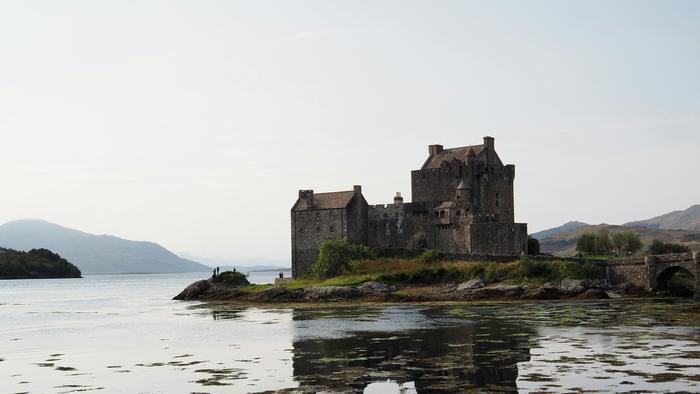
Scotland’s headline is the Highlands and the isles. Glencoe’s glacial valley, Loch Ness and Urquhart Castle, Ben Nevis (1,345 m) above Fort William, the single-track glens — and then the islands that are half the magic: honeypot Skye (the Fairy Pools, the Old Man of Storr, the Quiraing), the quieter Gaelic-speaking Outer Hebrides with their white-sand beaches and the Callanish stones, and Orkney, whose Skara Brae and Heart of Neolithic Orkney are older than Stonehenge. Over it all sits the castle-and-clan romance — Edinburgh Castle on its volcanic rock, Stirling, and a thousand ruins besides.
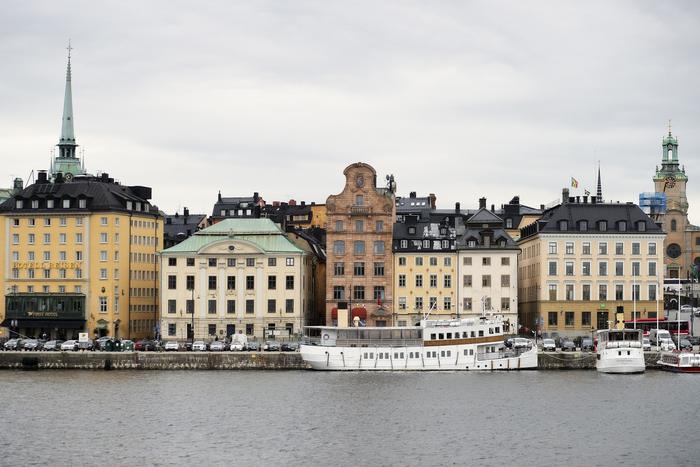
Sweden’s headline is water, forest and the Arctic. Stockholm spreads across fourteen islands where Lake Mälaren meets the Baltic — Gamla Stan, the Vasa Museum (built around a warship salvaged after 333 years on the seabed), Skansen, and a tens-of-thousands-strong archipelago on the doorstep. Out in the Baltic, Gotland’s Visby is the best-preserved medieval walled town in Scandinavia. And then the north: aurora-famous Abisko, the mining town of Kiruna (being physically relocated as the mine undermines it), the Icehotel rebuilt from river ice each winter, and the red-cottage folk heartland of Dalarna. Scotland’s scenery is wilder and rockier; Sweden’s is softer, wetter with lake rather than rain, and runs all the way to the polar circle.
The island question splits the same way as everything else. Scotland’s isles are rugged outposts reached by CalMac ferries you book weeks ahead — Skye, the Hebrides, Orkney, whisky-island Islay — each a windswept world of its own. Sweden’s archipelago is a gentle commute: Waxholmsbolaget ferries run out from central Stockholm to thousands of low, wooded, red-cabin islands as ordinary public transport. Wild and remote, or serene and close at hand — take your pick.
Aurora & light
The northern lights, and the midnight sun
This is the one where the answer is not close — Sweden’s Lapland sits inside the auroral band, and Scotland does not.
~68°N vs ~58°NAbisko and Kiruna versus Scotland’s latitudes
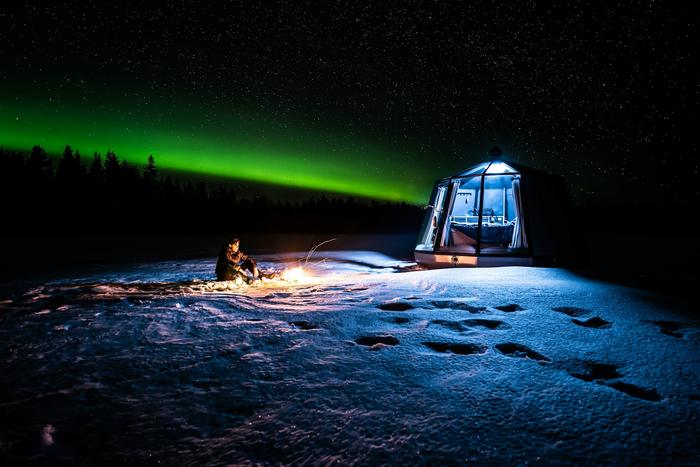
Swedish Lapland — Abisko and Kiruna, around 67–68°N — sits under the auroral oval, with Abisko’s famously clear-sky microclimate over Lake Torneträsk making it one of the most reliable aurora bases on earth (aurora season September–March, best December–March). Scotland tops out around 59–60°N, so it only occasionally catches the lights in the far north on a strong geomagnetic night. For the aurora, this is not a toss-up.
Sep–MarSweden’s dependable aurora season (best Dec–Mar)Abisko and Kiruna, under the auroral zone — plus the Aurora Sky Station
~28 May–16 Julmidnight sun in Swedish Lapland (Kiruna)The sun never sets; the flip side is a polar night in midwinter
Long simmer duskScotland’s summer light — but no midnight sun or reliable auroraFar-north midsummer barely gets dark, yet the sun still sets
Sweden owns both extremes of the light. North of the Arctic Circle the sun doesn’t set for weeks around midsummer (in Kiruna roughly 28 May to 16 July), and in winter it doesn’t rise at all — the polar night. That same winter darkness, with clear Lapland skies, is why Abisko and Kiruna are a genuine aurora destination rather than a hopeful one. Even Stockholm swings from about 18 hours of daylight at midsummer to roughly six in December.
Scotland gets the long light but not the extremes. Far-north midsummer barely darkens and the “simmer dim” is lovely, but the sun still sets and there is no midnight sun. The aurora does reach northern Scotland on strong nights, and it’s a thrill when it does — but it is luck, not a plan. If seeing the northern lights or standing under a midnight sun is the point of the trip, Sweden is the answer and it isn’t a close call.
Entry & money
UK pound and ETA, or Schengen krona and cards
They sit on opposite sides of nearly every border and money rule — and neither uses the euro.
Entering Scotland means entering the UK — not Schengen — so the key change is the UK ETA: visa-exempt visitors (US, Canada, Australia, and the EU since April 2025) must now get an Electronic Travel Authorisation, £20, before travelling, valid two years and multiple entries with stays up to six months. Money is pound sterling, cards and contactless everywhere; the one quirk is that Scottish banknotes, though valid UK-wide, aren’t technically “legal tender” and an unfamiliar English shop may occasionally balk — a card sidesteps it.
Sweden is in Schengen, so you get the shared 90-days-in-180 allowance; the EU’s biometric Entry/Exit System is now deployed, and the separate ETIAS pre-registration (€20) is expected in 2027 but not yet required. The surprises are domestic: the currency is the krona, not the euro, and Sweden is one of the most cashless societies on earth — bring a contactless card or phone, because plenty of places simply won’t take notes. VAT is 25%.
Scotland
Sweden
Bloc
The UK — not Schengen
The EU and Schengen
Pre-travel
UK ETA, £20 (live now for US/EU/Canada/Australia)
EES live; ETIAS (€20) not yet — expected 2027
Allowance
Each stay up to 6 months
90 days in any 180 (Schengen)
Currency
Pound sterling — not the euro
Krona (SEK) — not the euro
Cash
Cards universal; Scottish notes occasionally balked at south of the border
Famously near-cashless — ~80% by card, many venues card-only
Driving
On the left; single-track roads
On the right; winter tyres mandatory Dec–Mar
Two separate systems that happen to agree on one thing — avoid euros. Scotland uses sterling and the UK ETA; Sweden uses the krona inside Schengen. Full detail, including the ETA application and Sweden’s Systembolaget alcohol rules, is on the country guides.
A money trap unique to Sweden: anything over 3.5% alcohol is sold only through Systembolaget, the state monopoly, with an age limit of 20 and early closing (about 20:00 weekdays, 15:00 Saturdays, shut Sundays) — so plan drinks shopping around its hours, and expect high bar prices on top. Scotland’s drink equivalent is the opposite temptation — distilleries everywhere — but its drink-drive limit is lower than England’s, so a dram and a drive don’t mix.
When to go
Short summers, long dark winters — used differently
Both are northern and seasonal, but Scotland’s calendar is about the midge and the festivals, Sweden’s about two completely different trips.
MJJASON
Scotland — best window (long days, green)May–Sep
May–Sep
Scotland — Highland midge worstJun–Aug
Jun–Aug
Scotland — Edinburgh festivalsAugust
August
Sweden — summer (archipelago, midnight sun)Jun–Aug
Jun–Aug
Sweden — aurora season (the north)Sep–Mar
Sep–Mar
Crimson bars catch people out. Scotland’s summer brings the west-Highland midge (June–August, worst at dawn and dusk in still, humid weather) and, in August, a mobbed and expensive Edinburgh. Sweden’s calendar instead splits the year in two: summer for the archipelago and midnight sun, winter (shown running past the chart into the new year) for the aurora and snow. Both have short, dark winters — the Scottish Highlands get under seven hours of daylight in December.
Scotland is a May-to-September country for long days and green landscapes, with May and September the sweet spot for thinner crowds and — crucially — fewer midges. The Highland midge is the one genuinely Scottish planning factor: in the west Highlands and islands from June to August it swarms at dawn, dusk and in still, muggy weather, though a breeze, bright sun or simply moving keeps it off, and the east coast and Orkney are largely spared. August is also festival season: Edinburgh hosts the Fringe (the world’s largest arts festival) and the Military Tattoo — electric, but beds and prices spike hard.
Sweden runs two separate trips off one calendar. Summer (June–August) is the archipelago, the bright evenings, Midsummer and the midnight sun up north; late May and September are the quieter shoulder. Winter is the other Sweden entirely — the aurora season runs September to March, with December–March giving the darkest skies, most reliable snow, dog-sledding and the Icehotel. The one to watch is Midsummer (the weekend around 20 June): glorious if you join in, but it shuts shops and strains transport for a long weekend. Pick Scotland by crowd and midge; pick Sweden by which Sweden you want.
What it costs
Both expensive — Sweden the dearer
Neither is a budget trip; the honest shape is upper-end UK prices against structurally expensive Nordic ones.
Upper-mid, UK-pricedScotland — Highlands/islands dearest, August Edinburgh dearPound sterling; cities more moderate than the remote north
Above the EU averageSweden — structurally expensive, though Stockholm is the cheapest Nordic capitalAlcohol especially steep via Systembolaget and high bar prices
Distance adds upSweden’s scale is itself a costCrossing a far bigger country means more on trains, sleepers or flights
Scotland costs what the UK costs — moderate-to-upper, with the Highlands and islands the priciest to reach and stay, the cities more moderate, and August Edinburgh genuinely expensive when the festivals are on. Tipping runs about 10% in restaurants and isn’t expected in pubs.
Sweden is dearer across the board, sitting structurally above the EU average — though, fairly, Stockholm is the cheapest of the Nordic capitals and tipping is modest and optional. Alcohol is where it bites hardest, thanks to the Systembolaget monopoly and high bar prices. And Sweden’s sheer size is a cost in itself: a trip that takes in both the south and Lapland means long train legs, a sleeper or a domestic flight that a compact Scottish tour never incurs. We keep exact daily figures off this page because they go stale within a season — the reliable rule is that both are expensive and Sweden is the one that adds up faster.
The cheapest authentic thing in either country tells you their character. In Sweden it’s fika — coffee and a cinnamon bun, a daily ritual that costs almost nothing. In Scotland it’s a Highland walk under the right to roam, which is free by law. Both countries reward the traveller who leans into the outdoors and the everyday over the expensive set-pieces.
Getting around
A Highland road-trip, or a Nordic rail country
Scotland is a car-and-ferry country with a famous loop; Sweden is a train country with Arctic distances.
~830 km loop vs ~1,250 km one waythe whole NC500, against Stockholm-to-Kiruna
Scotland’s showpiece drive, the North Coast 500, is an ~830 km loop you can do in a long week and still sleep near where you started. Sweden’s equivalent reach is one-directional and far longer — Stockholm to Kiruna is roughly 1,250 km, an overnight sleeper or a ~90-minute flight before Lapland even begins. That single comparison is the whole scale difference: Scotland loops, Sweden stretches.
Scotland rewards the driver. The cities need no car, but the Highlands, the islands and the North Coast 500 effectively do — on the left, braced for single-track roads where the passing-place etiquette is real and Highland distances take far longer than the map suggests. The ferries (CalMac, booked weeks ahead in summer) stitch the west-coast isles together, and the West Highland Line to Mallaig — crossing the Glenfinnan Viaduct of Harry Potter fame — is rated one of the world’s great rail journeys.
Sweden rewards the rail passenger. SJ’s X2000 runs the populated spine — Stockholm to Gothenburg in about three hours, on to Malmö and over the Öresund Bridge to Copenhagen. The catch is the north: reaching Lapland means an overnight sleeper or a roughly 90-minute flight, because it is genuinely far. Around Stockholm, archipelago ferries are public transit and the metro is “the world’s longest art gallery.” The contrast is clean: Scotland is a road-trip you plan around ferries and slow glens; Sweden is a train network you plan around sheer distance.
Scotland
Sweden
The spine
The NC500 — an ~830 km Highland driving loop from Inverness
SJ X2000 high-speed rail down the populated south
Signature journey
West Highland Line to Mallaig over the Glenfinnan Viaduct
The sleeper north to Kiruna/Abisko, or a ~90-min flight
Islands
CalMac ferries — book car spaces weeks ahead in summer
Waxholmsbolaget archipelago ferries from central Stockholm
The catch
Single-track roads, drive on the left, Highland distances are slow
Vast distances; winter tyres Dec–Mar; elk and reindeer on the roads
Without a car
Cities fine; Highlands and isles effectively need one
Strong trains and transit make car-free genuinely workable
Scotland is driven and ferried — a car is effectively essential for the Highlands, the NC500 and the islands, though the West Highland Line is a world-great exception. Sweden is a rail country: the fast X2000 down south, a night sleeper or a short flight for Lapland, and the art-filled Stockholm metro in the capital. Full route detail is on the country guides.
Pace is the shared lesson, for opposite reasons. In Scotland, plan fewer Highland miles a day than you think — the single-track roads and the views both slow you down. In Sweden, don’t try to “do” the whole country — it’s nearly six times the size, so pick the city-and-coast south or the Arctic north by season rather than stringing them end to end.
Culture
Tartan and whisky, or lagom and fika
The cultural texture is as far apart as the map: clans, castles and a national drink versus restraint, design and a coffee ritual.
Scotland’s culture is worn proudly and loudly. Tartan, bagpipes, the clan-and-Highland story, Highland Games and ceilidhs, and above all whisky — a landscape of five protected regions (fruity Speyside, peaty Islay, the broad Highland, the softer Lowland and briny Campbeltown) where a distillery tour is a trip highlight. Gaelic survives in the west, on the road signs and in the island communities. It’s a confident, romantic national identity within the UK.
Sweden’s culture is quiet and designed. Two words unlock it — lagom, the ideal of “just the right amount,” and jantelagen, the social rule against thinking yourself better than others — and together they explain the understated egalitarianism and the design restraint the world buys as IKEA and H&M. The daily ritual to absorb is fika: stopping properly for coffee and a cinnamon bun. In the north, the indigenous Sami have their own language, parliament and reindeer-herding culture, to be met with respect rather than as a photo op. Loud heritage, or quiet restraint — the two countries feel different the moment you arrive.
Scotland
Sweden
Identity
Clans, tartan, bagpipes, Highland Games, ceilidhs
Lagom (“just the right amount”) and jantelagen — understated, egalitarian
The drink
Whisky — five protected regions, distillery tours everywhere
Fika — coffee and a cinnamon bun as a daily institution
The look
Weathered stone, castles, heather and tweed
Clean Scandinavian design — the restraint behind IKEA and H&M
Indigenous / minority culture
Gaelic in the west; bilingual Highland signs
The Sami of the north — own language, parliament and reindeer herding
Language for visitors
English everywhere
English near-universal (~89% speak it)
Both are easy, welcoming, English-friendly countries — the difference is mood. Scotland wears a loud, romantic heritage; Sweden a quiet, designed restraint. Food and etiquette detail (köttbullar, surströmming, shoes-off homes, Systembolaget) is on the Sweden guide; whisky regions and ceilidh culture on the Scotland guide.
Both countries hand you a right to be in nature, and the parallel is striking. Scotland’s right to roam (the Land Reform Act) gives responsible access to most land and water, including lightweight wild camping — one of the world’s most generous access laws. Sweden’s allemansrätten does the same: walk, cycle, ski, swim, camp a night or two and pick berries on open land, under the rule “do not disturb, do not destroy.” If being outdoors freely is your idea of a holiday, either delivers.
Who suits which
Who each actually suits
On several of these the answer inverts — the trip that wins overall loses for the particular thing you want.
If you want…
Scotland
Sweden
Dramatic, compact scenery
Wins. Highlands and isles, trip over the drama
Vaster and gentler — you travel to each sight
The northern lights or midnight sun
Rare, far north only, luck not a plan
Wins clearly. Abisko and Kiruna, under the auroral zone
Castles, clans and whisky
Wins. Edinburgh, Speyside, Islay
Not the draw
Scandinavian design and polished cities
Edinburgh charm, but not the point
Wins. Stockholm, design, the archipelago
A short, tourable trip in a week
Wins. Compact enough to loop
Too big — rewards a longer, slower trip
A driving road-trip holiday
Wins. The NC500 and the glens
Distances too vast and forested to drive for pleasure
Car-free travel beyond the capital
Highlands and isles effectively need a car
Wins. Fast trains and strong transit
Wild, remote islands
Wins. Skye, the Hebrides, Orkney by ferry
Gentle, close-in archipelago instead
Doing both
Separate trips across the North Sea
These are not neighbours you hop between — they’re two countries and a flight apart, so most people pick one.
Scotland and Sweden sit on opposite sides of the North Sea, with no land link and no short ferry — combining them means a flight via a hub (typically through Copenhagen, Amsterdam or a UK airport), plus the two separate entry systems above: the UK ETA for Scotland, Schengen for Sweden. It can be done as two halves of a longer northern-Europe trip, but it is a deliberate two-centre itinerary, not a natural pairing like two islands a ferry apart.
Because of that, the honest framing is a choice rather than a combination: the compact, dramatic, castle-and-whisky Highlands, or the vast, Nordic forests-archipelago-and-aurora country. Each also compares more naturally with its own neighbours — Scotland with Finland, Sweden with Austria and the wider Nordics (Norway vs Sweden, Iceland vs Norway).
If you genuinely want both a compact castle-and-whisky week and the reliable aurora, the pragmatic answer is to treat them as two trips in different years, or to book Scotland in late spring for the long light and Sweden in deep winter for the lights — the seasons that suit each are opposite, which actually makes them easy to split across a calendar.
What you give up
What each choice costs you
Every “which one” is also a “what do I give up” — so here is the honest other side of each pick.
Choose Scotland and you give up the Arctic. No dependable northern lights, no midnight sun, no true polar north — and a smaller country, so less of the vast-wilderness, lose-yourself scale that Sweden does so well. You also accept the weather (“four seasons in a day,” often wet) and, in the west in summer, the midge.
Choose Sweden and you give up the concentration. The sights are spread across a huge country, so you trade Scotland’s trip-over-the-drama compactness for long travel legs, and you give up the castle-and-clan romance and the whisky-region culture that Scotland wears so distinctively. You also pay more, and you plan around Systembolaget hours and Midsummer closures.
One thing is deliberately missing from this page: exact current prices. Both countries are expensive and move with the season, and a stale figure is worse than none — so the comparison here is the structural shape of the cost and the trip, with the live detail (ETA fees, ETIAS timing, ferry and festival dates) kept on the two country guides where it’s re-checked each season.
Scotland or Sweden, month by month
Which of the two is the better bet for each month of the year, scored on
how well the season suits each place.
The northern lights or the midnight sun are the point — Lapland delivers both, reliably.
You want scale: vast forests, lakes and a Stockholm archipelago, sampled slowly.
Scandinavian design, polished island-city life and fika over castles and whisky.
You’d rather travel car-free on fast trains than drive single-track Highland roads.
Common questions
Is Scotland or Sweden better for scenery?
Different flavours of northern beauty. Scotland is more dramatic and compact — Glencoe, the Skye landscapes, sea lochs and clifftop castles come thick and fast in a small area. Sweden is vaster and gentler — immense forests and lakes, the Stockholm archipelago, and the stark Arctic of Lapland — beauty on a bigger, quieter canvas. For concentrated, rugged drama, Scotland; for vast, serene wilderness, Sweden.
Which is better for the northern lights?
Sweden, clearly — its Lapland north (Abisko, Kiruna, around 67–68°N) sits under the auroral zone and is a prime, reliable place to chase the northern lights from September to March, with the midnight sun in summer. Scotland can occasionally catch the aurora in the far north on a strong night, but it’s not a dependable aurora destination. For the lights, Sweden; Scotland’s draw is its Highlands and coast.
Which has the better castles and history versus design and cities?
They split neatly. Scotland wins on castles and romantic history — Edinburgh, Stirling, the clan-and-Highland story, and the whisky heritage. Sweden wins on design, cities and modern Scandinavian life — Stockholm’s islands and museums, clean design, and a polished urban culture. For castles and whisky, Scotland; for design and Nordic city life, Sweden.
Do the entry and money rules differ?
Yes, on almost every point except one. Scotland is part of the UK, so you need the UK ETA (£20) and use pound sterling. Sweden is in the EU and Schengen (so the EU’s EES applies and ETIAS is expected in 2027) but, like Denmark, is not in the eurozone — it uses the krona and is famously near-cashless. The one agreement: neither takes euros. The country guides carry the detail — Scotland and Sweden.
Can I combine Scotland and Sweden in one trip?
They’re separate trips rather than a natural pairing — two countries across the North Sea, linked only by flights via a hub, with two different entry systems — so most people pick one. The choice is really compact-dramatic Highlands versus vast-and-Nordic forests-and-aurora. If you want both, splitting them across the calendar works well: Scotland in the long-light late spring, Sweden in the deep-winter aurora season.