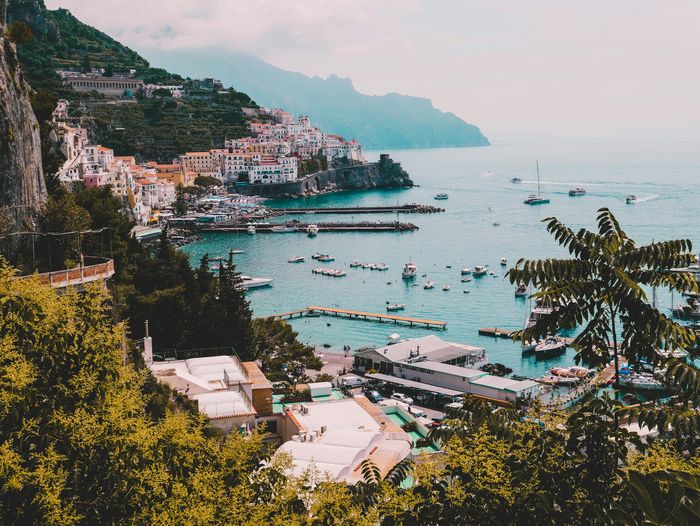
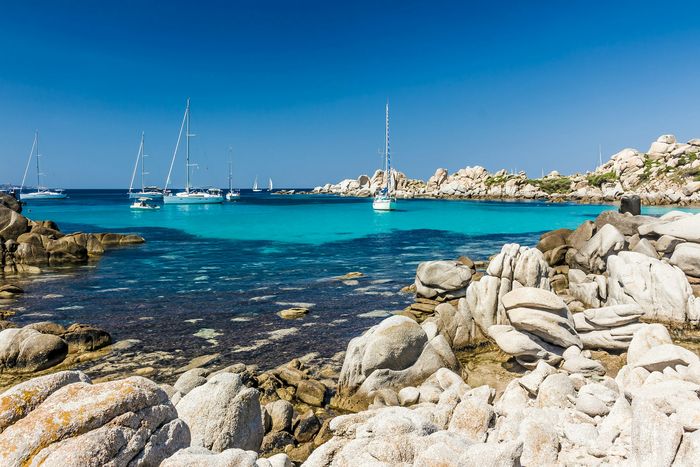
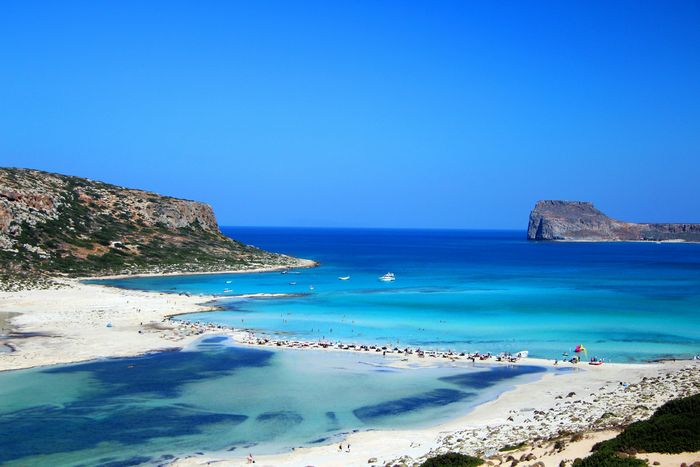
Two big Mediterranean islands, and two opposite trips. Mallorca is compact, polished and superbly connected — turquoise coves a short flight from everywhere, pricier than most of the Med. Sicily is seven times the size, wilder, cheaper and far deeper in history, with a live volcano on it — and it needs a car and more days. The sea is nearly the same; almost nothing else is.
Both are big Mediterranean islands. That is about where the resemblance ends.
7×Sicily’s size against Mallorca~25,700 km² to ~3,640 — a week versus ten days
~28% lessSicily’s cost of living against Mallorca’sRents less than half; Mallorca is the pricey one
Coves vs templeswhat each is really forA beach-first island, or a history-first one
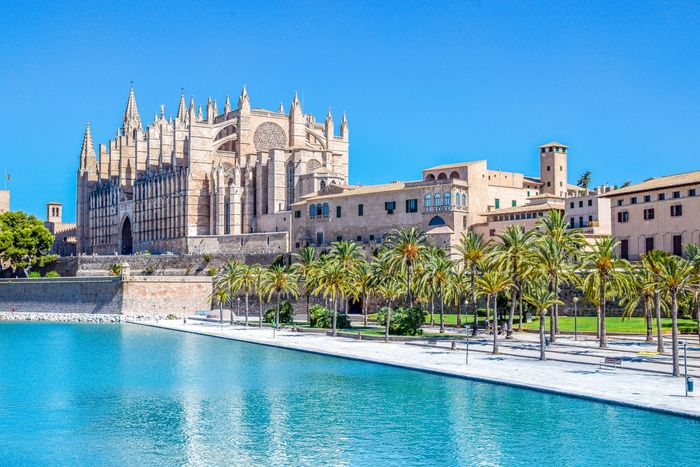
Mallorca is the compact, polished one. Turquoise calas, a UNESCO mountain range and a genuine city in Palma, all a short flight from anywhere in Europe and crossable by car in about an hour and a half — pricier than most of the Mediterranean, and wrestling openly and publicly with overtourism. Sicily is seven times the size and a different order of trip. Greek temples, Baroque towns, Arab-Norman Palermo and Europe’s most active volcano, cheaper and wilder and less polished, needing a car and more days than people plan for.
The sea is the one thing they share — both are warm, swimmable Mediterranean islands whose water runs within about a degree of each other in summer. After that the trip forks completely: polish, ease and a short flight on one side; depth, scale and value on the other. The operational detail that shapes each — Mallorca’s ecotax and cove access, Sicily’s ZTL fines and Etna’s eruptions — lives on the two guides: Mallorca, know before you go and Sicily, know before you go. This page is the head-to-head.
Sea & season
The sea is nearly the same. The land heat is not.
Pick these two apart on what happens out of the water, not in it.
About 1°Cthe typical summer gap between the two islands’ sea
Both are warm Mediterranean islands and their sea tracks closely — within roughly a degree most months, peaking near 27°C in August and still swimmable at about 23°C into October on each. So the water is not the deciding factor. The land is: Sicily’s interior and the Catania plain regularly hit 35–40°C in July and August when the Saharan sirocco blows — Europe’s reliably recorded record of 48.8°C was set at Siracusa in 2021 — and an open site like the Valley of the Temples is punishing at midday. Mallorca’s summer tops out far gentler, around a 30°C high in Palma.
On the calendar both islands point to the same answer: May–June and September–October are the humane windows — warm sea, thinner crowds, lower prices — and July–August is the crush. But the reason to avoid high summer differs. On Mallorca it is heat-plus-crowds-plus-price in a resort setting that is comfortable but packed. On Sicily it is genuine heat: the open-air archaeology that is the whole point of the island becomes brutal at midday, so the shoulder is not a nicety there but close to a requirement for the headline sights.
There is one hard seasonal fact that has nothing to do with temperature, and it is covered next: much of Mallorca closes for the winter, while Sicily stays open all year.
Month
Mallorca sea
Sicily sea
The real difference
May
~18°C
~19°C
Both pleasant; shoulder begins
June
~22°C
~23°C
Sweet spot on both
July
~26°C
~26°C
Sicily’s interior starts to roast
August
~27°C
~27°C
Peak sea, peak crowds, peak heat
September
~25°C
~26°C
Sweet spot returns
October
~22°C
~23°C
Still swimmable on both
Approximate monthly average sea-surface temperatures; both islands peak near 27°C in August and hold swimming warmth into October. The season that matters is the air and the crowd, not the water — and that is where they split.
What’s open
Mallorca shuts for winter. Sicily does not.
The climate charts say both are mild in the cool months. They do not say what is shuttered.
JFMAMJJASOND
Mallorca — spring shoulder (warm sea, fewer crowds)May – Jun
May – Jun
Mallorca — peak summer (hot, crowded, pricey)Jul – Aug
Jul – Aug
Mallorca — autumn shoulder (still ~23°C)Sep – Oct
Sep – Oct
Mallorca — resorts shut outside PalmaNov – Mar
Nov – Mar
Sicily — open year-round (winter city breaks, snow on Etna)Jan – Dec
Jan – Dec
The crimson bars are the traps on the Mallorca side: the July–August crush, and the winter shutdown when much of the resort island closes (shown Jan–Mar, but the shutter runs Nov–Mar). Palma itself stays open all year. The green Sicily bar is the point of this section — it runs the full width.
This is the cleanest inversion between the two islands. Outside Palma, much of Mallorca shuts from roughly November to March: coastal hotels, beach clubs and resort-town restaurants close, so a late-autumn or winter trip can find the resorts dark while the capital carries on. Base in Palma or a Serra de Tramuntana village and the island works year-round; book a mega-resort for January and you may find it boarded up.
Sicily has no such off-season. Its coastal cities stay mild and lived-in through winter, the sights and markets keep their doors open, and it is one of the few Mediterranean islands that genuinely works as a winter destination — you can even find snow, and short ski runs, on Etna. If you can only travel in the cold months, that is close to a decision on its own.
The flip side of Sicily’s year-round openness is Sicily’s one unpredictable closure, and it has nothing to do with the season: Etna. Through 2026 a run of eruptions sent ash over the island and shut Catania airport for days at a time, so an itinerary flying in or out of Catania needs slack and a Plan-B airport (Palermo, Trapani, Comiso). Mallorca has no equivalent live hazard; its winter shutdown is predictable, Sicily’s airport closures are not. Both the ecotax calendar and Etna’s state are on the countryguides.
Crowds
August on both — plus a backlash on one
They crowd at the same time of year, but only one of them is arguing about it in the street.
33 millionpassengers through Palma airport in 2024Third-busiest in Spain; overwhelmingly a summer load
Tens of thousandsat Mallorca’s July 2026 anti-tourism marchThe largest yet — aimed at the model, not visitors
12.3 millionpassengers at Catania airport in 2024Italy’s 4th-busiest — but Etna ash shut it for days in 2026
15 AugustFerragosto & l’Assomption — both islands peakFamily-run Sicilian firms shut for up to a fortnight around it
Both islands crush in August, and both slow for the mid-month holiday — Ferragosto on the Italian side, where many family-run Sicilian businesses close for up to a fortnight. That much is shared. What is not shared is the backlash: Mallorca has had mass anti-tourism protests since 2024, with the July 2026 march in Palma the largest to date, aimed squarely at the tourism model — holiday rentals, the pressure on housing and water — rather than at individual visitors. What you actually meet as a guest is a tourist tax, the occasional protest day when businesses close in support, visible graffiti, and a string of overtourism measures (a cruise-ship cut and a rental-car cap both phasing in from 2027).
Sicily carries nothing of that intensity. It is big enough, and its demand spread thinly enough across a far larger island, that no single place feels as pressured as the Mallorcan calas in August — with the loud exception of Taormina, which has become the island’s priciest and most crowded corner since The White Lotus filmed there. The lever on both islands is the same: travel in the shoulder, and the crowding problem largely dissolves.
Mallorca’s pinch point is a single airport taking 33 million people a year, overwhelmingly in summer, into a small island — so the overtourism story is really a concentration story. Sicily’s crowding is diluted by scale and by having several gateways (Catania, Palermo, Trapani, Comiso). Neither protest nor crowd is a reason to avoid either island; both are reasons to avoid August.
Beaches & coast
Mallorca is a beach. Sicily is a continent with beaches on it.
One island’s coast is the whole reason to go. The other’s is a nice side-effect.
~40 mthe length of Caló des Moro, Mallorca’s most-photographed cove
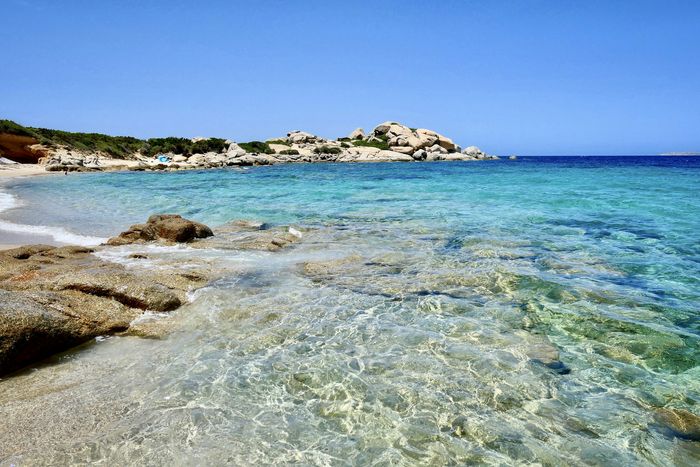
Mallorca’s signature turquoise calas are the postcard — and they are tiny. Caló des Moro is about forty metres of sand down a steep ten-minute scramble with no facilities, drawing thousands on a peak day, with roadside parking cut back and residents-only zones nearby. They are genuinely beautiful and genuinely crowded. Sicily’s beaches — San Vito Lo Capo, Cefalù, the Egadi islands, the long sands near Siracusa — are good and far less fought-over, but they are not why anyone books Sicily.
On Mallorca the coast is the trip. The calas are small, clear and the island’s defining image, and the two famous drives out to them are experiences in themselves — the Sa Calobra road’s hairpin “tie-knot” and the Cap de Formentor run to the lighthouse (closed to private cars by day in summer, with a park-and-ride shuttle). The constraint is everywhere the same: go early or off-season, and do not count on parking.
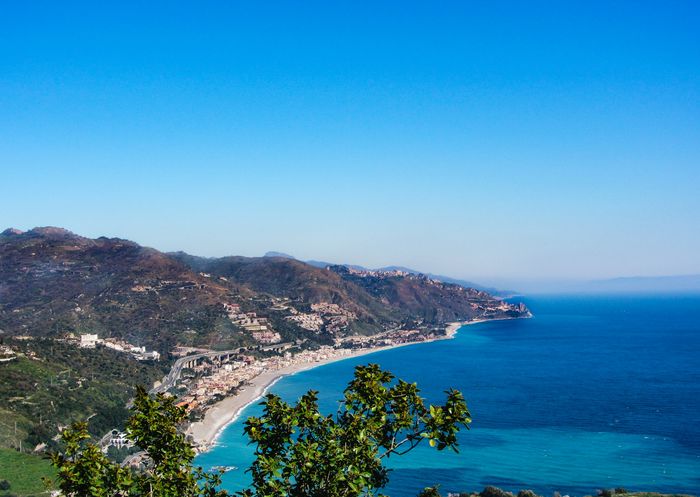
On Sicily the coast is one layer among many. You can have excellent beach days — the north-west around San Vito Lo Capo, the Egadi islands by hydrofoil, pretty Cefalù — but the island’s pull is inland and historical: temples, Baroque towns, a volcano, markets. A Sicily trip built only around beaches wastes the island; a Mallorca trip built around anything but the coast and the Tramuntana is working against the grain. That difference in what the coastline is for is the cleanest way to choose between them.
History vs polish
Seven UNESCO sites and a volcano, or a mountain range and a bike
This is the heart of it: Sicily sells depth, Mallorca sells polish — and both are world-class at their own thing.
7 vs 1UNESCO World Heritage sites — Sicily against Mallorca
Sicily packs seven UNESCO sites onto one island — the Valley of the Temples, Arab-Norman Palermo, the Baroque Val di Noto, Siracusa, Villa Romana del Casale, the Aeolian Islands and Mount Etna (~3,340 m, Europe’s most active volcano). Mallorca has one: the Serra de Tramuntana, inscribed in 2011 as a cultural landscape of thousand-year-old dry-stone terracing. That ratio is the whole argument about depth in a single line.
Sicily is the deepest layer-cake of history in the Mediterranean — Greek, Roman, Arab, Norman, Spanish and Baroque, stacked on one island — with Europe’s most active volcano as its headline and a food culture (arancini, cannoli, granita with a brioche for breakfast, pasta alla Norma, Etna and Nero d’Avola wines) that is, for many visitors, the main reason to come. It is cheaper, wilder and less tidy, and it rewards the time and driving you put in.
Mallorca’s depth is narrower but its polish is unmatched. Behind the beach reputation sit the UNESCO Serra de Tramuntana, the GR221 dry-stone walking route, Palma’s cathedral and old town, the century-old Sóller railway, and a genuinely world-class road-cycling scene — the Sa Calobra climb, pro teams wintering and spring-training on the island, the big Mallorca 312 sportive. If your active holiday is on a bike, Mallorca has no European equal and Sicily is not in the conversation; if it is among ruins and a volcano, the reverse is just as absolute.
Draw
Mallorca
Sicily
Ancient history
A Gothic cathedral (La Seu) and Bellver Castle
Greek temples, Roman mosaics, Arab-Norman Palermo, Baroque Val di Noto
A live volcano
None
Etna — ~3,340 m, erupting on its own schedule, UNESCO-listed
Mountains & walking
Serra de Tramuntana (UNESCO), the GR221 dry-stone route
The Nebrodi, Madonie and a hike up Etna
Road cycling
A world cycling mecca — Sa Calobra, pro spring training, the 312 sportive
Possible, but not a cycling destination
Food & wine
Ensaïmada, sobrassada, Binissalem wine
Arancini, cannoli, street food, Etna DOC, Nero d’Avola, Marsala
A real city
Palma — walkable, year-round, polished
Palermo and Catania — grittier, deeper, louder
Cost
Sicily is the value island, clearly
Both are eurozone, but the price of a day differs by about a third.
~28% cheaperSicily’s cost of living against Mallorca’s
Sicily is one of the cheaper corners of the Mediterranean; Mallorca is one of the pricier. Cost of living runs about 28% lower on Sicily, with rents less than half. An inexpensive meal is roughly €13.50 on Sicily against €16.50 on Mallorca, a cappuccino about €1.83 against €2.88. Mallorca’s northern-European package demand and luxury end push its accommodation, dining and car hire well above Sicily’s — though an inland or shoulder-season Mallorca trip narrows the gap.
€13.50 vs €16.50an inexpensive meal, Sicily vs MallorcaA real, everyday gap you feel at each meal
Less than halfSicilian rents against Mallorca’sThe clearest single number in the comparison
Taorminathe one place Sicily stops being cheapWhite-Lotus prices; many base in Catania or Siracusa instead
If the budget is doing the choosing, Sicily wins and it is not close. The gap shows up at every meal and every night’s lodging, and it compounds over the longer trip Sicily asks for — which is one reason the extra days there are less painful than they look. Mallorca’s premium is real and structural: it is a short-haul resort island carrying northern-European demand and a luxury tier, so even its everyday prices sit above most of the Med.
The honest caveats run both ways. Mallorca has a cheaper self away from the coast and outside July–August — inland towns, the shoulder season, a city-only Palma trip. And Sicily has one genuinely pricey corner in Taormina, where a famous hotel runs well over a thousand a night; most people base cheaper in Catania or Siracusa and visit on a day trip.
Everyday cost
Mallorca
Sicily
Inexpensive meal
~€16.50
~€13.50
Cappuccino
~€2.88
~€1.83
Cost of living (overall)
Baseline
~28% lower
Rent
Baseline
Less than half
Cost-of-living anchors, not day-rates — hotel and car-hire prices move within a season, so treat these as the shape of the gap rather than a quote. Taormina is Sicily’s one expensive exception; inland and shoulder-season Mallorca is its cheaper one. The live detail is on the country guides.
Driving & car-free
Both want a car — but for opposite reasons
One is small and you drive it in an afternoon; the other is big and slow, and the car is survival.
On Mallorca you want a car for access, not distance. The island is tiny and quick to cross, but the calas, the Tramuntana and the Sa Calobra and Formentor roads effectively need one — and that is the island’s sore point: severe summer traffic, pricey and scarce peak-season rentals, parking crackdowns at the popular coves, the Formentor daytime car ban (take the shuttle from Port de Pollença), and a Balearic vehicle cap aimed at 2027. The one great exception is Palma, which is walkable and bus-served, so a city-only trip works entirely car-free.
On Sicily you want a car because of distance. The island is seven times the size with slow, mostly single-track trains — Palermo to Catania is still nearly three hours by rail — so driving is how you reach a spread of sights from Palermo to Agrigento to Siracusa. The catch is the ZTL limited-traffic zones in the historic centres of Palermo, Catania and Siracusa’s Ortigia: drive in without a permit and automatic cameras issue a fine (€83–332) that reaches your rental company, and you, months later.
Route
Island
By car
Palma – Port de Pollença (north tip)
Mallorca
~1h
Palma – right across the island
Mallorca
~1h30 at most
Palermo – Catania
Sicily
~2.5–3h (train ~2h47, single track)
Catania – Agrigento
Sicily
~2.5h
Palermo – Siracusa
Sicily
~3h
Catania – Taormina
Sicily
~1h
Mallorca is crossable in well under two hours; Sicily’s headline sights are spread two to three hours apart on slow single-track rail, so a car is how you actually see it. The Aeolian and Egadi islands are reached by hydrofoil, not car.
The car-free verdict inverts. Mallorca has one car-free base that genuinely works year-round (Palma, with its airport, buses and the vintage Sóller railway up into the mountains) and little else. Sicily has no car-free option that lets you see the island — you really do need the car there. So for a low-effort, no-driving trip Mallorca wins through Palma; for everything beyond Palma, both islands put you behind the wheel. Full driving and transport detail is on the Mallorca and Sicily guides.
Culture & language
Catalan island, or Sicilian one
Two Mediterranean cultures that both insist, politely, that they are not the mainland.
Mallorca is a Catalan island running on a Spanish clock. Spanish and Catalan are both official, and the local variant — Mallorquí — is what you hear and read, with many signs and place names in Catalan. The daily rhythm is Spanish: a quiet midday inland, dinners from about 20:30, a strong café-and-plaça culture. Over the top of all that sits a thick northern-European resort overlay — German and British in particular — so English is widely spoken in the tourist areas, and a city-and-villages Mallorca feels a world away from the party strips of Magaluf and Playa de Palma.
Sicily is Italian with a distinct language of its own. Italian is spoken, Sicilian is a separate language rather than a dialect, and English is patchier here than in northern Italy or in resort Spain, so a few Italian phrases carry you a long way outside tourist venues. The pace is relaxed — afternoon riposo closures in smaller towns, late dining — and a handful of table habits are worth honouring: a coperto (cover charge) is normal and not a scam, service is usually included, and a cappuccino is a morning-only drink, never ordered after lunch.
A little local language is well received on both islands, and on Mallorca it carries extra weight given the current feeling about mass tourism: being Mallorcan first, Catalan-speaking, and distinct from the mainland beach-holiday image is a point of local pride, and an interest in the island beyond its beaches lands well. On Sicily, dress modestly for churches (shoulders and knees covered), and remember the single Italian emergency number, 112.
Who suits which
Who each actually suits
On most of these the answer is clear — but on a few it inverts, so read the row, not the island.
If you are…
Mallorca
Sicily
After a short, easy, polished week
Wins clearly. Compact, superbly connected, low-friction — a week is plenty
Big and slow; a week barely scratches one corner
Chasing turquoise coves and beach days
Wins. The calas are the signature draw
Good beaches, but not the reason to come
After deep history, ruins and range
A cathedral and a mountain range
Wins clearly. Seven UNESCO sites, Greek temples, a live volcano
Travelling in the cold months
Hard — resorts shut Nov–Mar outside Palma
Wins. A genuine year-round and winter-break island
Keeping costs down
Pricier than most of the Med
Wins. ~28% cheaper, real value
Going car-free and low-effort
Wins via Palma — walkable, bus-served, year-round
You genuinely need a car to see the island
On a road bike
Wins outright. A world cycling mecca — Sa Calobra, spring training
Not a cycling destination
Chasing distinctive, cheap food
Good Mallorcan and Palma dining
Wins. Arab-Greek-Norman street food, Michelin-cheap
Doing both
These are two trips, not one — and that’s the honest answer
Plenty of people asking “which one?” are really asking “can I do both?” Here, unlike neighbouring islands, the answer is don’t.
No easy hopMallorca and Sicily sit at opposite ends of the Mediterranean
Some island pairs are a short ferry apart and beg to be combined — a Corsica-and-Sardinia, where a 50-minute crossing settles the argument. These two are not that. Mallorca is off eastern Spain and Sicily off the toe of Italy, roughly 1,200 km apart with no easy direct hop, so pairing them means a connecting flight and two separate logistics puzzles. Each comfortably fills its own holiday, so treat them as two decisions, not a two-in-one.
Because neither is a short step from the other, and because each rewards a different length and style of trip, the sensible plan is one island per holiday: a compact, polished week on Mallorca, a longer and deeper and cheaper trip on Sicily. Pick by what you want from the week — ease and coves, or history and value — rather than trying to force both into a fortnight that would spend too much of itself in airports.
What you give up either way is worth naming plainly. Choose Mallorca and you give up the depth — the temples, the Baroque, the volcano — the lower prices, and the year-round season; you buy ease, a short flight, world-class cycling and the best beach-day coves. Choose Sicily and you give up the polish, the low friction, the short hop and the car-free option; you buy seven thousand years of history, a live volcano, the Med’s best value and a food culture that is half the reason people return. Neither is the “better island” — they are built for different holidays.
If the decision is genuinely 50/50, let the practicalities break the tie: travelling in winter, on a tight budget, or hungry for history points to Sicily; a short window, a no-driving or on-a-bike trip, small children on a gentle beach, or a first, low-friction Mediterranean island points to Mallorca. And whichever you pick, go in the May–June or September–October shoulder, when both islands are at their best.
Mallorca or Sicily, month by month
Which of the two is the better bet for each month of the year, scored on
how well the season suits each place.
You want depth over polish — Greek temples, Baroque towns, Arab-Norman Palermo and a live volcano.
Value matters: Sicily runs about a third cheaper across food and lodging, with rents less than half.
You’re travelling in the cold months — Sicily is a genuine year-round island, while Mallorca’s resorts shut Nov–Mar.
You have ten days and don’t mind driving — it’s a big island that rewards the time.
Common questions
Is Mallorca or Sicily cheaper?
Sicily, clearly. Cost of living runs about 28% below Mallorca and rents less than half; an inexpensive meal is around €13.50 versus €16.50, a cappuccino about €1.83 versus €2.88. Both are eurozone, but Mallorca’s northern-European package demand and luxury end push its prices up, while Sicily is one of the cheaper corners of the Med. Taormina is Sicily’s one expensive exception.
Is Mallorca or Sicily better for a first trip?
Mallorca for ease — it’s compact, a short flight from anywhere in Europe, polished, and doable in a week without long drives, with Palma workable car-free. Sicily is the richer, deeper trip but asks more: it’s seven times the size, needs a car, and rewards ten days over a long weekend. Choose ease or depth.
Which has better beaches, Mallorca or Sicily?
Mallorca — its turquoise calas are the signature draw, if increasingly tiny and crowded. Sicily has good beaches too (San Vito Lo Capo, Cefalù, the Egadi islands) but they’re not why you go; its pull is Greek temples, Baroque towns, street food and Etna. For a beach-first island holiday, Mallorca; for history and range, Sicily.
Can you visit Mallorca or Sicily in winter?
Sicily, easily — it’s one of the few Mediterranean islands that works year-round, with mild coastal cities, open sights and even snow on Etna. Mallorca is the opposite: outside Palma, much of the resort island closes from roughly November to March, so a winter trip there means basing in Palma or a Tramuntana village rather than a shuttered mega-resort.
Should I do both Mallorca and Sicily in one trip?
Rarely worth it. Unlike neighbouring islands a short ferry apart, these sit at opposite ends of the Mediterranean — about 1,200 km, with no easy direct hop — and each fills its own holiday. Treat them as separate trips: Mallorca for a compact, polished week, Sicily for a longer, deeper, cheaper one.