Mallorca
Far more than package beaches — turquoise coves, a UNESCO mountain range, and one of the Med’s best cities.
Mallorca has an image problem it doesn't deserve: for a lot of people it means package resorts and party strips, and that Mallorca does exist. But turn away from it and you find one of the most varied islands in the Mediterranean — hidden turquoise coves, a dramatic UNESCO-listed mountain range, olive-terraced villages, and in Palma one of the most underrated small cities in Europe. It's easy, close, and does both the flop-and-swim holiday and the active one.
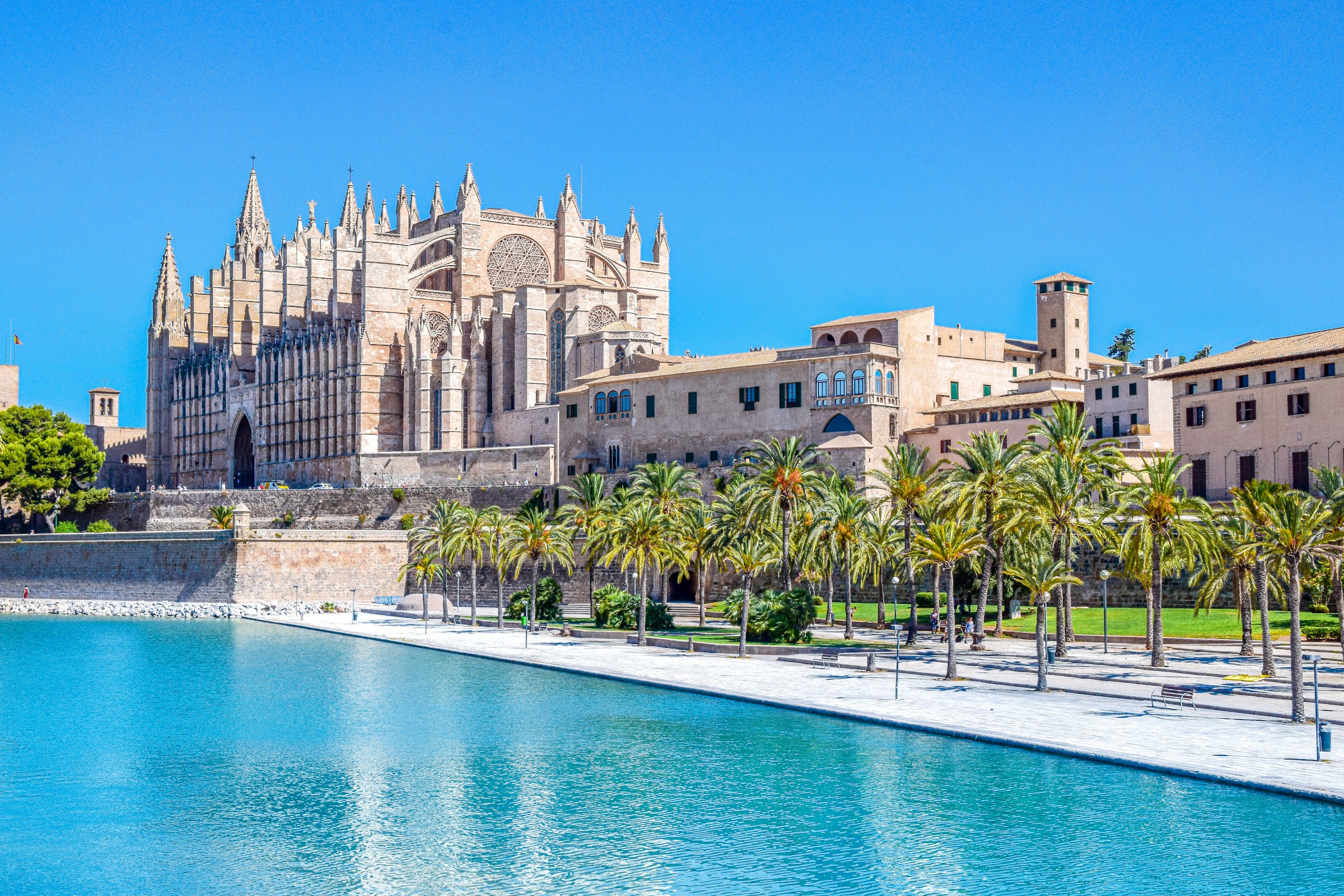
The Serra de Tramuntana along the northwest coast is the revelation: a wall of mountains dropping to the sea, threaded by one of Europe's great driving (and cycling) roads down to the hairpins of Sa Calobra, with honey-stone villages like Valldemossa and Deià, and the vintage wooden train up to Sóller. The coast is riddled with calas — small, cliff-framed coves of unreal turquoise water, especially in the northeast and around Cala Deià. And Palma itself is a proper city: a soaring seafront cathedral, a tangled old town, a serious food-and-wine scene. Cap de Formentor at the northern tip is the classic sunset drive.
The honest part: Mallorca in July and August is busy and hot, the famous coves get rammed and their tiny car parks fill by mid-morning, and the southern resort belt is exactly the concrete package Mallorca of the cliché. The trick is timing and geography — come in late spring or September, base in the Tramuntana or the quieter northeast rather than the party resorts, and start early for the calas. Do that and it's a genuinely brilliant, varied island that's a two-hour flight from most of Europe.
Highlights
-
Serra de Tramuntana
A UNESCO mountain range down the northwest coast — the Sa Calobra road, cycling passes, and terraced villages.
-
The calas
Hidden turquoise coves, especially in the northeast and around Cala Deià — arrive early to beat the crowds.
-
Palma
An underrated capital: a vast seafront cathedral, a maze of an old town, and a serious food scene.
-
Sóller & the vintage train
A wooden 1912 train over the mountains to a pretty valley town of orange groves.
-
Valldemossa & Deià
Honey-stone mountain villages on the northwest coast, long a haunt of writers and artists.
-
Cap de Formentor
A dramatic drive to the island’s northern tip — cliffs, a lighthouse, and the classic sunset.
Practical info
- Visa
- Schengen — visa-free for most Western passports (90 days).
- Currency
- EUR (€)
- Language
- Spanish and Catalan (Mallorquí); English widely spoken.
- Safety
- Very safe; watch for pickpockets in busy tourist spots in Palma.
- Getting around
- Rent a car to reach the coves and mountains; Palma has buses and the Sóller train.
- Tap water
- Tap water safe.
- Plug type
- Type C Type F 230V
- Money
- Cards accepted widely.
General guidance — visas, safety, and health change, so check your government's travel advisory and the official sources before you go.
Common questions
- When is the best time to visit Mallorca?
- May–June and September–October are the sweet spot: warm sea, thinner crowds, lower prices. July–August is hot (Palma highs around 30°C) and crowded. And note the crucial winter fact: much of the island’s resort infrastructure — coastal hotels, beach clubs, resort-town restaurants — closes roughly November to March. Palma itself stays open year-round.
- Do you need a car in Mallorca?
- For the calas, the Serra de Tramuntana and the Sa Calobra and Formentor roads, effectively yes — but it’s the island’s contested issue: summer traffic and parking are severe, rental cars scarce and pricey in peak, and the Formentor road closes to private cars by day in summer with a park-and-ride shuttle. A Balearic vehicle cap aimed at 2027 may tighten this further. Palma itself is walkable and bus-served, so a city-only trip works car-free.
- Is Mallorca affected by the anti-tourism protests?
- There have been large demonstrations since 2024 — the July 2026 march in Palma, the biggest yet, drew tens of thousands — but they target the tourism model: mass and rental tourism and the pressure on housing and water, not individual visitors, who aren’t the target. What you’ll actually meet is a tourist tax, the odd protest day when businesses close in support, and visible graffiti.
- Is Mallorca cheaper than Sicily?
- No — Mallorca is markedly pricier. Both are eurozone, but northern-European package and luxury demand pushes Mallorca’s accommodation, dining and car hire well above Sicily’s: cost of living runs around 28% higher and rents more than double. A budget tier exists inland and in the shoulder season. See our full comparison.
- Is the Magaluf party scene what Mallorca is like?
- No — it’s one concentrated strip and atypical. A 2020 decree cracked down on it (no happy hours, pub crawls or party boats, no late-night off-licence sales in Magaluf and Playa de Palma, a six-drink daily limit at all-inclusives), and the rest of the island — the Tramuntana villages, Palma’s old town, Deià — is a completely different, upmarket experience.
- Can you visit Mallorca without flying into a crush?
- Yes — just avoid the system’s pinch points. Palma airport handled 33 million passengers in 2024, overwhelmingly in summer, so travel in the May–June or September–October shoulder and the island feels like a different place: the calas are walkable, parking exists, the sea is still warm, and prices ease. Base in Palma or a Tramuntana village rather than a mega-resort, and you sidestep both the crowds and the party strips.
The backlash
A small island having a very public argument with tourism
The defining current story here isn’t a sight — it’s the backlash, and it shapes the practical trip.
Mallorca is compact, superbly connected — its airport handled 33 million passengers in 2024, third-busiest in Spain — and that success has produced a genuine reckoning. Mass anti-tourism protests have run since 2024, with the July 2026 march in Palma the largest to date, aimed squarely at mass tourism, holiday rentals and the pressure on housing and water rather than at individual visitors. The grievance is the model, not the guest; what it means on the ground is a tourist tax, occasional protest days when local businesses close in support, and the measures in the table.
The concrete rules to know: a Sustainable Tourism Tax of roughly €1–4 per person per night (by season and hotel category, higher in summer, under-16s exempt and halved after the eighth night, dropping to low-season rates on 1 November — a proposed 2026 hike was ruled out); the 2020 alcohol decree still in force in the Magaluf and Playa de Palma party zones; and moves to curb cruise ships and cars — a plan to cut Palma’s peak cruise capacity phases in from 2027, and a Balearic vehicle cap passed its first parliamentary reading in September 2026, targeting 2027. Water scarcity is real in peak summer and a named grievance in the protests.
| Measure | Status | What it means for you |
|---|---|---|
| Sustainable Tourism Tax | In force (no 2026 rise) | €1–4 pppn; drops to low-season rates 1 Nov |
| Magaluf / Playa de Palma alcohol decree | In force since 2020 | No happy hours, pub crawls or party boats there |
| Palma cruise-ship cut | Agreed, from 2027 | Peak daily berths fall 8,500 → 7,500 |
| Balearic vehicle / rental-car cap | Passed first reading Sep 2026 | Aimed at 2027; could limit cars on the island |
None of these targets the individual visitor — they aim at the volume model. The one you’ll definitely pay is the tourist tax; the cruise and car caps are still phasing in. Confirm current rates at booking. Checked October 2026.
When to go
The shoulder is the sweet spot — and winter shuts
The calendar has a trap at both ends: August is the crush, and November is the shutter.
The two crimson bars are the traps: the July–August crush (heat, crowds and peak prices) and the winter shutdown, when much of the resort island closes — the bar is shown Jan–Mar but the shutter runs Nov–Mar. Palma stays open all year. And note the Formentor road is closed to private cars by day from mid-May to mid-October — use the shuttle.
Time it for the shoulder — May–June or September–October — for warm water without the July–August heat, prices and crush. The catch travellers miss is the other end: outside Palma, much of the island closes from November to March, when coastal hotels, beach clubs and resort-town restaurants shutter, so a late-autumn trip can find the resorts dark while the capital carries on. The sea is warmest (around 27°C) in August and still swimmable (around 23°C) into October, though marine heatwaves have pushed recent summers hotter.
- you want the famous calas without the scrumSkiparriving midday in July–AugustGofirst thing in the morning, or in the May/September shoulder
- you’re travelling in late autumn or winterSkipbooking a coastal resort that will be shutteredGobasing in Palma or a Tramuntana village, which run year-round
- you want to drive out to Cap de FormentorSkipthe 10:00–22:00 daytime ban (15 May–18 Oct)Gothe park-and-ride shuttle from Port de Pollença, or going at dawn/dusk
Getting around
A car for the coast, a vintage train for the mountains
The island rewards a car — but the one great exception is a century-old wooden railway.
For the calas, the Serra de Tramuntana and the Sa Calobra and Formentor roads, you really need a car — but it’s the island’s sore point, with severe summer traffic, pricey and scarce rentals, parking crackdowns at the popular coves, and a Balearic vehicle cap aimed at 2027. The lovely exception is the Sóller railway, a century-old narrow-gauge wooden train from Palma up into the mountains (€23 single, €30 return in 2026), with a connecting tram down to Port de Sóller. Palma is walkable and bus-served, so a city-only trip works entirely car-free.
| Way | Use it for | Note |
|---|---|---|
| Hire car | The calas, Tramuntana, Sa Calobra | Scarce and dear in peak; book early; a 2027 cap looms |
| Sóller railway | Palma up into the mountains | €23 single / €30 return (2026); vintage wooden train |
| Formentor shuttle | The cape in summer | Park-and-ride from Port de Pollença when cars are banned |
| Palma buses & on foot | A car-free city trip | Palma is walkable and well bus-served |
Palma itself needs no car. For everything else a hire car is effectively required — but peak-season scarcity, parking crackdowns at the calas, and the coming vehicle cap all push toward going early, parking smart and using the Formentor shuttle. Checked October 2026.
A hire car still unlocks the Serra de Tramuntana and the far calas, but two changes are reshaping driving: a Balearic cap on rental and visitor vehicles (passed its first reading in 2026, effect expected 2027) and the summer daytime ban on the Cap de Formentor road (10:00–22:00, mid-May to mid-October), for which you take the park-and-ride shuttle from Port de Pollença. The vintage Sóller railway (€23–30 in 2026) is a scenic ride, not everyday transport.
The calas
The famous coves are tiny, and everyone knows about them
Mallorca’s signature turquoise calas are the postcard — and the clearest face of its overtourism.
The most-photographed coves are minute. Caló des Moro is about forty metres of sand reached down a steep, rocky ten-minute scramble with no facilities — and it draws thousands on a peak day, so the authorities have cut and reorganised the roadside parking and brought in residents-only access zones with fines nearby. Cala Varques and Cala s’Almunia are undeveloped and foot-access only. The lesson is the same everywhere: go early or off-season, and don’t count on parking.
The two famous drives are experiences in themselves and equally congested, both built by the engineer Antonio Parietti in the 1920s–30s: the Sa Calobra road spirals down through its 270° “nus de sa corbata” (tie-knot) bridge to the Torrent de Pareis gorge, and the Cap de Formentor road runs out to the 1863 lighthouse at the island’s northern tip — but in summer Formentor closes to private cars by day, with a park-and-ride shuttle from Port de Pollença and fines for driving up in restricted hours.
Beyond the coves
A UNESCO mountain range and a real city
The island people reduce to beaches has a cathedral, a mountain landscape and a scenic railway to match.
2011 the year the Serra de Tramuntana became UNESCO heritage
Palma is a genuine city, not a resort: the great Gothic cathedral of La Seu (which Gaudí worked on from 1903) presides over an atmospheric old town, the round Bellver Castle looks down from its hill, and the city lives year-round. Behind the coast rises the Serra de Tramuntana, a UNESCO cultural landscape of dry-stone terraces threaded by the GR221 and dotted with the villages of Valldemossa — where Chopin and George Sand wintered in 1838–39 — Deià and Sóller.
The Sóller railway, a century-old narrow-gauge wooden train from Palma, is the scenic way up into those mountains, and the Coves del Drac near Porto Cristo end their tour with a live classical concert played by musicians on boats across a vast underground lake. For all the island’s beach reputation, this is the Mallorca that keeps people coming back.
Food & drink
Pastry, cured pork, and a glass of hierbas
Hearty island cooking with an icon of a pastry — and more to it than resort buffets suggest.
The island icon the ensaïmada — Mallorca’s coiled pastry
Beyond the resort buffets, Mallorca has a real island kitchen. The star is the ensaïmada (see the figure); the savoury staples are sobrassada, the soft paprika-cured pork spread, and pa amb oli, bread with tomato and oil. Look too for tumbet (the local ratatouille), the rustic frit mallorquí, and coca de trampó, an open vegetable flatbread. Local Binissalem wines and the herbal hierbas liqueur round out a meal, and the almond blossom turns the inland groves white in late winter.
| Dish | What it is | Note |
|---|---|---|
| Ensaïmada | A coiled spiral pastry dusted with sugar | The island icon; take a boxed one home |
| Sobrassada | Soft, spreadable cured paprika pork | On bread, warm from the oven |
| Pa amb oli | Bread with tomato, oil and toppings | The everyday Mallorcan plate |
| Tumbet | Layered potato, aubergine and pepper in tomato | The local ratatouille |
| Frit mallorquí | Fried meat or offal with potato and veg | A rustic classic |
| Coca de trampó | Open flatbread with tomato, pepper, onion | The Mallorcan “pizza” |
Wash it down with a Binissalem DO wine or a shot of hierbas, the island’s aniseed-and-herb digestif. The almond groves (blossoming spectacularly in late January–February) feed a whole world of local sweets.
Culture
Catalan island, Spanish rhythm
Mallorca speaks its own language and keeps its own hours — worth knowing before you arrive.
Spanish and Catalan are both official, and the local variant, Mallorquí, is what you’ll hear and read — many signs and place names are in Catalan (Palma’s streets, the Tramuntana villages), though English is widely spoken in tourist areas. The daily rhythm is Spanish: a quiet midday inland, late dinners from about 20:30, and a strong café-and-plaça culture. The island has long drawn artists and writers — Chopin and George Sand at Valldemossa, later Robert Graves at Deià — and that cultured, unhurried side is the antidote to its party-strip caricature.
A note on identity: locals are proud of being Mallorcan first, Catalan-speaking, and distinct from the mainland image of “Spanish beach holiday.” A little Catalan (“bon dia”, “gràcies”) and an interest in the island beyond its beaches is genuinely well received — especially given the current feeling about mass tourism.
Good to know
Live EU borders, hard water, dry summers
The practical footnotes that shape the days.
Mallorca is Schengen and eurozone. On borders, the EU’s biometric Entry/Exit System (EES) has been fully operational since April 2026, so expect fingerprint-and-photo registration on arrival; the separate ETIAS travel authorisation (around €20) is not yet required — it’s expected in 2027. Tap water is legally drinkable but hard and poor-tasting, so bottled is the norm, and water is genuinely scarce in peak summer — the island ran on drought alert in 2026, with restrictions in some towns, so use it sparingly.
The US rates Spain Level 2 (standard “increased caution” for terrorism and the occasional large demonstration); the UK FCDO gives only routine guidance. Neither flags the Balearics specifically — Mallorca is a thoroughly safe, mainstream destination, and the protests are political theatre aimed at policy, not a risk to visitors.
Compare Mallorca
If you like Mallorca, also consider
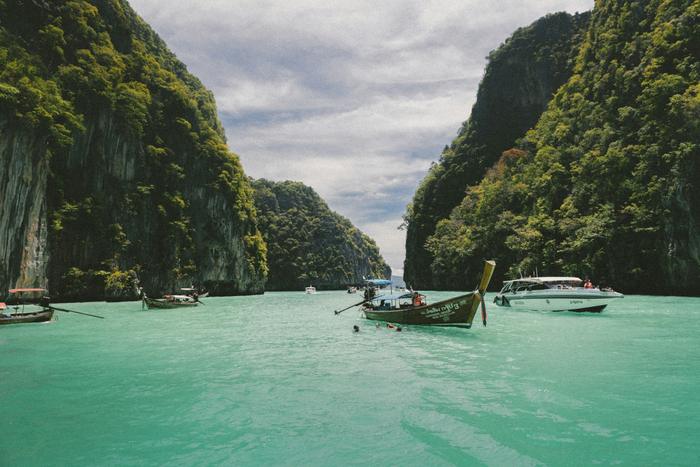
Thailand
The complete package for warm-climate travel.
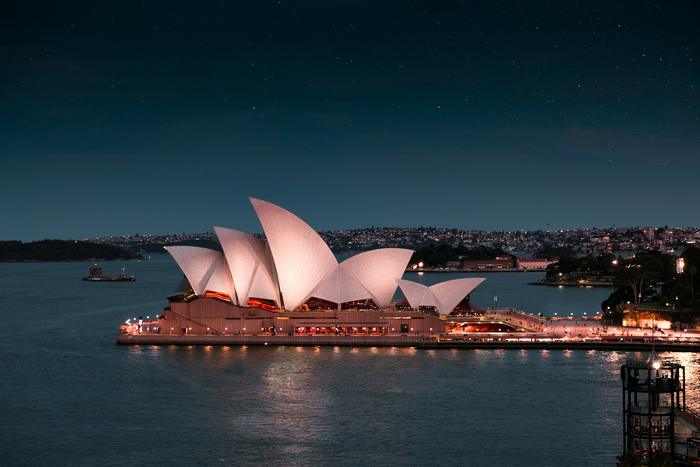
Australia
Vast, varied, relaxed. Reef, Sydney, and proper wilderness in one.
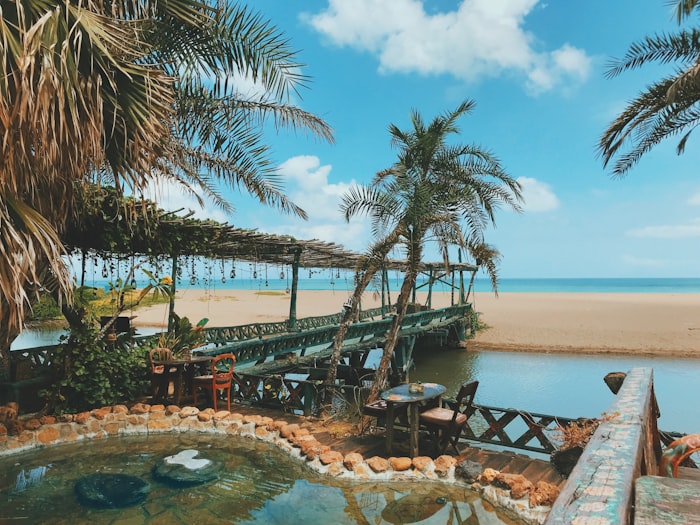
Bali, Indonesia
Warm, affordable, endlessly deep — beach, wellness, and culture in one place.
Not sure where to go
Take the 5-minute quiz
Answer a few honest questions and get matched to destinations that actually fit how you travel.
Start the quiz