Turkey
Istanbul alone is worth the trip. Add Cappadocia, the coast, and ancient ruins.
Turkey straddles continents and trip styles. Istanbul deserves a week on its own — bazaars, mosques, Bosphorus, food. Add Cappadocia for hot air balloons and rock-cut churches, the Aegean coast for ancient cities and beach time, or Eastern Turkey for genuinely off-track travel.
Give Istanbul the time it demands: Sultanahmet for the imperial mosques, then across the water to Karaköy and Kadıköy, where the city actually eats. Fly to Cappadocia — dawn balloons, valley hikes between rock-cut churches — then drop to the coast for Ephesus, gulet boats, and stretches of the Lycian Way. Lokanta lunches and intercity buses cost little; the balloon rides, cave hotels, and boat charters are where the budget goes.
The friction is real: queues at Hagia Sophia and Topkapi run long in summer, the Grand Bazaar hustle wears thin, and Pamukkale's terraces are more crowded and drier than the photos admit. Distances are continental — drive between regions and you lose whole days, so fly. If constant low-grade negotiation exhausts you, brace yourself or stick to the coast. Few countries return this much history and food per dollar, which settles the argument.
Highlights
-
Istanbul
A city as much as a destination — endlessly layered.
-
Cappadocia
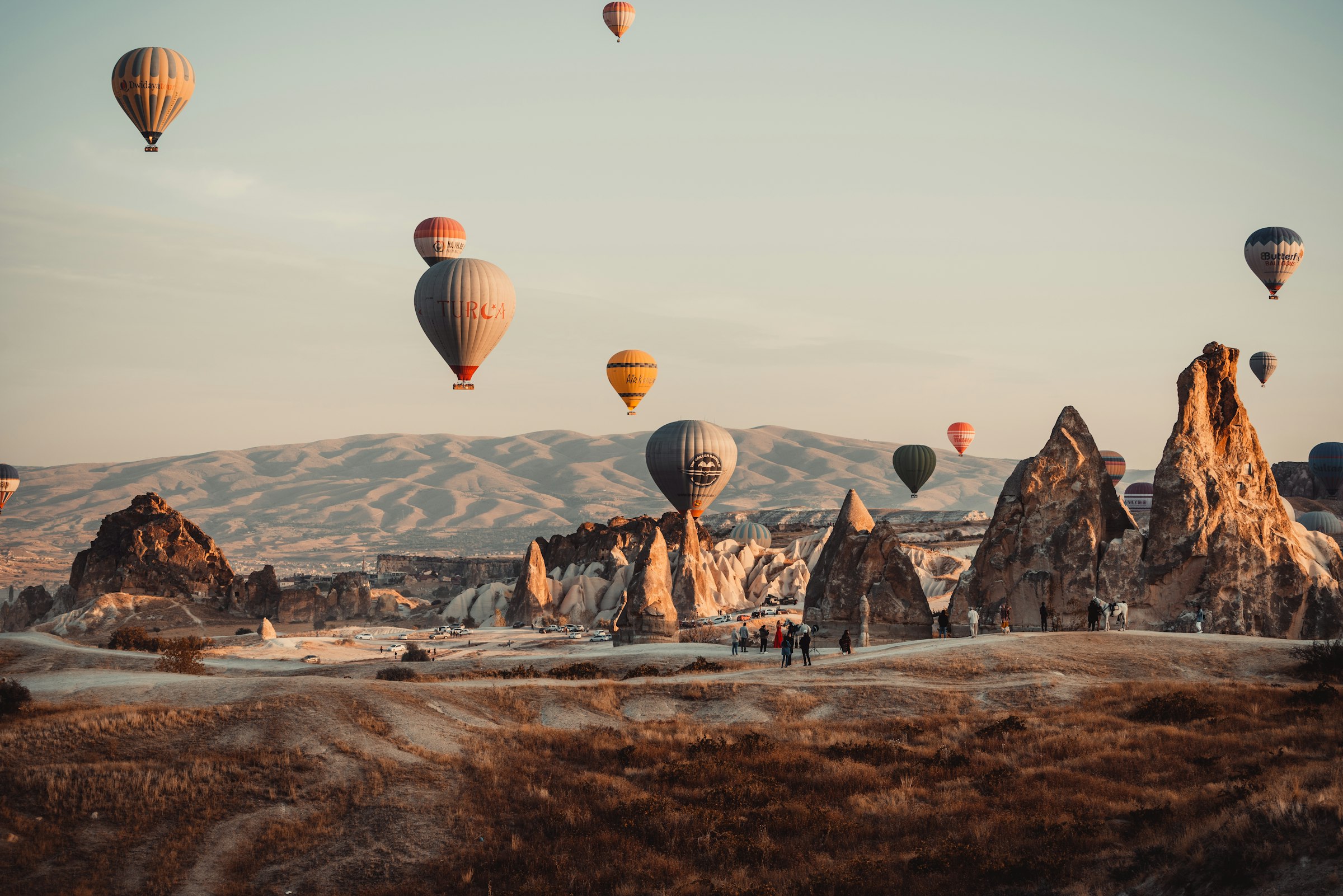
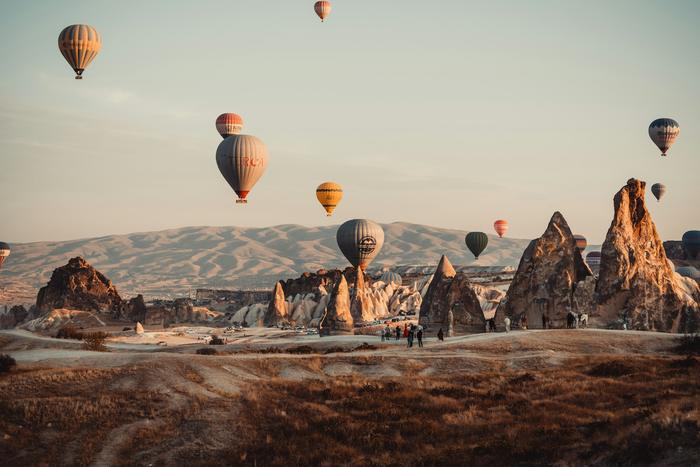
Hot air balloons over fairy chimneys. Cliché because it earns it.
-
Turquoise Coast (Bodrum, Kaş, Olympos)
Ruins, blue water, gulet cruises.
-
Pamukkale
White travertine terraces and Roman Hierapolis above them.
Practical info
- Visa
- E-visa required for most nationalities. Apply online before travel.
- Currency
- TRY (Lira). Volatile — check rate close to travel.
- Language
- Turkish. English in tourist areas, less in the east.
- Safety
- Tourist areas safe. Avoid the Syrian border region.
- Getting around
- Excellent buses, internal flights, ferries on the coast.
- Tap water
- Tap water generally not recommended for drinking.
- Plug type
- Type C Type F 220V
- Money
- Cards widely accepted; cash useful in markets.
General guidance — visas, safety, and health change, so check your government's travel advisory and the official sources before you go.
Common questions
- Do you need a visa for Turkey?
- Most Westerners no longer do — US, UK and all EU citizens now enter visa-free for 90 days in 180. The notable exceptions still paying for the e-Visa (about $50 at the official evisa.gov.tr) are Canadians and Australians. And a real advantage over Greece: Turkey isn’t in Schengen, so your time here doesn’t count against a Schengen allowance.
- When is the best time to visit Turkey?
- April–May and September–October — warm, uncrowded, and cheaper than summer. July–August is hot and peak on the Aegean and Mediterranean coasts; Istanbul works year-round, and Cappadocia is dramatic in winter snow (the balloons still fly on clear mornings). May is the single best all-round month.
- Why are Turkey’s museums so expensive if the country is cheap?
- Because the state deliberately prices its flagship sights in euros at rich-world rates, insulated from the weak lira — Hagia Sophia’s upper gallery is €25, Ephesus €40, Pamukkale €30, while everyday food and hotels stay genuinely cheap. So budget separately for the monuments; the rest of the trip is a bargain.
- How reliable are the Cappadocia hot-air balloons?
- Weather-dependent — flights are grounded for wind or fog, and in winter 40–60% of mornings are cancelled (May and September are the most reliable). Cost runs roughly €150–300 in peak season. Don’t schedule the balloon for your last morning; leave a buffer day.
- Is Turkey cheaper than Greece?
- On food, hotels and transport, decisively — a weak lira makes everyday Turkey exceptional value. But its marquee monument tickets now match or exceed Greece’s (and Greece charges everyone one flat price), and Turkey is a huge country that needs internal flights where Greece island-hops easily. See our full comparison.
The value catch
A cheap country with expensive monuments
The weak lira makes everyday Turkey a bargain — but the state prices its headline sights in euros.
This is the paradox to plan around. A casual meal is well under €10, a local beer €3–5, and hotels and transport are cheap — Turkey’s weak lira and high inflation make daily spending a bargain for anyone earning foreign currency. But the marquee monuments are deliberately priced in euros at rich-world rates: Hagia Sophia’s visiting gallery €25, Ephesus €40, Pamukkale €30, Topkapi around €45. So the sticker shock isn’t the country — it’s the tickets, and you should budget for them separately. One more inflation note: any lira price you read online goes stale within months, so sanity-check against the current rate (around 48 lira to the dollar).
When to go
Spring and autumn, and a winter city
Turkey is huge and varied, so the “when” bends by region — but two windows work everywhere.
April–May and September–October are the sweet spots nationwide — 18–25°C, wildflowers in spring, prices 20–30% below summer. The Aegean and Mediterranean coast (Bodrum, Antalya, Fethiye) peaks in a hot July–August; Istanbul runs year-round, cold and grey but fully functional in winter; and Cappadocia is at its most dramatic under winter snow, though that’s also when the balloons are least reliable. Ramadan (roughly mid-February to mid-March in 2026) barely affects secular tourist areas — restaurants, bars and alcohol stay open — but expect busier iftar dining and higher domestic-travel prices around it and the Eid holidays.
Getting around
It’s a big country — you fly between the highlights
Turkey is far larger than it looks on a Mediterranean map. Plan on internal flights, not one loop.
Istanbul to Cappadocia is around 750 km, to the Aegean coast 500-plus — so domestic flights (Turkish Airlines, Pegasus, AJet) do the heavy lifting, often €30–60 one-way and about an hour and a half. A caution on Istanbul’s two airports: the main IST on the European side and low-cost SAW on the Asian side are 1.5–2 hours apart across the city, so never book a tight self-transfer between them. Within Istanbul, an Istanbulkart covers the metro, trams and the Bosphorus ferries (which double as a cheap sightseeing cruise); the intercity coaches are excellent and cheap; and a car earns its keep only for Cappadocia’s spread-out valleys and the Turquoise coast.
The big sights
Istanbul, Cappadocia, and the ancient coast
The depth and variety are the point — a world city, a lunar landscape, and Greco-Roman ruins that rival Greece’s.
Istanbul straddles two continents: Hagia Sophia (a working mosque since 2020 — free on the ground floor, €25 for the upper gallery), the Blue Mosque, Topkapi Palace, the Grand Bazaar and the Bosphorus. Cappadocia is the lunar valley of fairy chimneys, cave hotels in Göreme, and the sunrise balloons. Ephesus, near Selçuk, is one of the best-preserved Greco-Roman cities in the Mediterranean, and Pamukkale stacks white travertine terraces over the ancient spa city of Hierapolis.
The coast is the beach half of the trip: Bodrum, Fethiye and Ölüdeniz on the Aegean and Turquoise coasts, where a wooden-gulet “blue cruise” is the signature experience, and Antalya’s Mediterranean resorts and ruins. A Museum Pass Türkiye (€165 for 15 days) covers most state sites — but not Hagia Sophia’s ticket or the Basilica Cistern — and only pays off on a busy itinerary.
Good to know
Secular but Muslim, and mind the Istanbul scams
Turkey is hospitable and easy — with a handful of practical rules and city scams worth knowing.
Turkey is constitutionally secular but Muslim-majority: alcohol is legal but heavily taxed (so pricey against the cheap food), and mosques require modest dress — women cover their hair, everyone removes shoes. Plugs are European Type C/F at 230V, tap water is treated but best avoided for drinking (bottled is very cheap), and bargaining is expected in the bazaars. It’s generally very safe for tourists — the one region to avoid is the south-eastern Syrian border. The real nuisance is Istanbul’s scams: the “dropped” shoeshine brush, the friendly stranger who invites you for a drink that ends in a €500-plus bill, the over-helpful guide who steers you to a carpet shop, and restaurants that pad the bill or quote in euros at ten times the lira value — check the menu currency and your total.
Sources
Where this comes from
The detail above was read off primary sources on — operator timetables, municipal ordinances, regional tourism boards, national statistics offices and first-hand traveller reports, rather than other travel articles. Researched and maintained by Dmitrii Romashchin — how we research.
Compare Turkey with
If you like Turkey, also consider
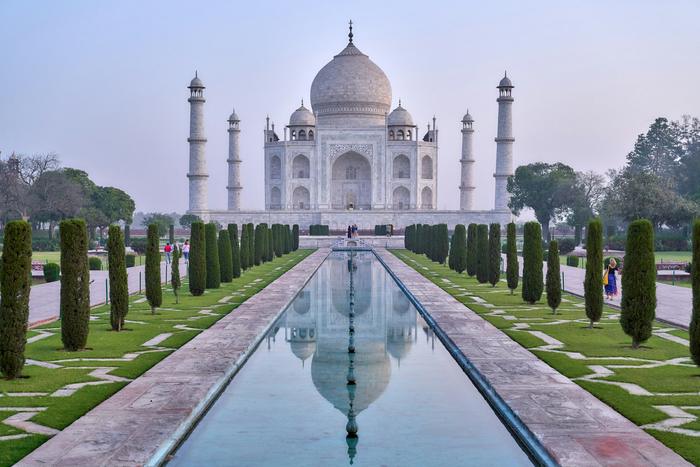
India
Overwhelming, beautiful, and utterly unlike anywhere else.
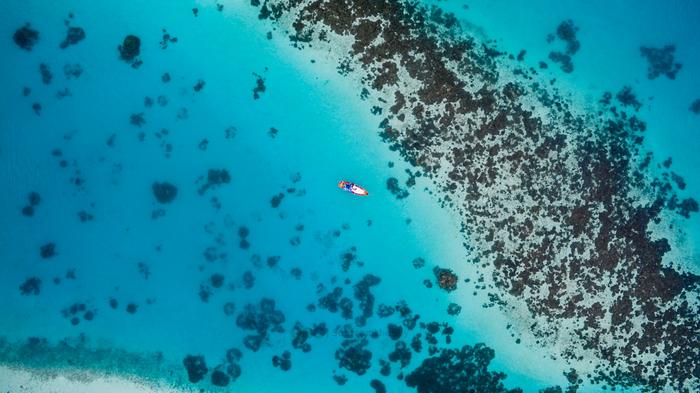
Maldives
One island, one resort, almost nothing to do. That is the point.
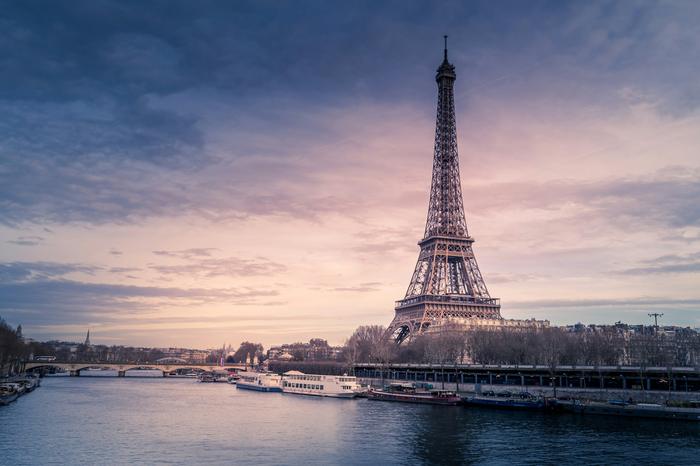
France
Paris is only the opening act — wine country, the Alps, and two coastlines.
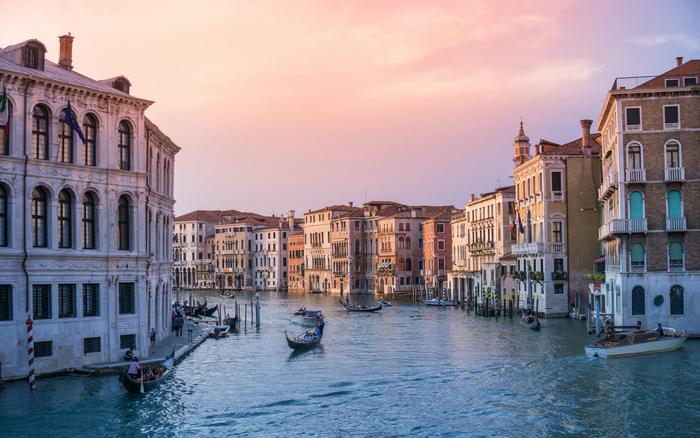
Italy
The benchmark for food, history, and beauty.
Not sure where to go
Take the 5-minute quiz
Answer a few honest questions and get matched to destinations that actually fit how you travel.
Start the quiz