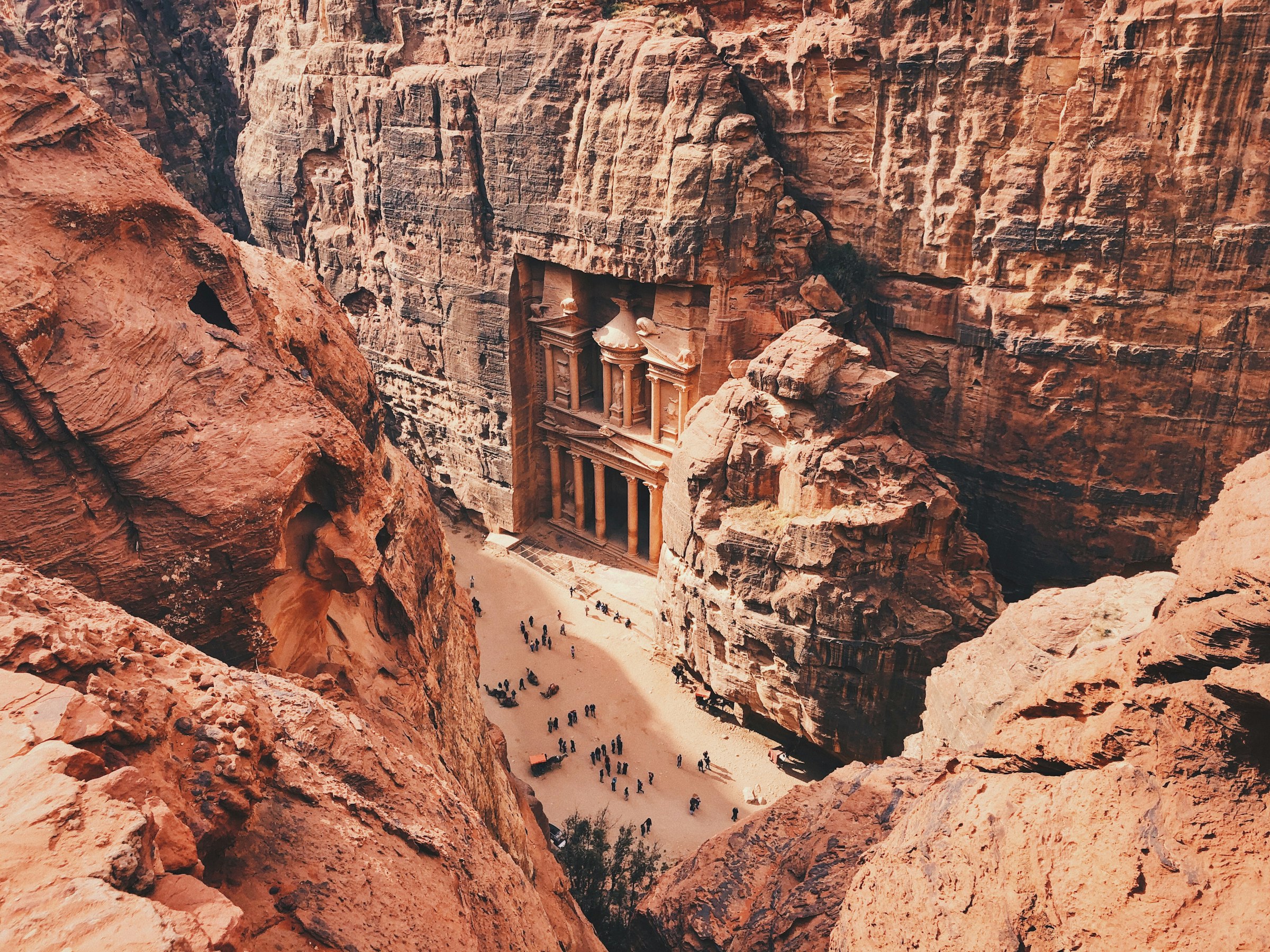
Jordan packs three of the great Middle East experiences into a country you can drive across in a long day. Petra is the headliner — bigger and stranger than photos suggest. Wadi Rum delivers Mars-on-earth desert. And the Dead Sea floats you whether you like it or not.
The route writes itself: a night or two in Amman with a half-day at Jerash, then south to Petra — take the slower King's Highway if you have time — then Wadi Rum, then a Dead Sea resort to wash it all off. A week covers it without rushing. Give Petra two full days; the climb to the Monastery beats the Treasury. Most of the money goes to the Jordan Pass, a Wadi Rum camp, and one fancy Dead Sea hotel night.
The honest part: Petra's vendors and donkey touts are persistent, midsummer is brutally hot for a site you cross entirely on foot, and the food outside Amman gets repetitive — you will eat a lot of hummus and grilled chicken. Amman itself is a stopover, not a destination, and Jordan costs more than its neighbors. But few countries stack this much within a few hours' drive, and standing in front of the Treasury at opening time, nearly alone, ends the debate.
Highlights
-
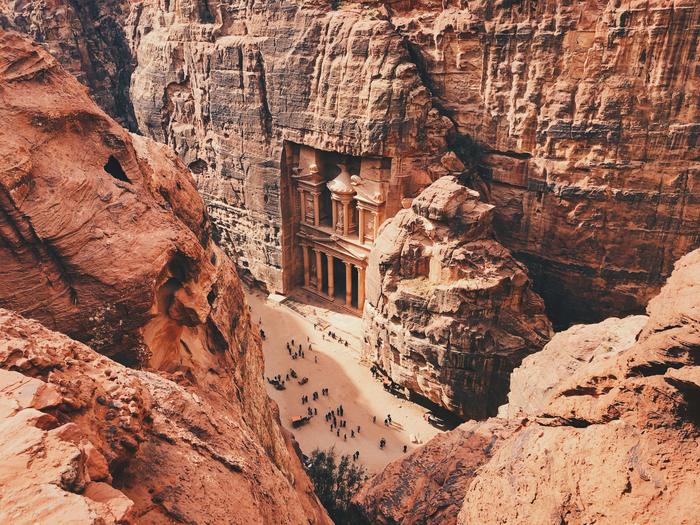
Petra
Two days minimum — much bigger than the famous Treasury shot.
-
Wadi Rum
Sleep in a Bedouin camp under the desert stars.
-
Dead Sea
Float, mud bath, dramatic sunset over the lowest point on earth.
-
Amman & Jerash
The capital plus one of the best preserved Roman cities anywhere.
Practical info
- Visa
- Jordan Pass covers visa + main sites — buy online before arrival.
- Currency
- JOD (Jordanian Dinar). Roughly 0.71 JOD ≈ 1 USD.
- Language
- Arabic. English widely spoken in tourism.
- Safety
- Very safe. Despite regional perception, Jordan is stable and welcoming.
- Getting around
- Hire a car or use JETT buses between main spots.
- Tap water
- Tap water not safe to drink.
- Plug type
- Type B Type C Type D Type F Type G Type J 230V
- Money
- Cards in cities; cash for desert camps and small towns.
General guidance — visas, safety, and health change, so check your government's travel advisory and the official sources before you go.
Common questions
- What is the Jordan Pass, and should you buy it?
- For almost every visitor, yes. The Jordan Pass waives the tourist-visa fee (if you buy it before you arrive and stay at least two nights) and includes entry to Petra plus around 40 other sites including Wadi Rum and Jerash. It comes in three tiers by how many days of Petra you want — Wanderer (70 JOD, 1 day), Explorer (75 JOD, 2 days), Expert (80 JOD, 3 days) — and the crucial rule is that it must be bought online before you fly; buy it after landing and you get no waiver. For a two-night visitor doing Petra it almost always pays for itself against the 40-dinar visa plus the Petra ticket. Note: many older guides still say a three-night minimum — it’s now two.
- How long do you need at Petra?
- Plan on two days, which is exactly why the Explorer Pass exists. One day can’t comfortably take in the Siq, the Treasury, the full valley and the Monastery (Ad-Deir), a long uphill climb of several hundred rock-cut steps. A deliberate quirk to know: a same-day visitor who isn’t staying overnight in Jordan pays 90 dinars at Petra — far more than the ~50-dinar overnight rate — another reason to stay a night and get the Pass. Petra by Night (30 dinars, not covered by the Pass, Sunday–Thursday) needs a valid daytime ticket too.
- Is Jordan safe to visit?
- This needs an honest, current answer. Jordan’s tourist circuit — Amman, Petra, Wadi Rum, the Dead Sea, Aqaba — is stable and thoroughly used to visitors, and the areas governments flag are remote border zones (the Syrian and Iraqi frontiers) that no tourist route goes near. But advisories have been elevated by regional events: as of 2026 the US rates Jordan Level 3 “Reconsider Travel” following US–Iran hostilities, and regional flare-ups can disrupt flights or airspace at short notice. So the honest advice is to check the current US State Department and UK Foreign Office guidance in the days before you book and travel, and weigh it for yourself — within Jordan itself, tourists are safe and warmly received.
- When is the best time to visit Jordan?
- Spring (March–May) and autumn (September–November) are ideal — mild, dry days around 25–30°C. Summer is very hot (Aqaba and the Dead Sea push 40°C), though desert nights at Wadi Rum stay cold year-round. Winter is cold and windy in Amman and Petra, which sit above 800 m and can even see snow, while Aqaba and the Dead Sea — over 400 m below sea level — stay pleasantly warm. Elevation, not just season, drives the climate here.
- Can you do Jordan’s highlights in one trip, and how long?
- Yes, easily — it’s a compact country. The classic loop of Amman, Jerash, the Dead Sea, Petra and Wadi Rum (plus Aqaba if you want the Red Sea) fits comfortably into about a week, with Petra taking two of those days and Wadi Rum an overnight in a desert camp. Distances are short (Amman to Petra is ~235 km), so most people do it as a self-drive or with a private driver on a single looping route rather than backtracking.
- Do you need a guide or a tour?
- No — Jordan is very doable independently. Roads are good, the Jordan Pass handles tickets, and Petra and Jerash are easy to self-guide (hire a local guide at the gate if you want the history). The one place you don’t go it alone is Wadi Rum, which isn’t a self-drive park: you book a Bedouin camp and a 4x4 tour. A private driver for the whole loop is popular for those who’d rather not drive, but it isn’t required.
Entry & the Pass
The Jordan Pass does the visa and Petra at once
Buy it before you fly, stay two nights, and it waives the visa and covers Petra.
The Jordan Pass is the key to entry and sightseeing in one purchase: bought online before arrival and paired with a stay of at least two nights, it waives the tourist-visa fee and covers Petra plus around 40 sites (Wadi Rum, Jerash, Karak and more). The three tiers — Wanderer (70 JOD), Explorer (75), Expert (80) — differ only in how many consecutive days of Petra they include. Without the Pass, a visa on arrival costs 40 dinars, except at the King Hussein/Allenby Bridge crossing from the West Bank, where it isn’t issued.
The currency is the Jordanian dinar, pegged hard to the US dollar (about 1 JOD = 1.41 USD) — which is why Jordan feels pricey. Cards work in hotels and larger restaurants; carry cash for Bedouin camps, taxis, Wadi Rum and the small stops along the King’s Highway. Passport validity of six months is required.
Buy the Jordan Pass online before you fly — it’s the single best-value move in the country. Paired with a stay of at least two nights, it waives the tourist-visa fee and bundles Petra (one- to three-day entry) plus around 40 sites including Wadi Rum and Jerash. Buying it in advance is what removes the visa cost, so don’t leave it until arrival; pick the tier by how many days at Petra you want.
When to go
Spring and autumn — and mind the elevation
The sweet spots are the shoulders, and the thermometer swings with altitude, not just the calendar.
Spring and autumn are ideal — mild and dry. The crimson bars are the ones to plan around: high-summer heat (the Dead Sea and Aqaba push 40°C, though Wadi Rum’s desert nights stay cold), and Ramadan (around 8 Feb–8 Mar in 2027), when daytime eating and drinking in public pause and site hours shorten. Elevation matters as much as season — Amman and Petra, above 800 m, can see snow while Aqaba stays warm.
Spring (March–May) and autumn (September–November) are the ideal windows — mild, dry days around 25–30°C, perfect for Petra and Wadi Rum. Summer is very hot, with Aqaba and the Dead Sea pushing 40°C, though the desert nights at Wadi Rum stay cold year-round. Winter is cold and windy in Amman and Petra — both above 800 m and capable of snow — while Aqaba and the Dead Sea, far below sea level, stay pleasantly warm. The big calendar variable is Ramadan (around 8 February–8 March in 2027), when daytime hours shorten and public eating and drinking pause.
- you want comfortable all-day sightseeingSkiphigh summer in the lowlands (Petra, Dead Sea, Aqaba at 40°C)Gospring (Mar–May) or autumn (Sep–Nov)
- you’re buying the Jordan PassSkipbuying it after you landGobuying online before you fly, and staying two nights — or you lose the visa waiver
- you’re a cruise or same-day visitor to PetraSkipthe 90 JOD same-day gate priceGostaying a night in Jordan, which drops the rate to ~50 JOD
Getting around
A compact country — drive it or ride the coach
Distances are small; the choice is a car, a JETT bus, or a driver.
Jordan is compact — Amman to Petra is about 235 km — and there’s no useful passenger rail, so the realistic options are three. A rental car drives easily on good roads, with a choice between the fast, dull Desert Highway (~3 hours) and the scenic King’s Highway via Madaba, Karak and Dana (~4–4.5 hours). The JETT tourist coach runs Amman–Petra and Aqaba–Petra cheaply, but typically only once a day, so book ahead and mind that the single departure makes a same-day Petra trip tight. A private driver is the popular way to do the classic Petra–Wadi Rum–Dead Sea loop without driving yourself.
| Way | Use it for | Note |
|---|---|---|
| Rental car | The Petra–Wadi Rum–Dead Sea loop | Fast Desert Highway (~3h) vs scenic King’s Highway (~4–4.5h) |
| Private driver | The classic loop without driving | Popular and flexible; set the route in advance |
| JETT coach | Amman–Petra and Aqaba–Petra | Cheap but typically once daily — book ahead |
| Bedouin 4x4 | Inside Wadi Rum | Not a self-drive park — you book a camp and jeep tour |
There’s no useful passenger rail. Amman to Petra is ~235 km; the Desert Highway is fast and dull, the King’s Highway slow and scenic (Madaba, Karak, Dana). Checked October 2026.
Sights & tickets
Petra, Wadi Rum and the Dead Sea
The big three each have a rule worth knowing — and Petra’s pricing rewards staying overnight.
Petra is covered by the Pass and wants two days; expect persistent horse, donkey and cart touts, including on the long climb to the Monastery. Wadi Rum is not a self-drive park — you book a Bedouin camp and a 4x4/jeep tour (overnight stays bundle the jeep and meals), and entry is free with the Pass. The Dead Sea has no truly free easy-access public beach: the government-run public beach charges around 20 dinars, and resort day passes more. Before floating, don’t shave for a day or two (the salt burns cuts), keep the water out of your eyes and mouth, and limit each float to 15–20 minutes.
Beyond the headliners, Jerash is one of the best-preserved Roman provincial cities anywhere (free with the Pass), Amman has its Citadel and Roman theatre, Madaba holds the 6th-century Byzantine mosaic map of the Holy Land, Dana is for hiking the King’s Highway, and Aqaba is Jordan’s only coast — warm Red Sea diving and snorkelling year-round.
| Petra ticket | Price | Note |
|---|---|---|
| Overnight visitor (1 / 2 / 3 days) | 50 / 55 / 60 JOD | Free with the Jordan Pass |
| Same-day visitor (not staying in Jordan) | 90 JOD | The penalty for not overnighting |
| Petra by Night | 30 JOD | Sun–Thu; needs a daytime ticket; not on the Pass |
The Jordan Pass covers the overnight daytime entry plus ~40 other sites (Wadi Rum and Jerash included), which is why it almost always pays off for a two-night visitor. Petra wants two days to do properly.
Food & drink
Mansaf, mezze, and Bedouin hospitality
Levantine cooking at its generous best — built around a national dish you eat with your hands.
The national dish mansaf — lamb, jameed and rice
Jordanian food is classic Levantine, generous and meze-led. The national dish is mansaf — lamb in a tangy jameed (fermented-yoghurt) sauce over rice, eaten communally (see the figure) — and the everyday table runs to mezze (hummus, falafel, mutabbal, tabbouleh), the flipped rice-and-meat pot maqluba, and, in the desert, the Bedouin underground barbecue zarb. The dessert to seek out is knafeh, cheese in crisp syrup-soaked pastry. It all comes wrapped in a famous culture of hospitality, sweet tea and cardamom coffee.
| Dish / drink | What it is | Note |
|---|---|---|
| Mansaf | Lamb in fermented-yoghurt “jameed” over rice | The national dish, eaten communally by hand |
| Mezze | Hummus, falafel, mutabbal, tabbouleh | The shared starter spread |
| Maqluba | “Upside-down” rice, meat and vegetable pot | Flipped at the table |
| Zarb | Bedouin barbecue cooked underground | The Wadi Rum camp dinner |
| Knafeh | Cheese pastry soaked in sweet syrup | The beloved dessert (Nabulsi-style) |
| Arabic coffee / mint tea | Cardamom coffee; sweet tea | The ritual of welcome |
Hospitality is central: expect endless sweet tea and cardamom coffee, and in a Bedouin camp the zarb barbecue pulled steaming from the sand. Jordan is largely dry-ish socially — alcohol is available in hotels and tourist restaurants but not everywhere.
Culture
Nabataean stone, Bedouin welcome
A young Hashemite kingdom on very old ground — and a living Bedouin tradition in the desert.
2007 Petra — a New7Wonder, carved by the Nabataeans
Jordan is a Hashemite monarchy (under King Abdullah II) layered over extraordinarily old ground — Nabataean Petra, Roman Jerash, Byzantine Madaba, biblical Mount Nebo. The official language is Arabic, with English widely used in tourism, and the country is overwhelmingly Sunni Muslim with a notable Arab Christian minority. The defining cultural thread for visitors is the Bedouin heritage of the south — the camps, the 4x4s and the hospitality of Wadi Rum — and a genuine, oft-remarked warmth toward travellers. It’s relaxed by regional standards but still conservative, so dress modestly away from the resorts.
Safety & advisories
Stable inside, sensitive to the neighbourhood
The country is safe for visitors; its advisories track the region, and in 2026 they are elevated — so check them fresh.
The distinction to hold onto is that Jordan itself is stable and well-practised with tourists — the whole circuit of Amman, Petra, Wadi Rum, the Dead Sea and Aqaba is safe and welcoming — while the travel advisories governments issue are driven by its neighbours and regional events, not by conditions on the ground in Jordan. The specific no-go areas named in those advisories are remote border zones along the Syrian and Iraqi frontiers that no tourist itinerary touches.
That regional picture has worsened in 2026: the US raised Jordan to Level 3 “Reconsider Travel” after US–Iran hostilities began in late February, ordering non-emergency embassy staff to depart, while the UK Foreign Office advises against travel only to within 3 km of the Syrian border. The practical risks for a tourist are flight cancellations and airspace closures during a flare-up rather than danger on the ground. So the right move is to check the current US State Department and UK Foreign Office advice in the days before booking and travelling, weigh it for yourself, and take flexible flights and good insurance.
This is a case where the honest answer is “it depends on timing.” A Level 3 US advisory is a serious flag, but it is driven by the risk of regional military escalation spilling into Jordanian airspace, not by any threat on the tourist circuit, which continued operating normally through 2026. Many travellers still go and have superb, safe trips — but the decision, and the insurance, should be made with the live advisory in front of you, not this page.
Good to know
Customs, dress and Ramadan
A relaxed country by regional standards — with a few norms to respect.
Jordan is relatively relaxed but still conservative. Dress modestly (shoulders and knees covered; a headscarf isn’t required but carry one for mosques), women travelling alone should take extra care at night, and in rural areas expect some gender-segregated seating. Tipping is appreciated rather than required — around 10% in restaurants, a little for guides and drivers. Carry cash for the desert camps, Wadi Rum and the small King’s Highway stops.
During Ramadan (around 8 February–8 March in 2027; moon-dependent) eating, drinking and smoking in public during daylight is prohibited, so visitors should refrain out of respect — hotels and international restaurants still serve non-fasting guests, and evenings come alive after iftar. Site hours shift and shorten during the month.
Compare Jordan
If you like Jordan, also consider
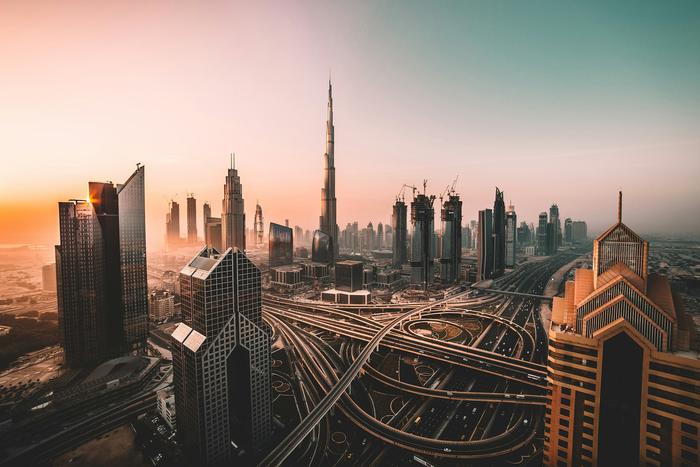
United Arab Emirates
Dubai and Abu Dhabi: superlatives, desert, and a stopover worth a few days of its own.
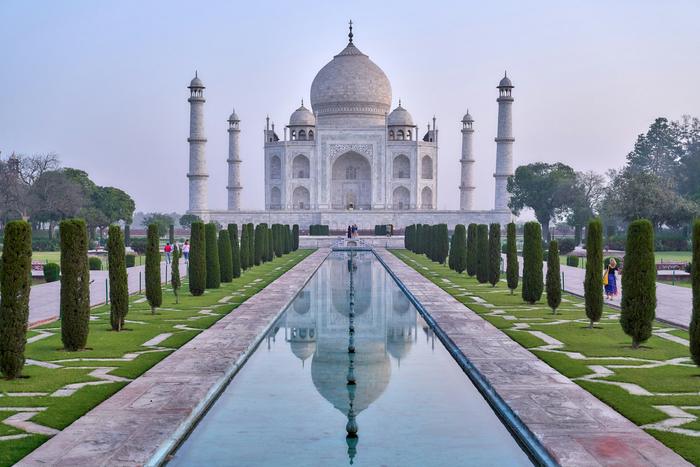
India
Overwhelming, beautiful, and utterly unlike anywhere else.
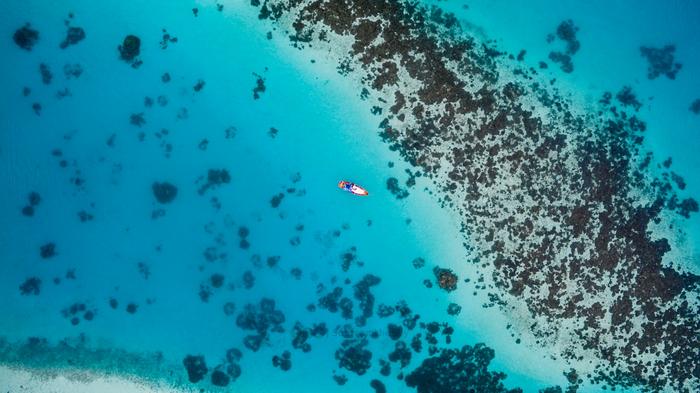
Maldives
One island, one resort, almost nothing to do. That is the point.
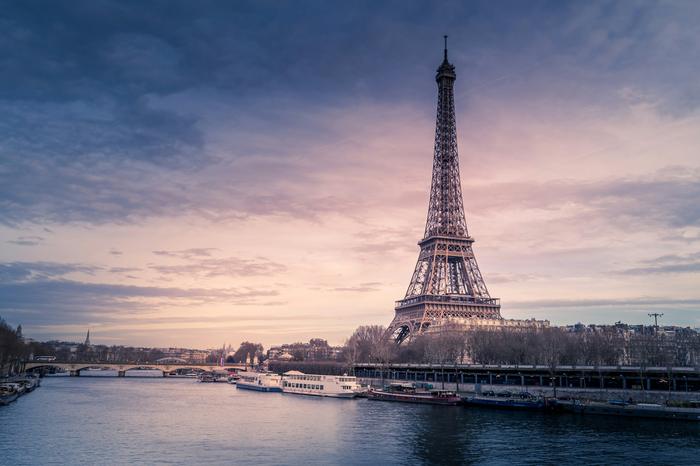
France
Paris is only the opening act — wine country, the Alps, and two coastlines.
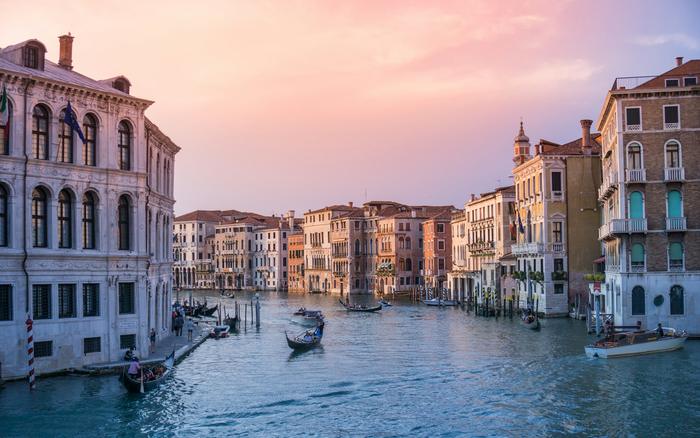
Italy
The benchmark for food, history, and beauty.

Greece
Ruins in the morning, a swim by noon, taverna until dark.
Not sure where to go
Take the 5-minute quiz
Answer a few honest questions and get matched to destinations that actually fit how you travel.
Start the quiz