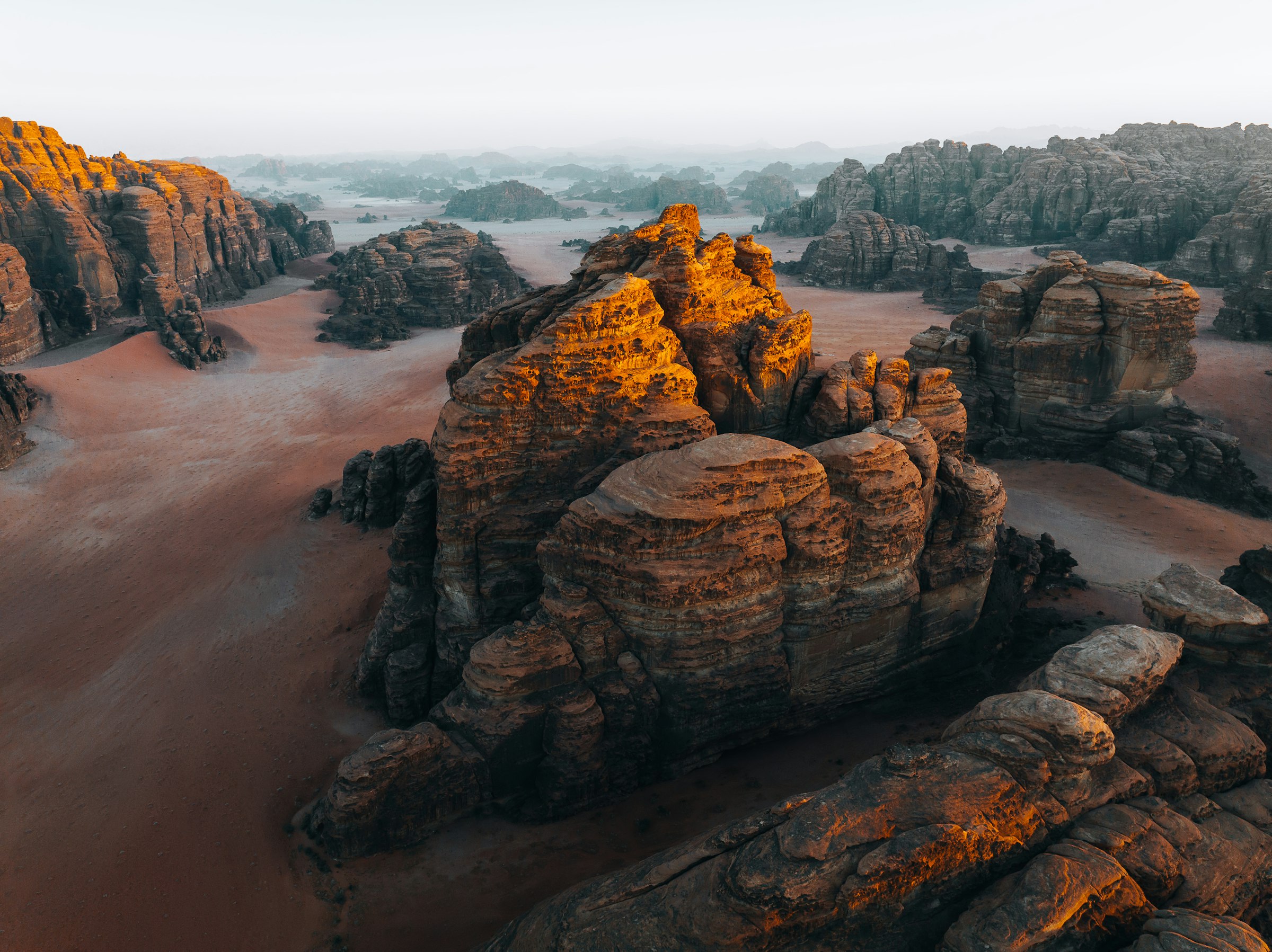
Saudi Arabia
Newly open, and the most surprising trip in the region right now.
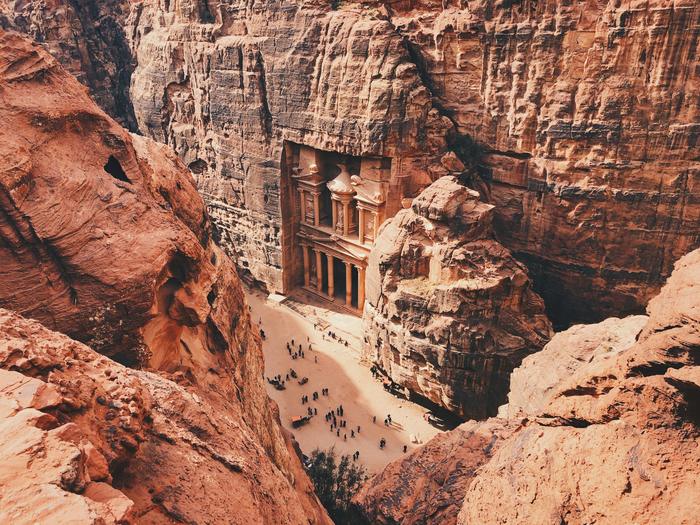
Saudi Arabia only began issuing tourist visas in 2019, and it still feels early. AlUla's desert and the Nabataean tombs of Hegra rival Petra without the crowds. Add Red Sea diving, a fast-changing Riyadh, and the coral lanes of old Jeddah. Come for what most travelers haven't seen yet, and dress and behave for a conservative country.
Most trips run Jeddah–AlUla–Riyadh, stitched together with short domestic flights. AlUla is the anchor: two or three days for Hegra's tombs, Elephant Rock at sunset, and the mud-brick lanes of the old town. In Jeddah you wander Al-Balad's coral houses; in Riyadh it's Diriyah and a restaurant scene changing by the month. This is not a budget trip — AlUla hotels in particular price like a luxury destination — but tours and tickets are well organised.
Be clear about what this isn't. There is no alcohol and no nightlife in the conventional sense, distances between sights are enormous, and summer heat makes half the year unworkable. The tourism machine is new and occasionally half-finished. Travellers uncomfortable with conservative social codes, or with the politics, should think hard before booking. The trade-off: you walk through Hegra nearly alone — something that hasn't been possible at Petra in decades.
Highlights
-
AlUla & Hegra
Nabataean tombs in red rock — Petra's sister site, nearly empty.
-
Riyadh
The capital reinventing itself by the month.
-
Jeddah (Al-Balad)
Coral-stone old town and the gateway to the Red Sea.
-
The Red Sea
Some of the least-dived healthy reef left anywhere.
Practical info
- Visa
- eVisa or visa-on-arrival for most Western passports.
- Currency
- SAR (Riyal), pegged at roughly 3.75 SAR ≈ 1 USD.
- Language
- Arabic. English in cities and tourism, and growing fast.
- Safety
- Very safe; a conservative country, so follow local customs and dress codes.
- Getting around
- Domestic flights, the Haramain high-speed train, and hire cars for AlUla.
- Tap water
- Stick to bottled water.
- Plug type
- Type G 230V
- Money
- Cards widely accepted; cash for souks and smaller towns.
General guidance — visas, safety, and health change, so check your government's travel advisory and the official sources before you go.
Common questions
- Do you need a visa for Saudi Arabia?
- Most Western travellers do, but it is now easy: an eVisa (or visa on arrival) valid a full year, multiple entry, with medical insurance bundled into the fee (~$140). It covers the whole country and Umrah outside Hajj season — but not Hajj. Around fifty-odd nationalities qualify and the list keeps expanding; check visa.visitsaudi.com for yours.
- When is the best time to visit Saudi Arabia?
- November to March. The interior — Riyadh, AlUla — hits 43°C by July and is too hot for comfortable sightseeing from May to September; the Asir highlands around Abha stay mild in summer and are the one warm-season refuge.
- Can you drink alcohol in Saudi Arabia?
- No. The ban is total and intact — no bars, no hotel minibars, nothing for sale to tourists. The single licensed shop that opened in Riyadh in 2024 is for non-Muslim diplomats only and has not been extended to visitors. Plan an alcohol-free trip; it removes an entire budget line versus the UAE or Qatar.
- Is Saudi Arabia cheaper than the UAE?
- Yes — roughly 20–30% less on hotels, dining and transport at comparable quality, before the alcohol saving, though it is still not a backpacker destination: the budget tier is thin and most travellers default to hotels. See our full comparison.
- Do women need an abaya, and can they travel alone?
- The abaya has not been required since 2019 — foreign women dress modestly (shoulders and knees covered, loose clothing) but need no abaya or headscarf outside mosques, and can book hotels and travel solo. Recent solo-female trip reports consistently describe it as easier than the country’s old reputation suggests.
Getting in
The visa is the easy part now — but read the fine print
Saudi only opened to leisure tourism in 2019. The tourist eVisa is generous; the Makkah and Hajj lines around it are where people trip up.
The tourist eVisa — or visa on arrival, same eligibility list — is valid a full year with multiple entries and the mandatory medical insurance folded into the fee. Around fifty-odd nationalities qualify (all EU/Schengen, the UK, US, Canada, Australia, Japan, Korea, China) and the list has been expanding, so the exact count and the 90-day stay rule are the two things worth confirming on visa.visitsaudi.com before you book — sources disagree on whether the 90 days is per visit or cumulative across the year.
The trap is the pilgrimage layer. The tourist visa lets you perform Umrah and travel to any city, but Makkah is closed to non-Muslims entirely, and Hajj needs a separate Nusuk permit. If a trip involves the pilgrimage cities, the rules are different from the ordinary tourist track — see transport below for how that shapes even the train.
When to go
The interior is unbearable half the year
This is a winter country. In summer the desert cities empty into the highlands, and so should you.
43°C Riyadh’s average July high — bone-dry, and too hot to sightsee
The Red Sea coast around Jeddah is warm year-round but humid (around 57% in summer); its diving runs all year, with water dropping only to about 22°C in February. Ramadan reshapes the day wherever you are — street cafés shut through the fasting hours and public eating in daylight is prohibited, though hotels keep discreet daytime dining and evenings come alive. It shifts about eleven days earlier each year; in 2027 it falls roughly mid-February to mid-March.
The rules
What is relaxed, what is not, and what still catches people
A lot of the old reputation is out of date. Some of it is exactly as strict as you feared. Knowing which is which is the trip.
Relaxed: foreign women need no abaya or headscarf since 2019 — modest, loose clothing covering shoulders to below the knee is the rule for both sexes, stricter only at religious sites. Unmarried couples have been able to share a hotel room since 2019, and women can book and travel alone. Prayer-time closures are no longer legally enforced since the 2021 reform — malls and hotels stay open — but smaller shops, souks and family restaurants still pause 20–30 minutes at each of the five prayers, and Friday midday is quiet.
Not relaxed: alcohol is totally banned (see below), same-sex relationships are illegal, extramarital sex remains an offence, and public displays of affection are prohibited for everyone. Photographing government, military or diplomatic buildings is arrestable, and you should never photograph people — women and children especially — without consent.
Two that are easy to miss. The alcohol ban is total — the single licensed store that opened in Riyadh in 2024 is for non-Muslim diplomats only and has explicitly not been extended to tourists; ignore any report of tourist-zone alcohol, which a Saudi official publicly denied, and note the 2034 World Cup is planned entirely dry. And from 1 November 2025, travellers carrying common prescription medicines — Adderall, Xanax, Tramadol and similar controlled drugs — need advance electronic clearance from the SFDA, which is simple but easily overlooked. (Conduct facts here follow the UK FCDO travel advice.)
Getting around
Everything is far apart, so you fly — then you drive
This is a country the size of Western Europe with almost no intercity public transport. Plan it as flights between hubs, a car within them.
The Haramain high-speed railway is the single genuinely fast surface link — 300 km/h from Jeddah up to Madinah via the airport and KAEC. But the catch is structural: the line’s southern terminus is Makkah, which non-Muslims cannot enter, so a non-Muslim tourist rides the Jeddah–airport–Madinah stretch and must not book a Makkah leg. For everything else, domestic flights do the work — the Riyadh–Jeddah corridor is one of the busiest in the region.
Within cities, a car is close to mandatory outside Riyadh. Women driving is fully legal and normal since the 2018 ban lift, and applies to tourists; Uber and Careem are everywhere; and fuel is among the cheapest anywhere — a flat, subsidised ~$0.60 a litre nationwide, which softens the long distances the country forces on you.
The big sights
The best sight makes you book a guide — you cannot just turn up
Hegra is the reason many people come, and it is the clearest case of Saudi’s tour-gated access.
AlUla and Hegra — the Nabataean tombs that are Petra’s quieter sister — cannot be visited independently. You book the official Hegra day tour through experiencealula.com: an air-conditioned coach with a licensed rawi guide, from around SAR 95 a person, and it sells out on weekends, so book two or three days ahead in season. It does not close in summer despite the common belief, but October–April is the humane window.
Near Riyadh, Diriyah — the mud-brick UNESCO birthplace of the Saudi state — is self-guided and, for 2026, free to enter from 1 May to 30 September (a day pass applies otherwise; check on arrival). The Edge of the World, the cliff escarpment about 90 km west of the capital, needs no permit but does need a genuine 4×4 for the final unpaved stretch — a sedan will not make it — so most people take a guided 4×4 trip rather than risk it.
Costs
Cheaper than the Gulf neighbours, but not cheap
The alcohol ban quietly makes it one of the cheapest Gulf trips — for everything except the getting-around.
Saudi runs roughly 20–30% below the UAE on hotels, dining and transport at comparable quality, and being dry removes an entire budget line — no bar tab, which in Dubai or Doha alone can add $50 a day. But it is mid-to-high-end, not a backpacker destination: hostels are rare outside Riyadh and Jeddah, so most travellers default to hotels, and the fly-and-drive geography adds domestic flights to the bill. VAT is 15%, and the tourist refund launched in 2025 covers physical goods only — not hotels, dining or fuel — so for a normal trip it barely applies.
What to expect
What will actually frustrate you — and what surprises people
Tourism is five years old here, and it shows both ways.
The frustrations are real: the country is vast and the marquee sights are far apart, so a Riyadh–AlUla–Jeddah loop is a fly-plus-drive project, not a road trip. Public transport barely exists between cities, prayer-time pauses still interrupt the day unpredictably, and outside the big hubs the tourist infrastructure is thin — booking sites revert to Arabic, and English drops off. The best sights being pre-booked-tour-only compounds it: you cannot improvise your way through Hegra.
What surprises people: the two things travellers most dread tend to flip positive. Alcohol-free evenings — corniche walks, mocktail lounges — are widely reported as pleasant rather than a deprivation, and solo female travel comes back easier than expected: no guardian, no headscarf, women-only metro sections, and safety rankings among the highest in the G20.
Sources
Where this comes from
The detail above was read off primary sources on — operator timetables, municipal ordinances, regional tourism boards, national statistics offices and first-hand traveller reports, rather than other travel articles. Researched and maintained by Dmitrii Romashchin — how we research.
Compare Saudi Arabia with
If you like Saudi Arabia, also consider
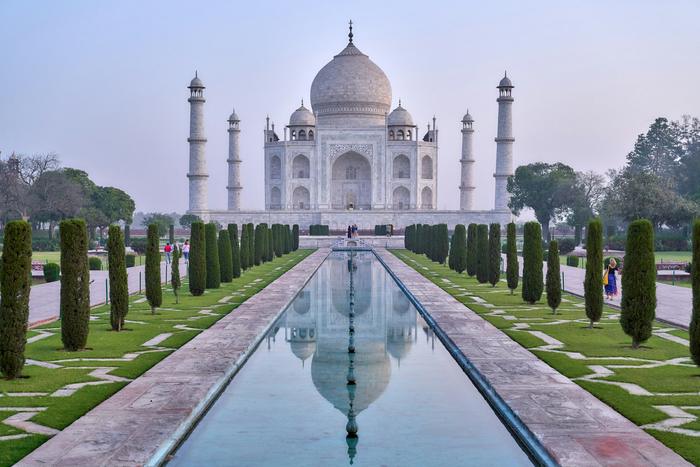
India
Overwhelming, beautiful, and utterly unlike anywhere else.
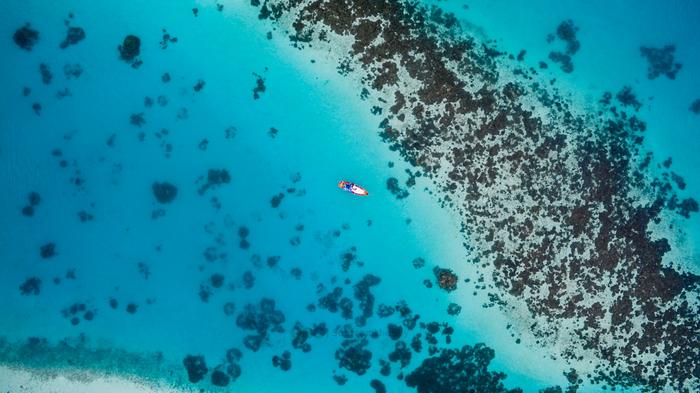
Maldives
One island, one resort, almost nothing to do. That is the point.
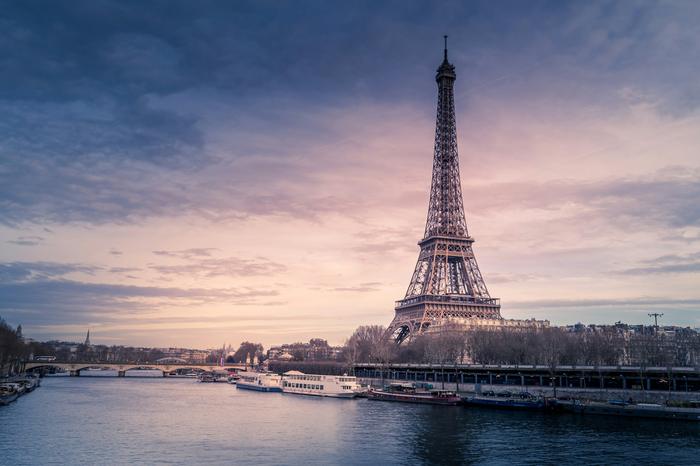
France
Paris is only the opening act — wine country, the Alps, and two coastlines.
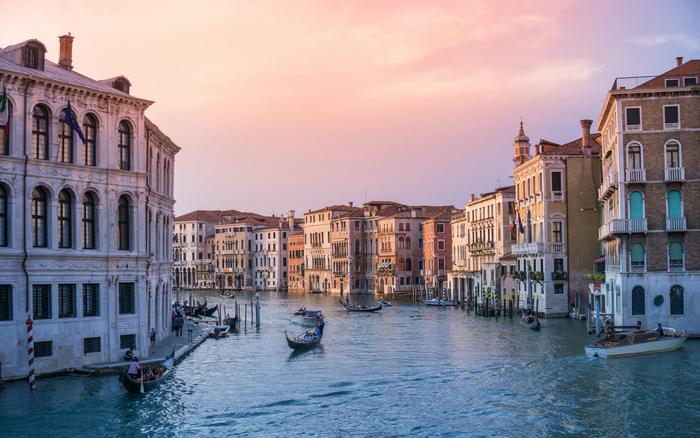
Italy
The benchmark for food, history, and beauty.
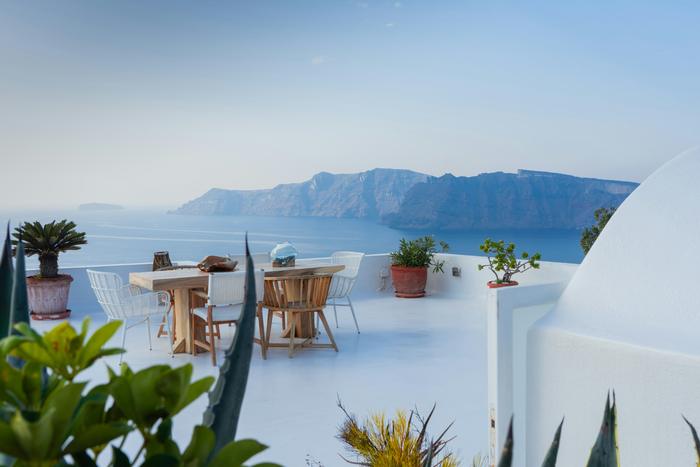
Greece
Ruins in the morning, a swim by noon, taverna until dark.
Not sure where to go
Take the 5-minute quiz
Answer a few honest questions and get matched to destinations that actually fit how you travel.
Start the quiz