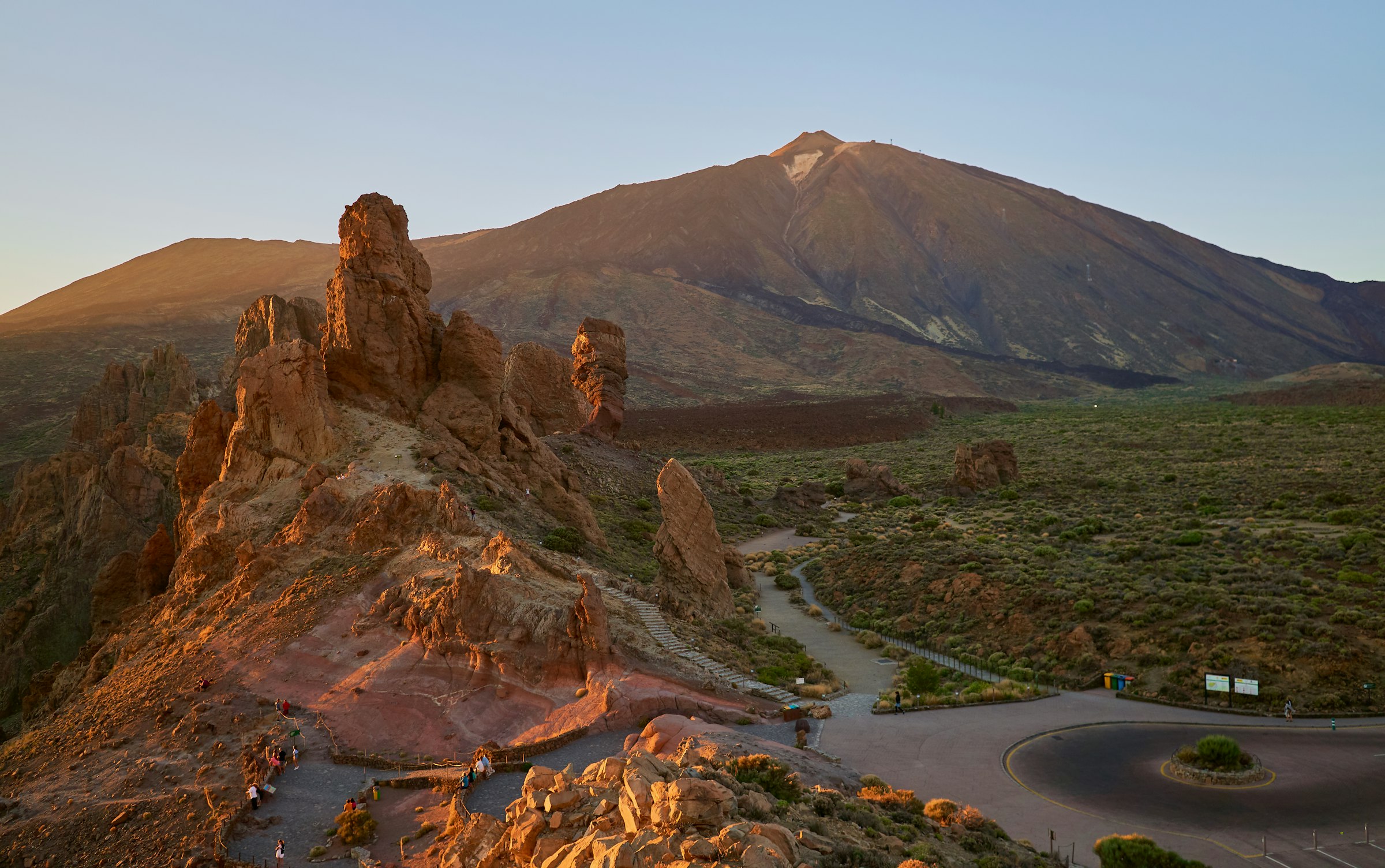
Canary Islands
Year-round warm weather, volcanic landscapes, easy from Europe.
The Canaries get unfairly dismissed as a package holiday cliché — they're more interesting than that. Each island has a different vibe: Tenerife and Gran Canaria for variety, Lanzarote for volcanic art-installation landscapes, La Palma and El Hierro for hiking and quiet, Fuerteventura for surf and dunes. Four hours from most of Europe and warm in January, they're the continent's easiest winter escape.
The trick is picking one island and renting a car the day you land. On Tenerife that means driving from the laurel forests of Anaga to the lunar caldera around Mt Teide in under two hours; on Lanzarote, touring César Manrique's volcanic architecture between black-sand coves. Days are simple — a hike or a surf, a long menú del día lunch, papas arrugadas and cheap local wine by evening. Ferries and short flights make a two-island trip easy in a week.
Be honest about what you're booking. The southern resort strips — Playa de las Américas, the worst of Maspalomas — are concrete package-holiday land, and if you stay there without a car, that's all you'll see. The trade winds blow hard, especially on Fuerteventura, and many beaches are black volcanic sand, not Caribbean white. The food is solid rather than exciting. But nowhere else in Europe is reliably warm in January, and the hiking is seriously underrated.
Highlights
-
Tenerife
Mt Teide, surf in the south, hiking in the north.
-
Lanzarote
Volcanic landscapes shaped by the artist Cesar Manrique.
-
La Palma
The greenest, quietest island — hiking heaven.
-
Fuerteventura
Endless beaches, wind, surf.
Practical info
- Visa
- Schengen — visa-free for most Western passports (90 days).
- Currency
- EUR (€)
- Language
- Spanish. English in tourist areas.
- Safety
- Very safe.
- Getting around
- Hire a car on each island. Ferries or short flights between islands.
- Tap water
- Tap water safe.
- Plug type
- Type C Type F 230V
- Money
- Cards everywhere.
General guidance — visas, safety, and health change, so check your government's travel advisory and the official sources before you go.
Common questions
- Which island should I pick?
- Tenerife for variety and Mount Teide; Gran Canaria for a city-and-dunes mix; Lanzarote for volcanic/Manrique design; Fuerteventura for the best beaches and wind; La Palma for hiking and stargazing; La Gomera/El Hierro for quiet. The breakdown is in the islands section.
- Do I need a permit for Teide’s summit?
- Yes — a free but booked PNT-10 “Telesforo Bravo” permit via tenerifeon.es (200 a day, slots release Mondays and sell out fast), plus a €15 non-resident eco-tax since January 2026. The cable car alone stops at 3,555 m, below the 3,715 m top. See the Teide section.
- When is the best time to go?
- Any time — the “eternal spring” keeps coastal temperatures ~18–26°C year-round, and winter (Dec–Mar) is the peak European-sun season. Watch for the occasional calima — a hot, hazy Saharan-dust episode, most common in summer and on the eastern islands.
- Is there a tourist/bed tax?
- No general nightly bed tax — Mogán’s small levy was struck down in July 2026. The only charges are Tenerife natural-site eco-fees (the €15 Teide summit, Masca, Roque Nublo) introduced in January 2026.
- How do I get between the islands?
- Binter or Canaryfly flights (25–40 minutes) or Fred. Olsen / Baleària (ex-Armas) ferries — Lanzarote–Fuerteventura is ~30 minutes. Note that most hire cars can’t cross on the ferries without prior permission. More in getting around.
- Are things cheaper than mainland Spain?
- Often, yes — the Canaries levy the local IGIC at 7% instead of mainland VAT at 21%, so electronics, perfume, spirits and tobacco are notably cheaper. Car hire is among the cheapest in Europe too.
Entry & getting there
Spain, Schengen, four hours from Europe
Straightforward EU entry and a short-haul hop from northern Europe — with the new biometric border now live.
The Canaries are a full part of Spain and the EU — euro, Schengen, the same 90-in-180 visa-free entry as the mainland — and the EES biometric system is now operating at the islands’ airports, with ETIAS expected in 2027. Despite sitting off the coast of Morocco, they’re a short-haul flight: about four hours from the UK and northern Europe, under three from mainland Spain.
That combination — reliable winter sun, short flights, cheap packages — is why the islands are northern Europe’s winter beach. Which island you land on matters far more than the entry formalities, which are the mainland’s.
Fly into the island you’re actually staying on where you can: the two Tenerife airports (north TFN, south TFS) catch people out — the southern resorts are an hour-plus from the northern airport. Check which one your flight uses against where your hotel is.
Which island
Seven islands, seven different trips
This is the one decision that shapes everything — the islands are genuinely unalike.
- Variety and the big volcanoSkipa one-note islandGoTenerife — Teide, the green north and the resort south in one
- Beaches and windSkipthe rockier western islesGoFuerteventura — long sand and the Sotavento kite/windsurf coast
- Design, wine and calmSkiphigh-rise resort stripsGoLanzarote — Manrique’s deliberately low-rise island
- Hiking and dark skiesSkipthe party southGoLa Palma — trails and the Roque de los Muchachos observatory
| Island | Character | Best for |
|---|---|---|
| Tenerife | Biggest and most varied; Mount Teide, green north, resort south | First-timers, the volcano |
| Gran Canaria | “Continent in miniature”; Maspalomas dunes plus a real city | City-and-beach, nightlife |
| Lanzarote | Volcanic moonscape; the César Manrique aesthetic, low-rise | Design, wine, calm |
| Fuerteventura | The longest beaches and the most reliable wind | Beach purists, windsurf, families |
| La Palma | Lush hiking and dark skies; recovered from the 2021 eruption | Hikers, stargazers |
| La Gomera / El Hierro | Garajonay laurel forest; remote, diving | Quiet, walkers, divers |
Seven islands in all; these are the practical picks. The eastern pair (Lanzarote, Fuerteventura) are drier and flatter; the western (La Palma, La Gomera, El Hierro) greener and steeper; Tenerife and Gran Canaria have a bit of everything.
The south of Tenerife and Gran Canaria is a dense belt of large all-inclusive resorts — reliable sun and predictable cost, but it can feel sealed off from island life. If you want the real islands, base away from Playa de las Américas / Playa del Inglés, or pick Lanzarote or La Palma instead.
Climbing Teide
Spain’s highest peak, permit then eco-tax
Mount Teide is 3,715 m and double-gated — a booked permit for the cone, and now a fee on top.
| Item | Detail | Cost |
|---|---|---|
| Summit permit (PNT-10) | The final cone above the cable car; book at tenerifeon.es | Free |
| Summit eco-tax | Non-resident, daytime, since 19 Jan 2026 | €15 |
| Cable car (Teleférico) | Up to La Rambleta at 3,555 m — below the top | ~€42 non-resident return |
From the Teide booking portals, October 2026; residents and under-14s are exempt from the eco-tax. The cable car does NOT reach the summit — the final ~160 m of ascent needs the PNT-10 permit, so book the permit before the cable-car ticket.
The usual disappointment is riding the cable car expecting to reach the top: it stops at 3,555 m, and the summit cone beyond is permit-only. Either book the free PNT-10 permit weeks ahead (the 200 daily slots vanish fast) or accept the cable-car viewpoint — and either way, the stargazing after dark is arguably the better draw.
When to go
Eternal spring, mind the calima
Mild in every month — the variables are the Saharan dust and where the wind blows.
18–26°C the year-round coastal band
Coastal temperatures stay ~18–26°C all year, so there is no bad season. The crimson bar is the peak winter-sun window (shown Jan–Mar; it runs on from December). Calima can arrive in any month.
The Canaries’ whole proposition is that they have no real off-season: coastal temperatures hover in the high teens to mid-twenties year-round, which makes December to March the busy stretch when northern Europe is grey. The sea is never tropical — the cold current keeps it around 18–24°C — but it’s swimmable all year.
The one thing to understand is the calima: when the wind swings round off the Sahara it brings hot, hazy, dust-laden days, most often in summer and on the eastern islands of Lanzarote and Fuerteventura. It passes in a few days, but it can grey out the views and the stargazing.
Lanzarote & Manrique
The island César Manrique designed
Lanzarote is a volcanic art-project — geothermal demos, lava-tube galleries, and a ban on high-rise.
Lanzarote looks like nowhere else because one man shaped it: the artist César Manrique, whose fight against high-rise development left the island deliberately low-rise, its attractions built into the volcanic landscape rather than on top of it. Timanfaya National Park — the “fire mountains” — is reached only by the official coach route, with live geothermal demonstrations (water flashed to steam, brush set alight over a pit) at Islote de Hilario and a Manrique-designed volcano-grill restaurant.
His other set-pieces — Jameos del Agua, a lava tube turned auditorium and pool around a lake of endemic blind crabs, and the Mirador del Río — make the whole island feel curated. It’s the design-lover’s Canary.
Timanfaya’s core is only accessible on the official “Ruta de los Volcanes” coach included in the entry — you can’t drive or walk the fire mountains yourself. Arrive early, as the car park and the coach queue both back up by late morning; the camel ride at the Echadero is a separate, optional add-on.
La Palma
A fresh volcano and the darkest skies
The western island pairs a 2021 eruption you can now visit with Europe’s premier observatory.
85 days the 2021 Cumbre Vieja (Tajogaite) eruption
“La Isla Bonita” is the hikers’ and stargazers’ Canary — lush, steep, laced with trails — and since 2021 it carries a very fresh volcano. The Tajogaite eruption reshaped a corner of the south-west over 85 days; the new lava fields and cone are now visited on marked and guided routes as the banana-and-tourism economy rebuilds around them.
Above it all sits the Roque de los Muchachos Observatory at ~2,426 m, home to one of the world’s largest optical telescopes, on an island that was the world’s first Starlight Reserve and protects its night sky by law. For dark skies and walking rather than resorts, La Palma is the pick.
Check which eruption sites and trails are actually open before you plan a day around them — access was still settling as the ground cooled and infrastructure was rebuilt, so confirm on visitlapalma.es near your travel date rather than relying on an older route description.
Getting around
Flights, ferries and a cheap hire car
Island-hopping is quick; on each island a hire car is the norm.
Hopping between islands is easy and quick — Binter and Canaryfly run frequent 25–40-minute flights, and Fred. Olsen and Baleària ferries link the neighbours, the Lanzarote–Fuerteventura crossing taking barely half an hour. For the smaller western islands (El Hierro, La Gomera) the short flight is often the only practical option.
On each island, a hire car is the standard way around — the Canaries have some of the cheapest rental rates in Europe, and the local firm Cicar is well regarded. Just don’t assume you can take it to another island: most contracts forbid the ferry without prior permission.
| Link | Mode | Time |
|---|---|---|
| Between most islands | Binter / Canaryfly flight | 25–40 min |
| Lanzarote ↔ Fuerteventura | Fred. Olsen / Baleària ferry | ~25–30 min |
| Tenerife ↔ La Gomera | Ferry (Los Cristianos–San Sebastián) | ~50 min |
| Tenerife ↔ La Palma | Ferry | ~2.5–3 h |
Fares indicative, from the operators in October 2026; the former Naviera Armas now runs as Baleària Canarias after a May 2026 takeover (the “Armas” branding may persist). Car hire is cheap and normal; most rentals can’t cross on the ferries without prior permission.
If you’re tempted to combine islands, do it by flying and renting separately on each, not by ferrying your hire car — the standard rental contract bars the crossing, and ignoring that voids the insurance. Binter’s inter-island fares are low enough that it’s rarely worth the hassle anyway.
Money & tax
Cheaper, thanks to a different tax
The Canaries sit outside mainland Spain’s VAT — which makes some things noticeably cheaper.
The quiet money story is tax: the Canaries levy their own IGIC at a general 7% rather than mainland Spain’s 21% VAT, which is why electronics, perfume, spirits and tobacco run cheaper here and the islands feel good value overall. Car hire is among the cheapest in Europe, and there’s no general nightly bed tax — Mogán’s attempt was struck down in mid-2026.
The only visitor charges are the Tenerife natural-site eco-fees introduced in 2026 — the €15 Teide summit, Masca, Roque Nublo — which are modest and site-specific. Package deals to the south are where the real bargains sit; independent trips to Lanzarote or La Palma cost more but buy more of the islands.
The IGIC saving is real but modest on everyday spending — don’t over-plan around it. Where it genuinely bites is big-ticket duty-free-style goods (cameras, spirits, perfume); for a normal beach week the bigger lever on cost is choosing a package to the south versus an independent trip to a western island.
Compare Canary Islands
If you like Canary Islands, also consider

France
Paris is only the opening act — wine country, the Alps, and two coastlines.

Italy
The benchmark for food, history, and beauty.

Greece
Ruins in the morning, a swim by noon, taverna until dark.
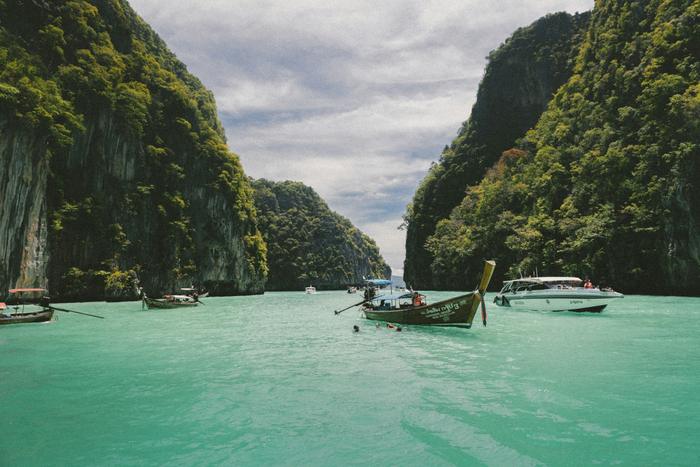
Thailand
The complete package for warm-climate travel.
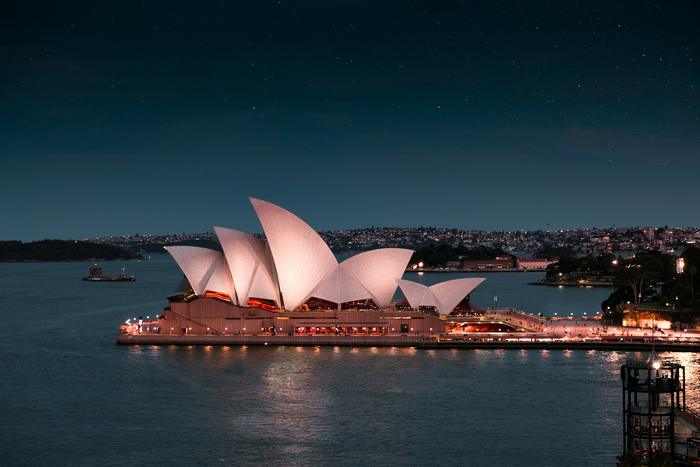
Australia
Vast, varied, relaxed. Reef, Sydney, and proper wilderness in one.
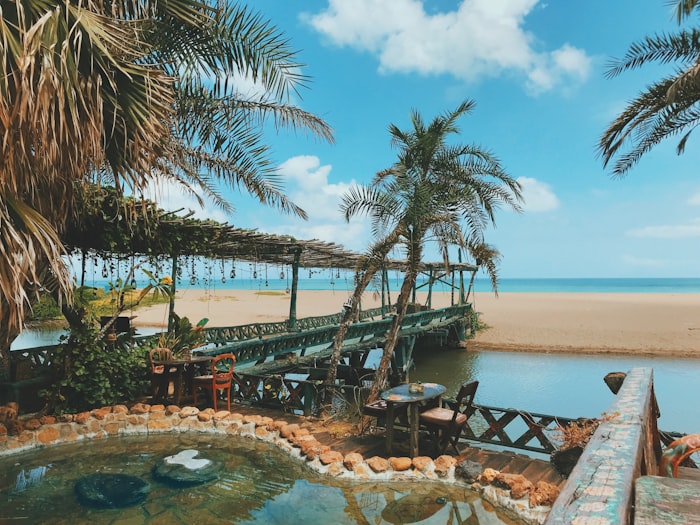
Bali, Indonesia
Warm, affordable, endlessly deep — beach, wellness, and culture in one place.
Not sure where to go
Take the 5-minute quiz
Answer a few honest questions and get matched to destinations that actually fit how you travel.
Start the quiz