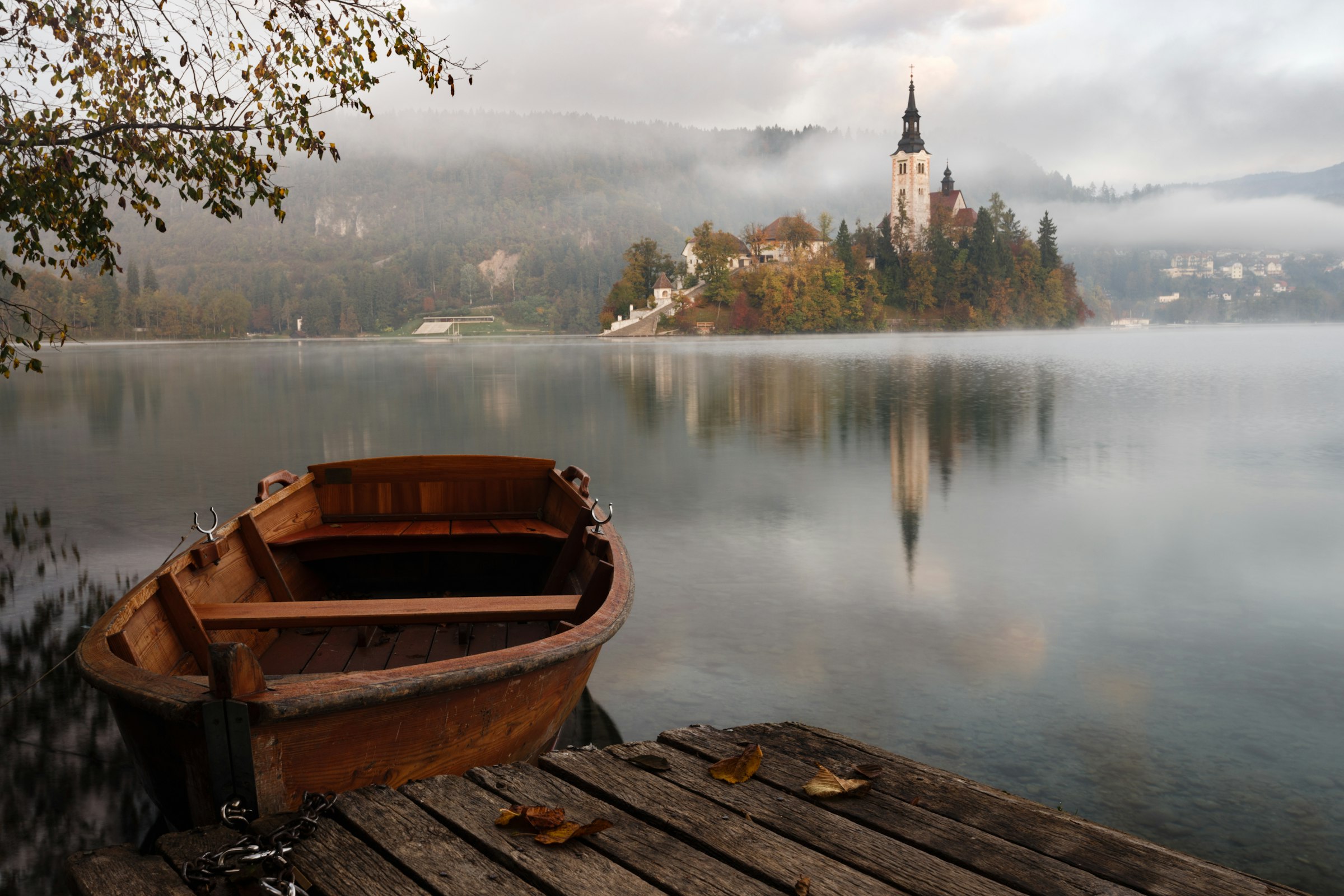
Slovenia
Alps, coast, and a capital you can cross on foot — all in one small country.
Slovenia packs an Alpine lake, a turquoise river gorge, a walkable green capital, and a sliver of Adriatic coast into a country you can drive across in three hours. It is compact, organized, and outdoorsy, with serious food and wine for its size. A week here covers the highlights without rushing.
A typical loop starts in Ljubljana, where the car-free old town curls along the river under a hilltop castle, then runs north to Lake Bled and the Julian Alps. From there it is short hops to the Soča Valley for the river, the gorges, and rafting; to Triglav National Park for hiking; and west to Piran, a Venetian-era town on the coast. Distances are tiny, the roads are good, and you are rarely more than a couple of hours from the next thing.
The honest part: Slovenia is more pleasant than dramatic. The mountains are real but modest next to the Swiss or French Alps, the coast is barely 30 miles long, and the country can feel like a tidy sampler rather than a deep destination. Bled in July is busy and overpriced for what it is. Two weeks is a stretch unless you slow right down or pair it with Croatia or Italy next door. It rains a lot in autumn and the high passes close in winter.
Highlights
-
Lake Bled
The island church and clifftop castle. Go at dawn before the buses.
-
Ljubljana
A green, car-free capital you can walk in a morning.
-
Triglav National Park
The Julian Alps, with hiking from easy valleys to serious peaks.
-
Soča Valley
A river the color of glass, plus rafting and WWI history.
-
Piran
A Venetian fishing town on the short Adriatic coast.
Practical info
- Visa
- Schengen area; visa-free for most Western passports (90 days). Verify before travel.
- Currency
- EUR (€).
- Language
- Slovene. English widely spoken.
- Safety
- Very safe, with low crime even in the capital.
- Getting around
- Compact and easy; renting a car opens up the mountains and coast. Trains and buses link the main towns.
- Tap water
- Tap water safe and excellent.
- Plug type
- Type C Type F 230V
- Money
- Cards accepted almost everywhere; carry a little cash for small mountain spots.
General guidance — visas, safety, and health change, so check your government's travel advisory and the official sources before you go.
Common questions
- Do I need a vignette to drive in Slovenia?
- Yes — and it’s the single most common way visitors get fined. Using any motorway or expressway requires a vignette, now entirely digital (an e-vignette linked to your plate, no windscreen sticker since 2021). For a car it costs about €16 for 7 days, €32 monthly or €117.50 annually (prices rose ~7% for 2026). Buy it online at the official DARS portal or app, or at petrol stations near the border before you hit a highway. Rental cars usually already have one — confirm with the company. Driving a motorway without a valid vignette risks a €300–800 fine. One 2026 change: the coastal H5/H6 expressway around Koper is now vignette-exempt (reclassified as a main road).
- Do I need to book Vintgar Gorge in advance?
- Yes, in summer especially. The Vintgar Gorge near Bled runs on capped, timed-entry tickets sold in 20-minute slots (adult ~€15, sold online only — no booths at the gate), and in July–August slots sell out days ahead, so book well before you go. It’s also seasonal, open roughly April to late November and closed in winter, so don’t build a cold-month trip around it. The nearby lakes and Triglav National Park are free if the gorge is full or shut.
- Which caves should I visit — Postojna or Škocjan?
- Both are world-class, and they’re different. Postojna is the polished, crowd-pleasing one — a little electric train rattles you into vast chambers, and you can see the olm (the blind “human fish” salamander); it pairs on a combined ticket with the cliff-face Predjama Castle (from ~€45). Škocjan, about 35 minutes away and UNESCO-listed, is wilder and more dramatic — a huge underground river canyon you walk on foot (adult from ~€18). Both run as fixed-departure guided tours, so check the day’s times and book a slot. If you only do one, Postojna for comfort, Škocjan for drama.
- When is the best time to visit Slovenia?
- Late spring (May–June) and September — warm, green and far less crowded. July and August are peak, when Lake Bled gets busy and overpriced and the headline sights are at their most crowded. Autumn (October–November) can be notably wet, and the high Alpine passes close in winter — the Vršič Pass over to the Soča Valley shuts with snow, so a Soča loop over Vršič is a warm-months plan only (and in summer 2026 it ran a summit parking restriction with free shuttle buses).
- Is Lake Bled overrated, and how crowded does it get?
- Bled is genuinely lovely — a glacial lake with an island church and a clifftop castle — but in July and August it’s mobbed and pricey, and a pletna boat, castle entry and a cream cake add up for what’s a fairly small lake. The fix is timing and spreading out: come in the shoulder months, walk the lakeside loop early, and give a day to quieter, wilder Lake Bohinj next door (free, in the national park). Treat Bled as a half-day icon, not the whole trip, and it delivers.
- How long do I need in Slovenia?
- Less than people assume. The country is tiny — you can drive across it in about three hours — so five to eight days comfortably covers the headline sights: Ljubljana, Lake Bled and Bohinj, the Soča Valley, the caves, and a day on the coast at Piran. A rigid two-week Slovenia-only itinerary tends to drag; the natural move is to pair it with neighbouring Croatia, Italy or Austria, all a short hop away.
When to go
Spring and September — and the winter passes
A short, green shoulder is the sweet spot, around a busy summer and a snowed-shut mountain winter.
The May–June and September shoulders are the sweet spot — warm, green, far fewer people than the crimson July–August peak, when Lake Bled is mobbed and prices spike. Autumn (Oct–Nov) is notably wet, and in winter the high passes shut with snow (the Vršič over to the Soča Valley) and Vintgar Gorge closes — so a mountain loop is a warm-months plan.
Come in late spring (May–June) or September: warm, green, and far quieter than the July–August peak, when Lake Bled is busy and overpriced and the caves and gorge run at capacity. Autumn tips wet from October, and the mountains then start to close for winter.
The seasonal hard stop is the high passes. The Vršič Pass — the dramatic road from Kranjska Gora over to the Soča Valley — shuts with snow in winter, and even in summer 2026 ran a parking restriction at the summit with free shuttle buses (Kranjska Gora–Bovec). So if a Julian Alps loop is on your list, it anchors you to the warm months; check live pass conditions before you plan the drive.
- you’re driving the motorwaysSkipforgetting the e-vignetteGobuying the plate-linked e-vignette first — the fine is €300–800 (rentals usually include one)
- you want Vintgar Gorge in summerSkipjust turning upGobooking a timed slot online days ahead — it sells out, and shuts in winter
- you’re planning a Soča loop over VršičSkiptrying it in winterGoJune–September — the pass shuts with snow (2026 ran a summit shuttle)
Entry & Schengen
Schengen and the euro, with EES now live
Slovenia is in Schengen and the eurozone — the 90/180 clock applies, and the biometric border is running.
Slovenia is in both the Schengen area and the eurozone, so visa-exempt visitors (the UK, US, Canada, Australia and most others) get 90 days in any rolling 180, counted across every Schengen country, and pay in euros throughout. Since April 2026 the biometric Entry/Exit System (EES) has been operational — non-EU arrivals are registered with fingerprints and a facial image rather than a passport stamp.
The separate ETIAS authorisation is confirmed at €20 but not yet mandatory — it’s expected to phase in from late 2026 with a grace period and become required in 2027 (under-18s and over-70s are fee-exempt). Until then there’s nothing to apply for; don’t let older guidance tell you that you already need it.
The currency is the euro and cards are accepted almost everywhere, so you need little cash. An overnight tourist tax applies per person per night, set locally — Ljubljana and Bled sit at the top band (around €3.13 a night), smaller towns less — and it’s added to the accommodation bill rather than shown in the room rate. English is widely spoken, especially by younger people and in tourism, so language is rarely a barrier.
Getting around
A car is ideal — but buy the vignette first
Tiny distances reward a car; the mandatory e-vignette is the one thing not to forget.
A car is the ideal way to see Slovenia — but the first thing to sort is the e-vignette, mandatory to use any motorway or expressway. It’s digital and tied to your plate (about €16 for a week), bought online or at border petrol stations; a rental usually already carries one, so confirm at pickup. Skip it and the fine runs €300–800. As of January 2026 the coastal H5/H6 around Koper is vignette-exempt (reclassified as a main road).
Without a car, Ljubljana is the natural hub: trains and intercity buses cover the main towns, and buses are often the better bet for Bled and Bohinj (there’s no train to the lakes themselves). Because the whole country is drivable in about three hours, day-tripping from a single base is entirely realistic.
| Way | Use it for | Note |
|---|---|---|
| Hire car + e-vignette | The ideal way to see it | Motorways need a plate-linked e-vignette (~€16/7 days) |
| Ljubljana trains / buses | The main towns | Buses are better for Bled/Bohinj (no train to the lakes) |
| ~3 hours across | The whole country | Day-trip the lot from a single base |
| Koper H5/H6 | The coast around Koper | Now vignette-exempt (since Jan 2026) |
Bled is ~50 min from Ljubljana, Bohinj ~30 min beyond. A rental usually already carries a vignette — confirm at pickup. Checked October 2026.
The e-vignette is the one piece of Slovenia admin worth doing before you arrive: it’s plate-linked and digital now, so there’s nothing to stick on the windscreen, but there’s also nothing to warn you at the motorway on-ramp — the cameras simply catch an unregistered plate. Buy it on the DARS app the morning you set off (or confirm the rental’s), and the €300–800 fine never enters the picture.
The country
Alps, caves and coast in a small space
Slovenia’s appeal is variety in miniature — a lake, mountains, show caves, a green capital and a sliver of Adriatic, all close together.
What Slovenia is for is variety in a very small space: the Alpine postcard of Lake Bled and the wilder Bohinj, the Julian Alps and Mt Triglav, the vivid turquoise Soča Valley, the walkable, café-lined capital Ljubljana, world-class show caves, and a short Adriatic coast whose jewel is Venetian Piran. Distances are tiny and the roads good, so you’re rarely more than a couple of hours from the next thing.
The honest framing: Slovenia is pleasant and tidy rather than jaw-dropping — the mountains are modest next to the Swiss or French Alps, and the coast is barely 47 km long — but the density and ease are the point. Treat it as a rich five-to-eight-day trip, ideally paired with a neighbour (Croatia, Italy or Austria), rather than a two-week epic. The headline experiences — the lakes and the caves — get their own sections next.
| Region / sight | What it’s for | Good to know |
|---|---|---|
| Lake Bled & Bohinj | The Alpine postcard | Bled’s island + castle; Bohinj wilder and free |
| Soča Valley | Emerald river, WWI history | Rafting at Bovec; over the Vršič Pass |
| Ljubljana | The green, walkable capital | Plečnik’s UNESCO city; castle funicular |
| The caves | Postojna & Škocjan | Guided tours — book a slot |
| Piran & the coast | ~47 km of Adriatic | Venetian Piran; car-free old town |
| Maribor & the east | Wine country | The 400-year Old Vine; Ptuj, the oldest town |
Bled & the lakes
An island church, a cliff castle, a gorge
The Julian Alps deliver Slovenia’s signature image — and a couple of planning catches around it.
An island & a castle Lake Bled — the Alpine postcard
The north-west is the heart of a Slovenia trip. Lake Bled (see the figure) is the half-day icon — lovely, and genuinely mobbed in summer, so come early or in the shoulder months. Next door, Lake Bohinj is larger, wilder and free, the better choice for a quiet day on the water or a cable-car up Vogel for the Triglav panorama. The one sight that needs advance tickets is the Vintgar Gorge, on capped timed slots and closed in winter (see the FAQ).
All of this sits inside Triglav National Park (free to enter), which also cradles the Soča Valley over the Vršič Pass — the emerald-green Soča river, the WWI Isonzo Front history around Kobarid, and the rafting and kayaking hub of Bovec. It’s the most dramatic corner of the country, and the one most tied to the warm-season road calendar.
The caves
Two of Europe’s great show caves
Beyond the Alps, Slovenia’s karst underground is a headline in its own right — book the tour slots.
An olm & a cliff castle Postojna, Predjama and Škocjan
Slovenia’s karst country hides two of Europe’s best show caves, and they’re complementary rather than interchangeable (see the figure). Postojna is the polished, comfortable one — the little train, the souvenir scale, the famous olm — and the natural pairing with the cliff-face Predjama Castle. Škocjan is the wilder, more awe-inducing one, a UNESCO-listed river canyon underground that you walk on foot.
The practical point for both: they run on fixed-departure guided tours at set times, not drop-in entry, so check the day’s tour times and book a slot — especially Postojna in peak season. If you’ve time for only one, choose Postojna for ease and the castle combo, Škocjan for sheer drama.
Food & wine
Nut cake, sausage, and a cream slice
Hearty Central-European cooking with an Alpine-Adriatic edge — and a quietly serious wine country.
Slovenian food borrows from all its neighbours — Austrian, Italian, Balkan — around a hearty Central-European core: the rolled walnut cake potica, sweet or savoury štruklji dumplings, the EU-protected kranjska klobasa (Carniolan sausage), and the bean-and-sauerkraut stew jota. The one edible souvenir everyone takes from Bled is the kremšnita, the custard-and-cream slice invented at the lakeside Park Hotel.
Less expected is how good the wine is. Slovenia barely exports, so it’s little known abroad, but the Goriška Brda hills (next to Italy’s Collio) make superb orange/amber wines from Rebula, and the east around Maribor — home to the world’s oldest living grapevine — and Ptuj is serious wine country too. Drinking local, in a country this compact, is one of its real pleasures.
| Dish / drink | What it is | Note |
|---|---|---|
| Potica | Rolled nut cake | The festive classic |
| Štruklji | Rolled dumplings, sweet or savoury | A national staple |
| Kranjska klobasa | Carniolan sausage | EU-protected (PGI) |
| Jota | Bean-and-sauerkraut stew | Mountain comfort food |
| Bled cream cake | Kremšnita custard-cream slice | Eat it lakeside at Bled |
| Orange wine (Rebula) | Amber wine from Goriška Brda | Slovenia’s wine signature |
Maribor’s “Stara trta” is the world’s oldest grapevine (400+ years, Guinness-recognised). Checked October 2026.
Good to know
Euros, English, and an easy, green country
The practical footnotes — an easy, euro country that leans hard into its green, outdoorsy image.
Slovenia is safe and straightforward (the US rates it Level 1), the currency is the euro, cards work almost everywhere, and English is widely spoken, so there’s little friction. The overnight tourist tax is set locally — Ljubljana and Bled at the top band (~€3.13 a night), smaller towns less — and added to the accommodation bill. Tipping is modest: round up or 5–10% for good service.
The country markets itself hard as green and sustainable — Ljubljana was European Green Capital in 2016, its centre is car-free along the river, and the whole place trades on the lakes, forests and mountains. Independent only since 1991 and in the EU and eurozone since the 2000s, it’s an easy, modern, outdoorsy introduction to this corner of Europe — best taken at the five-to-eight-day scale it’s built for.
A base-and-pairing tip: because you can cross Slovenia in three hours, you rarely need to move hotels — a single base (Ljubljana for the centre and caves, or Bled for the Alps) day-trips almost everything. And since a week is plenty, the smart itinerary pairs Slovenia with a neighbour: Venice and Trieste are a short drive west, Croatia’s Istria and the Plitvice lakes lie south, and Austria’s Klagenfurt is just over the Karawanks north.
Compare Slovenia
If you like Slovenia, also consider

France
Paris is only the opening act — wine country, the Alps, and two coastlines.

Italy
The benchmark for food, history, and beauty.

Greece
Ruins in the morning, a swim by noon, taverna until dark.
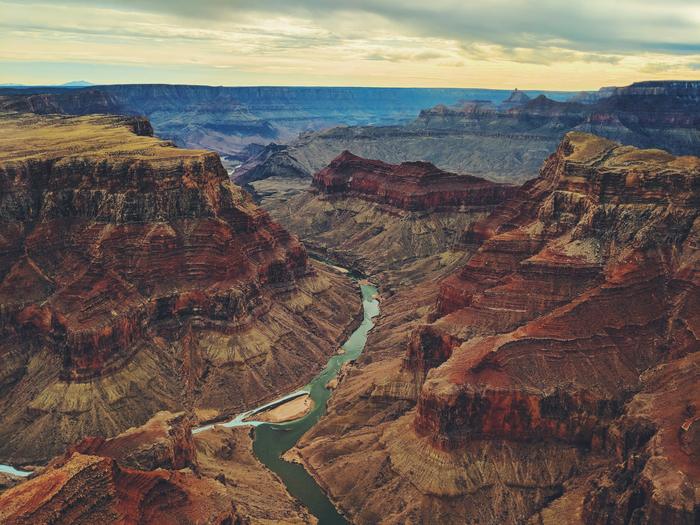
United States
A continent pretending to be a country — cities, deserts, and the best national parks anywhere.
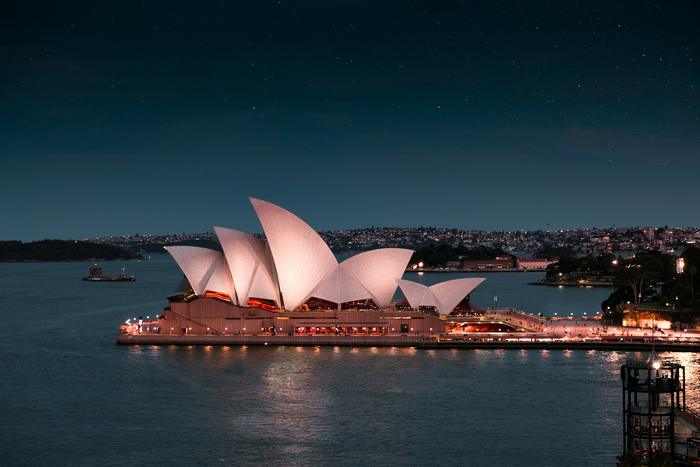
Australia
Vast, varied, relaxed. Reef, Sydney, and proper wilderness in one.
Hawaii
A handful of islands where the landscapes and the ocean genuinely earn the flight.
Not sure where to go
Take the 5-minute quiz
Answer a few honest questions and get matched to destinations that actually fit how you travel.
Start the quiz