
Australia
Vast, varied, relaxed. Reef, Sydney, and proper wilderness in one.
Australia is bigger than people remember and harder to do justice to in one trip. Pick a coast: Sydney + Great Ocean Road + Tasmania for the south, or Cairns + Whitsundays + Top End for the tropics. Wine country, surf, indigenous culture, and wildlife you won't see anywhere else.
Australian trips are road trips with flights stitched in. A classic fortnight: Sydney's beaches and ferries, fly north to Cairns or the Whitsundays for the reef, then Melbourne and the Great Ocean Road — or swap the tropics for Tasmania's trails and cool-climate wine. Days are outdoorsy by default: a morning swim, a flat white, a national park walk, a long drive between very good small-town bakeries. The money goes on internal flights, car hire, and accommodation, none of it cheap.
The distances are the tax. Sydney to Perth is further than London to Moscow, the flight from Europe is a full day each way, and this is simply not a one-week destination. Prices sting — city hotels, reef trips, and tours add up fast — and parts of the reef have visibly bleached. If you want dense history and old-world culture, you'll find it thin. What you get instead is space, ease, and wildlife that exists nowhere else on earth.
Highlights
-
Sydney
World-class harbour city. Beaches, bridge climb, ferries.
-
Great Barrier Reef
Best from Cairns or the Whitsundays. Snorkel or dive.
-
Tasmania
Wilderness walks, cool-climate wine, and MONA — worth the extra flight.
-
Uluru / Red Centre
Indigenous culture and the desert heart of the country.
Practical info
- Visa
- eVisitor or ETA required for most Western passports — apply online.
- Currency
- AUD (Dollar). Roughly 1.5 AUD ≈ 1 USD.
- Language
- English.
- Safety
- Very safe. Wildlife (jellyfish, sharks, snakes) overhyped but real.
- Getting around
- Domestic flights for distances. Self-drive for coast trips.
- Tap water
- Tap water safe.
- Plug type
- Type I 230V
- Money
- Cashless. Cards everywhere.
General guidance — visas, safety, and health change, so check your government's travel advisory and the official sources before you go.
Common questions
- Do I need a visa for Australia?
- Yes — there’s no visa-free entry. Europeans (including the UK) use the free eVisitor; US, Canadian, Japanese and other listed passports use the ETA (free visa plus a ~A$20 service fee), applied for in the official Australian ETA app before you fly. See entry.
- Can I drive across Australia?
- You can, but you shouldn’t: it’s the size of the continental US — Sydney to Perth is a 5-hour flight — so fly between regions and pick two or three, don’t try to see it all. See the distances section.
- When’s the best time to go?
- The seasons are flipped (summer is Dec–Feb). The south is best October–April; the tropical north is best in the dry, May–October (the wet season brings humidity, cyclones and marine stingers). See when to go.
- Is the wildlife really that dangerous?
- Mostly overstated — snakes and spiders rarely kill. The genuine risks are marine stingers (tropical north, Nov–May) and saltwater crocodiles up north; obey signs, swim between the flags, and “Be Crocwise.” The everyday hazard is the sun. See wildlife.
- Can I still climb Uluru?
- No — climbing has been permanently banned since October 2019 at the request of the Anangu traditional owners. Do the base walk, and see the Field of Light instead. See the Red Centre section.
- Do I tip, and is it expensive?
- Tipping isn’t expected — staff earn full wages — but Australia is expensive for food, lodging and fuel. The 10% GST is already in the displayed price, so no surprise at the till.
Entry
Not visa-free — get the ETA first
Every visitor needs a travel authority before boarding — and biosecurity is taken seriously.
Australia has no visa-free entry: you arrange a travel authority before you fly. Europeans (the UK included) get the free eVisitor; US, Canadian, Japanese and other listed passports use the ETA — the visa is free but carries a ~A$20 service charge, payable only through the official Australian ETA app (any website charging more is a markup). Both give 12 months of multiple entry with stays up to three months.
The other arrival reality is biosecurity: declare all food, plant matter, wood and animal products — the fines are steep and declaring is free.
Use the official Australian ETA app for the ETA (it’s app-only, ~A$20, with no “premium” tier) and ignore copycat sites that charge more. On arrival, declare anything edible or natural — even snacks and wooden souvenirs — because an undeclared item risks a four-figure fine, while declaring costs nothing.
The distances
It’s the size of a continent
The single biggest planning mistake is trying to “do” Australia in one trip.
Size of the US mainland Australia ≈ the continental United States
Australia’s scale defeats first-timers who plan a loop. It is a continent, not a country you cross: the cities and regions are flight-distances apart, the Outback between them vast and sparsely serviced. The remedy is simple — choose two or three regions and fly between them, rather than renting a car and hoping.
Classic pairings: the East Coast plus the Red Centre; Sydney plus the reef; Melbourne plus Tasmania. Trying to add Perth or Darwin on top usually means a trip spent in airports.
- A first trip with the iconsSkiptrying to see it allGothe East Coast — Sydney, the reef, perhaps Melbourne
- The desert and the Aboriginal heartSkipsqueezing it between citiesGothe Red Centre — Uluru, flown into Yulara
- Cool-climate wildernessSkipmore of the hot mainlandGoTasmania — a short flight south
Budget your trip in regions, not a route: a fortnight comfortably covers two or three areas linked by flights, where a drive between them would eat days. The interior driving that does make sense (the Great Ocean Road, the Red Centre loop, Tasmania) is within a region, not between them.
The East Coast
Sydney, the reef and the drives
Most first trips run the east — the cities, the Great Barrier Reef and the coast roads.
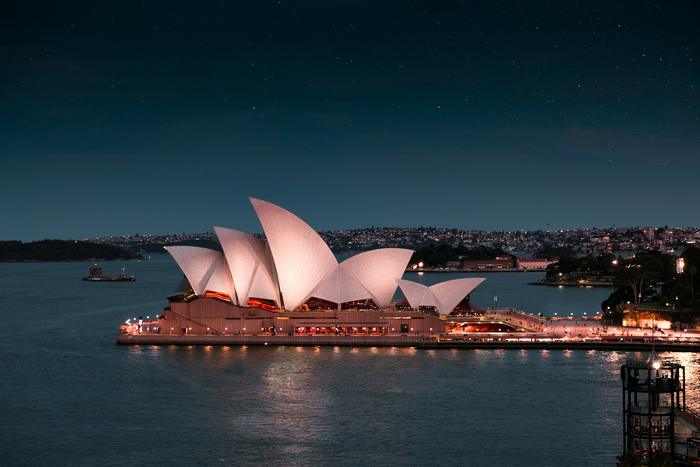
The East Coast is the default itinerary — and rightly so. Sydney opens with the Opera House, Bondi and the Blue Mountains; the Great Barrier Reef, reached from Cairns, Port Douglas or the Whitsundays, is the natural-wonder centrepiece (choose eco-certified, outer-reef operators); Melbourne brings the coffee culture and the Great Ocean Road to the Twelve Apostles.
The reef carries the sober subtext of repeated coral bleaching from marine heatwaves — it’s still spectacular, but it’s a changing wonder, best supported by responsible operators.
| Where | What | Note |
|---|---|---|
| Sydney | Opera House, Bondi, the Blue Mountains | The classic first stop |
| Great Barrier Reef | Cairns / Port Douglas & the Whitsundays | Reef charge ~A$8.50/day; pick eco-certified operators |
| Melbourne | Coffee and laneways; the Great Ocean Road | Gateway to the Twelve Apostles |
| Brisbane / Gold Coast | Subtropical city + surf beaches | Byron Bay just south in NSW |
The east coast carries most first trips. The reef and the cities are flights apart (Sydney–Cairns ~3h). The reef’s Environmental Management Charge is currently A$8.50 full-day (rising to A$9 on 1 Apr 2027), collected by your operator.
On the reef, pay the small Environmental Management Charge (about A$8.50 a day, via your operator) and favour outer-reef, eco-certified trips over the closest inshore sites — the coral is healthier further out, and the better operators run marine-biologist guides. Cairns and the Whitsundays are a flight from Sydney, so slot the reef as its own leg.
The Red Centre
Uluru, and the Outback’s scale
The desert heart — Uluru and Kata Tjuta — is a flight, not a side-trip from the coast.
Uluru — sacred to the Anangu traditional owners — is the Red Centre’s icon, and since 26 October 2019 the climb has been permanently banned at their request. The experience now is the base walk, the changing light at dawn and dusk, and Bruce Munro’s Field of Light installation; nearby Kata Tjuta (the Olgas) sits in the same national park. Fly into Yulara / Ayers Rock Airport, not Alice Springs (450 km away).
The Outback around it is genuinely remote and hot — a place that rewards respect for distance, water and heat rather than improvisation.
If you drive any Outback road, treat it seriously: carry extra water and fuel, tell someone your route, and stay with the vehicle if it breaks down. Unsealed roads close after rain, mobile coverage vanishes between towns, and dawn/dusk kangaroo strikes are the common crash — far more of a risk than anything with fangs.
Wildlife
The cuddly, and the genuinely dangerous
The scary reputation is mostly myth — but a few hazards are real, and narrow.
The famous wildlife is mostly harmless and wonderful — kangaroos at dawn and dusk, koalas in the eucalypts, the grinning quokkas of Rottnest Island off Perth. The genuinely dangerous animals are few and localised: marine stingers in the tropical north (November–May; swim in netted enclosures and a stinger suit) and saltwater crocodiles in northern waterways (follow the “Be Crocwise” rules and swim only where signed).
Snakes and spiders, for all their reputation, almost never kill thanks to antivenom and common sense. The real everyday hazards are the sun, the surf and the roads — swim between the flags, slather on the SPF.
| Hazard | Where / when | What to do |
|---|---|---|
| Marine stingers | Tropical north, Nov–May | Swim in stinger nets; wear a stinger suit |
| Saltwater crocodiles | Northern rivers, estuaries, coast | “Be Crocwise” — swim only at signed safe spots |
| Sharks / rip currents | All coasts | Swim between the red-and-yellow flags |
| The sun | Everywhere | High UV — cover up and use SPF; the real daily risk |
Box jellyfish and tiny Irukandji make the tropical north’s Nov–May a stinger season — nets stop box jellyfish but Irukandji can pass, so lifeguards run “stinger drags.” Snakes and spiders are wildly overstated; sun, surf and roads are the genuine hazards.
Two habits cover the real risks: swim between the red-and-yellow flags on patrolled beaches (and only in stinger nets up north in season), and treat every northern water edge as croc habitat unless a sign says otherwise. Do that and the “deadly Australia” reputation is a non-issue; ignore the hype about spiders in the bedroom.
When to go
Flipped seasons, and the north’s wet-dry
Southern-hemisphere seasons — and the tropical north runs on wet vs dry, not summer vs winter.
Flipped the seasons — summer is December–February
Seasons are flipped (southern hemisphere). The south is best October–April; the tropical north best in the dry, May–October. Marine stingers run Nov–May up north; bushfire season is the southern summer (check Total Fire Ban days).
Get the hemisphere right: summer is December to February, winter June to August. For the southern cities and Tasmania, the warm Oct–Apr half is the window, with the shoulder months most comfortable. The tropical north is the opposite — plan it by the dry season (May–October), when the reef, Kakadu and the Outback are at their best, and avoid the wet (November–April), which brings humidity, cyclones, flooded roads and marine stingers.
One southern-summer caveat: it’s bushfire season — check the state fire-service apps and Total Fire Ban days if you’re in the bush.
Getting around
Fly between, drive within
Domestic flights are the backbone; a hire car or campervan is for exploring one region.
Domestic flights are how Australians cross their own country — Qantas, Virgin and budget Jetstar — and they’re how you should too. A hire car or campervan comes into its own within a region: the Great Ocean Road, the Red Centre loop, a Tasmanian circuit. You drive on the left, and Outback self-drive needs the water-and-fuel discipline above.
In the cities, the smartcard systems (Opal, Myki and the rest) now accept contactless bank cards, so you rarely need a separate ticket.
| Journey | How | Time |
|---|---|---|
| Sydney ↔ Melbourne | Flight | ~1h20 |
| Sydney ↔ Cairns | Flight | ~3h |
| Sydney ↔ Perth | Flight | ~5h |
| Within a region | Hire car / campervan (drive LEFT) | distances still large |
Fly between regions on Qantas, Virgin Australia or Jetstar. City smartcards — Opal (Sydney), Myki (Melbourne), Go card (Brisbane) — now also take contactless bank cards. Drive on the left.
Book domestic flights early for the long legs (Sydney–Cairns, anything to Perth or the Red Centre) — they’re the trip’s backbone and the cheap fares go first. For a regional road leg, a campervan suits the Great Ocean Road or Tasmania; just don’t mistake it for a way to cross the continent.
Money & culture
Pricey, tip-free, and sun-smart
Expensive but transparent — no tipping, GST included — with a strong outdoor and Indigenous culture.
Australia is expensive — high wages push up dining, hotels and fuel — but it’s honest about it: the 10% GST is included in displayed prices and tipping isn’t expected, so the number on the menu is close to what you pay. Coffee culture is a genuine pleasure (the flat white is a local invention).
The culture is outdoor and casual — beach, barbecue, surf-lifesaving — and increasingly foregrounds its Aboriginal and Torres Strait Islander heritage, with “Welcome to Country” and “Acknowledgement of Country” common at events and respect expected at sacred sites. The one thing to take seriously everywhere is the sun.
Bank the two upsides against the cost — no tipping and tax-inclusive prices mean fewer nasty surprises than in North America — and don’t skimp on sun protection: Australia’s UV is among the world’s highest, so a hat, SPF and “slip-slop-slap” are daily essentials, not caution.
Compare Australia
If you like Australia, also consider

Not sure where to go
Take the 5-minute quiz
Answer a few honest questions and get matched to destinations that actually fit how you travel.
Start the quiz