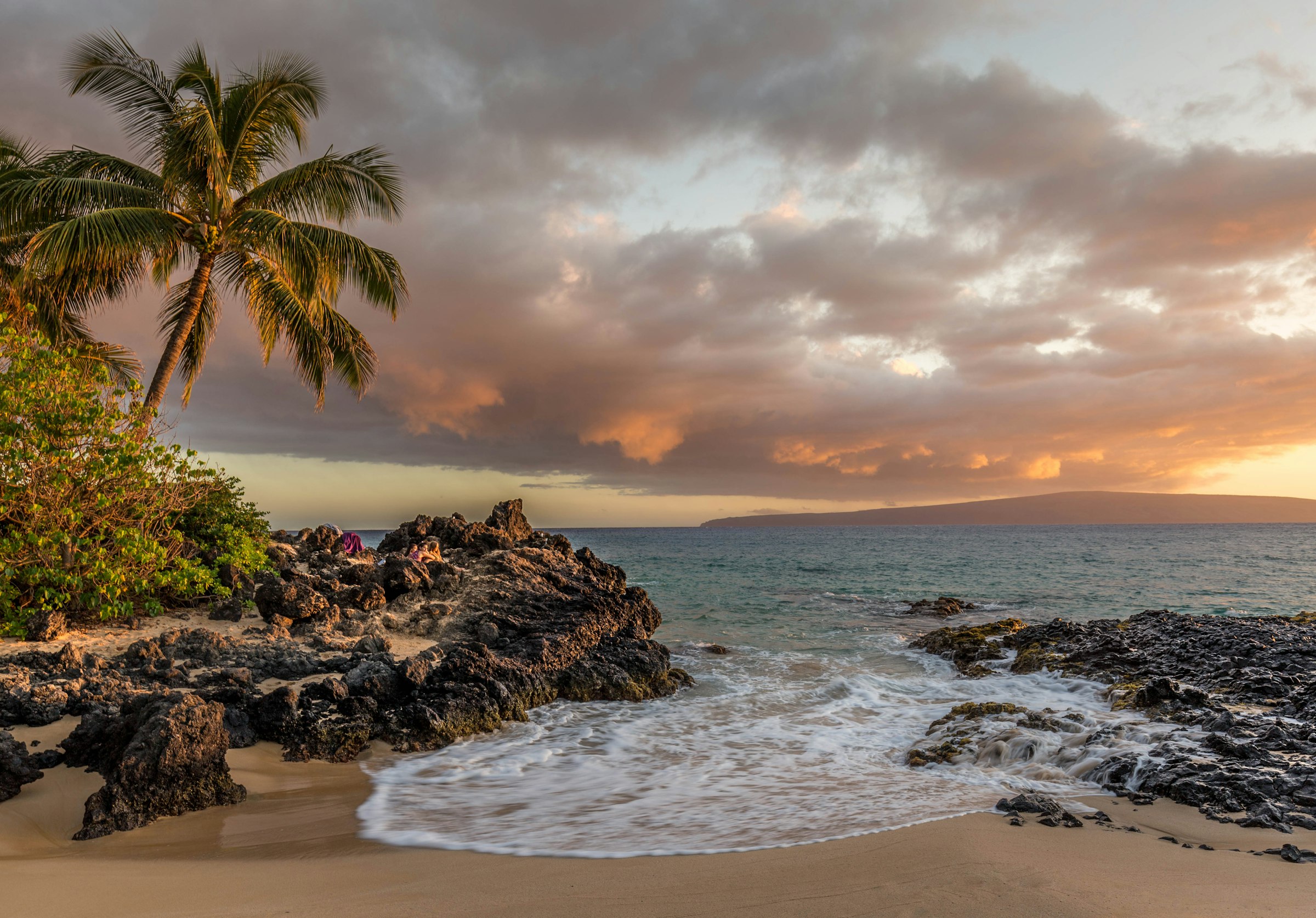
Hawaii
A handful of islands where the landscapes and the ocean genuinely earn the flight.
Hawaii is not one trip — it's a choice between islands you barely have time to make. You pick one or two, fly between them, and rent a car because nothing else moves you around. Kauaʻi is the green, dramatic one; Maui is the polished one; Oʻahu has the city and the surf; the Big Island has the volcanoes. Whatever you land on, most of your money goes to the flight, the room, and the food.
The texture of a Hawaii trip is island-hopping: you rarely do more than one or two islands in a week or two, because each deserves its own days and the inter-island flights, while short and frequent, eat time and money. On every island you rent a car — there's no rail and buses won't get you to the trailheads, the beaches, or the sunrise you flew here for. Budget honestly: the flights (long-haul to get here, then hops between islands), the lodging, and the food are where the spend goes, and none of it is cheap by any measure.
The honest part: this is expensive, and parts of it can feel over-touristed and resort-heavy — Waikīkī on Oʻahu and much of west Maui lean hard into the packaged, high-rise version of paradise. The flights are genuinely long from almost anywhere. But the trade-off holds: the Nā Pali cliffs, a Haleakalā sunrise above the clouds, lava meeting the sea, and water clear enough to make snorkeling feel unfair — the landscapes and the ocean deliver in a way that few places on Earth match.
Highlights
-
Nā Pali Coast, Kauaʻi
Fluted green cliffs plunging into the Pacific — hike the Kalalau, or see it by boat.
-
Road to Hāna & Haleakalā, Maui
A hairpin coast drive to waterfalls, then a pre-dawn climb for sunrise above the clouds.
-
Oʻahu: Waikīkī, North Shore & Pearl Harbor
City beach, winter big-wave surf, and the sobering USS Arizona memorial.
-
Hawaiʻi Volcanoes National Park, Big Island
Active craters, lava tubes, and glowing vents — the raw machinery of the islands.
-
Snorkeling Molokini
A sunken crescent crater off Maui with some of the clearest water in the chain.
Practical info
- Visa
- ESTA visa waiver for most Western passports (90 days). Apply before travel.
- Currency
- USD ($)
- Language
- English; Hawaiian (ʻōlelo Hawaiʻi) is also official.
- Safety
- Generally very safe; the real risks are the ocean and surf, and hiking.
- Getting around
- Rent a car — essential on every island. No rail; inter-island flights connect them.
- Tap water
- Tap water safe.
- Plug type
- Type A Type B 120V
- Money
- Cards accepted everywhere.
General guidance — visas, safety, and health change, so check your government's travel advisory and the official sources before you go.
Common questions
- When is the best time to visit Hawaii?
- April–May and September to early October — the best weather-to-crowds-to-price ratio. Mid-December to mid-January (holidays) and June–August (summer) are the busy, pricey peaks. Hawaii has two seasons, not four: drier summer (May–Oct) and wetter winter (Nov–Apr), and within each island the leeward south and west sides are sunny while the windward north and east are greener and wetter. Winter also brings the humpback whales and the huge, dangerous north-shore surf.
- Do you need a car in Hawaii, and how do you island-hop?
- A car is effectively essential on Maui, the Big Island and Kauaʻi, where the sights are spread out and transit is thin. Oʻahu is the exception — Waikīkī, TheBus and the new Skyline rail (its second segment reached the airport in October 2025) can cover a trip car-free. There is no general inter-island passenger ferry (the Superferry ended in 2009), so you island-hop by a 30–50-minute flight (Hawaiian, Southwest, Mokulele); only the Maui–Lānaʻi ferry still runs, now from Māʻalaea.
- Do Hawaii’s famous sights need a reservation?
- Several of the headline ones now do, booked before you arrive: Hanauma Bay, Diamond Head and the Haleakalā sunrise, plus Waiʻānapanapa (the black-sand beach on the Road to Hāna) and Kauaʻi’s Hāʻena State Park (gateway to the Nā Pali coast) all require a timed reservation and a non-resident fee, and even the free Pearl Harbor memorial is best reserved. Turning up without one won’t get you in. The full list is in the reservations section on this page.
- Is Hawaii expensive?
- Yes — it’s one of the priciest US destinations, with little genuine budget tier. Island isolation pushes food, fuel and lodging well above the mainland, and a rental car plus accommodation dominates the budget. Note the lodging tax is now around 18%: the state accommodations tax rose to 11% on 1 January 2026, the extra 0.75 point a first-in-the-nation "green fee" for climate protection, on top of a county tax and the general excise tax.
- What do you need to enter Hawaii?
- Hawaii is a US state, so Visa Waiver Program travellers need an approved ESTA before boarding, valid two years; the ESTA fee rose to about $40 in September 2025. Non-VWP nationals need a B-2 visitor visa instead. Domestic US travellers just fly in — no passport, but a REAL ID-compliant ID is now required for domestic flights.
- Which Hawaiian island should I choose?
- Oʻahu for a first trip, city life and the big-ticket sights (Pearl Harbor, Waikīkī, the North Shore); Maui for resorts, the Road to Hāna and winter whales; the Big Island for active volcanoes and raw, varied landscapes; Kauaʻi for the lushest scenery and the slowest pace. Lānaʻi and Molokaʻi are small and quiet, for a specific kind of traveller. Most people do one or two islands, not all of them — see Bali vs Hawaii, Fiji vs Hawaii and Costa Rica vs Hawaii for how it compares to other tropical options.
The islands
You don’t "do Hawaii" in one trip
It’s six distinct islands, each a different holiday — the first decision is which one (or two).
6 islands and you island-hop by plane, not ferry
The single most useful thing to grasp: you don’t "do Hawaii" in one trip, and trying to string several islands together on a short visit is the classic mistake. Oʻahu is the busy heart — Honolulu, Waikīkī, Pearl Harbor, and the only real public transport. Maui is the resort island of the Road to Hāna and the Haleakalā sunrise. The Big Island is raw and volcanic; Kauaʻi the lush, quiet Garden Isle; and Lānaʻi and Molokaʻi the small, slow pair for a particular kind of traveller.
On Maui, a note of care. The August 2023 Lahaina wildfire was the deadliest in modern US history — 102 people died and the historic town was destroyed, though the famous banyan tree survived. West Maui is open and its businesses want visitors back: Kāʻanapali and Kapalua resorts are running and Front Street reopened in 2026. But the rebuild is ongoing and the county’s framing is "residents first" — come, spend locally, and tread gently.
Which island
Six islands, six different trips
Match the island to the holiday you actually want — they are not interchangeable.
If you have a week, pick one island; with ten days or more, pair two with a short flight between. The common first-trip combination is Oʻahu plus Maui; the nature-led alternative is the Big Island plus Kauaʻi. Resist the urge to tick off four — the inter-island hops and rental-car resets eat the days you came for.
| Island | Character | Come for |
|---|---|---|
| Oʻahu | The busy one — Honolulu & Waikīkī | Pearl Harbor, city life, North Shore surf, the rail |
| Maui | The Valley Isle — resorts | The Road to Hāna, Haleakalā sunrise, winter whales |
| Hawaiʻi (Big Island) | The largest and youngest | Active volcanoes, Mauna Kea stargazing, black sand |
| Kauaʻi | The Garden Isle — lush | The Nā Pali coast, Waimea Canyon, the quietest classic |
| Lānaʻi | Tiny and upscale | Seclusion and luxury, reached by ferry from Maui |
| Molokaʻi | The least developed | Old Hawaiʻi, no resorts — a trip for a specific traveller |
Most first trips pick one or two islands. Oʻahu and Maui are the headline pair; the Big Island and Kauaʻi reward a slower, nature-led trip. Island-hopping is a short flight — there is no general inter-island ferry.
Reservations
Half the famous sights now need a booking before you go
Hawaii has quietly put its most-visited spots behind timed reservations and fees — not queues you can beat by arriving early.
The binding constraint is the booking window, not what time you show up. Each system is run by a different agency — Honolulu for Hanauma Bay, Hawaiʻi State Parks for Diamond Head, Waiʻānapanapa and Hāʻena, the National Park Service for Haleakalā and Pearl Harbor — so each has its own portal, release time and fee. Sort them before you travel.
| Sight | Island | How to book | Non-resident cost |
|---|---|---|---|
| Hanauma Bay | Oʻahu | 48 h ahead at 7am HST; closed Mon–Tue | $25pp (under-13 free) + $3 parking |
| Diamond Head (Lēʻahi) | Oʻahu | Online in advance (non-residents) | $5pp + $10 parking |
| Pearl Harbor (USS Arizona) | Oʻahu | recreation.gov — free ticket, $1 booking fee | Free + $7 parking |
| Haleakalā sunrise | Maui | recreation.gov; entry 3–7am only | $1 booking + $30 park fee (3-day) |
| Waiʻānapanapa (black sand) | Maui | Timed slot; on the Road to Hāna | $5pp + $10 parking |
| Hāʻena / Nā Pali | Kauaʻi | Shuttle + entry via gohaena.com | $5pp (shuttle extra) |
Read off the official agency portals in October 2026. The Kalalau Trail beyond Hanakāpīʻai needs a separate overnight camping permit from State Parks, released 90 days ahead and quick to sell out. Caps and fees change — re-check before you travel.
When to go
Two seasons, the swell and the whales
The weather is reliable most of the year — what reshapes a trip is the surf, the whales and the storm window.
Crimson bars are the catches. Hawaii really has two seasons — drier summer, wetter winter — and winter brings both the humpbacks and the huge, dangerous north-shore surf. The shoulder months (April–May and September–October) give the best weather-to-crowds-to-price ratio. Within each island the leeward south and west are dry; the windward north and east are green and wet.
Time it for April–May or September to early October for the best mix of weather, crowds and price. The trade winds from the north-east are the islands’ natural air-conditioning; when they fade, humid "Kona" conditions set in and vog — volcanic smog from Kīlauea — can settle, worst on the Big Island. The Central Pacific hurricane season runs June to November (peak Aug–Sep); direct hits are rare, but passing systems bring swell and rain.
Two winter draws reshape a trip. Humpback whales are in Hawaiian waters roughly December to May, peaking January–March, best off Maui. And the big winter swells (Nov–Feb) hit the north shores — spectacular to watch, lethal to swim — while summer swells hit the south. Match the beach to the season, every time.
- it’s winter and the north shore is roaringSkipswimming the big north-shore breaks (Pipeline is for experts)Gothe calm leeward south and west beaches — watch the surf, don’t swim it
- the windward side is grey and wetSkipwriting the day offGodrive to the leeward (south/west) side — on the same island it’s often dry and sunny
- the summer south shore has swellSkipassuming every beach is calmGothe north shore, flat and swimmable in summer — the seasons flip by coast
Getting around
Fly between, drive within
A flying archipelago with one car-free exception — Oʻahu.
Hawaii is a flying archipelago: with no general inter-island ferry (the Superferry ended in 2009), you hop between islands on a 30–50-minute flight — Hawaiian, Southwest and Mokulele. On the ground, a rental car is effectively essential on Maui, the Big Island and Kauaʻi. Oʻahu is the exception: Waikīkī, TheBus and the new Skyline rail — whose second segment reached the airport in October 2025 — can cover a whole trip car-free.
Two notes for island-hoppers. Hawaiian Airlines has merged with Alaska (the deal closed in 2024, a single operating certificate followed in 2025), though both brands and the inter-island schedule continue. And the only passenger ferry left is Maui to Lānaʻi, now sailing from Māʻalaea rather than Lahaina.
There is no general passenger ferry between the islands — you fly (30–50 minutes on Hawaiian, Southwest or Mokulele), so treat each island-hop as a mini-flight with its own check-in and bag drop. On Maui, the Big Island and Kauaʻi a hire car is essential and the sights are far apart; only Oʻahu really works car-free, now that the Skyline rail reaches Honolulu’s airport and TheBus covers the rest.
Ocean & nature
The ocean, the wildlife, and treading lightly
Hawaii’s dangers and its rules are mostly about nature — respect both and it’s easy.
13,796 ft Mauna Kea — and sacred ground
The ocean is the real risk. Rip currents, shore break and the huge winter north-shore surf cause most visitor injuries and deaths — swim at lifeguarded beaches, read the warning flags, and never turn your back on the water. Reef-safe sunscreen is the law: Hawaii banned the sale of oxybenzone and octinoxate sunscreens in 2021 (the first US state to do so) and Maui County now requires mineral-only, so bring zinc or titanium. The wildlife is protected too: keep well back from honu (green sea turtles) and at least 50 feet from Hawaiian monk seals resting on the sand, and never touch or feed them.
The state now asks visitors to practise mālama — to care for the place: stay on trails, don’t take lava rocks or sand (it’s prohibited in the national parks), and treat heiau and other sacred sites with respect. It isn’t box-ticking; the islands are small, and the strain of tourism is real.
The food
Plate lunch, poke and shave ice
Hawaii’s food is a melting pot — and the best of it is cheap, local and off the resort menu.
Local food is its own cuisine, and the everyday staple is the plate lunch — two scoops of rice, macaroni salad and a protein. The island obsession is Spam, eaten here more than in any other state, most famously as musubi, and poke, the seasoned raw-fish bowl, was born here. It’s a food-truck and plate-lunch culture far more than a fine-dining one, which is also where the value is.
Save room for shave ice (fluffy, syrup-soaked, nothing like a snow cone), a hot malasada, and a cup of Big Island Kona coffee. The feast to seek out is a lūʻau, where the centrepiece is kālua pig, slow-cooked in an underground imu.
| Dish | What it is | Note |
|---|---|---|
| Plate lunch | Two scoops rice, mac salad and a protein | The island staple — cheap and filling |
| Poke | Cubed raw fish, seasoned | Born here, long before it went global |
| Spam musubi | Grilled Spam on rice, nori-wrapped | Hawaiʻi eats more Spam than any state |
| Kālua pig | Pork slow-roasted in an underground imu | The centrepiece of a lūʻau |
| Shave ice | Fluffy ice soaked in syrups | Not a snow cone — don’t say so to a local |
| Malasada | A Portuguese fried doughnut, no hole | Best fresh and hot |
Local food is a multi-ethnic cuisine — Native Hawaiian, Japanese, Filipino, Portuguese and Chinese — and most of it is cheap plate-lunch and food-truck fare. Kona coffee (grown on the Big Island) and fresh ʻahi tuna round it out.
Good to know
Cost, the green fee, and a welcome
The practical money and paperwork — including a new tax you’ll see on the bill.
Hawaii is among the most expensive US states — nearly everything is shipped in — with little genuine budget tier, and a rental car plus lodging dominates most budgets. Expect a lodging tax of around 18%: the state accommodations tax rose to 11% on 1 January 2026, the extra 0.75 point a first-in-the-nation "green fee" funding climate and environmental protection, plus a 3% county tax and the roughly 4.7% general excise tax passed on to you. Tipping is the US norm, 18–20%, and it’s otherwise the mainland template — Type A/B plugs at 120V, driving on the right, the US dollar, safe tap water.
Entry is simply US entry: visa-waiver visitors need an approved ESTA (about $40 since September 2025) before boarding, others a US visa; domestic travellers just fly in with a REAL ID. It’s a genuinely welcoming place — Hawaii has had marriage equality since 2013 — and the two words that open every door are "aloha" and "mahalo." Emergency help is 911.
Kīlauea is active. The Big Island’s volcano has been in an on-and-off summit eruption since December 2024, with lava fountaining in episodes through 2026 — spectacular when it’s on, but confined to closed areas of Hawaiʻi Volcanoes National Park. Check the USGS/HVO status before planning a volcano day, and watch for "vog," the volcanic haze that can drift over the island’s south and west.
Compare Hawaii
If you like Hawaii, also consider

Greece
Ruins in the morning, a swim by noon, taverna until dark.

Spain
Food, beaches, and three or four cities that each justify the trip.
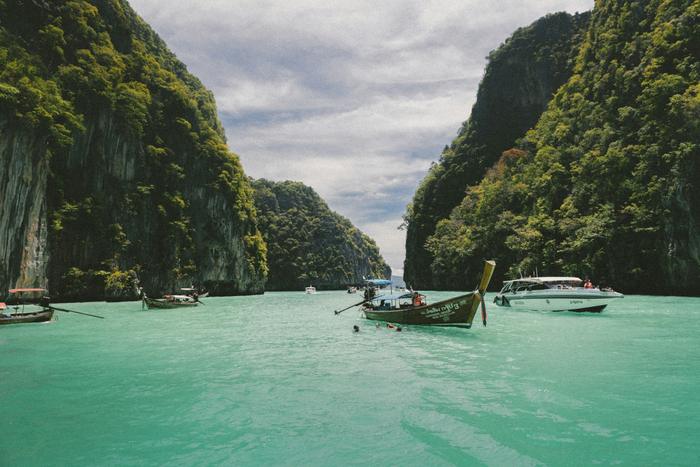
Thailand
The complete package for warm-climate travel.
Not sure where to go
Take the 5-minute quiz
Answer a few honest questions and get matched to destinations that actually fit how you travel.
Start the quiz