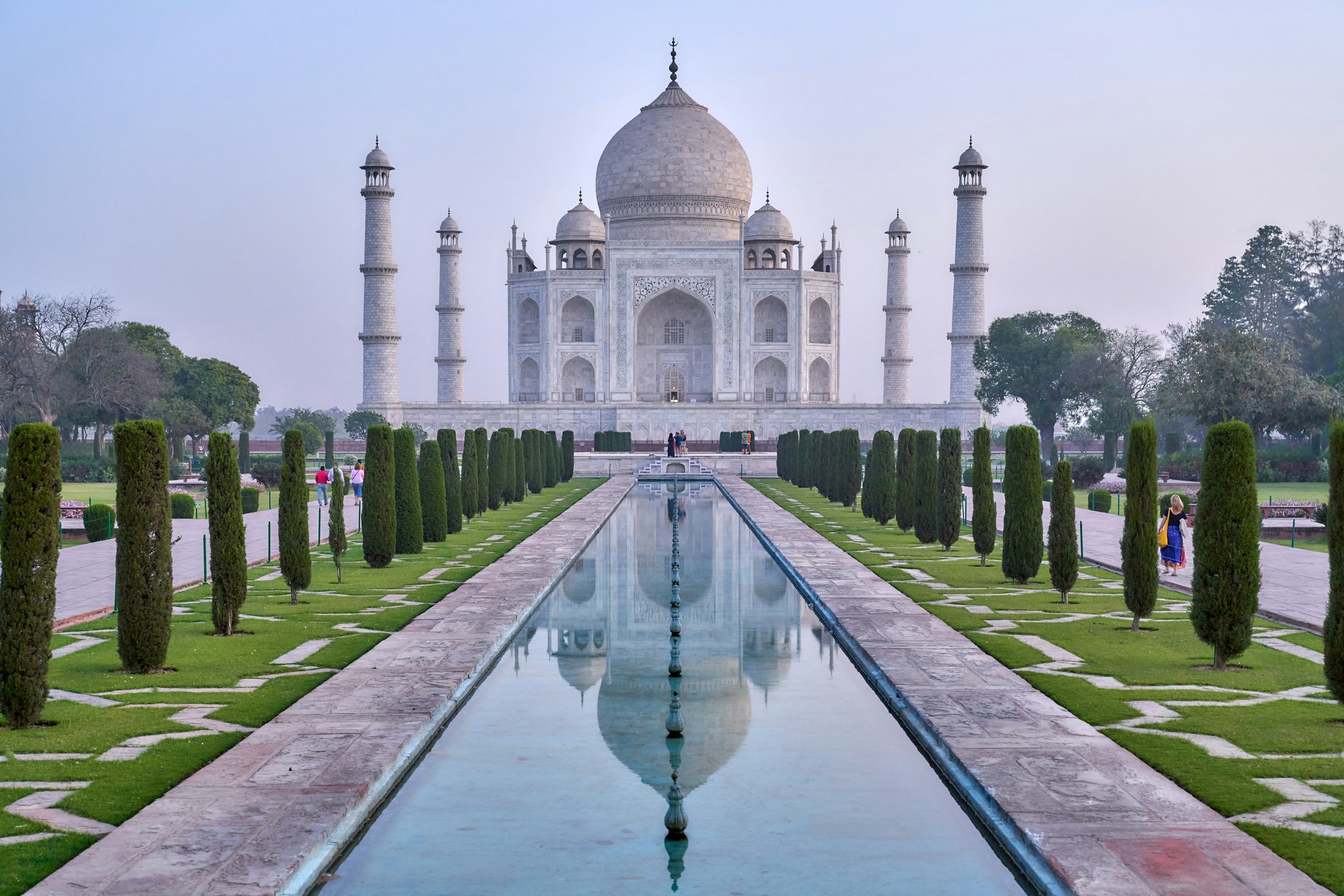
India
Overwhelming, beautiful, and utterly unlike anywhere else.
India is not one trip — it's a different country in every region. Rajasthan for forts and color, Kerala for backwaters and Ayurveda, Goa for beaches, the Himalayas for trekking, the south for ancient temples. It rewards patience and rewards it tenfold.
Pick one region and go deep. Rajasthan plus the Taj Mahal is the classic first trip: Delhi, Agra, Jaipur, then Jodhpur and Udaipur, two weeks by car-and-driver or overnight train. Days swing between extremes — a dawn fort, a chaotic bazaar, a thali for a couple of dollars that outclasses Indian restaurants back home, then the stillness of a haveli courtyard. Hiring a car with a driver costs less than you'd guess and removes the hardest part of the logistics.
The honest part: the touts, the traffic, Delhi's air, and the near-certainty of at least one bad stomach day — India tests you, and travelers who need things to run on time tend to leave angry. Distances are huge; trying to do the north and south in one trip is a mistake. This is not a relaxing holiday and shouldn't be sold as one. But nowhere else delivers this much life per day, and it recalibrates how interesting every other country seems.
Highlights
-
Rajasthan (Jaipur, Udaipur, Jodhpur)
The classic India trip — palaces, forts, color.
-
Kerala
Backwaters, beaches, Ayurveda, very different vibe to the north.
-
Goa
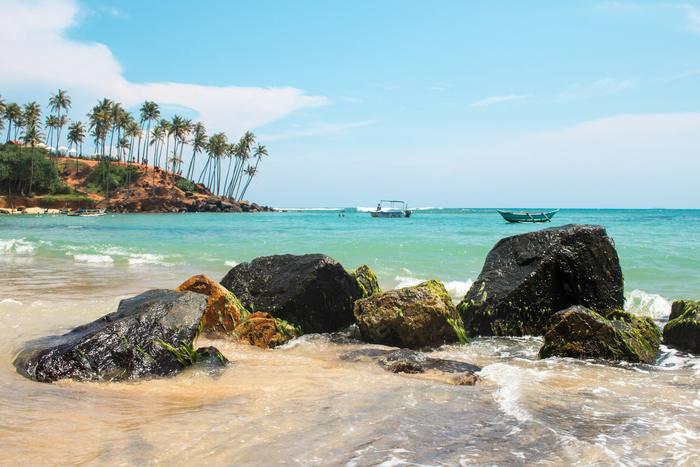
Beaches, Portuguese colonial, hippie holdouts.
-
Ladakh & the North
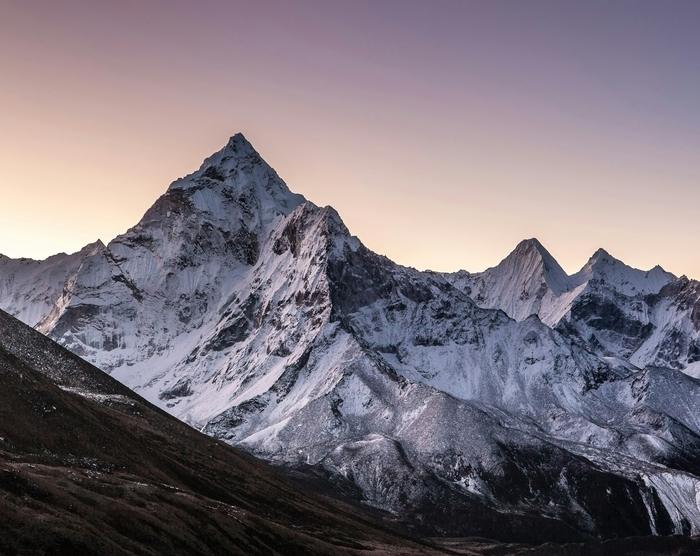
High-altitude desert, Buddhist monasteries, raw landscape.
-
Varanasi
The most intense city on earth — sacred and confronting.
Practical info
- Visa
- E-visa required for most nationalities. Apply 4 days+ before travel.
- Currency
- INR (Rupee). Roughly 84 INR ≈ 1 USD.
- Language
- Hindi, English, plus dozens of regional languages. English widespread.
- Safety
- Generally safe but solo female travel needs care. Watch food/water hygiene.
- Getting around
- Trains are an experience. Domestic flights cheap. Tuk-tuks and Uber in cities.
- Tap water
- Tap water not safe. Bottled or filtered only.
- Plug type
- Type C Type D Type M 230V
- Money
- Cash for street and small shops; UPI/cards in cities.
General guidance — visas, safety, and health change, so check your government's travel advisory and the official sources before you go.
Common questions
- How do you get an Indian visa, and where?
- Most visitors use the e-Visa, and the single most important thing is to apply only on the official government site, indianvisaonline.gov.in — the search results are crowded with lookalike agencies that charge several times the real fee. There is no visa-on-arrival for Western passports, so you must have it before you fly. It comes in three tiers — a 30-day double-entry (about US$25, dropping to ~US$10 in April–June), a 1-year and a 5-year multiple-entry (both allow up to 180 days continuous) — with fees that vary by nationality, so check the current amount on the portal. Apply at least four days ahead; your passport needs six months’ validity and two blank pages.
- When is the best time to visit India?
- The main season is October to March — dry and mild across most of the country, with December–February the best weather and the peak. Avoid the pre-monsoon furnace of April–May (the plains routinely top 40°C) and the southwest monsoon, June–September (though that’s the only window for Ladakh, and the season for Kerala’s Ayurveda retreats). One real timing caveat: Delhi’s air turns hazardous every October–January, worst just after Diwali (8 November in 2026), when readings hit “severe” — if you have a respiratory or heart condition, avoid Delhi then or carry an N95.
- Is the Taj Mahal open every day?
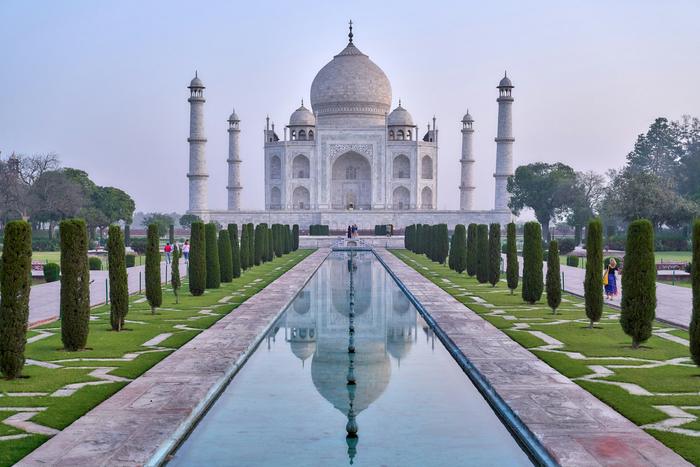
- No — the Taj Mahal is closed every Friday (open only to locals for mosque prayers), so build your Agra day around that. Foreigners pay ₹1,100, plus ₹200 to enter the mausoleum itself (under-15s free), and a timed online ticket via the official ASI platform shaves ₹50 off and gives you a faster lane. There’s also a separate night viewing on the five nights around each full moon, booked a day ahead at the ASI Agra office.
- Is India safe, especially for women travellers?
- India is rewarding but demands more street-sense than most destinations, and the concern that needs stating plainly is safety for women: several Western governments flag an elevated risk of harassment and sexual violence, and advise women to take particular care about travelling alone. Practical measures help — dress modestly, avoid isolated areas and solo night travel, use the women-only train carriages and the reserved Delhi Metro car, pre-book airport transfers, and use app cabs (Ola/Uber) whose trips can be shared and tracked. Beyond that, the common scams are the “your hotel is closed” taxi diversion, fake “government tourist offices” and the gem-resale con — book direct and walk away from all three.
- Do you need to drive, or how do you get around?
- Don’t self-drive — the traffic and liability make it a genuinely bad idea for visitors. The railway is the great way to travel, booked on IRCTC, and foreign passport holders get a reserved block of berths (the Foreign Tourist Quota) bookable up to a year ahead even when the general list shows a waitlist. For long distances, domestic flights (IndiGo, Air India, Akasa) save days; around the Golden Triangle, hire a car with a driver — cheap and completely standard. See the getting-around section.
- Should I choose India or Sri Lanka?
- They suit different appetites: India is vast, intense and endlessly varied — a trip you plan around one or two regions — while Sri Lanka is compact enough to loop in two weeks and gentler as a first taste of South Asia. See our full India vs Sri Lanka comparison for the measured differences.
Entry & money
The e-Visa, the one real site, and a closed rupee
Getting the visa is simple; getting it on the right website — and planning cash — is the thing.
Most travellers enter on the e-Visa, applied for online before flying — and the non-negotiable rule is to use only indianvisaonline.gov.in. Dozens of commission sites mimic it and charge large markups for nothing you need; no agent is required. There is no visa-on-arrival for US, UK, EU, Canadian or Australian passports, so sort it in advance (processing is usually a couple of days — apply at least four before travel). You pick a 30-day, 1-year or 5-year tier; fees vary by nationality, and the 30-day is cheaper in the April–June window.
On money, the rupee is a partially closed currency — you may legally carry only ₹25,000 in or out, and it’s hard to get abroad — so plan to withdraw on arrival rather than buy it at home. City ATMs take foreign cards (with per-withdrawal caps), and cards work in mid- and upscale venues, but cash is essential for auto-rickshaws, small shops, temples and tips. India’s UPI phone-payment system is everywhere for locals; the tourist workaround (a “UPI One World” prepaid wallet) is still mostly an airport pilot, so don’t rely on it.
Tipping is customary but modest: round up for auto-rickshaws, roughly 5–10% in restaurants if no service charge is already added, and small notes (baksheesh) for porters (₹50–100 a bag) and hotel housekeeping. A hired driver on a multi-day trip expects a gratuity at the end.
Getting around
Trains, a berth reserved for you, and a driver not a wheel
The railway is the great way to travel — and there’s a reserved block of berths just for foreign passports.
100 min Delhi–Agra on the Gatimaan Express
Book trains through the official IRCTC site or app, setting your account to a foreign nationality. For overnight journeys aim for 2AC or 3AC class; for day routes like Delhi–Agra, the AC chair car on a Shatabdi or Vande Bharat. Popular trains sell out, so book ahead — and if the general list is full, check the Foreign Tourist Quota and the same-day Tatkal release (AC from 10:00, non-AC from 11:00, the day before). For the long hauls, domestic flights (IndiGo carries the most, with Air India and Akasa) simply save days.
Do not self-drive: the traffic, norms and liability make it a bad idea for visitors — hire a car with a driver, which is cheap and standard. In cities, the metros (Delhi’s is excellent) are clean and cheap; for everything else use app cabs (Ola/Uber) or prepaid taxi/auto booths over unmetered street rides, and agree the fare before you get in.
| Golden Triangle leg | By road | By fast train |
|---|---|---|
| Delhi – Agra | ~230 km, ~3.5h | Gatimaan ~100 min |
| Agra – Jaipur | ~240 km, ~4–5h | — (car or bus) |
| Jaipur – Delhi | ~270 km, ~5–6h | Vande Bharat ~3.5h |
The classic first-timer loop. Most people cover it with a car and driver over 4–6 days; the Delhi–Agra leg is quickest by the Gatimaan or a Vande Bharat.
From the airports, use the official prepaid taxi booth (fixed fare, printed receipt) or an app cab rather than a tout at the arrivals rail — the “your hotel is closed, let me take you to a better one” diversion is a classic Delhi scam, and it starts at the taxi.
Sights & tickets
Two-tier pricing, 45 World Heritage sites
Foreigners pay many times the local rate — and that part is official, not a scam.
Almost every major monument charges foreigners far more than locals — often ten times or more. This is standard and official, not a scam; carry your passport, and buy online where you can for a small discount and a faster lane. The classic first circuit is the Golden Triangle — Delhi (the Red Fort, Qutub Minar, Humayun’s Tomb), Agra (the Taj, closed Fridays, and Agra Fort) and Jaipur (the Amber Fort, Hawa Mahal and City Palace of the UNESCO-listed walled city).
India has 45 UNESCO World Heritage sites as of mid-2026 — sixth most of any country — so the monument list runs deep beyond the Triangle: the Ganges ghats of Varanasi at dawn, the rock-cut Ajanta and Ellora caves in Maharashtra, Khajuraho, Hampi, and Konark among them. The elephant rides at Jaipur’s Amber Fort are ethically contentious — take a jeep up instead.
A word on the Taj: it’s closed every Friday, and the foreign ticket (₹1,100, plus ₹200 to step inside the mausoleum) is timed — book online via the ASI platform for the ₹50 discount and the faster lane, and come for sunrise, when the marble glows and the crowds are thinnest. At Varanasi’s cremation ghats, show real respect and take no photographs.
Where to go
One country, a dozen different trips
India is too big for one visit — pick a region or two and do them properly.
The Golden Triangle is the standard first trip, and Rajasthan is its natural extension — the lake palaces of Udaipur, the blue city and Mehrangarh Fort of Jodhpur, the Thar-desert fort and camel safaris of Jaisalmer. For something utterly different, Varanasi on the Ganges is India’s spiritual heart, and the deep south offers the gentle counterpoint: Kerala’s backwater houseboats, Fort Kochi and Munnar tea hills (“God’s Own Country”), and Goa’s beaches and Portuguese churches.
Up north, the land climbs into the Himalaya: Rishikesh and Haridwar for yoga and the Ganges, the hill stations of Himachal, and high-altitude Ladakh (its roads open only May–September). Amritsar holds the golden-domed Harmandir Sahib, Sikhism’s holiest shrine, and the theatrical Wagah border ceremony; Mumbai brings the Gateway of India, colonial grandeur and Bollywood. The table pairs each region with its season.
| Region | What it’s for | Best window |
|---|---|---|
| Rajasthan | Forts and palaces — Udaipur’s lakes, Jodhpur’s blue city, Jaisalmer’s desert | Oct – Mar |
| Varanasi | The Ganges ghats at dawn, India’s spiritual heart | Oct – Mar |
| Kerala | Backwater houseboats, Fort Kochi, Munnar tea hills | Oct – Mar |
| Goa | Beaches — party north, quiet south — and Portuguese churches | Nov – Feb |
| Himalaya & Ladakh | Rishikesh yoga, hill stations, high-altitude Ladakh | May – Sep |
| Mumbai & the caves | Gateway of India, Bollywood; Ajanta & Ellora | Oct – Mar |
When to go
October–March down low, summer up high
The plains and the mountains run on opposite calendars — the trick is to follow the comfortable one.
The cool, dry October–March window is the main season (shown here split across the calendar year); December–January brings fog to Delhi and Agra. The Himalaya invert it — Ladakh and the high passes are a summer-only destination.
For most of the country — the Golden Triangle, Rajasthan, Varanasi, the south — aim for October to March: dry and mild, with December–February the finest weather and the busiest (book months ahead). Skip the pre-monsoon furnace of April–May, when the plains top 40°C, and the southwest monsoon of June–September for classic sightseeing.
The mountains flip the logic entirely. April to June is exactly when the hill stations and the Himalaya come into their own, and the monsoon months are the only window for Ladakh, whose roads are snowed shut the rest of the year. So “bad season” is always a question of where — the swaps below are how to keep finding good weather year-round.
- April–June heat on the plainsSkipRajasthan and the Golden Triangle at 40°C+Gothe hill stations — Shimla, Manali, Darjeeling — or Ladakh
- The June–September monsoonSkipthe soaked west coast and the high Himalaya (landslides)Gorain-shadow Ladakh and Spiti, or Kerala’s green-season retreats
- Delhi’s Oct–Jan smogSkipthe capital when the AQI is “severe”Goheading straight to Rajasthan, the south or the coast
Festivals
Time it to a festival — or around a crowd
India’s festivals are extraordinary to witness — but the big ones also mean packed trains and booked-out hotels.
Catching a festival can be the making of a trip — Diwali’s lamps and fireworks (8 November in 2026), Holi’s riot of colour (22 March in 2027, and most intense across the north), the surreal Pushkar Camel Fair in the Rajasthan desert. The flip side is logistics: these are enormous, and the Ardh Kumbh Mela at Haridwar (January–April 2027) draws millions to the Ganges on its bathing dates, when transport and lodging for a wide region book out.
So decide deliberately: aim for a festival and book well ahead, or steer a few days clear of the peak dates. Either way, keep in mind that Diwali also marks the start of the north’s worst air — the two happen together.
| Festival | When (2026–27) | Where / note |
|---|---|---|
| Diwali | Sun 8 Nov 2026 | Nationwide; Delhi’s smog is worst just after |
| Pushkar Camel Fair | ~17–24 Nov 2026 | Rajasthan; lunar date, reconfirm |
| Holi | Mon 22 Mar 2027 | Nationwide; biggest in the north |
| Ardh Kumbh Mela | Jan – Apr 2027 | Haridwar; vast crowds on the bathing dates |
Hindu festival dates are lunar and shift every year — reconfirm for your travel year. Diwali and the Kumbh bathing days in particular fill trains and hotels weeks ahead, and the Delhi area’s air is at its worst in the days after Diwali.
Safety
Level 2 overall, with a few hard “do not travel” lines
India is rewarding and largely safe for tourists — the real warnings are reserved for specific borders and regions.
Level 2 US “exercise increased caution”
Day to day, the issues are hassle and petty crime, not violence: touts and faux “tourist offices”, pickpocketing in crowds, auto-rickshaw overcharging, and the gem/carpet and “hotel closed” cons. The concern that needs stating plainly is safety for women — several governments flag an elevated risk of harassment and assault — so solo female travellers take more care here than in most places: modest dress, no solo night travel, the women-only train carriages and reserved Delhi Metro car, and pre-booked or app-tracked transport. Many women travel India happily; it simply asks for more street-sense.
LGBTQ travellers can note that same-sex relations were decriminalised in 2018 (the Supreme Court read down Section 377), though there is no same-sex marriage and society remains conservative — discretion is sensible. None of the hard advisory zones above sit on the normal tourist map, but re-check the current wording before you travel, as the US and UK advisories don’t align exactly.
A handful of states are “dry” (total alcohol prohibition in Bihar, Gujarat, Nagaland, Mizoram and Lakshadweep — Gujarat issues tourist permits), so don’t assume a drink is available everywhere. And the J&K / Pakistan-border / Manipur / Maoist “do not travel” zones are the few places to genuinely keep off the itinerary.
Health & good to know
Water, stomachs, manners and the numbers to save
A little discipline on food and water, and a few manners, prevents most trouble.
See a travel clinic 4–6 weeks ahead: Hepatitis A and typhoid are the headline vaccines, with others by itinerary, and malaria and dengue are present widely (dengue bites by day) — discuss prophylaxis and pack repellent. No yellow-fever certificate is needed unless you’re arriving from an endemic country. Never drink the tap water — sealed bottled or boiled/filtered only, no ice from unknown sources, and skip raw salads and pre-cut fruit. Travellers’ diarrhoea (“Delhi belly”) is near-universal, so carry oral rehydration salts and loperamide.
On manners: remove your shoes at temples and homes, dress modestly and cover shoulders and knees at religious sites, use the right hand to eat and give (the left is considered unclean), leave leather items outside Jain temples, and keep public affection low-key. The cow is sacred to Hindus, so beef is off most menus. Ask before photographing people. A local SIM (Jio or Airtel) needs your passport and visa and takes about a day to activate; an eSIM works too. Hindi and English are the link languages across 22 official tongues.
Save the emergency numbers: 112 is the unified line that routes everything, with 100 for police, 101 for fire and 108 for an ambulance. The 112 India app can also share your location and a panic alert — worth installing on arrival.
Compare India
If you like India, also consider
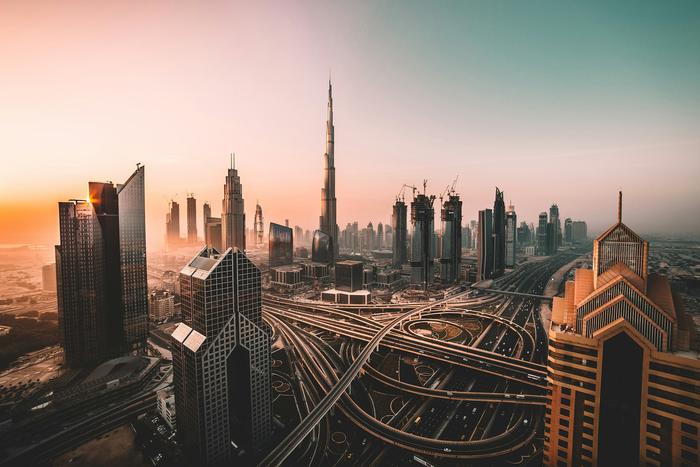
United Arab Emirates
Dubai and Abu Dhabi: superlatives, desert, and a stopover worth a few days of its own.

France
Paris is only the opening act — wine country, the Alps, and two coastlines.

Italy
The benchmark for food, history, and beauty.
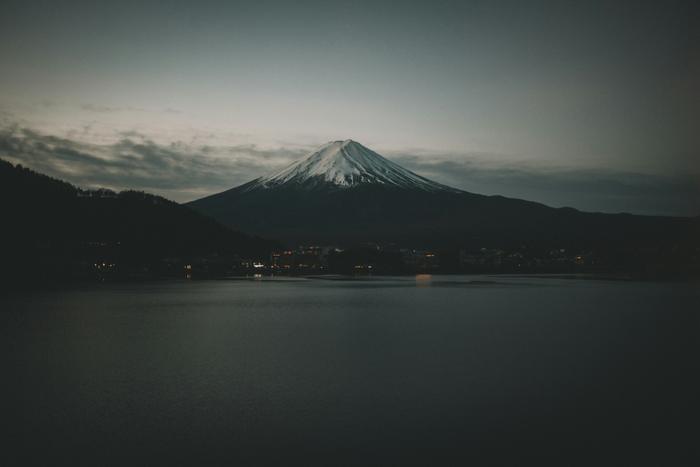
Japan
Extraordinary food, culture, and cities. Nothing quite prepares you for it.
Not sure where to go
Take the 5-minute quiz
Answer a few honest questions and get matched to destinations that actually fit how you travel.
Start the quiz