Argentina
Buenos Aires has the best steakhouses and nightlife in South America.
Argentina works as either a city break or a continental odyssey. Buenos Aires has the energy and food of a top-tier capital at South American prices. Add Mendoza for Malbec and Andes views, Patagonia for mountain drama, Iguazu for waterfalls, the northwest for high-altitude desert.
Buenos Aires sets the rhythm: coffee and medialunas late morning, a long parrilla lunch, dinner at ten, dancing after one. Base in Palermo or Recoleta and walk most of it. From there the country opens up by plane — two hours to Mendoza's vineyards, three to El Calafate and the Perito Moreno glacier. Steak, wine, and city pleasures cost a fraction of what they would in Europe; the flights between regions are where the budget actually goes.
The economy is the catch. Inflation makes prices a moving target, and you'll spend real effort on exchange rates and cash logistics. Distances are brutal — Buenos Aires to southern Patagonia is roughly Madrid to Moscow, so a two-week trip means cutting regions you wanted. English is thin outside tourist zones, and phone-snatching in BA is real. None of it matters much once you're at a sidewalk parrilla at midnight; few countries deliver this much for the money.
Highlights
-
Buenos Aires
Stay in Palermo. Long lunches, late nights, parrillas.
-
Mendoza
Malbec country with Andes-foothill backdrop.
-
Iguazu Falls
Stand close enough to feel them. Both sides worth doing.
-
Bariloche & the Lake District
Patagonia-lite — green mountains, lakes, chocolate.
Practical info
- Visa
- Visa-free for most Western passports (90 days).
- Currency
- ARS (Peso). Bring USD cash for "blue rate" exchange.
- Language
- Spanish. Limited English outside Buenos Aires tourism.
- Safety
- Generally safe. Pickpocketing in Buenos Aires.
- Getting around
- Domestic flights for distance; long-distance buses are good.
- Tap water
- Tap water safe in Buenos Aires.
- Plug type
- Type C Type I 220V
- Money
- Bring USD cash; the official-vs-blue rate gap matters a lot.
General guidance — visas, safety, and health change, so check your government's travel advisory and the official sources before you go.
Common questions
- When is the best time to visit Argentina?
- It depends where — Argentina spans the Southern Hemisphere, so seasons are reversed. Overall, spring (September–November) and autumn (March–May) are the best all-rounders for Buenos Aires, Mendoza and the northwest: mild and less crowded. But Patagonia only really works in its summer (November–March), when trails are open and lodges running — winter largely shuts it down. Buenos Aires summers (December–February) are hot and humid and half the city decamps; Iguazú is hot year-round; Mendoza’s wine harvest runs February–April; and Bariloche’s ski season is June–September. Pick the region, then the month.
- What’s the money situation — do I bring cash dollars?
- This is Argentina’s most changeable practical fact, so treat it as live. For years the "blue dollar" parallel rate made cash US dollars hugely advantageous, but after the government lifted most currency controls in 2025 that gap has largely closed — by 2026 the official and parallel rates sit within a few percent (around 1,500 pesos to the dollar), and foreign Visa/Mastercard now settle at roughly the market rate, making cards the easy default. Cash dollars are no longer the big win they were, though a small stash still helps with cash-only vendors and the occasional discount. Inflation is down sharply — from 200%+ to roughly 33% a year — but still high, so quoted peso prices go stale fast. Re-check the current rates within days of travelling.
- How do you get around such a big country?
- Fly the long legs. Argentina is vast and most domestic routes hub through Buenos Aires, so inter-regional trips often backtrack via the capital — and mind that Buenos Aires has two airports: Aeroparque (AEP), in the city, handles most domestic flights, while Ezeiza (EZE) is the international gateway about 45 minutes out, so leave plenty of time for any connection between them. On the ground, long-distance "cama" buses are genuinely comfortable (fully reclining seats on overnight hauls). In Patagonia, many roads are ripio (gravel) with long gaps between fuel stations — fill up whenever you can.
- What do I need to know for Patagonia?
- Go in the southern summer (November–March) and book well ahead — flights to El Calafate and Ushuaia, lodging in El Chaltén and glacier excursions all sell out in peak season. El Calafate is the base for the Perito Moreno Glacier in Los Glaciares National Park (which charges a foreign-visitor entry fee, repriced for inflation); El Chaltén is the trekking hub for Mount Fitz Roy, with day hikes straight from town — though a park-sector fee was introduced there in 2024, so they are no longer free. One common itinerary confusion: Torres del Paine is in Chile, not Argentina — reaching it means crossing the border into a separate (Chilean) park.
- Iguazú Falls — the Argentine or Brazilian side?
- Both, if you can — they’re different experiences on either side of the border. The Argentine side holds about 80% of the falls and puts you right on top of them, with catwalks leading to the Garganta del Diablo (Devil’s Throat), the thundering centrepiece; it’s most of a day. The Brazilian side is a shorter visit that delivers the panoramic wide-angle view of the whole system. Each charges its own foreign-visitor park fee and crossing between them is an international border, so carry your passport. If you only have time for one, make it the Argentine side.
- Is Argentina safe?
- Relatively, for the region — it carries the lowest US travel-advisory tier (Level 1) and violent crime against tourists is rare. The real risk is petty theft: pickpocketing and bag-snatching on Buenos Aires transport and at tourist nodes (Florida Street, San Telmo, La Boca, around the Obelisco), sometimes by motorbike (motochorros). Watch for the "mustard" distraction scam — someone sprays a substance on you and a helpful stranger robs you while cleaning it off; refuse help and walk on. Express kidnappings are occasional — use ATMs indoors in daylight. Tap water is safe in Buenos Aires and major cities, and Patagonia and the countryside are very safe.
When to go
Reversed seasons, region by region
There’s no single best month — only the right month for your region, in a Southern-Hemisphere calendar.
Southern-hemisphere seasons, so the calendar is flipped. The two crimson bars are the same Patagonia/Ushuaia summer window (Nov–Mar) — the only time the far-south trails, lodges and glacier boats reliably run; winter largely shuts the south. Buenos Aires and the northwest are best in the spring and autumn shoulders, and the Valdés whales and the ski fields fill the mid-year.
Argentina’s seasons are reversed, and the country is big enough that "best time" is really a regional question. For Buenos Aires, Mendoza and the northwest, the spring (September–November) and autumn (March–May) shoulders are mild and uncrowded — the safe all-round choice. Buenos Aires summers are hot, humid and half-empty as locals leave; Iguazú is hot and humid year-round, a little easier in the shoulder months.
Patagonia sets its own clock: its summer, November to March, is the window when trails are open and excursions run, while winter largely closes it down. Add the seasonal highlights — Mendoza’s wine harvest (February–April, with the Vendimia festival in early March), the southern-right whales off Península Valdés (June–December) and Bariloche’s ski season (June–September) — and the pattern is clear: choose the region first, then the month.
Money
The blue-dollar game is largely over
Argentina’s most volatile practical fact: the arbitrage that made cash dollars king has mostly collapsed — but it can swing back.
For years the "blue dollar" parallel rate made bringing cash US dollars hugely advantageous. After the government lifted most currency controls in April 2025, that gap has largely closed — by 2026 the official and parallel rates sit within a few percent (around 1,500 pesos to the dollar), and foreign Visa/Mastercard now settle at roughly the market (MEP) rate, so cards are the easy, safe default. Chasing street changers, and the old Western Union edge, are no longer worth the trouble.
Cash dollars still have niche uses — some sellers and private landlords prefer them, and small vendors may not take cards — but they’re no longer the trip-defining advantage they were. Inflation is down sharply from its peaks but still high (~33% a year), so a quoted peso price can go stale within weeks. The one firm rule: this picture has shifted repeatedly since 2023, so re-check the current rates within days of travelling and before any large transaction.
Getting around
Fly the distances, mind the two airports
A country this size rewards flying the long legs — and knowing which Buenos Aires airport you need.
Argentina is vast, and most domestic routes hub through Buenos Aires, so inter-regional trips often backtrack via the capital rather than connecting directly. Crucially, Buenos Aires has two airports: Aeroparque (AEP), right in the city, handles most domestic and regional flights, while Ezeiza (EZE) is the international gateway about 45 minutes out — leave generous time for any connection between them. The main carriers are Aerolíneas Argentinas and JetSMART, which overtook the shrinking Flybondi in 2025–26.
On the ground, Argentina’s long-distance "cama" buses are a genuine pleasure — fully reclining (even near-flat "suite") seats make overnight hauls civilised. In Buenos Aires you need a SUBE card for the Subte, city buses and trains (the Subte also takes contactless bank cards now); official black-and-yellow taxis and the Cabify app are legal, while Uber runs in a legal grey zone. In Patagonia, be ready for ripio (gravel) roads — much of Ruta 40 and its side roads are unpaved, with long gaps between fuel stations, so fill the tank at every chance.
| From Buenos Aires to | Distance | Flight | By bus |
|---|---|---|---|
| Mendoza (wine) | ~1,050 km | ~1h40 | ~13 h |
| Iguazú Falls | ~1,050 km | ~1h45 | ~18 h |
| Salta (northwest) | ~1,550 km | ~2h20 | ~20 h |
| Bariloche (Lakes) | ~1,550 km | ~2h15 | ~22 h |
| El Calafate (glaciers) | ~2,600 km | ~3h20 | ~40 h |
| Ushuaia (fin del mundo) | ~3,000 km | ~3h30 | — |
Flights are nonstop from Aeroparque (AEP), not Ezeiza — leave time to transfer between the two airports. "Cama" overnight coaches are comfortable and good value, but the far-south legs really only make sense by air.
The connection that catches people out is the two Buenos Aires airports: domestic flights use Aeroparque (AEP) in the city, but international ones use Ezeiza (EZE), about 45 minutes away through heavy traffic — so a same-day domestic-to-international hop means a cross-city transfer, not an airside connection. Give it several hours or, better, an overnight in the city. And in Patagonia, fill the tank at every station: much of Ruta 40 and its side roads are ripio (gravel) with long gaps between fuel stops.
Where to go
A country of regions, not a circuit
From subtropical falls to sub-Antarctic ice — Argentina is 3,700 km long, so pick a few regions, don’t try to join them all.
The sensible trip picks two or three regions and flies between them rather than trying to join the dots overland. A classic two-week shape is Buenos Aires, a Patagonia leg (El Calafate plus El Chaltén, or Ushuaia), and one of Mendoza, Salta or Iguazú — booked around the fact that the south only opens in summer while the city and the northwest are at their best in the shoulders.
| Region | What it is | Best season |
|---|---|---|
| Buenos Aires | Tango, Recoleta, La Boca’s Caminito, San Telmo’s Sunday feria, Palermo nightlife | Spring & autumn |
| Iguazú Falls | Misiones jungle — ~80% of the falls and the Devil’s Throat catwalks (UNESCO) | Year-round |
| Mendoza | Malbec wine country under Aconcagua, the Americas’ highest peak (6,961 m) | Autumn; Mar harvest |
| Salta & the NW | High-desert colour — Humahuaca (Jujuy), Cafayate’s Torrontés, the Tren a las Nubes | Spring & autumn |
| Bariloche & the Lakes | Nahuel Huapi, the Seven Lakes road and chocolate; skiing in winter | Summer; Jun–Sep ski |
| Patagonia — Calafate & Chaltén | The Perito Moreno glacier and the Fitz Roy treks, in Los Glaciares NP | Nov–Mar only |
| Ushuaia & Tierra del Fuego | The “end of the world” and the main Antarctica cruise gateway | Nov–Mar |
Patagonia
Glaciers, Fitz Roy, and a border myth
The south is the headline — book it early, and don’t confuse it with the Chilean park next door.
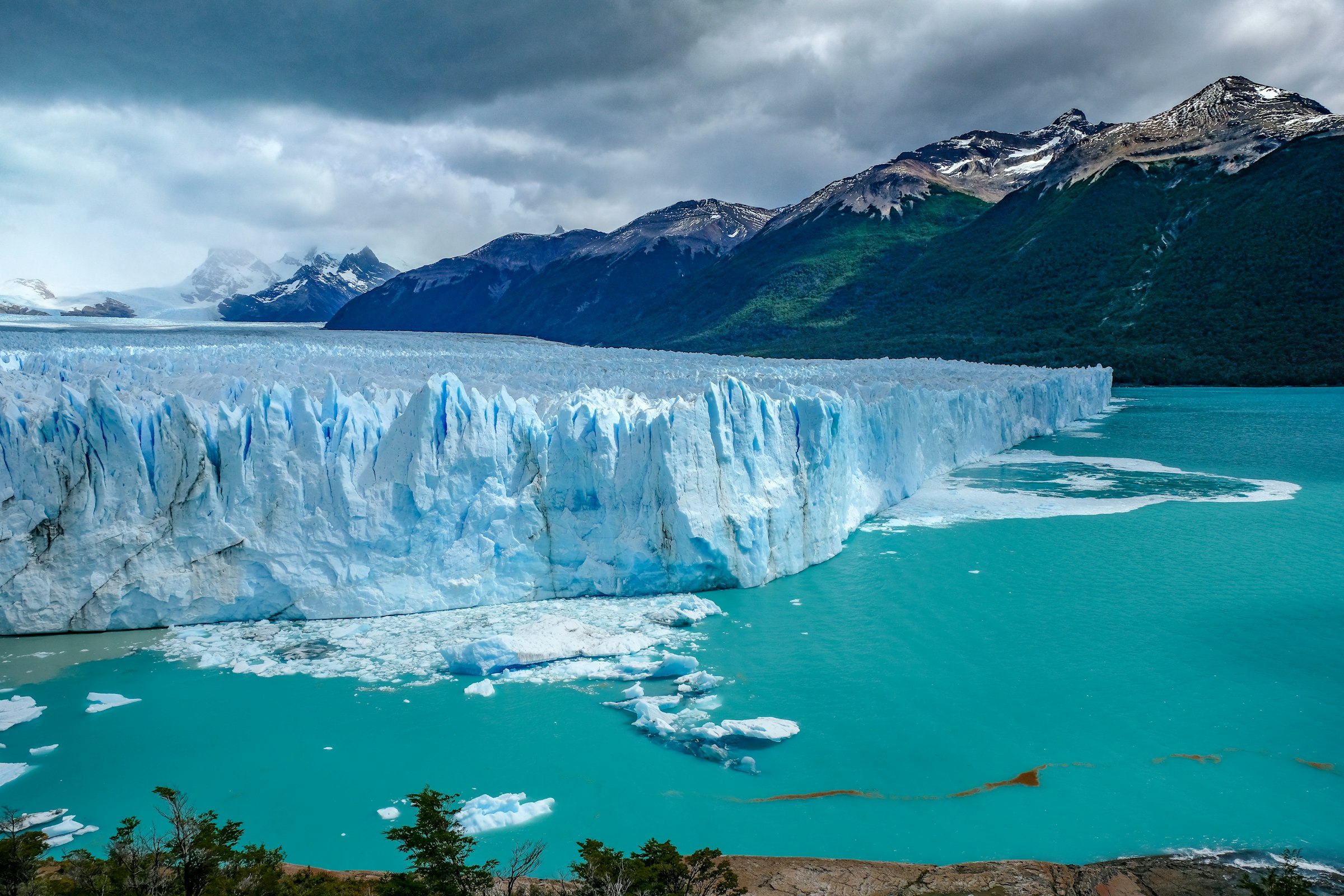
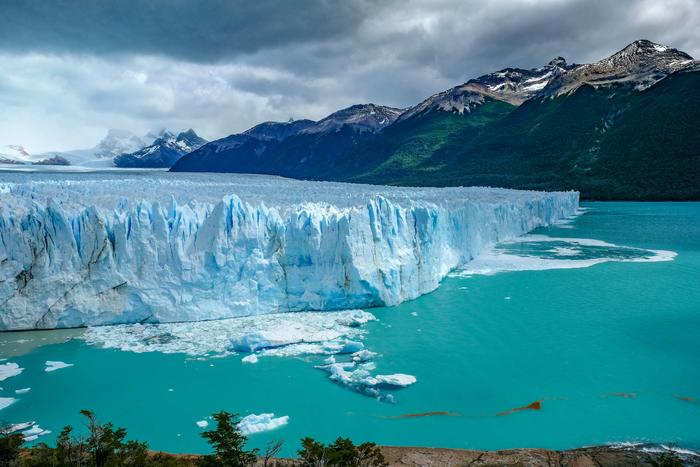
5 km wide the Perito Moreno glacier front
Go in the southern summer (November–March) and book well ahead: flights to El Calafate and Ushuaia, lodging in El Chaltén and the glacier excursions all sell out in peak season. El Calafate is the base for the Perito Moreno Glacier in Los Glaciares National Park; El Chaltén is the trekking hub beneath Mount Fitz Roy (3,405 m), with day hikes straight from town — though the park introduced a sector entry fee there in 2024, so they are no longer free. Ushuaia, the southernmost major city, is the jumping-off point for Tierra del Fuego and most Antarctica cruises.
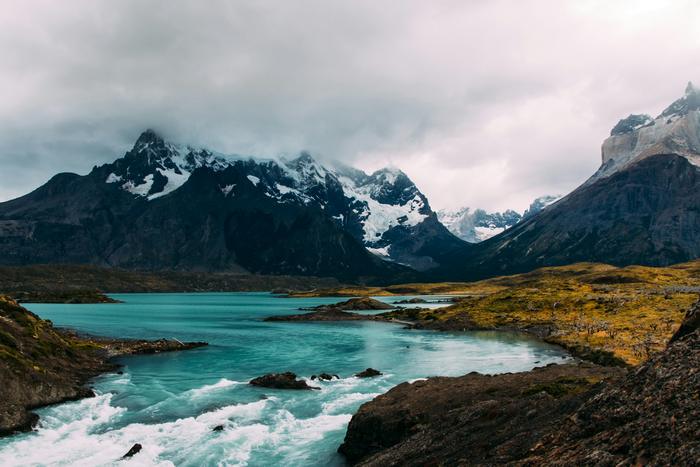
One persistent confusion to clear up: Torres del Paine is in Chile, not Argentina. Pairing it with El Calafate is a popular itinerary, but it means crossing the border into a separate Chilean national park with its own rules and fees — plan it as an international leg, not an Argentine day trip. And note the summer paradox: Patagonia is at its windiest in the warm months, so pack for gusts even on a sunny day.
Natural-hazard caveat: wildfires hit parts of Patagonia in early 2026 and can close trails or parks at short notice in a dry, windy summer — check park (APN) and operator notices close to your dates.
Park fees
Foreigners now pay a premium at the parks
Argentina has moved to steep foreigner-tier national-park pricing — budget for it, in dollars.
Argentina’s national parks now charge foreign visitors far more than nationals — roughly double the resident rate at Los Glaciares, and up to seven times the local rate at Iguazú. The peso figures are repriced for inflation every few months, so the US-dollar equivalents (at ~1,500 ARS to the dollar) are the steadier guide. The table shows the headline gate prices as of late 2026:
| Sight | Foreigner price | Note |
|---|---|---|
| Los Glaciares NP (Perito Moreno) | ARS 50,000 (~US$32) | 3-day flexipass ARS 100,000; from 1 Jun 2026 |
| Iguazú NP (Argentine side) | ARS 60,000 (~US$40) | 50% off a consecutive 2nd day; from 1 Jun 2026 |
| El Chaltén sector (Fitz Roy trails) | ~ARS 45,000 (~US$42) | No longer free — fee introduced Oct 2024 |
| Iguazú (Brazilian side) | ~BRL 131 (~US$24) | Different country — carry your passport |
| Tango dinner-show (Buenos Aires) | ~US$100–180 | Transfers-only show tickets from ~US$50 |
Prices read off park and operator schedules in October 2026. The peso amounts are a snapshot and will be re-indexed; treat the dollar equivalents as the more durable figure. A consecutive-day return at Los Glaciares or Iguazú gets a 50% discount — validate on exit within 72 hours.
Food & wine
Beef, Malbec, and dinner at ten
The asado is an institution, the Malbec is world-class — and the table runs late.
~46 kg beef eaten per person per year
Eat your way through the staples: empanadas, milanesa, choripán from a street grill, and dulce de leche in everything from alfajores to breakfast. The parrilla (steakhouse) is the set-piece meal — order a cut, let it come slowly, and pair it with a Mendoza Malbec. If someone shares mate with you, the etiquette is simple: drink it down and pass the gourd back without saying “gracias” unless you’re done for good.
Wine travel is easy to build in — Mendoza is the obvious base, with bodega visits a short drive from the city and the Vendimia harvest festival in early March, while Cafayate in the northwest offers some of the highest vineyards on earth. Buenos Aires itself is a serious food city, from Palermo’s restaurants to the old cafés notables.
Good to know
Easy entry, light precautions, late nights
The practical footnotes — simple entry, sensible street-smarts, and a socially liberal, very walkable culture.
Entry is straightforward: visa-free for 90 days for US, UK, EU, Canadian and Australian visitors (extendable once for about US$50), with no reciprocity or arrival fee since 2018. A mandatory-travel-insurance law has been on the books since July 2025 but has no implementing rules and isn’t checked at the border — carry insurance anyway. A yellow-fever certificate isn’t required, though the jab is recommended for the Iguazú region (Misiones/Corrientes). The emergency number is 911, and tap water is safe in Buenos Aires and the major cities.
- Someone sprays a stain on you in the streetSkipaccepting a stranger’s offer to help clean it offGokeep your bag close and walk on — it’s the classic distraction robbery
- You want to see La Boca’s CaminitoSkipwandering the side streets or going after darkGostick to the painted tourist strip in daylight, ideally on a tour
- You need cash from an ATMSkipstreet machines late at nightGouse ATMs inside banks or malls by day
Socially, Argentina is relaxed and liberal: same-sex marriage has been legal since 2010 — the first country in Latin America to do so — and Buenos Aires is one of the region’s most LGBTQ-friendly cities. Greetings are a single cheek kiss (men included), the Spanish is distinctive Rioplatense (vos instead of tú, “sh” for ll/y), and fútbol is a religion — a Boca–River Superclásico is the hottest ticket in the country. Above all, the pace runs late: lunch at two, dinner at ten, and the night just beginning at midnight.
Explore more of Argentina
Compare Argentina
If you like Argentina, also consider

France
Paris is only the opening act — wine country, the Alps, and two coastlines.
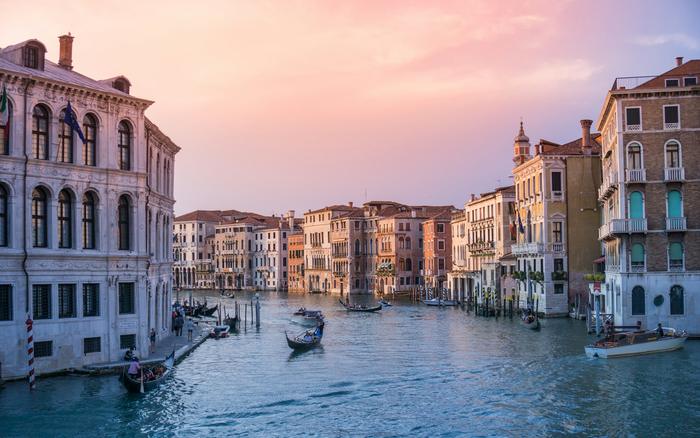
Italy
The benchmark for food, history, and beauty.
Japan
Extraordinary food, culture, and cities. Nothing quite prepares you for it.
Not sure where to go
Take the 5-minute quiz
Answer a few honest questions and get matched to destinations that actually fit how you travel.
Start the quiz