Santorini
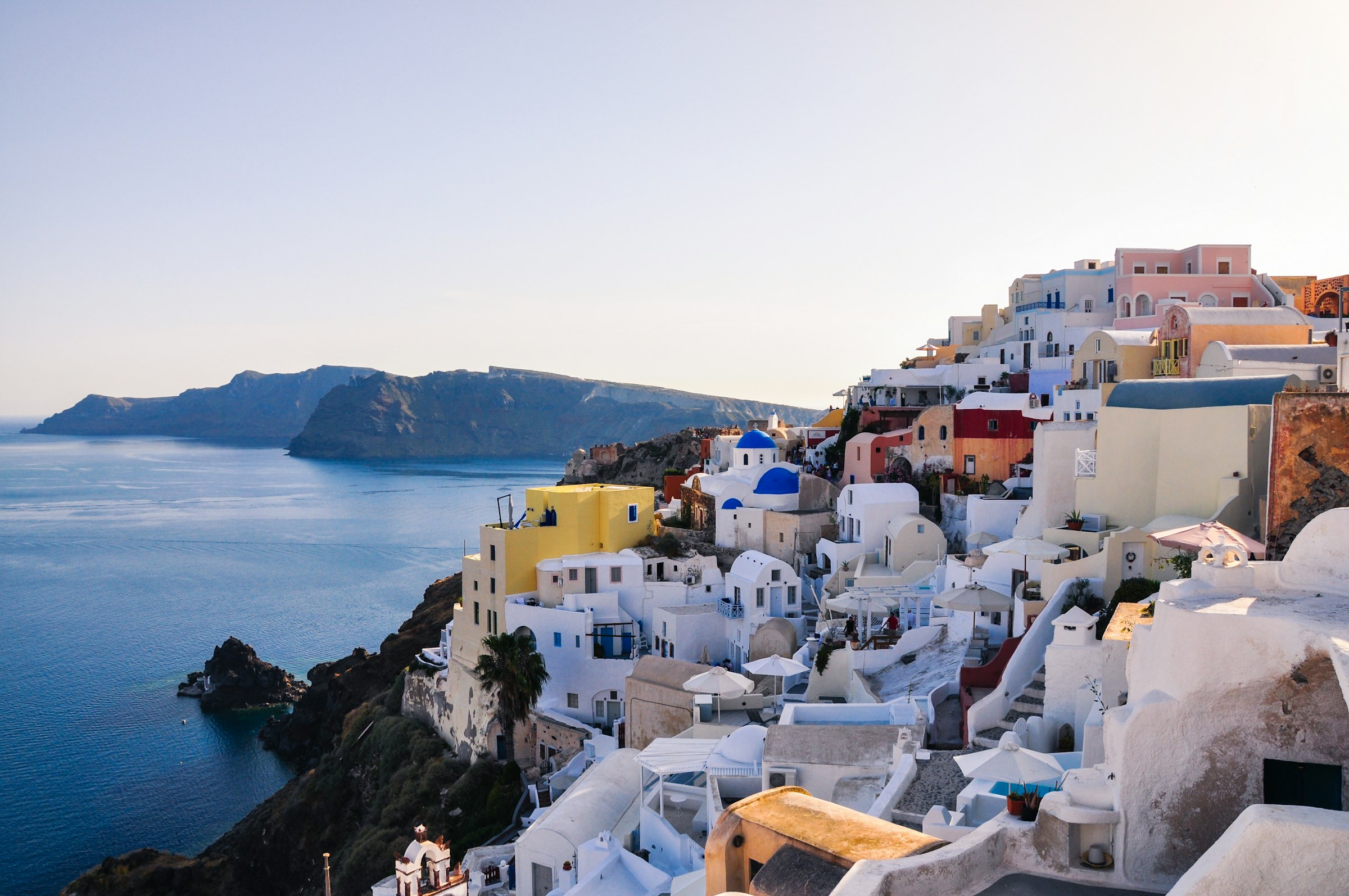
The most photographed view in Greece — a drowned volcano rim of white villages above a blue caldera.
Santorini is a half-sunken volcano, and the trip is built around one thing: the caldera, the flooded crater whose sheer inner wall is lined with white villages that spill down toward a 300-metre drop to the sea. It is the postcard of Greece — blue domes, whitewashed cubes, sunsets people applaud — and it delivers exactly that view. Just know going in that it's a scenery-and-romance destination, not a beach one.
You come for the caldera rim. Oia, on the northern tip, is the famous one — the blue-domed churches, the boutique cave hotels, the sunset that draws a nightly crowd — while Fira, the capital, is busier and better connected. The best of the island is slow: a glass of crisp Assyrtiko at a cliff-edge winery (the volcanic soil makes distinctive wines), a boat trip to the hot springs on the still-steaming volcanic islet in the middle of the bay, and the excavated Bronze Age town at Akrotiri, a Minoan settlement frozen by an eruption. The beaches are volcanic — black sand at Perissa and Kamari, dramatic red cliffs at Red Beach — striking to look at but not the soft-white kind.
The honest part: Santorini is small, expensive, and can be overwhelmed. In July and August the caldera towns are shoulder-to-shoulder, cruise crowds pack Oia for sunset, and prices for those cliff-view rooms are eye-watering. The beaches genuinely aren't the reason to come. And it's a one-note island — the view is spectacular but you'll have seen the essence in a couple of days. Come in the shoulder months, keep it short, pair it with a different Greek island if you want beaches or nightlife, and take the caldera for what it is: one of the most beautiful built landscapes in the Mediterranean.
Highlights
-
Oia at sunset
The blue-domed, cliff-clinging village on the northern tip — the defining view, and the nightly sunset ritual.
-
The caldera rim
White villages strung along the edge of a flooded volcanic crater, with a sheer drop to the sea below.
-
Assyrtiko wineries
Cliff-edge tasting rooms pouring crisp whites grown in the island’s black volcanic soil.
-
Akrotiri
A Bronze Age Minoan town buried and preserved by eruption — Greece’s own Pompeii, remarkably intact.
-
Volcano & hot springs boat trip
Sail to the still-steaming volcanic islet in the middle of the bay and swim in its warm sulphur springs.
-
Volcanic beaches
Black sand at Perissa and Kamari and the red cliffs of Red Beach — dramatic, if not the soft-white kind.
Practical info
- Visa
- Schengen — visa-free for most Western passports (90 days).
- Currency
- EUR (€)
- Language
- Greek; English widely spoken in tourism.
- Safety
- Very safe; take care on cliff paths and with ATV rentals.
- Getting around
- Buses link the main towns; an ATV or car helps. The port and airport get very busy in season.
- Tap water
- Tap water safe in mainland; bottled on smaller islands.
- Plug type
- Type C Type F 230V
- Money
- Cards accepted widely; carry some cash for small tavernas and beaches.
General guidance — visas, safety, and health change, so check your government's travel advisory and the official sources before you go.
Common questions
- Do I need anything special to visit Santorini?
- Entry is simply Greece’s, since Santorini is a Greek island: Schengen rules apply, so US, UK, Canadian and Australian visitors get 90 days in any 180 visa-free, the EU’s biometric EES is now in operation, and the ETIAS authorisation is still to come (fee €20, repeatedly postponed) — the detail lives on the Greece guide. The Santorini-specific things to know aren’t about entry at all: they’re the cruise crowding, the island’s size, and a few access quirks covered below. If you’re arriving by ferry or plane and staying overnight, you pay Greece’s small per-night accommodation tax, not the cruise levy.
- Is it true there’s now a cap and a tax on cruise visitors?
- Yes. To ease chronic overcrowding on an island of ~15,000 residents that was taking up to ~17,000 cruise passengers on peak days, Santorini introduced a daily cap of 8,000 cruise-ship passengers, and Greece added a cruise-passenger landing levy — for Santorini and Mykonos it’s €20 per person June–September (€12 in April/May/October, €4 in winter), collected by the cruise lines, in force since July 2025. Both the cap and the levy apply only to cruise-ship passengers: if you arrive by ferry or air and stay on the island, neither affects you (you pay the per-night accommodation tax instead). The upshot is somewhat thinner peak-day crowds than a few years ago — but high summer is still very busy.
- Is Santorini safe after the 2025 earthquakes?
- Yes. In late January–February 2025 the island went through an intense earthquake swarm — tens of thousands of tremors centred in the sea northeast of Santorini (near the Kolumbo submarine volcano, not under the island), prompting a state of emergency and the temporary departure of many residents. Crucially, it was a magma-dike intrusion that released as seismicity and caused no major structural damage and no eruption. Through 2026 the seismicity has returned to normal background levels, the main volcano (Nea Kameni) is stable with no magma ascent detected, and monitoring has been expanded. It’s a well-watched geological setting rather than a current danger — worth a sanity-check close to travel, but not a reason to stay away.
- When is the best time to visit Santorini?
- May and late September–October are the sweet spots: warm, far less crowded than high summer, and calmer. July and August bring brutal heat, peak prices and genuinely crushing crowds, with the Oia sunset a notorious scrum; the strong northerly summer wind (the meltemi) can also cancel ferries. Winter is quiet and cheap but many caldera businesses close. For the postcard Santorini without the worst of the squeeze, come in the shoulders.
- How long do you need, and can you day-trip it?
- Cruise day-trippers get a few hours and mostly see a mobbed Fira and Oia; it’s the least satisfying way to experience the island. Two or three nights is the sweet spot — enough to see the big caldera towns early or late (around the midday cruise influx), do a winery or the Akrotiri ruins, and catch a sunset without rushing. Add a night if you also want the black-sand beaches at Kamari or Perissa, which are a different, flatter, cheaper side of the island.
- Santorini or Mykonos — or another Greek island?
- Santorini is the scenery-and-sunset island — the caldera view is unmatched — but it’s pricey, crowded and short on good swimming beaches. Mykonos is the party-and-beach counterpart; Crete and Rhodes offer far more space, beaches and history for less money and less crush. If the caldera photo is the dream, Santorini delivers it like nowhere else; if you want to actually swim and unwind cheaply, pair it with a calmer island or look elsewhere in the Cyclades.
Crowds, cap & levy
A tiny island under big pressure
Santorini’s defining practical fact is overtourism — and the new cap and levy that are trying to manage it.
The single most useful thing to understand about Santorini is scale: a small island of around 15,000 residents absorbs well over a million cruise passengers a year, and on the worst days the caldera towns simply overflow. In response, Santorini now enforces a daily cap of 8,000 cruise-ship passengers and Greece levies a cruise-passenger landing fee (€20 per head June–September for Santorini and Mykonos, €12 in the shoulders, €4 in winter, in force since July 2025). The effect has been to trim the worst peak-day overlaps — now roughly three to five ships call on a busy day — not to empty the island.
The practical read-through: if you’re a cruise day-tripper, you’ll pay the levy and share the cap; if you’re staying overnight (ferry or flight), neither applies to you — but you’ll want to time your Fira and Oia visits around the midday cruise influx, seeing the big sights early or late. The crowds, not the geology or the entry rules, are what a Santorini trip is really planned around.
When to go
Shoulder-season sweet spots, a windy peak
The caldera is glorious year-round, but when you come decides whether you share it with a scrum.
May–June and September–October are the sweet spots — warm, far less crushed, calmer. The crimson bars are the traps: the July–August peak (brutal heat, the Oia-sunset scrum, top prices) and the meltemi, the strong northerly summer wind that can cancel inter-island ferries. Winter is cheap and quiet but much of the caldera closes.
Time it for the shoulders — May and late September–October — for warm weather and calmer seas without the July–August heat, prices and crush, when the Oia sunset becomes a notorious shoulder-to-shoulder scrum. The meltemi, the strong dry northerly that blows from about mid-May to mid-September, is the other summer factor: it keeps the air clear but regularly disrupts or cancels inter-island ferries, so build slack into island-hopping plans. Winter is quiet and cheap, but many caldera hotels and restaurants close.
- you want the caldera without the crushSkipJuly and August, the heat-and-scrum peakGoMay–June or September–October — warm, far quieter
- you’re arriving by cruiseSkipthe midday ship influx and the €20 levyGocoming by ferry or air and staying overnight — neither cap nor levy applies
- you want the Oia sunsetSkipexpecting a quiet spot in high seasonGoarriving early, watching from Imerovigli or Fira, or walking the caldera rim
Getting around
The port scramble, the cable car, the buses
Arriving and moving around a cliff-perched island has its own choreography — and a couple of things to avoid.
Ferries dock at Athinios, one of Greece’s more chaotic ports: when several boats arrive together the small quay is overwhelmed, only a few dozen taxis serve the entire island (long waits, variable fares), and the steep access road has no footpath — don’t try to walk it. A pre-booked private transfer is the low-stress choice. From the Old Port below Fira (where cruise tenders land), the cable car runs up to the clifftop in about three minutes for €10 — the right choice over the donkey path, whose mule rides are a well-documented animal-welfare problem.
On the island, Fira is the bus hub: almost every KTEL route radiates from it (Fira to Oia is about 30 minutes), so cross-island journeys often route through Fira. A rental car helps for the southern beaches, Akrotiri and the wineries — but think hard before renting an ATV or quad, which cause repeated serious tourist crashes on Santorini’s narrow, winding, traffic-heavy roads.
| Way | Use it for | Note |
|---|---|---|
| Pre-booked transfer | Athinios port → your hotel | The port is chaotic; few taxis; don’t walk the road |
| Cable car | Old Port → Fira | €10, ~3 min; the humane alternative to the donkeys |
| KTEL bus | Cross-island trips | Radiates from Fira; Fira–Oia ~30 min, ~€2–3 |
| Rental car | Southern beaches, Akrotiri, wineries | Fine — but think twice about ATVs/quads (crash risk) |
You don’t need a car for the headline caldera towns — buses and walking cover Fira and Oia. A car earns its keep for the south: the beaches, Akrotiri and the wineries. Checked October 2026.
Sights & access
Ancient ruins, a closed beach, a live volcano
Beyond the caldera view, Santorini’s sights come with tickets, closures and one fine print worth knowing.
The island’s cultural headliner is Akrotiri — a Cycladic Bronze Age town buried by the ~1600 BC eruption and preserved under a modern roof, the “Greek Pompeii.” Entry is around €12, and a combined ticket (~€15) covers Akrotiri, Ancient Thera and the Museum of Prehistoric Thera over three days; it’s usually closed on Tuesdays, so check the day before you go. The volcano boat tour from Fira’s Old Port lands you on Nea Kameni for a guided walk up to the active crater (small landing fee) and stops at the Palea Kameni hot springs.
One correction to a common plan: the famous Red Beach is effectively closed to descend — a long-standing municipal ban over rockfall danger, reinforced by a fresh landslide in the February 2025 quakes — so you should view it from the clifftop (or by boat) rather than walk down to the sand. For a swim, the black-sand beaches of Kamari and Perissa on the island’s flat side are the practical choice. And the wineries make an excellent, less-crowded half-day (see the Food & wine section).
Two access notes trip people up: the Red Beach descent is banned (a 2025 rockfall reinforced a standing ban — it’s a clifftop viewpoint now, not a swim), and Akrotiri plus the island’s state museums generally close on Tuesdays, with seasonal hours. Buy the €15 combined ticket if you’re doing more than one site, and check the exact day’s opening before you make the trip out.
Where to stay
Caldera rim, hilltop village, or flat beach
Where you sleep shapes the whole trip — view, calm or value, you largely can’t have all three.
The classic (and priciest) base is the caldera rim — Oia for the sunset and the postcard, Fira for the transport hub and nightlife, and quieter Imerovigli and Firostefani for the same view with fewer crowds. For a more traditional, better-value stay with its own charm, the inland hilltop village of Pyrgos is lovely (and home to the Santo Wines co-op). And if you actually want to swim, the flat south-east around Kamari and Perissa has the black-sand beaches, resorts and far gentler prices — a completely different, more relaxed Santorini from the caldera cliffs.
| Town / area | What it’s for | Good to know |
|---|---|---|
| Oia (north tip) | The sunset, blue domes, the postcard | The most crowded and most expensive |
| Fira (capital) | The main town, cable car, nightlife | The transport hub; central but busy |
| Imerovigli & Firostefani | Quieter caldera-rim views, Skaros Rock | Honeymoon-calm, still pricey |
| Pyrgos (inland hilltop) | A traditional village, Venetian castle, Santo Wines | The least touristy; great views, lower prices |
| Kamari & Perissa (SE) | Black-sand swimming beaches, resorts | The flat, practical, cheaper beach side |
| Akrotiri & the south | The Minoan site, Red Beach viewpoint, wineries | History and wine, away from the rim |
Where you base on the caldera rim shapes the whole trip: Fira is the transport hub and the nightlife, Firostefani and Imerovigli the quieter, walkable middle with the same view, and Oia the sunset-postcard crowd magnet (and the priciest). The rim path links them on foot — Fira to Oia is a scenic two to three hours — so you can stay somewhere calmer and cheaper and still walk to the icons.
Food & wine
Volcanic-soil flavours and the island’s great white
The dry volcanic earth concentrates everything it grows — and gives Greece one of its finest wines.
Kouloura the basket-trained vines of Santorini
Santorini’s food is shaped by its geology: the dry volcanic soil and near-total lack of rain concentrate what little grows into intensely flavoured produce. The island specialties are fava Santorinis (a PDO purée that looks like yellow split peas but is made from a local legume), tomatokeftedes (fritters of the tiny, sweet Santorini tomato), the mild white aubergine and fresh chloró cheese, plus capers from the wild bush. But the headline is the wine — the crisp, mineral Assyrtiko and sweet Vinsanto, from the extraordinary basket-trained vines (see the figure). A caldera-view winery is one of the island’s best, calmest half-days.
| Dish / wine | What it is | Note |
|---|---|---|
| Fava Santorinis | A PDO yellow legume purée | From a local vetchling, not split peas; with onion & oil |
| Tomatokeftedes | Fried tomato fritters | From the tiny, intense Santorini tomato |
| White aubergine | A sweeter, less bitter eggplant | A volcanic-soil specialty |
| Chloró cheese | A fresh, soft goat cheese | In salads and the tomato fritters |
| Assyrtiko | The crisp, mineral dry white | The flagship volcanic wine |
| Vinsanto | A sweet sun-dried dessert wine | The traditional sweet counterpart |
Everything grows in dry volcanic ash with almost no rain, which concentrates the flavours — the caper bush and the small Santorini tomato especially. Pair a meze spread with a cold Assyrtiko at a caldera-view taverna.
The caldera
An island built by a Bronze Age cataclysm
Everything you see — the cliffs, the view, the wine — is the legacy of one enormous eruption.
~1600 BC the Minoan eruption that made the caldera
Santorini (ancient Thera) is the southernmost of the Cyclades, and its whole character is volcanic. The island is the surviving rim of a vast crater left by the Minoan eruption of ~1600 BC (see the figure) — which is why you look out not to open sea but across a flooded caldera to the smouldering Kameni islets. The whitewashed, blue-domed cliff architecture, the black and red beaches, the mineral wines and the sunsets are all products of that geology. It’s Greek-speaking and Greek Orthodox like the rest of the country, and its modern name comes from “Santa Irini,” Saint Irene, after an early church at Perissa.
Good to know
Pricey, waterless, and famously jammed at sunset
The practical footnotes — an expensive island with no fresh water, where the sunset is worth it but shared with a crowd.
Santorini is expensive, with caldera-view hotels in Oia, Imerovigli and Firostefani commanding a steep premium over the inland and beach towns like Kamari and Perissa — cards are widely accepted, but carry some cash for small tavernas, buses and boat operators. The island has no natural fresh water: the tap supply is desalinated and brackish, fine for washing but drink bottled water. And manage the Oia sunset expectation — it’s genuinely beautiful and genuinely mobbed in season, so arrive early for a spot, or watch from Fira or Imerovigli instead. A lovely way to earn the view is the Fira-to-Oia caldera walk (about 10 km along the rim, best done Fira→Oia with the views ahead of you).
On the 2025 earthquakes: the swarm has ended and seismicity is back to background levels, so it’s not a reason to avoid Santorini — but it is a monitored active-volcano setting, so a quick glance at the current status (and your travel insurance) close to departure is sensible. The one lasting change for visitors is the Red Beach descent ban, reinforced by that episode.
Compare Santorini
If you like Santorini, also consider

France
Paris is only the opening act — wine country, the Alps, and two coastlines.
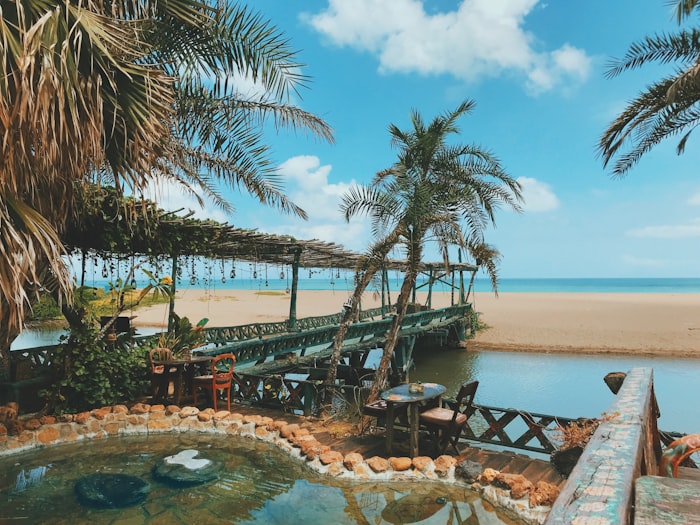
Bali, Indonesia
Warm, affordable, endlessly deep — beach, wellness, and culture in one place.
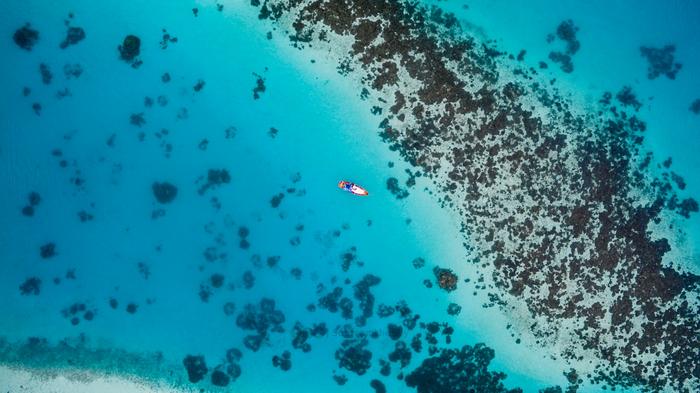
Maldives
One island, one resort, almost nothing to do. That is the point.
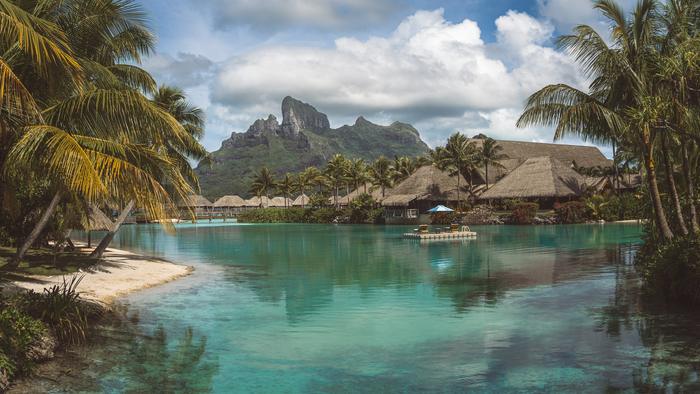
French Polynesia
Overwater bungalows and lagoons in their most expensive form.
Not sure where to go
Take the 5-minute quiz
Answer a few honest questions and get matched to destinations that actually fit how you travel.
Start the quiz