
Maldives
One island, one resort, almost nothing to do. That is the point.
The Maldives is a chain of low coral atolls scattered across the Indian Ocean, and a trip here means picking one island and staying put. Most travellers book a single resort — your own beach, an overwater villa, a house reef a few strokes from the sand. It suits honeymoons, divers, and anyone who wants to do nothing in particular for a week. The snorkelling and diving are the real draw.
A typical week is deliberately shapeless: snorkel the house reef before breakfast, a dive trip or a sandbank picnic mid-morning, an afternoon that dissolves into nothing, dinner under the stars. You reach your resort by seaplane or speedboat from Malé, and once there you don't leave. The reef life is excellent — reef sharks, turtles, rays, and on the right atolls seasonal manta and whale shark encounters. The water does most of the work.
The cost is the catch, and it compounds. Resorts price every meal, transfer, and excursion on top of the room, the seaplane alone runs into the hundreds, and a beer carries a markup that surprises first-timers. You are also captive to one island, so a bad fit means a long, expensive week. The cheaper alternative is a guesthouse on a local island, which is a fraction of the price but comes with modest-dress rules, no alcohol, and shared public beaches. Pick the wrong model and you'll be disappointed; pick well and the simplicity is the whole reward.
Highlights
-
Overwater villas
Step from your deck straight into the lagoon. The signature stay.
-
House-reef snorkelling
Turtles, reef sharks, and coral a short swim from your room.
-
Manta & whale shark dives
Seasonal encounters around Baa and South Ari atolls.
-
Local-island guesthouses
Maafushi and others — the budget route, with local rules.
-
Malé
The dense little capital — a brief stop between transfers, not a destination.
Practical info
- Visa
- Free visa on arrival for most passports (30 days). Verify before travel.
- Currency
- USD widely used; MVR (Rufiyaa) locally.
- Language
- Dhivehi. English widely spoken in resorts and Malé.
- Safety
- Very safe within resorts; standard sense on local islands.
- Getting around
- Seaplane or speedboat transfer from Malé. No roads to speak of once you arrive.
- Tap water
- Stick to bottled or filtered water; resorts provide it.
- Plug type
- Type D Type G 230V
- Money
- Cards work in resorts; carry small USD cash for local islands and tips.
General guidance — visas, safety, and health change, so check your government's travel advisory and the official sources before you go.
Common questions
- Do you need a visa for the Maldives?
- No — a free 30-day visa on arrival is granted to almost every nationality, with no pre-application (extendable to 90 days). You’ll need an onward ticket and either a confirmed resort/hotel booking or proof of funds. The one requirement to handle beforehand is the IMUGA Traveller Declaration, submitted free online within 96 hours of your flight at the official portal (imuga.immigration.gov.mv) — note it’s an arrival-only form now; the separate departure declaration was discontinued in 2024, even though the site’s home page still carries stale wording. (One exception to the open-door visa: Israeli passport holders have been barred since April 2025.) Carry six months’ passport validity to satisfy airlines, and remember alcohol, pork and “idols of worship” cannot be imported.
- How do the resorts and transfers actually work?
- The defining fact: you book an island, not just a hotel — one resort occupies one private island, a self-contained bubble. How you reach it depends on distance from the airport at Malé: a speedboat (20–60 min, cheapest, any time) for near atolls, a seaplane (~$275–700 return) for farther ones, or a domestic flight plus speedboat for distant atolls. The catch with seaplanes is that they fly in daylight only (roughly 06:00–16:00), so a late-night international arrival often means an airport-hotel overnight before the morning flight. Transfer type and cost are a big hidden variable — choose your island partly by how you’ll get there. The far cheaper alternative is a guesthouse on an inhabited “local” island.
- Why is the Maldives so expensive — what are all the taxes?
- On top of a high room rate, a resort bill stacks several separate charges: a service charge (10% minimum), TGST at 17% on nearly everything, and a per-person Green Tax of US$12 a night at resorts (US$6 at smaller local-island guesthouses) — which doubled in January 2025. On departure there are two stacking charges by cabin class — a departure tax and an airport development fee at the same rate — adding to roughly US$100 for an economy foreign traveller (US$240 business, US$480 first), usually bundled into your airfare. These rates are legislated and move, so treat them as current-not-permanent.
- What are the rules on bikinis and alcohol?
- It depends entirely on where you are. The Maldives is a conservative Muslim country, and on inhabited “local” islands (where the cheaper guesthouses are) you must dress modestly in public, there’s no alcohol, and swimwear is confined to designated screened “bikini beaches.” Private resort islands are exempt bubbles — bikinis, alcohol and pork are all fine there under resort rules (though topless and nude sunbathing are banned everywhere). That split is why the two ways of visiting can feel like different countries.
- When should I go — and when can I see mantas and whale sharks?
- The dry north-east monsoon, December–April, is the peak: calm seas, the clearest water and the least rain, with prices spiking over Christmas and the New Year. The wet “green” season, May–November, is cheaper and wetter — but it feeds the plankton blooms that trigger the manta aggregation at Hanifaru Bay (Baa Atoll, roughly June–November, snorkel-only). The lovely exception is South Ari Atoll, where juvenile whale sharks are resident year-round — the only place on earth with reliable month-round sightings. Water sits at 27–30°C all year.
- Resort island or local-island guesthouse?
- They’re almost different holidays. A private-island resort is the postcard — one island, one hotel, overwater villas, bikinis and alcohol, and an all-in bill (plus a transfer that can cost as much as a night). A guesthouse on an inhabited “local” island — legal since 2009, with Maafushi the famous example — costs a fraction, reached by cheap ferries, but comes with the island’s conservative rules. Many visitors do both: a few budget days on a local island, a splurge finale on a resort. Pairing it with Sri Lanka is another classic combination.
Entry & IMUGA
Free visa on arrival, one online form
The visa costs nothing; the declaration is the only thing to do first.
A free 30-day visa on arrival is issued to virtually every nationality — no application, just an onward ticket and a confirmed booking or proof of funds (about US$100 plus US$50 a day). The one task beforehand is the IMUGA Traveller Declaration, free and online, submitted within 96 hours of your flight at the official portal; it is arrival-only since the departure half was dropped in 2024 (the site’s own home page confusingly still implies otherwise). The sole exception to the open visa is that Israeli passport holders have been barred since April 2025. Remember the import bans: alcohol, pork, pornography and religious idols are all refused at the border.
For tourists the de-facto currency is the US dollar — resorts price and bill in it, and cards are universal; the rufiyaa (pegged around MVR 15.4 to the dollar) is really for locals and local islands. The new international terminal at Velana (Malé) opened in July 2025, easing the old arrival crush.
Islands & transfers
You book an island, and the boat that reaches it
The transfer isn’t a detail — it can cost as much as a night, and seaplanes only fly by day.
The Maldives runs on a one-resort-per-island model: you choose a private island, and everything on it is that resort’s. The consequence is that how you get there is set by geography — and it is a real cost and scheduling factor, not a footnote. The table shows the four ways in:
| Transfer | Used for | Time | Rough return cost | Note |
|---|---|---|---|---|
| Speedboat | Near atolls (North/South Malé) | 20–60 min | ~$135–230 pp | Runs day or night |
| Seaplane | Mid and outer atolls | 20–50 min | ~$275–700 pp | Daylight only (~06:00–16:00) |
| Domestic flight + speedboat | Far atolls (Baa, Addu, far N/S) | 1–2 h total | Varies | Book around daylight transfers |
| Public ferry (MTCC) | Local islands, budget | 2–4 h | ~$2–10 | Slow, infrequent, none on Fridays |
Because seaplanes fly daylight-only, a late international arrival often means a night near the airport before the morning flight out to the island — factor it into both ends of the trip. The Sinamalé bridge links Malé, the airport island and Hulhumalé by road for the near-city stays.
The budget alternative that has grown since the law changed in 2009 is the local-island guesthouse: rooms at a fraction of resort rates (from around US$30–40 a night on Maafushi), reached by cheap public ferries or speedboats — with the trade-off of the conservative-island rules on dress and alcohol. There are now 900-plus guesthouses across 100-plus inhabited islands.
The tax stack
What lands on top of the room rate
The headline price is rarely the price — several separate charges stack on.
The Maldives is among the world’s most expensive beach destinations, and the bill makes it so. On top of the room rate sit a minimum 10% service charge, TGST at 17% (raised from 16% on 1 July 2025) on rooms, meals, excursions and transfers, and a per-person Green Tax — US$12 a night at resorts and larger guesthouses, US$6 at smaller local-island ones — which doubled at the start of 2025.
On the way out, the departure levy is actually two charges that stack — a departure tax and an airport development fee at the same per-class rate — so an economy foreign traveller pays about US$100, not US$50. All of these are legislated figures that get revised, so read them as the current shape of the cost, not a fixed quote.
| Charge | Rate | Applies to |
|---|---|---|
| TGST (tourism GST) | 17% | Rooms, meals, excursions, transfers — since 1 Jul 2025 |
| Service charge | 10% minimum | Resort and guesthouse bills, by law |
| Green Tax | $12 / guest / night | Resorts & large guesthouses; $6 at small local-island ones |
| Departure levy | $100 economy | $240 business, $480 first, $960 private jet — two stacking fees |
The departure figures are a Departure Tax and an Airport Development Fee charged at the same per-class rate, so they double up — usually bundled into your airfare. Under-2s and transit passengers are exempt. The rufiyaa is pegged around MVR 15.4/US$, but resorts bill you in dollars.
When to go
Dry peak, wet-season wildlife
One clear best window for weather — and the opposite one for the big marine life.
The two outer crimson bars are the same dry north-east-monsoon peak — calmest seas, best visibility, highest prices — which straddles the New Year. The wet “green” season looks worse on paper but feeds the plankton that draws Hanifaru’s seasonal manta aggregation (also crimson). South Ari’s whale sharks, uniquely, stay all year.
It’s equatorial and warm all year, but the dry north-east monsoon, December–April, is the peak: calm seas, clear water (visibility to 30 m), least rain — and the highest prices around Christmas, New Year and Easter. The wet south-west monsoon, May–November, brings more rain and wind but cheaper rates.
The twist is that the wet season is the better one for the headline wildlife: the plankton blooms that come with it draw the mantas and whale sharks to the western atolls. Water temperature barely moves — 27–30°C the year round — so the choice is really about weather, crowds, price and what you most want to see.
Diving & reefs
Mantas, resident whale sharks, a recovering reef
World-class water — with one place on earth for year-round whale sharks, and an honest note on the coral.
Year-round whale sharks in South Ari
Beyond the two stars, the Maldives delivers reef sharks, turtles, drift dives on current-swept channels, and — at resorts — a house reef you can snorkel off the beach. Liveaboard “safari boats” are the way to dive the most sites for the money, moving between atolls and (unlike local islands) serving alcohol aboard.
The honest caveat is the coral. The 2024 global bleaching event hit Maldivian reefs, with roughly a quarter of hard coral lost and parts of the central atolls worse, so expect some stressed and recovering reef — though the southern atolls fared better and recovery is under way. Reef-safe sunscreen is encouraged and some resorts ban oxybenzone products, but there is no nationwide law, so bring your own mineral sunscreen to be sure.
Divers: the only hyperbaric chamber in the south is at Addu (Villingili), and facilities thin out fast away from Malé. A serious case means an expensive seaplane or speedboat evacuation — and seaplanes don’t fly at night — so dive insurance with evacuation cover is not optional here.
Resort or guesthouse
Resort, guesthouse or liveaboard
Three different trips at three very different prices — match the mode to what you actually want.
The one-island-one-resort postcard is only one way to visit. The right choice turns on budget, how much you want to dive, and your arrival time — here is how the common trade-offs resolve:
- You want the Maldives cheaplySkipa private-island resort and its transferGoa guesthouse on a local island — Maafushi, Dhigurah, Fulidhoo — on a ferry or speedboat
- You want maximum diving per dollarSkiprelying on a single resort house reefGoa liveaboard “safari boat” working several atolls (alcohol allowed aboard)
- You’re arriving late and hate an overnightSkipa seaplane-only outer-atoll resortGoa near-atoll resort on a day-or-night speedboat transfer
Weighing it against the obvious rivals? See Maldives vs Seychelles and Maldives vs Mauritius — the Maldives wins on house-reef snorkelling and the overwater-villa fantasy; the others on being able to roam a real island.
Which atoll
Which atoll, and how far out
Your atoll sets your transfer, your wildlife and half your budget — closer is cheaper.
As a rule, the closer the atoll, the cheaper and simpler the transfer — North and South Malé are speedboat country and the easiest first trip, while the outer atolls buy you fewer people and better reefs at the cost of a seaplane or a connecting flight. Baa Atoll was designated a UNESCO Biosphere Reserve in 2011, which is why its Hanifaru manta site is so tightly managed.
| Atoll / area | Known for | Getting there |
|---|---|---|
| North & South Malé | Closest to the airport — many resorts, and the budget hub of Maafushi | Speedboat (20–60 min) |
| Ari (Alif) | Year-round whale sharks (South Ari), mantas, classic dive resorts; budget base Dhigurah | Seaplane or domestic flight + speedboat |
| Baa | UNESCO Biosphere — Hanifaru Bay’s manta aggregation (Jun–Nov, snorkel-only) | Domestic flight (Dharavandhoo) + speedboat |
| Raa / Noonu / Lhaviyani | Quieter northern luxury resorts and strong house reefs | Seaplane or domestic flight |
| Addu (Seenu), far south | Equatorial diving, the southern hyperbaric chamber, causeway-linked islands | Domestic flight to Gan |
Good to know
The lowest nation on earth, and the local rules
Very safe for visitors — the real exposure is the sea and the bill, not crime.
~1.5 m average height above the sea
For tourists the Maldives is very safe — resort-island crime is rare, and the occasional gang violence and political demonstrations are confined to the capital, Malé, which guests transferring straight to a resort never touch. The genuine risks are the sun, the sea (strong channel currents on drift snorkels) and the cost of medical evacuation, so comprehensive insurance with medical-evacuation cover is essential. The US advisory sits at Level 2 for terrorism; the UK does not advise against travel. The emergency number is now a unified 911.
If you leave a resort for a local island, carry the rules with you — modest dress, no alcohol, swimwear only on the designated beach, and extra discretion during Ramadan (around 8 February to early March in 2027), when eating or drinking in public in daylight is avoided. On a resort island none of that applies: each is its own private bubble.
Southern-hemisphere it is not — the Maldives is equatorial, so there is no winter, just the two monsoons. Pack reef-safe sunscreen, a rash guard for long snorkels (the equatorial sun is fierce), and something that covers shoulders and knees for any local-island or Malé stop.
Compare Maldives
If you like Maldives, also consider
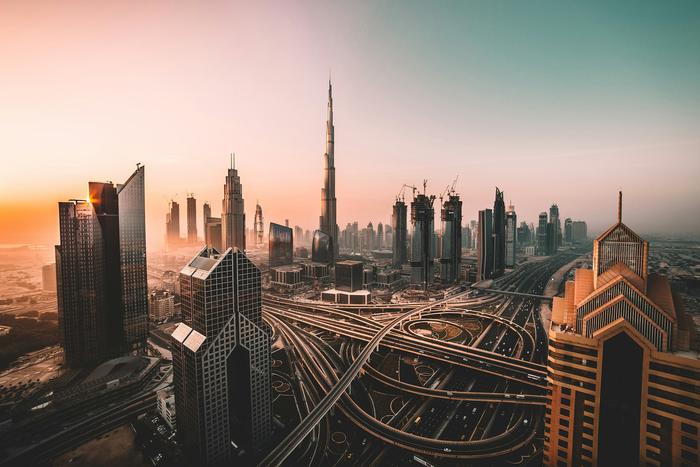
United Arab Emirates
Dubai and Abu Dhabi: superlatives, desert, and a stopover worth a few days of its own.
Morocco
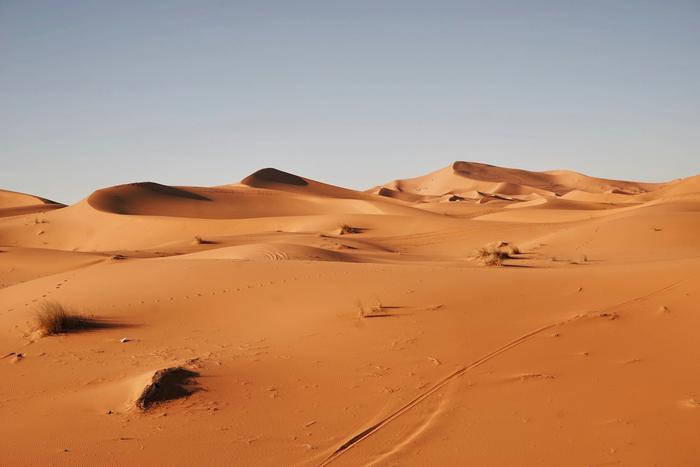
Medinas, desert, mountains, and coast — sensory and varied.

Greece
Ruins in the morning, a swim by noon, taverna until dark.
Spain
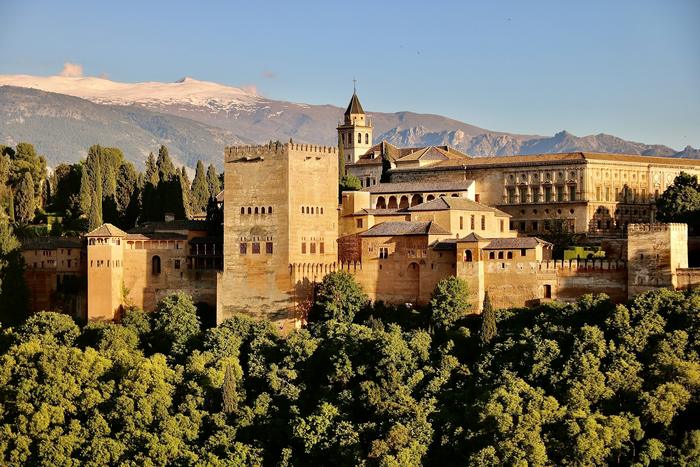
Food, beaches, and three or four cities that each justify the trip.
Not sure where to go
Take the 5-minute quiz
Answer a few honest questions and get matched to destinations that actually fit how you travel.
Start the quiz