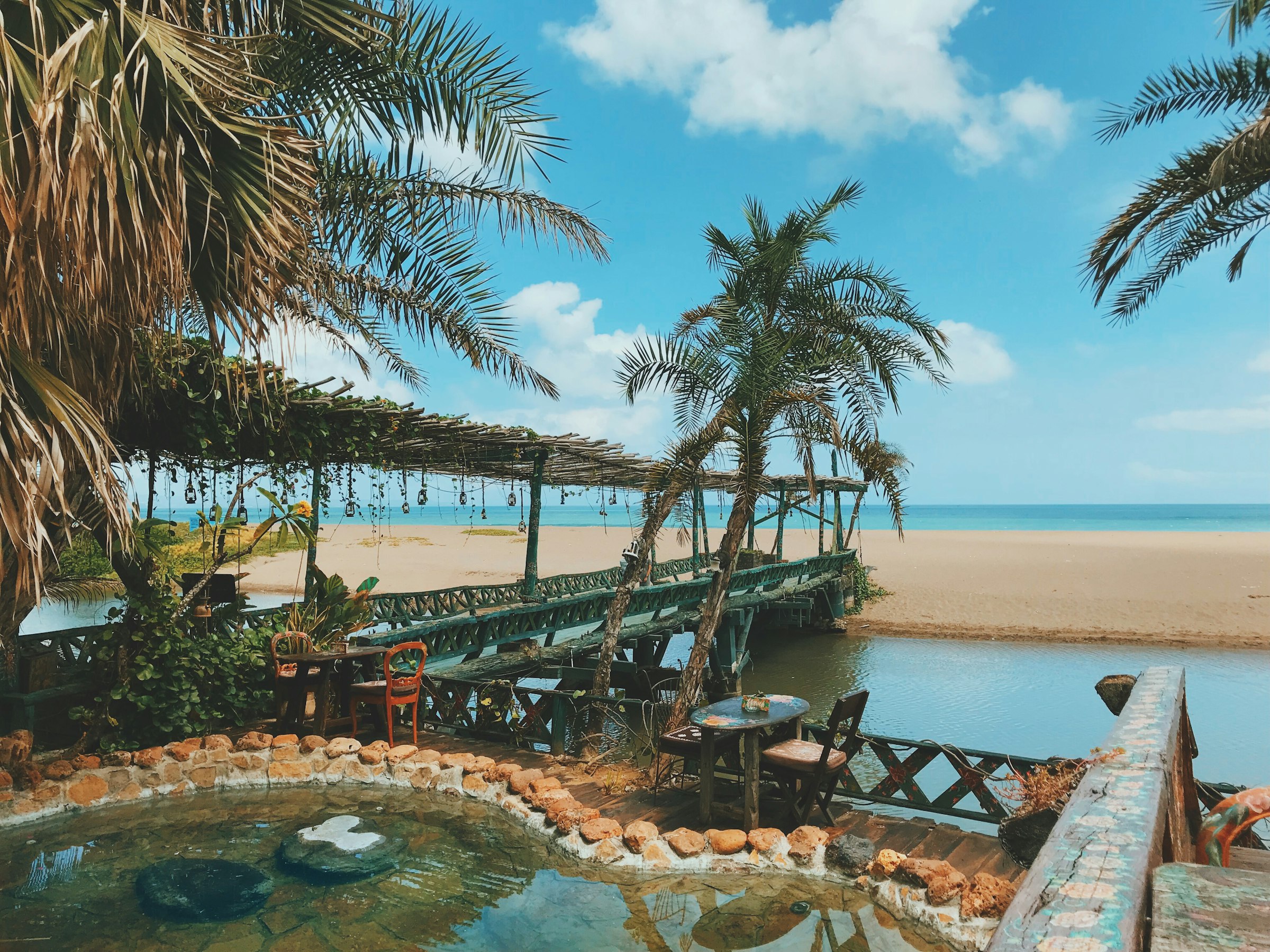
Bali, Indonesia
Warm, affordable, endlessly deep — beach, wellness, and culture in one place.
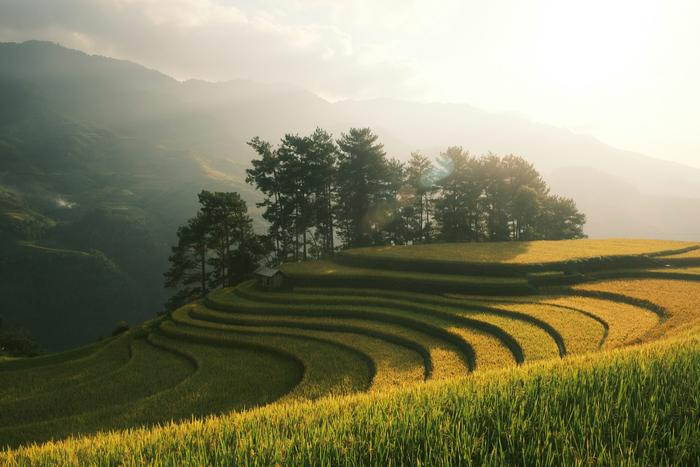
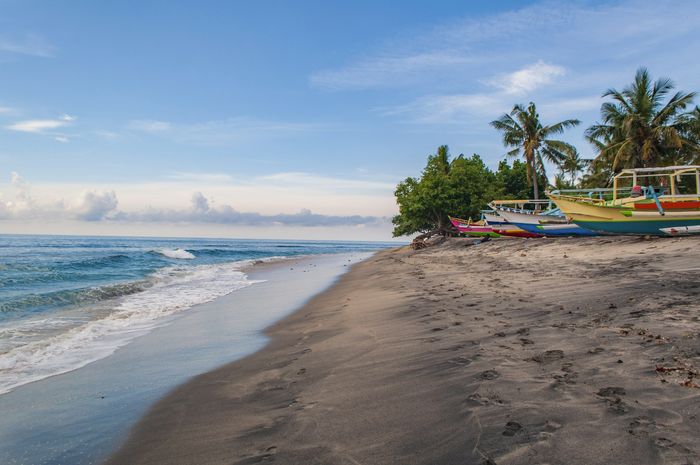
Bali is the rare destination that works for almost any travel style. The south for beaches and surf, Ubud for jungle wellness and yoga, the north and east for quieter coves and rice terraces. Affordable enough for long stays, deep enough that one trip rarely feels like enough.
Most trips split the island: a week around Uluwatu or Canggu for surf, beach clubs, and cheap massages, then Ubud for yoga, jungle pools, and temple ceremonies you'll stumble into uninvited. Days cost very little — a warung lunch of nasi campur is pocket change, and a private villa with a pool runs less than a chain hotel at home. Add Sidemen or Amed if you have time; that's where the postcard version of Bali still exists.
The south is genuinely congested. Canggu traffic can turn a five-kilometre trip into forty minutes, the famous rice terraces have queues for photos, and wet-season beaches collect plastic. Scooters are the main transport and the main hazard — accidents, not crime, are the real risk here. If you came for solitude, you're twenty years late. But the price-to-pleasure ratio remains absurd, and ten minutes off any main road the island goes quiet and green again.
Highlights
-
Ubud
Yoga, jungle, rice terraces, and the spiritual heart of the island.
-
Canggu & Uluwatu
Surf breaks, beach clubs, and digital nomad cafes.
-
Sidemen & East Bali
The Bali tourists overlook — quiet villages and volcano views.
-
Nusa Penida
Day trip island with cliffs and beaches that look unreal.
Practical info
- Visa
- Visa on arrival / e-visa for most Western passports (30 days, extendable). Verify before travel.
- Currency
- Indonesian Rupiah (IDR).
- Language
- Indonesian and Balinese. English widely spoken in tourist areas.
- Safety
- Generally safe. Watch for scooter accidents and dodgy operators.
- Getting around
- Scooter is king. Grab/Gojek for cars. No public transport to speak of.
- Tap water
- Drink bottled or filtered water.
- Plug type
- Type C Type F 230V
- Money
- Cash for local warungs and small shops; cards work in cafes and hotels.
General guidance — visas, safety, and health change, so check your government's travel advisory and the official sources before you go.
Common questions
- When is the best time to visit Bali?
- The dry season, roughly April–October, is the headline window; the wet season (November–March) still has sunny mornings with afternoon downpours. May–June and September are the sweet spot — dry, with fewer people than the July–August and Christmas/New-Year peaks. One date to plan around: Nyepi, the Balinese Day of Silence, when the entire island — the airport included — shuts for 24 hours (8 March in 2027).
- What is the Bali tourist tax?
- A one-time levy of IDR 150,000 (about US$8) on every foreign visitor, introduced in February 2024 and unchanged for 2026. You pay it through the official Love Bali portal or app (only the lovebali.baliprov.go.id address is genuine) before you fly, and show the QR voucher on arrival. It’s separate from your visa — and only about a third of arrivals actually pay it, so don’t assume no one checks.
- Do I need a visa for Bali?
- Most nationalities get a Visa on Arrival: IDR 500,000 (about US$28–30), 30 days, extendable once by 30 days. You can pay on landing or apply for the e-VoA online beforehand at the official molina.imigrasi.go.id. A fee increase was proposed in August 2026 (to IDR 750,000 for the e-VoA, IDR 1,000,000 on arrival) but is not yet in force — check the current figure before you travel. Passport valid six months.
- Is it safe to ride a scooter in Bali?
- Legally, only with a matching licence — an International Driving Permit plus your home licence — and a helmet, and the police now actively enforce it at checkpoints, fining tourists and seizing bikes (fines run IDR 300,000–500,000 per missing document). On top of the legal risk, scooter crashes are the number-one cause of tourist injury and death here, and southern Bali’s traffic is heavy and chaotic. Many visitors use a private driver or ride-hail instead.
- What is Nyepi?
- The Balinese Hindu Day of Silence — the whole island stops for 24 hours from 6am. No flights (the airport closes), no going outside, lights and noise kept to a minimum; you stay in your accommodation, visitors included. It falls on 8 March in 2027, preceded the evening before by the Ogoh-Ogoh monster parades. Don’t plan to arrive, leave or move around on that day.
- Should I choose Bali or Thailand?
- Bali is one island of layered culture, surf and rice-terrace scenery — intimate but increasingly crowded in the south — while Thailand offers a whole country of beaches, cities and islands at a similar price. See our full Bali vs Thailand comparison for the measured differences.
Visa & levy
A visa, a levy, and a weak rupiah
Two separate payments catch people out at the border — the visa on arrival and the tourist levy.
Most nationalities enter on a Visa on Arrival — IDR 500,000 (about US$28–30 at the current weak rupiah), 30 days, extendable once by 30 — payable on landing or online as an e-VoA beforehand at the official molina.imigrasi.go.id (apply at least 48 hours ahead). A fee increase was proposed in August 2026 — IDR 750,000 for the e-VoA, IDR 1,000,000 on arrival — but hasn’t taken effect, so confirm the figure before you fly. Your passport needs six months’ validity.
Separately, every foreign visitor owes the one-time Love Bali levy of IDR 150,000 (around US$8), paid through the official Love Bali portal or app for a QR voucher scanned on arrival — pay it before you fly to skip the airport queue. On money, the rupiah trades near 17,900 to the dollar in 2026, so old conversion figures run low; cards work in hotels and established restaurants, but carry cash for warungs, markets and small operators.
Change money only at a licensed exchange — look for the Bank of Indonesia logo and QR, and use known names like PT Central Kuta — not the back-street booths with suspiciously good rates, which run sleight-of-hand recounts and hidden commissions. Count your notes before you leave the counter.
Getting around
No trains, a lot of traffic, and a driver economy
There’s no public transport to speak of — and short distances don’t drive short.
60–90 min airport to Ubud — just 35 km
You get around Bali three ways. A private car with a driver (IDR 600,000–750,000 for a full day) is the easy default for sightseeing. A scooter is cheap and everywhere, but now genuinely policed — a valid IDP and helmet are required and enforced (see the FAQ). And ride-hail (Grab and Gojek) works island-wide and takes the haggling out of fares, though local “taxi-mafia” cooperatives block app pickups in parts of Ubud, Canggu and some villages (drop-offs are usually fine).
Beyond the roads, fast boats link Bali to its neighbours: from the organised new Sanur harbour to Nusa Penida and Lembongan (about 30–50 minutes), and from Padangbai to the Gili Islands and Lombok (1½–2½ hours). The table below is the quick comparison.
| Option | Rough cost | Notes |
|---|---|---|
| Private car + driver | IDR 600,000–750,000 / day | The easy default; 8–10 hours of sightseeing |
| Scooter rental | IDR 80,000–300,000 / day | IDP + home licence legally required and enforced |
| Grab / Gojek | metered in-app | Island-wide, but blocked in some “taxi-mafia” zones |
| Fast boat to Nusa Penida | IDR 150,000–250,000 | ~30–50 min from the new Sanur harbour |
There are no passenger trains on Bali. The southern Kuta–Seminyak–Canggu corridor is notoriously congested, so build in time and don’t over-plan the hops.
At the airport (DPS, just south near Kuta), use the official prepaid-taxi counter or the signed Grab/Gojek pickup points rather than the touts working the arrivals hall. Ride-hail can’t collect from inside the terminal — there’s a designated point a short walk out.
Where to base
South buzz, Ubud culture, quieter edges
The regions pull in very different directions — the classic mistake is basing only in the crowded south.
The south is the busy, built-up Bali, and it subdivides by mood: Kuta and Legian for budget and nightlife, Seminyak for upscale beach clubs, Canggu for the surf-and-café nomad scene, Jimbaran for seafood on the sand, Nusa Dua for gated resorts, and quiet, older Sanur — the departure hub for boats east. The clifftop Bukit peninsula around Uluwatu has the best surf and white-sand coves.
Inland, Ubud is the cultural heart — rice terraces, temples, art and wellness — and it makes the natural second base. The quieter edges reward you most: east Bali (Amed’s diving, serene Sidemen, Mount Agung), the far north around Lovina, and the dramatic cliffs of Nusa Penida and Lembongan a short boat away. The table pairs each southern area with what it’s really for.
| Area | What it’s for |
|---|---|
| Kuta / Legian | Budget, nightlife and beginner surf — busy and brash |
| Seminyak | Upscale beach clubs, boutiques and restaurants |
| Canggu | Surf, cafés and the digital-nomad scene |
| Uluwatu / Bukit | Clifftop sunsets, world-class surf, white-sand coves |
| Sanur / Nusa Dua | Calm and family-friendly; Sanur is the boat hub east |
| Ubud | The inland cultural heart — rice terraces, yoga, temples |
Sights & temples
Temples, terraces and a sunrise volcano
The headline sights are cheap by Western standards — but several now require a sarong, a guide, or both.
The icons are spread across the island: the clifftop Uluwatu Temple with its sunset Kecak fire dance; the Sacred Monkey Forest and Tegalalang rice terraces around Ubud; the UNESCO-listed Jatiluwih subak terraces (Bali’s rice-irrigation culture has been World Heritage since 2012); the lake temple of Ulun Danu Beratan (the one on the older IDR 50,000 banknote) and the sea temple of Tanah Lot at sunset; and the Mount Batur sunrise trek in the central highlands.
A couple of these have tightened up. Besakih, the “Mother Temple”, now runs a mandatory ticket-office, guide and shuttle system, and the Mount Batur climb legally requires a registered local guide. The famous “Gates of Heaven” reflection shot at Lempuyang is an illusion made with a mirror held under the phone — there’s no water. The fees are in the table.
| Sight | Entry (foreign adult) |
|---|---|
| Uluwatu Temple | IDR 100,000 (+ Kecak dance IDR 200,000) |
| Ubud Monkey Forest | ~IDR 100,000 (120,000 at weekends) |
| Besakih “Mother Temple” | ~IDR 150,000 (ticket + guide + shuttle) |
| Mount Batur sunrise trek | permit ~IDR 100,000; guided IDR 600,000–800,000 |
| Jatiluwih / Tegalalang terraces | small fee ~IDR 50,000 |
Approximate foreign-visitor rates read October 2026; several sites have moved to online ticketing, so verify at the gate. A registered local guide is now mandatory for Mount Batur and Besakih.
Temples need a sarong and sash and covered shoulders and knees (usually lent at the entrance), and by posted custom menstruating women are asked not to enter the grounds — both are written into Bali’s tourist-conduct rules. Don’t stand above or in front of people praying, and never climb a shrine for a photo; the authorities have deported visitors for it.
When to go
Dry April–October, and a trash-season coast
The weather splits cleanly in two — and the surf and the rubbish both follow the wind.
Bali is tropical year-round (~26–32°C, humid); the dry season’s May–September heart is the sweet spot, with Christmas–New Year a second crowd peak. Nyepi (8 March 2027) shuts the whole island for 24 hours.
The dry season runs roughly April–October (driest and best May–September), the wet season November–March, when rain usually falls in short afternoon bursts after sunny mornings. July–August and the Christmas–New-Year fortnight are the crowded, pricey peaks; May, June and September give you the dry weather without them.
Two things follow the monsoon wind, and they’re worth knowing. The surf swaps coasts — the west and Bukit (Uluwatu, Canggu) fire in the dry season, the east works better in the wet. And so does the beach rubbish: from roughly December to March, monsoon currents pile plastic debris onto the west-facing beaches from Uluwatu up through Seminyak and Canggu, with crews clearing tonnes a day. The swaps below are how to dodge both.
- Surfing in the dry seasonSkipthe blown-out east coastGothe west and Bukit — Uluwatu, Padang Padang, Canggu
- The Dec–Mar wet seasonSkipthe west-facing beaches, where monsoon winds pile up trashGothe east coast, the north (Lovina, Amed) or the Nusa islands
- Kuta feels like too muchSkipbasing in the party stripGoquiet Sanur or Nusa Dua, or inland Ubud
Nyepi
The one day the whole island stops
Nyepi is unlike anything else in travel — and it’s a hard date to build a trip around.
24 hours the island stops for Nyepi
Catching Nyepi and its eve-of parades is a genuine highlight — but the shutdown is total and enforced by village pecalang watchmen, so the one thing you must not do is try to arrive, depart or travel on the day. Flights in and out of Denpasar stop entirely, so align your dates to be already settled in before it begins.
If you’re on the island for it, embrace it: hotels keep a skeleton service and you can relax within the grounds, but step out and you’ll be turned back. It’s a day of unexpected stillness on one of the world’s busier islands — and, cloud permitting, an astonishing night sky with the lights off.
Date it precisely for your trip: Nyepi follows the Balinese saka calendar and moves each year — 8 March in 2027 (the Ogoh-Ogoh parades the evening of 7 March). Book accommodation that you’re happy to be confined to for the full 24 hours.
Safety
A safe hub — with a few serious, specific risks
Bali is generally very safe for tourists; the dangers that matter are the road, bad alcohol, and the drug laws.
The US sits Indonesia at Level 2 overall, with its only “do not travel” zones in remote Papua — nowhere near Bali, which is the country’s tourism hub and routinely safe for ordinary travel. The real risks here are specific: the scooter (by far the leading cause of tourist injury and death), methanol poisoning from cheap or illegal arak and spirits — a genuine, documented killer, so stick to sealed brand-name bottles and reputable bars and never leave a drink unattended — and petty stuff like bag-snatching from passing scooters, ATM skimming and the money-changer con.
The non-negotiable one is drugs: Indonesia has some of the strictest drug laws on earth, with the death penalty for trafficking and long prison terms for possession — there is no leniency for tourists. And at the temples and the Ubud Monkey Forest, keep a firm hold on phones and sunglasses, which the monkeys snatch and barter back.
On the volcanoes: Mount Agung is quiet (normal alert level) and not currently a concern. The one that periodically disrupts Bali is Lewotobi, far away on Flores — its 2024 and mid-2025 eruptions cancelled Denpasar flights with high ash plumes, so if you see “Indonesia volcano” flight news, check whether it’s actually affecting DPS before you worry.
Good to know
Water, manners, SIMs and the numbers to save
A little discipline on water, and a little respect for ceremony, keeps a trip smooth.
Don’t drink the tap water — sealed bottled only, including for brushing teeth, and skip ice from unknown sources — to avoid “Bali belly”; a travel clinic will usually suggest Hepatitis A and typhoid cover, and rabies is present (give the temple monkeys and street dogs a wide berth). On manners: use your right hand to give and receive, don’t touch people’s heads, don’t step on the little canang sari flower offerings laid on the ground, dress modestly away from the beach, and give way quietly to the frequent temple processions — don’t honk.
For data, a Telkomsel SIM has the widest coverage, and eSIMs are easy (your foreign phone’s IMEI is whitelisted for about 90 days on a tourist SIM); wifi is everywhere in cafés and villas. The language is Indonesian (Balinese alongside it), and English is widely spoken in tourist areas — a “terima kasih” (thank you) goes a long way.
Save the emergency numbers: 112 is the national emergency line (Denpasar runs a 112 command centre), with 110 for police directly. Bali’s tourist police can be reached on +62 361 224 111.
Compare Bali, Indonesia
If you like Bali, Indonesia, also consider

Greece
Ruins in the morning, a swim by noon, taverna until dark.
Spain
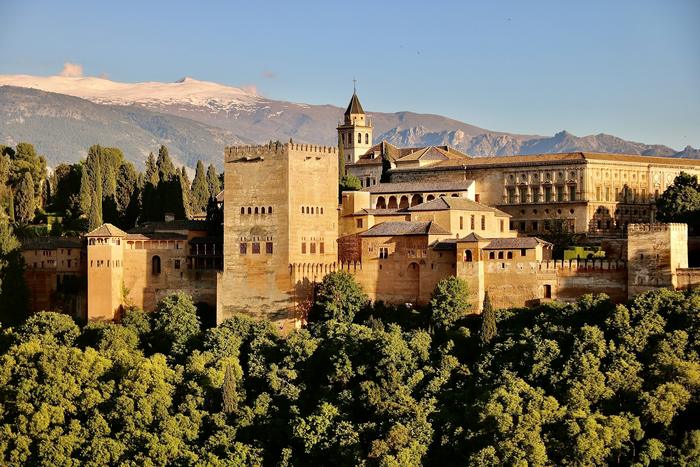
Food, beaches, and three or four cities that each justify the trip.
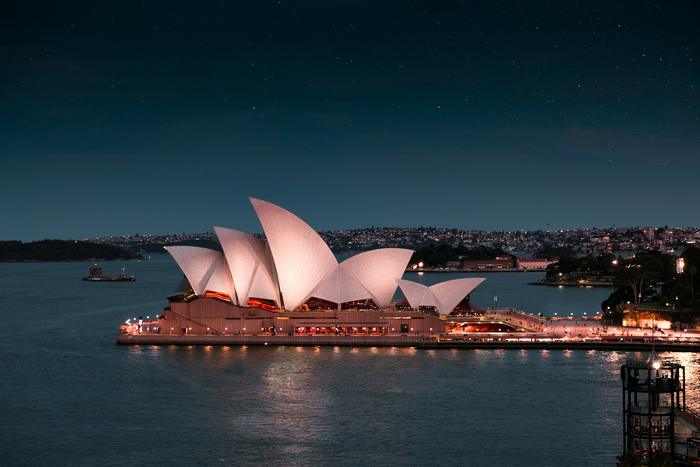
Australia
Vast, varied, relaxed. Reef, Sydney, and proper wilderness in one.
Not sure where to go
Take the 5-minute quiz
Answer a few honest questions and get matched to destinations that actually fit how you travel.
Start the quiz