
French Polynesia
Overwater bungalows and lagoons in their most expensive form.
French Polynesia is the high end of the South Pacific, and it knows it. You fly into Tahiti — the gateway, more working island than postcard — then hop by small plane or ferry to Moorea, an hour away, or Bora Bora, the lagoon that sells the brochures. This is honeymoon territory: overwater bungalows, turquoise water, and prices to match.
The usual trip pairs two or three islands over a week: a calmer stay on Moorea, which is closer and far cheaper, then the splurge nights on Bora Bora in a bungalow over the lagoon. Days are snorkeling drift dives, lagoon tours, stingray and shark encounters, and long stretches of doing nothing on a deck above clear water. Inter-island flights, the bungalow premium, and resort dining are where the money goes — and it goes fast.
The honest part: this is one of the most expensive destinations on earth, and the value question is real — much of what you pay buys the address, not the activity, and Tahiti itself underwhelms most arrivals. Outside resorts, French and Tahitian are the working languages and English thins quickly. November through April brings the wet, humid cyclone-risk season. Come in the May-to-October dry window with the budget it demands, and the lagoons deliver exactly what the brochures promise — which, here, is the whole transaction.
Highlights
-
Bora Bora
The overwater-bungalow lagoon. The splurge, and priced like one.
-
Moorea
Closer to Tahiti, cheaper, and arguably more beautiful — jagged peaks over a calm lagoon.
-
Tahiti (Papeete)
The gateway. A night before flying onward, not the destination.
-
Rangiroa
A vast atoll for serious divers — drift dives through the passes.
Practical info
- Visa
- Visa-free for most Western passports (90 days, French overseas territory rules). Verify before travel.
- Currency
- XPF (CFP Franc).
- Language
- French and Tahitian. Some English in resorts.
- Safety
- Very safe. Currents, sun, and reef are the main concerns.
- Getting around
- Domestic flights (Air Tahiti) and ferries between islands; rentals on the larger ones.
- Tap water
- Tap water safe in main centers and resorts; check on smaller atolls.
- Plug type
- Type C Type E 220V
- Money
- Cards accepted in resorts; carry cash for small islands and local stalls.
General guidance — visas, safety, and health change, so check your government's travel advisory and the official sources before you go.
Common questions
- Is it euros?
- No — the currency is the CFP franc (XPF), pegged to the euro at a fixed €1 = 119.3317 XPF, but it is not the euro. Cards work at resorts and on the main islands; carry XPF cash for atolls and markets. See money.
- Do I need a visa, and do EES/ETIAS apply?
- No visa for US/UK/EU/Canada/Australia up to 90 days. French Polynesia is a French overseas collectivity, not Schengen, so EES and ETIAS do not apply — they only affect you if you transit mainland France. Passport valid three months. See entry.
- Which island should I pick?
- Moorea (value and beauty, a 30-minute ferry from Tahiti), Bora Bora (the splurge lagoon), the Tuamotus (Fakarava/Rangiroa) for diving, the Marquesas for wild scenery. More in the island-groups section.
- Why is it so expensive?
- Everything’s imported across the mid-Pacific, the luxury inventory is tiny, and honeymoon demand is relentless — so you mostly pay for the overwater-bungalow address. The lagoon and the hiking are free; the room is the spend.
- When should I go?
- The dry, cooler May–October window; the humpback whales pass roughly July–November (swim-with-whales in Moorea and Rurutu). Avoid the hot, wet November–April stretch. See when to go.
- How do I get between the islands?
- Air Tahiti (and Air Moana, since 2023) run the inter-island flights, hub-and-spoke from Papeete — Tahiti to Bora Bora is ~50 minutes; multi-island air passes save money. Tahiti to Moorea is a 30-minute ferry.
Entry
French, but not euros or Schengen
A French collectivity in the South Pacific — its own currency, outside Schengen.
French Polynesia is part of France, but at arm’s length: a French overseas collectivity (not a DROM like Réunion), with its own entry rules and its own currency. Entry is easy — visa-free for 90 days for the main Western passports, passport valid three months, an onward ticket required. Crucially it is outside the Schengen Area, so the new EES and ETIAS systems do not apply unless you transit mainland France.
The gateways are long-haul: about 8 hours from Los Angeles to Papeete (Faa’a), plus routes from Paris (via the US) and Auckland.
The surprise for many is the money: it’s the CFP franc, not the euro, even though France issues it (pegged at €1 = 119.3317 XPF). Don’t assume euro cash works — carry a card for the main islands and get XPF for the atolls and markets.
The island groups
Societies, Tuamotus, Marquesas
A hundred-odd islands over an ocean the size of Europe — pick a group, not the whole map.
The scale here is oceanic — 121 islands across five archipelagos spread over a Europe-sized stretch of Pacific — so the first move is choosing a group, not trying to see it all. The Society Islands (Tahiti, Moorea, Bora Bora and their neighbours) are the lagoon-and-resort heart of almost every trip; the Tuamotus are flat coral atolls for divers; the Marquesas are rugged, remote and barely visited.
Most trips stay in the Societies, perhaps adding a Tuamotu atoll for the diving.
- Your first or only tripSkipchasing distant atollsGothe Society Islands — Moorea plus Bora Bora
- World-class divingSkipthe resort lagoons aloneGothe Tuamotus — Fakarava and Rangiroa
- Wild, barely-touristed landscapesSkipthe honeymoon circuitGothe Marquesas, far to the north-east
| Group | Islands | For |
|---|---|---|
| Society Islands | Tahiti, Moorea, Bora Bora, Huahine, Raiatea, Taha’a | Lagoons, resorts, the classic trip |
| Tuamotus | Rangiroa, Fakarava, Tikehau (atolls) | Diving, pearl farms, few people |
| Marquesas | Nuku Hiva, Hiva Oa (remote, rugged) | Wild landscapes, barely touristed |
121 islands spread over an ocean area roughly the size of Europe. The Society Islands are the core of nearly every trip; the Tuamotus are the divers’ archipelago; the Marquesas are the remote frontier.
Resist the urge to island-hop too widely — each hop is a flight (and a cost), and the archipelagos are oceans apart. A classic first trip is Moorea plus Bora Bora in the Societies; add a Tuamotu atoll only if diving is the point, and leave the Marquesas for a dedicated return.
Bora Bora
The lagoon that invented the overwater bungalow
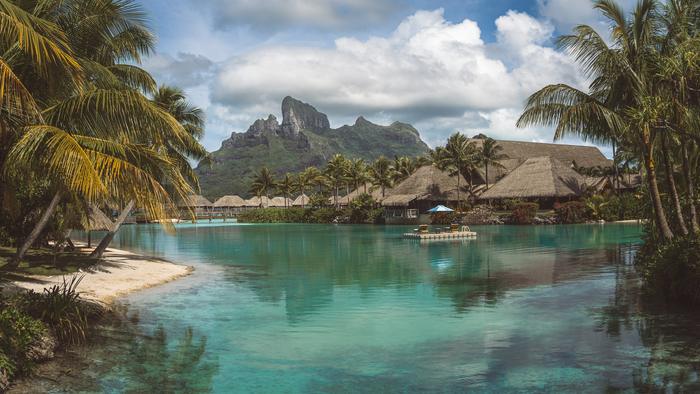
The honeymoon icon — Mount Otemanu over a turquoise lagoon, and a very high price.
1967 the overwater bungalow was invented here
Bora Bora is the postcard — a jagged peak, Mount Otemanu, rising over a ring of turquoise lagoon and motu islets — and the birthplace of the overwater bungalow. It’s the splurge island, overwhelmingly a luxury-honeymoon destination, with resorts running from four figures a night upward.
What the money buys is the address and the view, not the activities: the lagoon snorkelling, the ray-and-shark feeds and the Otemanu backdrop are the same whether you’re in an overwater suite or a pension.
If Bora Bora’s prices are out of reach, Moorea or Taha’a deliver much of the same lagoon beauty for far less — and you can visit Bora Bora’s lagoon on a day or a cheaper pension stay. The overwater bungalow is an experience worth one or two nights for many; a whole trip of it is a honeymoon budget.
Tahiti & Moorea
The gateway and the easy beauty
Tahiti is where you land; Moorea, 30 minutes away, is where many wish they’d stayed longer.
Tahiti is the largest island and the gateway — you fly into Papeete, and it’s worth a little time for the market, the black-sand beaches, and the legendary surf break Teahupo’o, which hosted the Paris 2024 Olympic surfing. But many visitors treat Tahiti as a transit point.
The island to linger on is Moorea — a 30-minute ferry from Tahiti, with jagged green peaks over a calm lagoon, the best value of the big islands, and a base for the seasonal whale swims. It’s the one that quietly outshines pricier Bora Bora for a lot of people.
Don’t burn your trip in a Papeete airport hotel — take the 30-minute ferry to Moorea for the first or last nights instead. It’s cheaper and far prettier than lingering on Tahiti, and the Aremiti/Terevau ferries run frequently across the channel.
Lagoons & diving
Atolls, sharks and black pearls
The Tuamotus are a world apart — drift dives through shark-filled passes and pearl farms.
For divers, the Tuamotu atolls are the real prize — ribbons of coral around vast lagoons, where tidal passes funnel staggering concentrations of marine life. Fakarava, a UNESCO Biosphere Reserve, is famous for the “Wall of Sharks” in its southern pass, where hundreds of grey reef sharks mass; Rangiroa’s Tiputa pass is a classic dolphin-and-shark drift dive.
The atolls are also the home of the Tahitian black pearl, farmed across the lagoons — the region’s signature souvenir, and far better value bought at source than at home.
| Site | Where | Note |
|---|---|---|
| Fakarava — Wall of Sharks | Tuamotus (south Tetamanu pass) | Hundreds of grey reef sharks massing in the pass |
| Rangiroa — Tiputa pass | Tuamotus | A drift dive with dolphins, sharks, rays |
| Bora Bora lagoon | Society Islands | Snorkel the reef — rays and reef sharks |
| Pearl farms | Tuamotus | Tahitian black pearls — the signature buy |
Fakarava is a UNESCO Biosphere Reserve; its southern Tetamanu pass holds the famous “Wall of Sharks.” The Tuamotu atolls are world-class drift-and-shark diving, with pearl farms a major local industry.
The Tuamotu diving is a different, wilder trip from the Society lagoons — plan it deliberately (a Fakarava or Rangiroa stay, a liveaboard), not as a casual add-on. For black pearls, buy from a Tuamotu farm or a reputable Papeete dealer with certification, not a cruise-stop stall.
Getting around
Inter-island flights, and a ferry
The archipelago runs on Air Tahiti — the backbone, and the biggest cost after the room.
Getting around means flying: Air Tahiti runs the hub-and-spoke network out of Papeete — Tahiti to Bora Bora is ~50 minutes — and these inter-island flights are, after accommodation, the biggest line in the budget. Air Tahiti’s air passes (chaining several islands) are the way to keep that down; a second carrier, Air Moana, has competed on the main routes since 2023.
The one exception is Moorea, reached by a 30-minute ferry from Tahiti rather than a flight. On the bigger islands you rent a car, scooter or bike; the atolls run on resort transfers and boats.
| Journey | How | Time |
|---|---|---|
| Los Angeles → Papeete | Direct flight | ~8 h |
| Tahiti ↔ Moorea | Ferry (Aremiti / Terevau) | ~30 min |
| Tahiti ↔ Bora Bora | Air Tahiti flight | ~50 min |
| Between island groups | Air Tahiti / Air Moana | hub-and-spoke from Papeete |
Inter-island flights are the backbone and the key cost; Air Tahiti’s multi-island air passes beat separate tickets for a multi-stop trip. Air Moana (since 2023) competes on the main routes, usually a touch cheaper.
Price an Air Tahiti air pass before booking island legs separately — for a multi-island trip it’s usually much cheaper, and it’s the single biggest lever on a French Polynesia budget after the room. Check Air Moana’s fares too, but note it’s the smaller, more fragile operator.
When to go
Dry winter, whale spring
Come in the dry, cooler season — and time it to the humpbacks if you can.
Jul–Nov the humpback-whale season
Heiva i Tahiti, the big song-and-dance festival, is in July at Place To’ata in Papeete. The crimson bar is the dry season; the wet season (shown wrapping from November) runs through April.
The best time is the dry, cooler austral winter, May to October — sunny, calmer seas, lower humidity. The November–April stretch is hot and humid, with a low (but real) cyclone risk peaking December–February.
If wildlife matters, time it to the humpback whales (roughly July–November), when Moorea and Rurutu offer tightly-regulated swim-with-whales trips. July also brings Heiva i Tahiti, the great cultural festival of song and dance in Papeete.
Money
The CFP franc, and a very high bar
Not euros, and one of the world’s most expensive destinations — plan for it.
The currency is the CFP franc (XPF) — France-issued, euro-pegged, but not the euro — and French Polynesia is, flatly, one of the most expensive places you can travel: a mid-Pacific archipelago that imports almost everything, with a small luxury inventory and relentless honeymoon demand. We don’t publish day-rates, but the shape is clear: the overwater-bungalow economy sets a high floor.
A small mercy is that tipping is not customary — service isn’t expected — so the eye-watering restaurant bill is at least the whole bill. Cards work on the main islands; carry XPF cash for the atolls, pensions and markets.
Trim the cost where the islands let you: a pension or a Moorea stay instead of Bora Bora overwater, an Air Tahiti air pass, and self-catering on the bigger islands all help. The lagoons, the hikes and the snorkelling are free — the spend is the room and the inter-island flights, so that’s where the savings are.
Compare French Polynesia
If you like French Polynesia, also consider
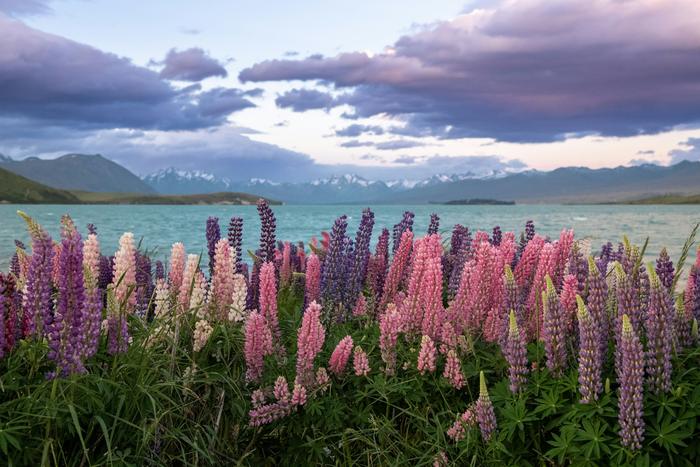
New Zealand
Fjords, volcanoes, glaciers, beaches — in one country.

Greece
Ruins in the morning, a swim by noon, taverna until dark.
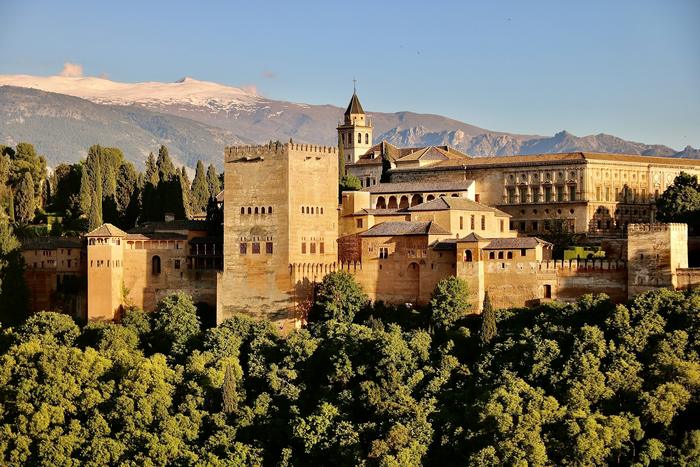
Spain
Food, beaches, and three or four cities that each justify the trip.
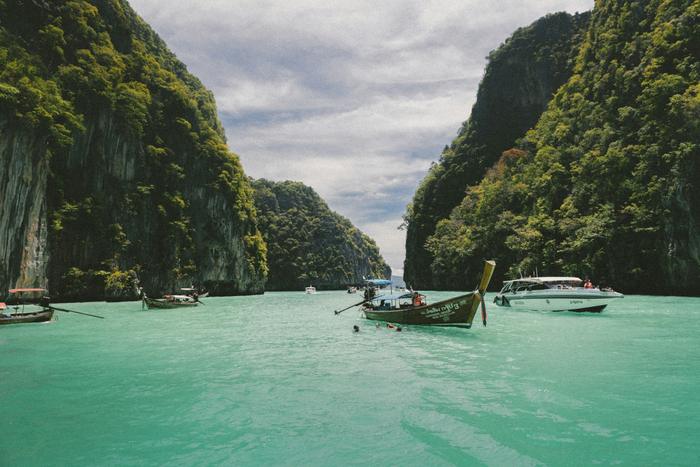
Thailand
The complete package for warm-climate travel.
Not sure where to go
Take the 5-minute quiz
Answer a few honest questions and get matched to destinations that actually fit how you travel.
Start the quiz