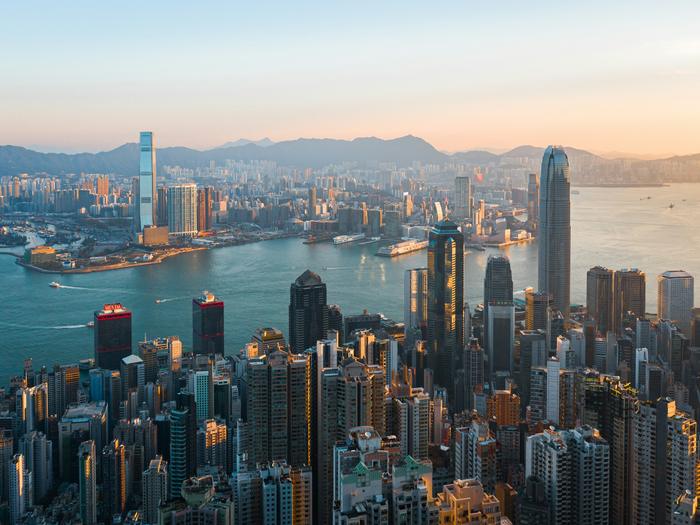
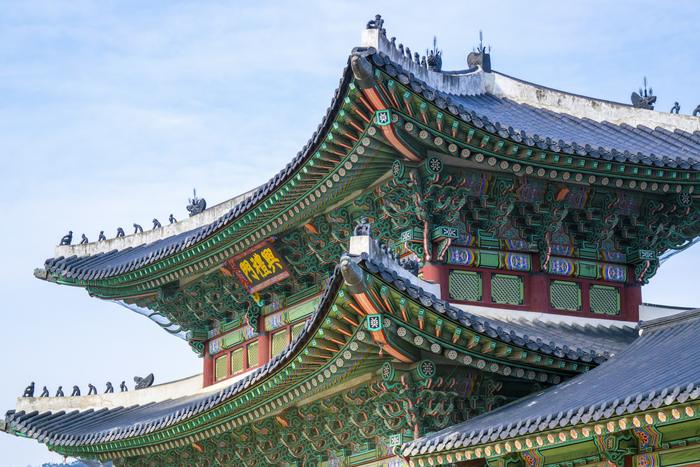
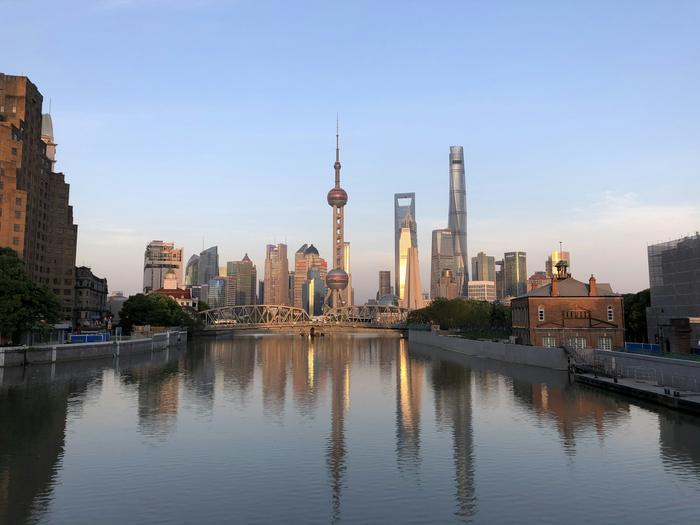
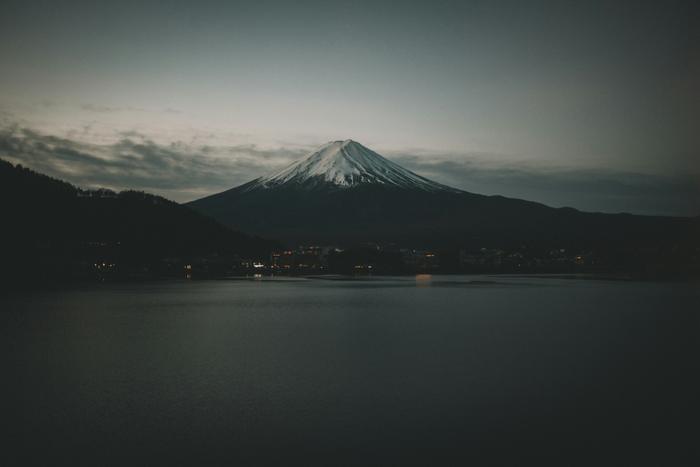
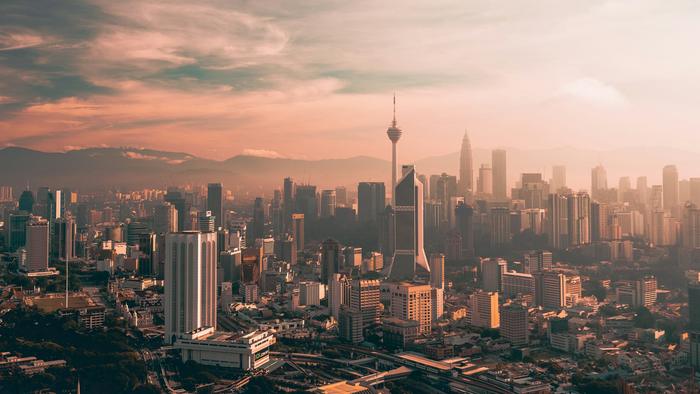
Two East Asian trips that barely overlap. Hong Kong is a vertical city-state you can take in over a long weekend — harbour skyline, dim sum, a Star Ferry and a ridge hike before dinner. South Korea is a whole country that wants a week or two — Seoul’s palaces and nightlife, Busan’s beaches, old Silla temples, autumn mountains and the global pull of K-pop and Korean food. The honest split is not which is better but which trip you are taking: a short, intense city stop, or a full-country tour.
A city you can see in a weekend, or a country that wants two weeks
Both are East Asian highlights — but one is a compact, vertical city-territory, the other a full country of cities, temples, mountains and coast.
3–4 dayscovers the Hong Kong headlineSkyline, the Peak, dim sum, a market and one hike or island
1–2 weeksis the natural South Korea tripSeoul plus one or two of Busan, Gyeongju, Jeju or Seoraksan
~1,110 km²Hong Kong — against Korea’s ~100,400A city-territory beside a country roughly 90 times its size
Hong Kong is the compact dynamo. A dense, vertical city-territory of 7.5 million people where the harbour skyline, the dim sum, the markets and surprisingly serious hiking all sit within an hour of each other, reachable on one Octopus card. You can take in the headline in three or four days, which is exactly why it works as a short break or a stopover on the way somewhere else.
South Korea is the full country. Seoul’s megacity energy and royal palaces, Busan’s beaches and fish market, the old Silla capital at Gyeongju, volcanic Jeju, the autumn fire of Seoraksan — plus the global K-culture wave of K-pop, K-drama and Korean food. It rewards a week or two, not a weekend.
So the choice is really about the shape of the trip, not a ranking. The operational detail — Hong Kong’s visa-free entry and transit role, South Korea’s shifting K-ETA rule and its blossom-and-foliage seasons — lives on the two guides: Hong Kong, know before you go and South Korea, know before you go. This page is the head-to-head.
Scale & time
One base, or a moving itinerary
Hong Kong is done from a single hotel; South Korea is Seoul plus one or two — and the planning is completely different.
~90×South Korea’s land area versus Hong Kong’s
Hong Kong packs its skyline, country parks and outlying islands into about 1,110 km² — a territory you never need to change hotels in, because the MTR reaches the lot in under an hour. South Korea is a country of roughly 100,400 km², so the trip is a sequence of bases strung along the KTX line: Seoul, then a pick of Busan, Gyeongju, Jeju or the north-eastern mountains. The time you spend deciding where to sleep is the single biggest practical difference between the two.
In Hong Kong you pick one base — Hong Kong Island (Central) or Kowloon (Tsim Sha Tsui), a few minutes apart across the harbour — and day-trip everything else: the New Territories monasteries and beaches, the Big Buddha on Lantau, car-free Lamma and Cheung Chau. You never pack a bag twice. The full where-to-base breakdown is on the Hong Kong guide.
South Korea works the other way. Seoul anchors almost every trip, and then you add bases by what you want: Busan for the coast (KTX about 2h15), Gyeongju for open-air Silla history, Jeju for volcanic island scenery (a flight, not a train), Seoraksan for autumn colour or winter skiing. A week is Seoul plus one or two of those; two weeks starts to feel like the country rather than a highlights reel. The South Korea guide lays out the bases and the times between them.
A useful rule of thumb when you are deciding how many nights to give each: Hong Kong rarely justifies more than four nights for a first visit (a fifth is for deeper hiking or a second island), while South Korea rarely justifies fewer than six — any shorter and you are really just doing Seoul, at which point you are comparing two cities, not a city and a country.
Entry
Both easy — but Korea’s rules are mid-change
Two of Asia’s more frictionless entries, with one moving piece on the Korean side that is worth checking the week you book.
No cardHong Kong dropped arrival/departure forms in Oct 2024Visa-free 90 days for most Westerners, 180 for British citizens
31 Dec 2026the date Korea’s K-ETA waiver is set to lapseK-ETA due back 1 Jan 2027 unless extended again — check k-eta.go.kr
e-Arrival Cardfree, filed online, mandatory for Korea since 1 Jan 2026K-ETA holders are exempt from it
Hong Kong is the simpler of the two. Most Western passports enter visa-free for 90 days (British citizens 180), and since October 2024 there is no arrival or departure card to file at all — you simply clear immigration. The one thing to understand is that Hong Kong is a separate immigration zone from mainland China: your Hong Kong entry does not let you cross into Shenzhen or the mainland, which needs its own Chinese visa arranged in advance.
South Korea is nearly as easy, but the rule is in flux. Right now the K-ETA is waived for around 22 nationalities — the US, UK, Canada, Australia, Japan and most of the EU — who enter visa-free with nothing to apply for. That waiver expires on 31 December 2026, with the K-ETA (about ₩10,000, valid three years) due to return on 1 January 2027 unless Korea extends the waiver yet again, as it has done each year. Separately, a free e-Arrival Card has been mandatory for all visitors since January 2026, filed online in the three days before you land.
The practical upshot for a 2027 trip: check k-eta.go.kr before you book Korean flights, because whether you need to apply (and pay) 72 hours ahead flips on the waiver decision. Hong Kong has no equivalent catch — the only thing to remember there is that the mainland border is real, however close the Greater Bay Area high-speed rail makes Shenzhen look. Both guides carry the current detail.
When to go
Four seasons each — and Korea’s are a reason to time the trip
Both have real winters and a hot, storm-prone summer; the difference is that Korea’s spring and autumn are destinations in themselves.
MAMJJASOND
Korea — cherry blossom (south → Seoul)Late Mar – mid-Apr
Late Mar – mid-Apr
Hong Kong — humid, foggy springMar – Apr
Mar – Apr
Korea — jangma monsoonLate Jun – Jul
Late Jun – Jul
Hong Kong — typhoon season (Signal 8 shuts the city)May – Nov
May – Nov
Korea — typhoon riskAug – Sep
Aug – Sep
Korea — autumn foliage (mountains → south)Oct – mid-Nov
Oct – mid-Nov
Hong Kong — dry, clear, best hikingLate Oct – Feb
Late Oct – Feb
Crimson bars are the ones that decide a trip: Korea’s blossom and foliage windows are worth planning around, and Hong Kong’s long typhoon season carries the Signal No. 8 that can shut the whole city for a day. Both shoulder onto a shared sweet spot in autumn.
Hong Kong has one clear window: autumn into early winter. Late October to December is dry, mild and clear — the best skyline visibility and the best hiking of the year. Spring is humid and foggy; summer (May–September) is hot and 80–90% humid, and it is typhoon season, when a Hong Kong Observatory Signal No. 8 or above effectively closes the city — transport winds down, shops and attractions shut, flights are cancelled. It usually blows through in a day, so leave a buffer around summer flights.
South Korea gives you two windows worth actively timing. The cherry blossom sweeps up the peninsula over about a fortnight — Jeju and Busan around 22–30 March, reaching Seoul roughly 4–10 April — and the autumn foliage runs the other way, igniting in the north-eastern mountains in early-to-mid October and working down to Seoul by late October into November. The trade-off is the middle of the year: the humid jangma monsoon from late June into July, and a real typhoon risk in August and September. Winter is cold and dry, and it unlocks a season Hong Kong simply does not have — skiing in the Gangwon resorts of the 2018 Winter Olympics region.
The seasons converge in autumn, which is the best single answer for doing both: late October gives Hong Kong its clearest skyline weather and catches the Korean foliage as it reaches Seoul and the south. If you can only travel in the deep summer, both carry a storm risk — build a flexible day into either leg.
Getting around
One tap-card city versus a bullet-train country
Both have world-class transit and need no car — but one runs on a single smartcard across a tiny territory, the other on high-speed rail across a whole country.
~2h15Seoul to Busan by KTX — the length of the country
South Korea’s transport story is distance made short: the KTX high-speed train crosses the peninsula from Seoul to Busan in about 2h15, and a T-money card taps you onto the Seoul metro, city buses and many taxis (though not the KTX, which you book separately via Korail). Hong Kong’s story is density made seamless: there is nothing to cross, so the whole system is one Octopus tap across the MTR, buses, the century-old trams, the Star Ferry and the Peak Tram. Two superb systems solving opposite problems.
Hong Kong invented the tap-to-pay smartcard and runs the entire city on it. The Octopus card, from 1997, pays for the MTR metro, the buses, the double-decker "ding ding" trams on Hong Kong Island, the ferries and the Peak Tram — and works in convenience stores and shops besides. The Star Ferry across the harbour is a few Hong Kong dollars and one of the world’s great cheap views, and the Airport Express reaches Central in about 24 minutes. Because the territory is tiny, getting around is never a trip in itself.
South Korea’s equivalent is the KTX. The high-speed network is the spine of the country — Seoul to Busan in about 2h15 — with a T-money card handling the city metros and buses on top. Crucially, T-money does not cover the KTX, which you book separately through Korail, and the one intercity leg that is a flight rather than a train is Seoul to Jeju, which happens to be the busiest air route on earth. Unlike China next door there is no firewall, so Google Maps and the Papago translation app work out of the box.
Both are genuinely car-free trips. Hong Kong needs nothing beyond an Octopus card; in Korea, T-money covers the cities while the KTX and domestic flights link them — full fares and times are on the two guides. Note foreign contactless cards do not yet work at Seoul subway gates, so a physical T-money card still matters there.
Cost
Both mid-priced — Korea just has more range
Neither is a budget blowout or a bargain; the real difference is that a whole country offers a wider spread than a single dense city.
Tiny roomsHong Kong’s structural cost catch
Hong Kong is cheap to eat and to get around — a bowl of wonton noodles or a dim sum plate costs a few dollars, and the Octopus fares are low — but it is expensive to sleep and to drink, and a "standard" mid-range room can be genuinely tiny. South Korea sits mid-to-higher overall (cheaper than Japan, dearer than Southeast Asia) but spreads far wider: guesthouses and hostels at the bottom, glossy hotels at the top, and a VAT refund for tourists on larger purchases.
Hong Kong’s cost has a very specific shape. Food and transport are among the cheapest pleasures in any major city, so your daily spend on the ground is modest — but the bed and the bar bill are not. Hotel rooms are small and expensive, and drinks in the bar districts run high. Because it is one compact city, there is less of a budget floor to drop onto: you pay city-centre prices because there is no countryside to retreat to.
South Korea gives you more levers. As a whole country it has a genuine budget tier — hostels, guesthouses, the templestay programme — alongside the full-price city hotels, and the won has traded weakly through 2026, which helps. Tipping is not customary, and tourists can reclaim VAT on larger purchases. The upshot: two mid-priced destinations, but Korea is the one where you can dial the trip up or down.
We keep exact daily figures off this page on purpose — hotel rates and exchange-driven prices both move within a season, and a stale number is worse than none. The reliable, durable rule is the one above: Hong Kong is cheap to experience and dear to sleep in; Korea spreads across a wider range because it is a country, not a city. The guides carry the current ballpark figures.
Food & pop culture
Dim sum and Cantopop, or Korean BBQ and K-pop
Both are world-class to eat and both export their culture — but they are different kitchens and different soundtracks.
~77 starsHong Kong is a Michelin city whose soul is cheap
Hong Kong carries around 77 Michelin-starred restaurants, yet the real genius is the bottom of the menu — the dim sum trolley, the roast-goose shop, the wonton-noodle counter, the vanishing dai pai dong open-air stalls. South Korea answers with a whole food culture of its own: Korean BBQ grilled at the table, the spread of banchan side dishes, fried chicken, and a buzzy street-and-market scene — plus the global pull of K-pop and K-drama that Hong Kong, for all its Cantopop and cinema heritage, does not match today.
Hong Kong is one Cantonese tradition, done at every price. The soul of it is at the bottom — the cha chaan teng diners with their milk tea and pineapple buns, the roast-meat shops hung with lacquered goose and char siu, the dim sum trolleys — while the top is a dense constellation of Michelin stars. The point everyone makes is that the finest eating is often also the cheapest: a bowl of wonton noodles is a few dollars, and Tim Ho Wan was once billed as the world’s cheapest Michelin meal.
South Korea is a whole national cuisine, and a cultural phenomenon on top. Korean BBQ and the ritual of banchan, the stews, the fried chicken, the market and tent-bar street food — and then the reason many people come at all, the K-culture wave of K-pop and K-drama that Hong Kong, whose own Cantopop and cinema golden age has faded, no longer rivals. If the music, the dramas and the food trends are part of why you are going, that pull points firmly to Korea.
Hong Kong
South Korea
The signature meal
Dim sum (yum cha) with tea
Korean BBQ grilled at the table
The everyday bowl
Wonton noodles, a few dollars
Bibimbap, kimchi stew, street tteokbokki
The cheap icon
The dai pai dong and cha chaan teng
The market stall and the pojangmacha tent
Fine dining
~77 Michelin stars, dense and Cantonese
A rising Seoul scene, Korean and global
The pop-culture export
Cantopop and classic HK cinema
K-pop, K-drama — the global wave
Both reward eating at the cheap end as much as the expensive one. Hong Kong’s pleasure runs top to bottom of a single Cantonese tradition; Korea’s is a broader national cuisine plus the K-culture draw that brings many visitors in the first place. Full dish rundowns are on the two guides.
What you see
A skyline and a peak, or palaces, temples and a volcano
Hong Kong’s headline sights are close together and quickly seen; Korea’s are spread across a country and take days to join up.
Hong Kong’s highlights are efficient and stacked close. Victoria Peak by the funicular tram (or the free Lugard Road loop), the Big Buddha and Po Lin Monastery on Lantau, the free nightly A Symphony of Lights over the harbour, a night market at Temple Street or Mong Kok, and — the most underrated fact about the place — a ridge trail like the Dragon’s Back about 40 minutes from Central. Roughly 40% of the territory is protected country park, so the city and the wild sit side by side.
South Korea’s highlights are a country’s worth, and they are spread out. Seoul’s four grand Joseon palaces and the Bukchon hanok lanes; Busan’s beaches, fish market and the photogenic Gamcheon Culture Village; the open-air Silla history of Gyeongju; the autumn showpiece of Seoraksan; and volcanic Jeju with Hallasan and its lava tubes. There is also the DMZ day-trip from Seoul — a guided visit to the world’s most fortified border that has no equivalent anywhere in Hong Kong.
Hong Kong
South Korea
The signature view
Victoria Peak over the harbour skyline
Seoul’s palaces under the mountains
The icon
The Big Buddha on Lantau
Gyeongbokgung and the guard-changing
The free show
A Symphony of Lights, nightly at 8pm
Gamcheon Culture Village, Busan
The nature
Dragon’s Back ridge, country parks
Seoraksan foliage, Hallasan on Jeju
The history
Ten Thousand Buddhas, old fishing islands
Silla tombs and temples at Gyeongju
Hong Kong’s list sits inside an hour of one hotel; Korea’s is scattered from Seoul to Busan to Jeju and needs the KTX and a domestic flight to string together. The detailed sight-by-sight guidance is on the two country pages.
Who suits which
Who each actually suits
On several of these the answer inverts — the one that wins overall loses for your particular trip.
If you are…
Hong Kong
South Korea
Short on time, or on a stopover
Wins clearly. The headline fits into three or four dense days, and it is a classic transit stop
Wants a week or more — a few days here is really just Seoul
After a full-country tour
A city-territory, not a country — you will exhaust it
Wins clearly. Cities, temples, mountains, coast and an island across two weeks
Chasing K-pop, K-drama and Korean food
Cantopop and dim sum, not the K-wave
Wins. This is the source of the whole thing
After skyline, dim sum and shopping
Wins. The vertical harbour city is its signature
Great cities too, but not this concentrated drama
Travelling in deep winter
Dry and mild — good city weather, no snow sports
Wins if you ski. The Gangwon resorts have a real season
Timing a trip to blossom or autumn colour
Pleasant autumn, but no headline bloom
Wins. Spring blossom and autumn foliage are destinations in themselves
Doing both
A 3.5-hour flight — easy to pair
Plenty of people asking “which one?” are really asking “can I do both?” — you can, and they complement each other well.
~3.5 hrsHong Kong to Seoul, non-stop
Hong Kong and Seoul are about a 3.5-hour flight apart, with frequent non-stop service on several carriers, so the two make a natural two-stop East Asia trip. The usual shape is a few dense days in Hong Kong bookending a longer South Korea leg — the compact city as the arrival or departure hit, the country as the main event. Because the seasons line up in autumn, late October is the single best month to run the pair.
The combination plays to each one’s strength: Hong Kong gives you the short, intense city hit and a world-class transit hub to fly through, while South Korea gives you the week-plus of range and depth. Neither duplicates the other — different kitchens, different scales, different reasons to go — so pairing them is additive rather than repetitive.
Each also compares usefully with its wider region if you are still shaping the trip: Hong Kong against Taiwan and Japan, and South Korea against China and Japan.
If you only have time for one country plus the flight, treat Hong Kong as the bookend, not the destination: three or four nights there and the rest in Korea reads far better than splitting evenly, because Hong Kong is finished long before Korea is. The reverse — a week in Hong Kong and two days in Seoul — leaves both legs feeling wrong.
What we leave out
What we deliberately leave out
Two things are missing on purpose. The first is exact prices beyond the structural comparison — Hong Kong’s hotel rates and Korea’s exchange-driven costs both move faster than we could keep accurate, so the figures here are the shape of the difference, not a quote. The country guides carry the live detail.
The second is the fine print of entry mechanics — Hong Kong’s visa-free transit and the separate China border, South Korea’s K-ETA-and-e-Arrival-Card sequence — which is volatile (Korea’s waiver status changes at the turn of the year) and belongs on the guides rather than restated here. Treat anything seasonal or entry-related on this page as worth a re-check close to travel.
Hong Kong or South Korea, month by month
Which of the two is the better bet for each month of the year, scored on
how well the season suits each place.
K-pop, K-drama and Korean food are a real part of why you are going.
You want a full-country trip — Seoul plus Busan, temples, mountains and an island — over a week or two.
You are timing the trip to spring blossom or autumn foliage, or you want to ski in winter.
You want a wider budget range and the room to dial the trip up or down.
Common questions
Is Hong Kong or South Korea better for a short trip?
Hong Kong, clearly. It is a compact city-territory you can experience in three or four days — skyline, Victoria Peak, dim sum, markets, a quick hike or island hop — and a classic stopover on the way elsewhere. South Korea is a full country that really wants a week or more to take in Seoul plus Busan, temples and the countryside; a short trip there is really just Seoul.
Which has the better food?
Both are world-class, differently. Hong Kong is a dim-sum, Cantonese and street-food paradise with a dense Michelin-starred top end and a cheap end that is the real soul of it. South Korea brings Korean BBQ, the banchan spread, fried chicken and a huge market-and-street food world — plus the K-food wave itself. For Cantonese and dim sum, Hong Kong; for Korean BBQ and the K-culture draw, South Korea.
Do the entry rules differ?
Yes, and Korea’s are mid-change. Hong Kong is visa-free for most Western visitors (90 days, 180 for British citizens) with no arrival card since October 2024 — just remember it is a separate border from mainland China. South Korea is visa-free for short stays, but its K-ETA waiver is set to lapse on 31 December 2026, with the K-ETA due back on 1 January 2027 unless extended again, and a free e-Arrival Card is mandatory. Check k-eta.go.kr before a 2027 trip; the guides carry the specifics.
When should I go, and can the seasons line up?
Hong Kong is at its best from late October to December — dry, clear and the best skyline and hiking weather. South Korea’s headline seasons are the spring cherry blossom (late March to mid-April) and the autumn foliage (October into November). They converge in autumn, so late October is the ideal month to do both: clear skies in Hong Kong and the foliage reaching Seoul.
Can I combine them, and how should I split the time?
Easily — they are about a 3.5-hour non-stop flight apart and make a natural two-stop East Asia trip. The shape that works is a few days in Hong Kong bookending a longer Korea leg: the compact city as the arrival or departure hit, the country as the main event. Splitting the time evenly reads badly, because Hong Kong is finished long before Korea is.