Uzbekistan
The Silk Road made real — turquoise-tiled cities that look like nowhere else, at prices that barely register.
Uzbekistan is the reason the Silk Road still fires the imagination. Samarkand, Bukhara, and Khiva are among the great trading cities of history, and the monuments survive at full scale: towering madrasas faced in turquoise and cobalt tile, minarets, mausoleums, and covered bazaars. Long closed-off and now genuinely easy to visit visa-free, it has become one of the most rewarding — and startlingly cheap — cultural trips on earth.
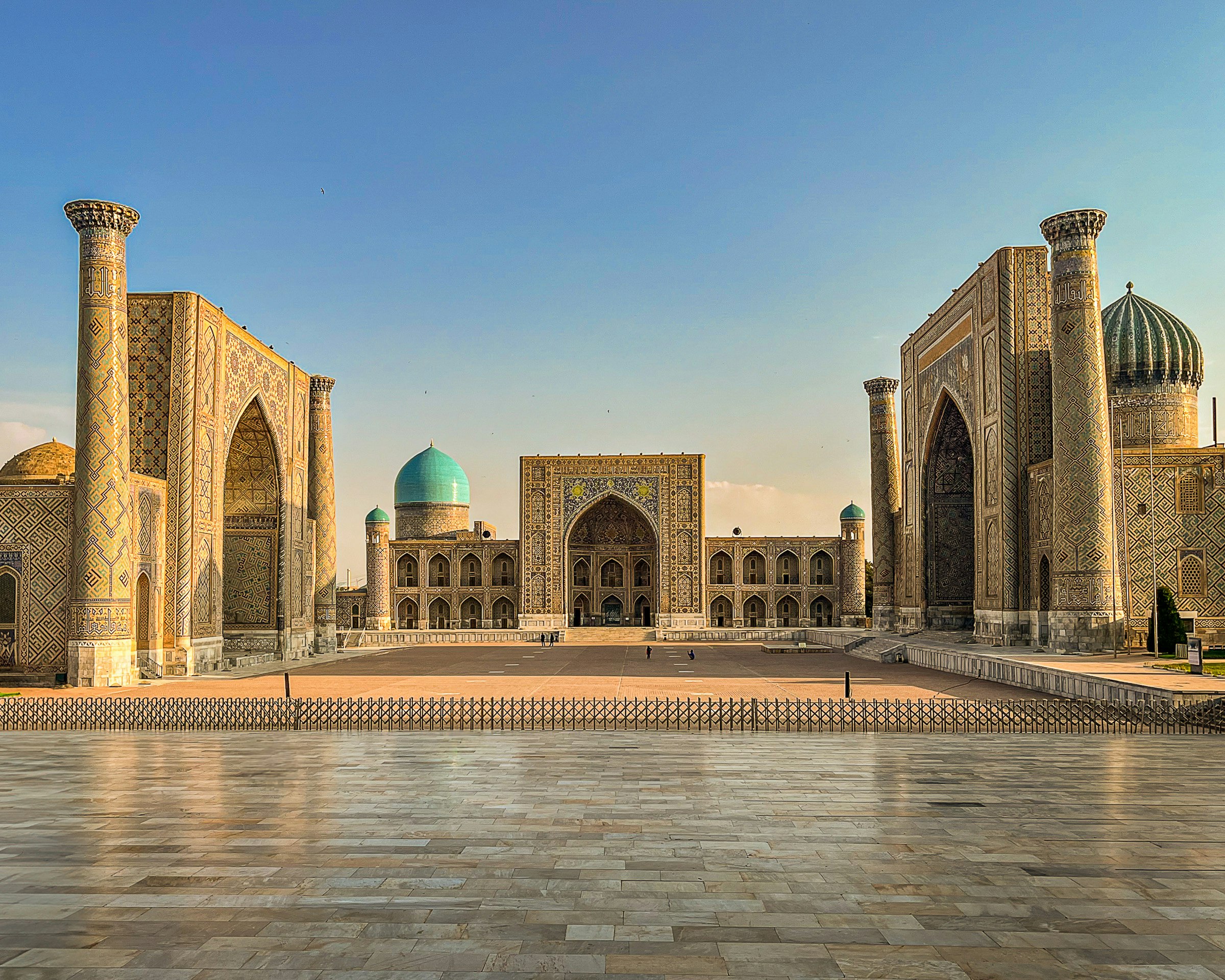
The classic route strings together three cities on a fast, comfortable train. Samarkand is the showstopper: the Registan, a plaza framed by three colossal tiled madrasas, is one of the most spectacular built spaces anywhere, and the Shah-i-Zinda avenue of tombs is even more intense up close. Bukhara is more intact and atmospheric — a still-lived-in medieval centre of madrasas, a slave-market square, and trading domes you can wander for hours. Khiva, out west, is a walled desert city so complete it feels staged. Tashkent, the Soviet-modern capital, is where you land, with a metro of chandeliered stations. The food is hearty and meat-heavy — plov (rice pilaf), samsa, kebabs, bread — and hospitality is genuine and constant.
The honest part: this is a culture-and-history trip, not a beach-or-nightlife one, and the appeal is fairly single-note — after three tiled cities some travelers feel they've seen the register. English is scarce (Uzbek and Russian rule; a few phrases and a translation app go a long way), and the summer heat is punishing while winter is bleak, so timing really matters. Infrastructure is improving fast but still rough at the edges outside the main sights. Come in spring or autumn, keep the pace unhurried, and you get world-class monuments, warm hospitality, and prices so low the whole trip feels like a bargain.
Highlights
-
The Registan, Samarkand
Three vast tiled madrasas around one plaza — arguably the single most spectacular sight on the Silk Road.
-
Shah-i-Zinda
A narrow avenue of tombs in Samarkand, walls of intricate blue tilework pressing in on both sides.
-
Bukhara old town
A still-inhabited medieval core of madrasas, minarets, and trading domes you can lose a day wandering.
-
Khiva (Itchan Kala)
A complete walled desert city out west — so intact it feels like a film set.
-
Tashkent metro
The Soviet-era capital’s underground: marble, mosaic, and chandeliered stations, each one different.
-
Plov & Silk Road food
Hearty rice pilaf, samsa, and fresh bread — cheap, generous, and central to the hospitality.
Practical info
- Visa
- Visa-free for many Western passports (typically 30 days) or a simple e-visa. Verify before travel.
- Currency
- Uzbekistani Som (UZS); carry cash, though cards are increasingly accepted in cities.
- Language
- Uzbek and Russian; little English outside the main hotels and sights.
- Safety
- Very safe for travelers; petty crime is low and the police presence is heavy.
- Getting around
- Fast Afrosiyob trains link Tashkent, Samarkand, and Bukhara; shared taxis and domestic flights fill gaps.
- Tap water
- Drink bottled water.
- Plug type
- Type C Type F 220V
- Money
- Cash is still king; ATMs in cities can be unreliable, so bring US dollars to exchange.
General guidance — visas, safety, and health change, so check your government's travel advisory and the official sources before you go.
Common questions
- Do I need a visa for Uzbekistan?
- Mostly no — US citizens became visa-free (30 days) on 1 January 2026, joining UK, EU, Canadian and Australian visitors who’ve been visa-free since 2018–19. Others use the quick e-visa at evisa.uz. See entry.
- What are the must-sees?
- The three great Silk Road cities — Samarkand (the Registan), Bukhara (the best-preserved medieval city) and Khiva (the walled Itchan Kala) — all UNESCO-listed. See Samarkand and Bukhara & Khiva.
- How do I get between the cities?
- The sleek Afrosiyob high-speed train links Tashkent–Samarkand (~2 h)–Bukhara, and a new fast service reached Khiva in 2026 (cutting it from ~14 h to under 8). See getting around.
- Is the Aral Sea worth the detour?
- For the curious, yes — Moynaq’s ship graveyard, where the sea retreated over 100 km, plus the extraordinary Savitsky avant-garde art museum in nearby Nukus, make a striking (if long) western detour. See the desert & Aral.
- When should I go?
- Spring (April–June) and autumn (September–October) — mild and clear. Summers are scorching (40°C+ in the desert) and winters cold. See when to go.
- Is it cheap and safe?
- Very cheap and safe, a predominantly Muslim but secular society famous for hospitality — and the national dish, plov. See money & culture.
Entry
Now visa-free — Americans included
A recent reform made entry easy for almost everyone.
Uzbekistan has transformed from a bureaucratic destination into one of the region’s most open. The newest change: US citizens became visa-free for 30 days on 1 January 2026 — joining the UK, EU, Canadian and Australian visitors who’ve enjoyed visa-free entry since the 2018–19 liberalisation, part of a push toward visa-free access for 90+ nationalities.
Everyone else can apply online for an e-visa (evisa.uz), approved in a few days. One lingering formality: registration within about 72 hours of arrival — but hotels and guesthouses handle it automatically, so it rarely troubles travellers.
The US visa-free rule is brand new (January 2026), so older guides and even some desks may lag — but it’s in force. Keep your registration slips (hotels issue them) in case they’re checked on exit, and if you’re staying in private accommodation, self-register to be safe, as the rules have recently been relaxed and are still settling.
Samarkand
The Silk Road’s showpiece
The name alone carries the romance — and the reality lives up.
UNESCO (2001) Samarkand — "Crossroad of Cultures"
Samarkand is the one that needs no introduction — Timur’s imperial capital, and the single most spectacular stop on the Silk Road. Its centrepiece, the Registan, is a trio of monumental madrasas sheathed in turquoise and gold tile, among the greatest architectural ensembles anywhere.
Beyond it, Gur-e-Amir holds Timur’s tomb beneath a fluted dome that echoes down to the Taj Mahal, while the Shah-i-Zinda necropolis is a narrow lane of mausoleums so intensely tiled it almost glows. The fast train makes it an easy anchor for any trip.
Visit the Registan twice — by day for the tilework and again at dusk, when the light turns it molten and the crowds thin. Samarkand pairs naturally with Bukhara on the high-speed line, and the whole three-city circuit (adding Khiva) is the classic itinerary; give Samarkand at least a full day.
Bukhara & Khiva
A living old city and a walled museum
Two more UNESCO cities — one lived-in, one frozen in time.
Bukhara is the counterpoint to Samarkand’s grandeur — a more intimate, lived-in medieval city, the best-preserved in Central Asia, where you wander between the towering Poi-Kalyan minaret and mosque, the mud-brick Ark fortress, and shaded pool of Lyab-i-Hauz, with trading domes and madrasas at every turn.
Far to the west, Khiva is different again: the entire walled inner city of Itchan Kala is a near-perfect open-air museum of madrasas, minarets and palaces inside its mud ramparts — Uzbekistan’s first UNESCO listing, and the most compact and complete of the three.
| Place | What | Note |
|---|---|---|
| Bukhara | The best-preserved medieval Central Asian city | Poi-Kalyan minaret, the Ark fortress — UNESCO (1993) |
| Khiva | The walled inner city of Itchan Kala | An open-air museum — UNESCO (1990), the first listing |
| Shah-i-Zinda (Samarkand) | A dazzling avenue of tiled mausoleums | Part of Samarkand’s UNESCO ensemble |
| Gur-e-Amir (Samarkand) | Timur’s mausoleum | The ribbed dome that inspired the Mughals |
The three Silk Road cities — Samarkand, Bukhara, Khiva — are the heart of any trip; the fast train links the first two, and now reaches toward Khiva.
Tashkent & Fergana
A modern capital and the craft valley
The gateway city — and the silk-and-ceramics east.
Tashkent, the capital, is the usual point of arrival — a big, green, Soviet-planned city (rebuilt after the 1966 earthquake) whose highlights are the ornately decorated metro stations and the domed Chorsu Bazaar. It’s a comfortable base rather than the trip’s climax.
East lies the fertile, traditional Fergana Valley, the craft heartland — Margilan for its ikat silk (watch it woven at the Yodgorlik factory) and Rishtan for its distinctive blue-glaze ceramics — a more conservative, everyday Uzbekistan away from the monument trail.
| Place | What | Note |
|---|---|---|
| Tashkent | The modern, Soviet-rebuilt capital | Ornate metro; the domed Chorsu Bazaar |
| Margilan | The Fergana silk-weaving town | Ikat/atlas at the Yodgorlik factory |
| Rishtan | The blue-glaze ceramics town | In the Fergana Valley |
| Nukus | Gateway to the Aral + the Savitsky Museum | A hoard of Soviet avant-garde art |
Tashkent was largely rebuilt on a Soviet plan after the 1966 earthquake — the arrival hub rather than a sightseeing climax.
Don’t overplan Tashkent — a half-day for the metro and Chorsu is plenty before you head for the Silk Road cities. The Fergana Valley is a worthwhile craft-focused add-on if you have time, but it’s a detour east; most first trips prioritise Samarkand–Bukhara–Khiva instead.
Desert & Aral
A shrunken sea and a yurt in the sand
The stark west: an environmental tragedy and desert nights.
~100+ km Moynaq — the distance the Aral Sea retreated, leaving a ship graveyard
The far west is Uzbekistan at its starkest. The Aral Sea — once one of the world’s largest lakes — was drained to a fraction of itself by Soviet cotton irrigation, and the ghostly ship graveyard at Moynaq, where trawlers rust on dry seabed over 100 km from the water, is a sobering monument to it. The regional capital Nukus hides the remarkable Savitsky Museum of forbidden avant-garde art.
Between the Silk Road cities, the Kyzylkum desert offers a gentler detour — community yurt stays in the Nuratau foothills and beside Aydarkul lake, a taste of the nomadic steppe.
The Aral/Moynaq detour is a long haul west (fly to Nukus to save days) and really for the environmentally and historically curious — but the Savitsky Museum alone rewards the trip. For most itineraries, a Kyzylkum yurt night between Samarkand and Bukhara is the easier, atmospheric desert add-on.
Getting around
A fast train down the Silk Road
The high-speed line makes the classic circuit genuinely easy.
Getting around is the best surprise. The Afrosiyob high-speed train glides between Tashkent, Samarkand (~2 hours) and Bukhara — comfortable, cheap and the natural spine of a Silk Road trip, so book it ahead. In 2026 a new fast service to Khiva slashed that once-brutal journey from about 14 hours to under eight.
Beyond the rail line, shared taxis fill the gaps, and domestic flights from Tashkent (the main gateway) reach the far west — the quickest way to Nukus and the Aral if you’re making that detour.
When to go
Spring and autumn, not the desert summer
A continental climate with two clear sweet spots.
Spring (April–June) and autumn (September–October) are the comfortable windows — mild and clear for the tiled cities. Mid-summer is blisteringly hot (40°C+ in the desert) and winter is cold with crisp, quiet, uncrowded sightseeing.
Uzbekistan has a sharply continental climate, so timing matters. The clear winners are spring (April–June) and autumn (September–October) — mild, clear days perfect for wandering the tiled cities, with autumn adding the bonus of melons and the harvest.
Avoid high summer (July–August) if you can, when the desert cities bake past 40°C, and expect a cold, quiet winter — atmospheric and crowd-free if you don’t mind wrapping up.
Money & culture
Cheap, open, and hospitable
A reforming, secular country where a little money goes a long way.
Uzbekistan is very cheap and, since the 2017 currency float unified the exchange rate and killed the black market, far easier to handle money in — though it’s still largely a cash economy, so carry som (around 12,000 to the dollar). The reforms of recent years have made the whole country markedly more traveller-friendly.
Culturally it’s a predominantly Muslim but secular society, with Uzbek and Russian both widely spoken and a deep tradition of hospitality — expect to be plied with tea and plov (the beloved rice-and-mutton national dish). It’s a safe, welcoming place to travel.
- A first classic tripSkiptrying to add the far westGoTashkent → Samarkand → Bukhara by fast train
- The full Silk RoadSkipskipping the westGoadding Khiva (now a faster train from Tashkent)
- Desert and the AralSkipa cities-only planGoa Kyzylkum yurt night + Moynaq via Nukus
| On the bill | Detail | Note |
|---|---|---|
| Currency | Uzbek som | About 12,000/USD; very cheap — carry cash |
| Since the 2017 float | A unified, open exchange rate | No more black market; cards more usable |
| Culture | Secular Islam; Uzbek + Russian | Famous hospitality; plov the national dish |
Register within ~72 hours of arrival (hotels do it automatically; keep the slips for exit).
Carry som in cash for most transactions, though cards work in cities post-reform. Keep your hotel registration slips for any exit check, and lean into the hospitality — a shared plate of plov and endless cups of green tea are as much the experience as the monuments.
Compare Uzbekistan
If you like Uzbekistan, also consider
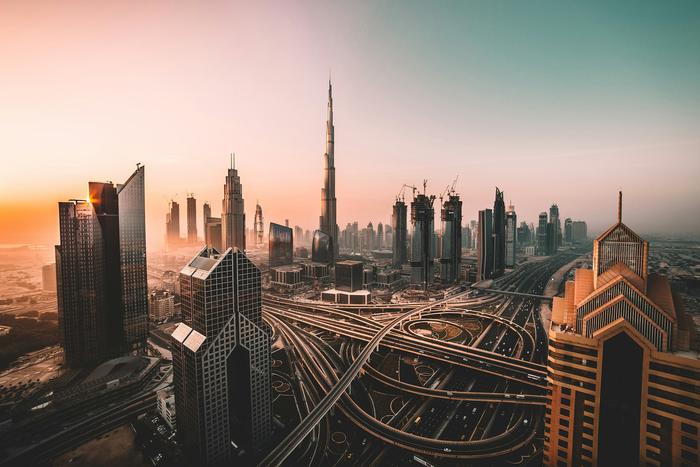
United Arab Emirates
Dubai and Abu Dhabi: superlatives, desert, and a stopover worth a few days of its own.
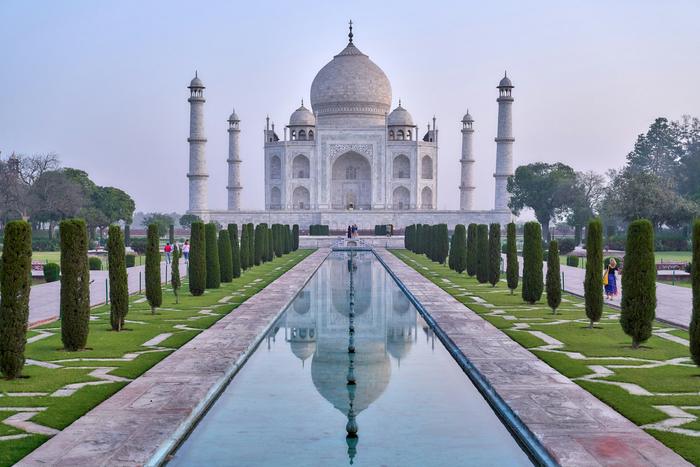
India
Overwhelming, beautiful, and utterly unlike anywhere else.
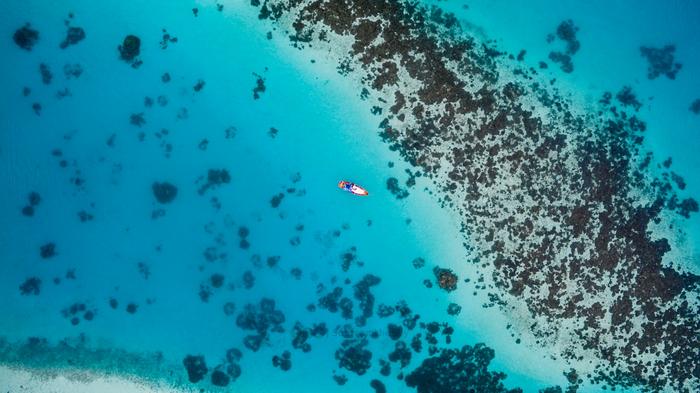
Maldives
One island, one resort, almost nothing to do. That is the point.

France
Paris is only the opening act — wine country, the Alps, and two coastlines.

Italy
The benchmark for food, history, and beauty.
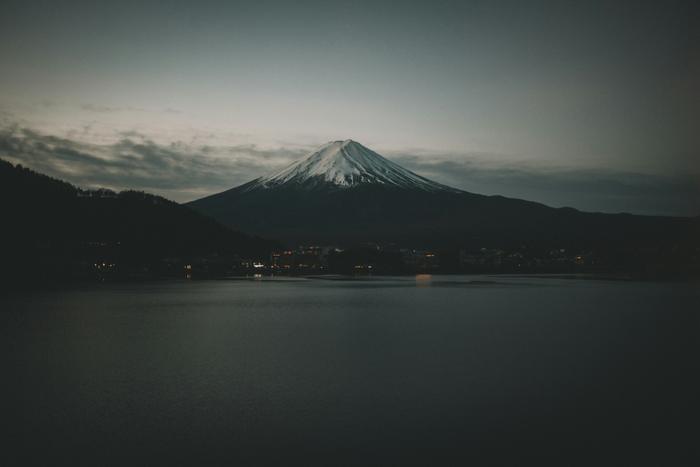
Japan
Extraordinary food, culture, and cities. Nothing quite prepares you for it.
Not sure where to go
Take the 5-minute quiz
Answer a few honest questions and get matched to destinations that actually fit how you travel.
Start the quiz