
Estonia
A medieval old town wired to one of the most digital states on earth.
Estonia is small, easy, and cheaper than its Nordic neighbours without feeling like a budget option. Tallinn's old town is genuinely intact medieval, not a reconstruction, and the country's digital-first quirks make the practical side frictionless. Beyond the capital lie quiet bogs, pine forests, and Baltic islands like Saaremaa. It pairs naturally with a day trip to Helsinki across the gulf.
A week here usually means a few days in Tallinn, then a rented car out to the bogs and the coast. The old town is the draw — cobbled lanes, town walls, café-lined squares you can cross in ten minutes — but the rhythm slows fast once you leave it. Saaremaa is a ferry and a flat drive of windmills, juniper, and a meteorite crater. Prices are reasonable by Northern European standards, and the e-society means tickets, parking, and ordering all just work.
The honest part: this is a cold, dark country for half the year. November through March, daylight is short and the weather is grey and wet rather than crisply snowy, and many island guesthouses and rural spots simply close. Outside summer, the landscape that justifies the trip is muted. The country is also genuinely small — engaging for a week, thin for two unless you slow right down and lean into the quiet.
Highlights
-
Tallinn Old Town
Intact medieval walls and lanes you can walk end to end before lunch.
-
Saaremaa
A ferry to windmills, juniper heath, and an old meteorite crater.
-
Lahemaa National Park
Boardwalk bog trails, pine forest, and manor houses an hour from the capital.
-
Tartu
A university town with more bite and student energy than its size suggests.
-
Helsinki day trip
Two hours across the gulf by ferry for a different country and lunch.
Practical info
- Visa
- Schengen rules apply: 90 days visa-free for most Western passports. Verify before travel.
- Currency
- EUR (€).
- Language
- Estonian. English near-universal among the young; Russian common.
- Safety
- Very safe, with low crime and easy solo travel.
- Getting around
- Good buses between towns; rent a car for the islands and countryside.
- Tap water
- Tap water safe to drink.
- Plug type
- Type C Type F 230V
- Money
- Cards accepted almost everywhere; you can travel for days without cash.
General guidance — visas, safety, and health change, so check your government's travel advisory and the official sources before you go.
Common questions
- Do I need a visa or ETIAS for Estonia?
- No visa for short stays — US, UK, Canadian and Australian visitors get 90 days in any 180 across Schengen. ETIAS is not yet in force (expected 2027), so you don’t need it right now, but the biometric EES is live, so expect fingerprint/photo enrolment on first entry. See entry.
- Is Tallinn worth more than a day trip from Helsinki?
- Yes — the UNESCO medieval Old Town rewards an overnight or two, and the Telliskivi creative quarter and Tartu add more. A Helsinki day-trip (2-hour ferry) only scratches the surface. See Tallinn.
- Is Estonia safe given it borders Russia?
- Yes — it’s a stable EU/NATO country, US State Dept Level 1 ("Exercise Normal Precautions"), and tourism runs normally. The one caveat is the immediate Russian border zone (don’t approach or photograph it; crossings can close). See the Russia/NATO context.
- What’s beyond Tallinn?
- Tartu (the 2024 Capital of Culture university city), the islands Saaremaa and Hiiumaa, the beach-and-spa resort Pärnu, and bog-and-coast national parks Lahemaa and Soomaa. See beyond Tallinn.
- When should I go?
- The short, bright summer (June–August) — near-white-nights, warm, festivals — is the peak; winter is cold and dark but has a famous Christmas market. See when to go.
- Is it really that digital?
- Yes — around 99% of public services are online, with digital ID, online voting since 2005, and the e-Residency programme; it’s the birthplace of Skype and home to Wise and Bolt. See digital Estonia.
Entry
Schengen, euro — and the new biometric border
Visa-free and easy; the only change is the EES at the border.
Estonia is in the EU and Schengen and has used the euro since 2011, so for US, UK, Canadian and Australian visitors it’s visa-free — up to 90 days in any 180-day period, counted across all of Schengen, with a passport valid at least three months beyond departure.
The one new thing at the border is the EU’s Entry/Exit System (EES), fully live since April 2026: non-EU travellers are biometrically enrolled (photo and fingerprints) on first entry instead of a passport stamp. Its companion, the ETIAS travel authorisation, is not yet in force (now expected in 2027), so you don’t need it at the moment.
Allow a little extra time at the border for EES biometric enrolment on your first post-April-2026 entry. And because the ETIAS launch date keeps moving (the 2026 target was dropped), check the official ETIAS portal shortly before you travel rather than assuming — right now it isn’t required.
Tallinn
A medieval capital that still works
One of Europe’s best-preserved medieval cores — plus a creative-quarter counterpoint.
UNESCO, 1997 Tallinn Old Town — a near-complete medieval Hanseatic city
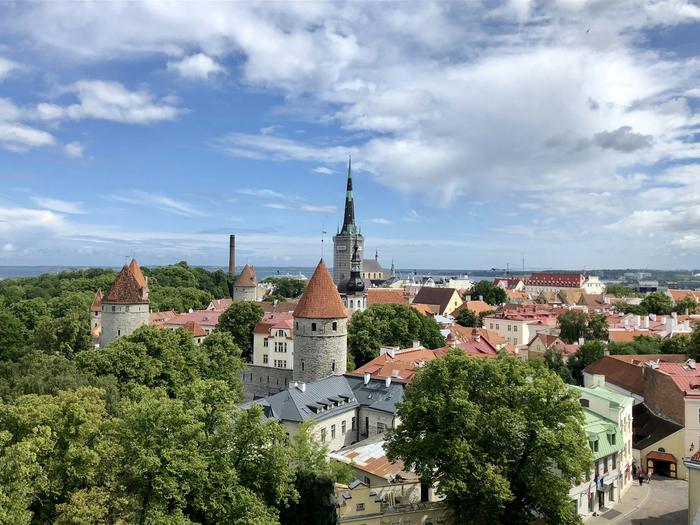
Tallinn’s Old Town is the headline and deserves it — a UNESCO-listed medieval Hanseatic core that survived remarkably intact, all cobbled lanes, guild houses, spires and city walls. The upper town of Toompea holds the seats of power and the best viewpoints out over the red roofs to the Baltic.
What saves it from feeling like a film set is Telliskivi, the regenerated industrial quarter near the station — design studios, galleries, street art, the Fotografiska photography museum and the lively Balti Jaam market — giving the city a contemporary edge beside the medieval one.
Give Tallinn at least one night, ideally two — the Old Town empties of cruise-and-ferry day-trippers in the evening, which is when it’s loveliest, and Telliskivi plus a Toompea sunset need their own slots. A Helsinki day-trip is fun but barely scratches it.
Beyond Tallinn
A university city, islands and bogs
A compact country of student towns, ferries and national parks.
Beyond the capital, Tartu is the intellectual heart — home to the 1632 university, a youthful student energy and museums, and a 2024 European Capital of Culture. Southwest on the coast, Pärnu is the laid-back "summer capital" of sandy beach and spa hotels.
Out west lie the islands — big, castle-topped Saaremaa (via a 30-minute car ferry) and quieter, lighthouse-dotted Hiiumaa — while the national parks show the country’s wild side: coastal Lahemaa with its bogs and restored manor houses, and Soomaa, famous for the spring floods of its "fifth season," paddled by canoe.
| Place | What | Note |
|---|---|---|
| Tartu | The university city (est. 1632); 2024 Capital of Culture | Youthful and walkable, ~2.5 h south |
| Pärnu | The "summer capital" — beach and spa resort | Long Baltic sand; busy only in summer |
| Saaremaa | The largest island; Kuressaare castle | Car ferry from Virtsu (~30 min) |
| Lahemaa / Soomaa | National parks — bogs, coast, manors | Soomaa’s spring-flood "fifth season" |
Hiiumaa (lighthouses, forest, quiet) is the second island; nearly everything in Estonia is an easy drive or short ferry from Tallinn.
Rent a car or use the cheap intercity buses to reach the islands and parks — the distances are short (Tallinn–Tartu ~2.5 h, Tallinn–Pärnu ~1.5 h). In summer, book the Saaremaa car ferry ahead; the bog boardwalks of Lahemaa and Soomaa are the signature easy half-day walks.
Digital Estonia
The world’s most digital state
A genuinely distinctive angle — government that runs online.
~99% online public services delivered digitally — "e-Estonia"
Estonia’s other claim to fame is being the world’s most digital society: around 99% of public services are online, built on a secure digital ID and the X-Road data backbone, with online voting since 2005. For visitors it mostly shows up as frictionless cards, contactless everything and fast public Wi-Fi.
The headline export is e-Residency (since 2014) — a government-issued digital identity that lets non-residents open and run an EU company online (it is not residency or a visa, and grants no right to enter). This is the country that birthed Skype and now hosts Wise and Bolt.
Russia/NATO
A front-line state that’s perfectly normal to visit
Two fortresses stare across a river — but tourism runs as usual.
Estonia is an eastern-flank NATO member (since 2004) directly on the Russian border, and its easternmost city, Narva, faces Russia’s Ivangorod across a narrow river — two medieval fortresses staring at each other across the EU frontier. It’s one of Europe’s most striking border scenes.
Despite the geopolitics, Estonia is a safe, ordinary place to travel: Level 1 on the US scale, no UK no-go zones, and daily life entirely normal. The only practical caveat is the immediate border — don’t wander into or photograph the border zone, and treat Russia land-crossings as unreliable.
| Source | Stance | Note |
|---|---|---|
| US State Dept | Level 1 — "Exercise Normal Precautions" | A safe, stable EU/NATO country |
| UK FCDO | No advice against travel anywhere | Tourism operates normally |
| The border zone | Sensitive — handle with care | Don’t approach/photograph it; crossings can close |
Narva the city is fine to visit; it’s the river border itself that’s sensitive, and land crossings into Russia can shut or back up at short notice.
Visit Narva and its castle without hesitation — it’s a fascinating, perfectly safe city — but respect the border zone itself: use authorised crossings only, don’t photograph the frontier, and don’t plan a trip that depends on a Russia land crossing, which can close at short notice.
Getting around
Small, flat and ferry-linked
Easy trains and buses — and the famous Helsinki ferry.
Estonia is small and flat, so getting around is easy and cheap. Elron runs modern domestic trains from Tallinn to Tartu, Narva and Pärnu, while Lux Express and other buses cover everywhere the trains don’t — often faster on some routes — and continue south to Riga and Vilnius along the Via Baltica (the long-planned Rail Baltica high-speed line is still under construction, not yet running).
The signature link is the sea: frequent fast ferries cross to Helsinki in about two hours, one of Europe’s busiest passenger routes and an easy add-on to a Nordic trip. Car ferries serve the islands, and Tallinn’s small airport is a tram ride from the Old Town.
When to go
A bright short summer, a dark long winter
Go in summer for the light — or winter for the Christmas market.
The short summer (June–August) is the intense peak — long days, warmth, festivals, island and beach season. Winter is cold and dark (only ~6 h of daylight in December) but Tallinn’s Town Hall Square Christmas market is among Europe’s loveliest.
Estonia’s year is a study in extremes of light. The summer (June–August) is short and intense — near-white-nights around the solstice, warm days, festivals, the Pärnu beach season and open island travel. The shoulder months of May and September are quieter and good value.
Winter is cold and dark — barely six hours of daylight in December, snow and sub-zero temperatures — but it brings its own magic in the Tallinn Christmas market on the medieval Town Hall Square, regularly rated one of Europe’s most beautiful.
Money & culture
Euro prices, a Finnic tongue, deep sauna roots
Cheaper than the Nordics, with a language and sauna all its own.
On money, Estonia sits in the European middle — on the euro, noticeably cheaper than Finland or Sweden across the water, but no longer the bargain it once was, with Tallinn the priciest and Tartu and the countryside gentler.
Culturally it’s distinct: Estonian is a Finnic language (close to Finnish, unrelated to Russian or the other Baltic tongues), English is widely spoken by younger people, and there’s a sizeable Russian-speaking minority concentrated in the northeast. The deepest tradition is the sauna — the southern Võro smoke-sauna custom is UNESCO-listed — woven right through family and social life.
- Medieval atmosphere and nightlifeSkiponly day-tripping from HelsinkiGotwo nights in Tallinn’s Old Town
- A youthful, cheaper citySkipstaying only in the capitalGoTartu — student energy and museums
- Beach and bogsSkipa winter visit for thoseGoPärnu and Soomaa/Lahemaa in summer
| On the bill | Detail | Note |
|---|---|---|
| Currency | Euro since 2011 | Cheaper than the Nordics, not a budget trip now |
| Tallinn vs the rest | The capital is dearest | Tartu and rural areas are cheaper |
| Getting there | 2-hour ferry from Helsinki | An easy Nordic add-on |
Cards and contactless work literally everywhere — Estonia is one of the most cashless, digital societies on earth.
Budget a little more for Tallinn and save on Tartu and the islands; you’ll rarely need cash. If you do one "local" thing, make it a proper sauna — ideally a traditional smoke sauna in the south — which is as central to Estonian life as the coffee shop is elsewhere.
Compare Estonia
If you like Estonia, also consider

France
Paris is only the opening act — wine country, the Alps, and two coastlines.

Italy
The benchmark for food, history, and beauty.

Greece
Ruins in the morning, a swim by noon, taverna until dark.
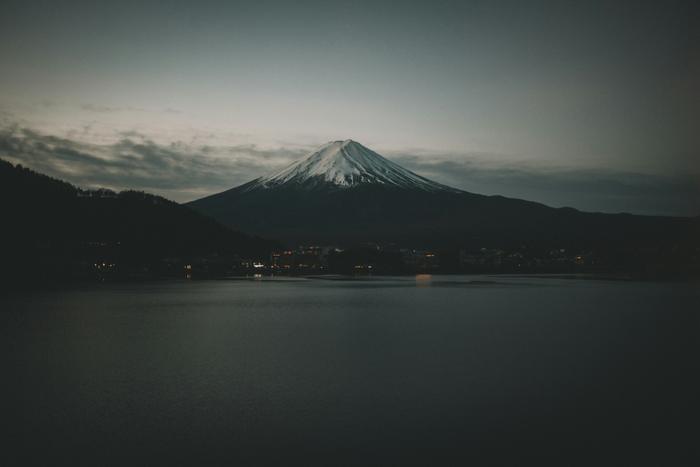
Japan
Extraordinary food, culture, and cities. Nothing quite prepares you for it.
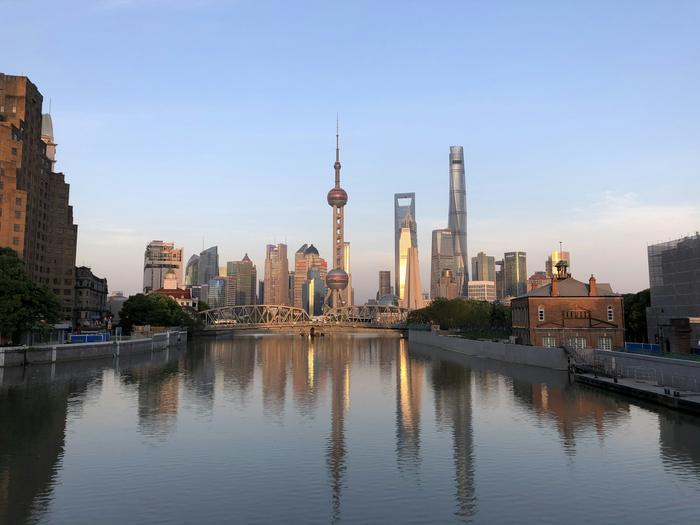
China
Ancient history and hypermodern cities at a scale that's hard to grasp until you're there.
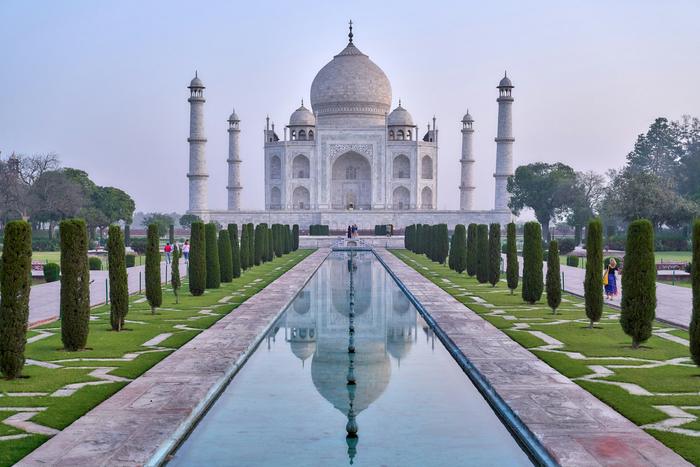
India
Overwhelming, beautiful, and utterly unlike anywhere else.
Not sure where to go
Take the 5-minute quiz
Answer a few honest questions and get matched to destinations that actually fit how you travel.
Start the quiz