Corsica
A mountain range in the sea — France’s wildest island, where the Alps meet Caribbean-clear water.
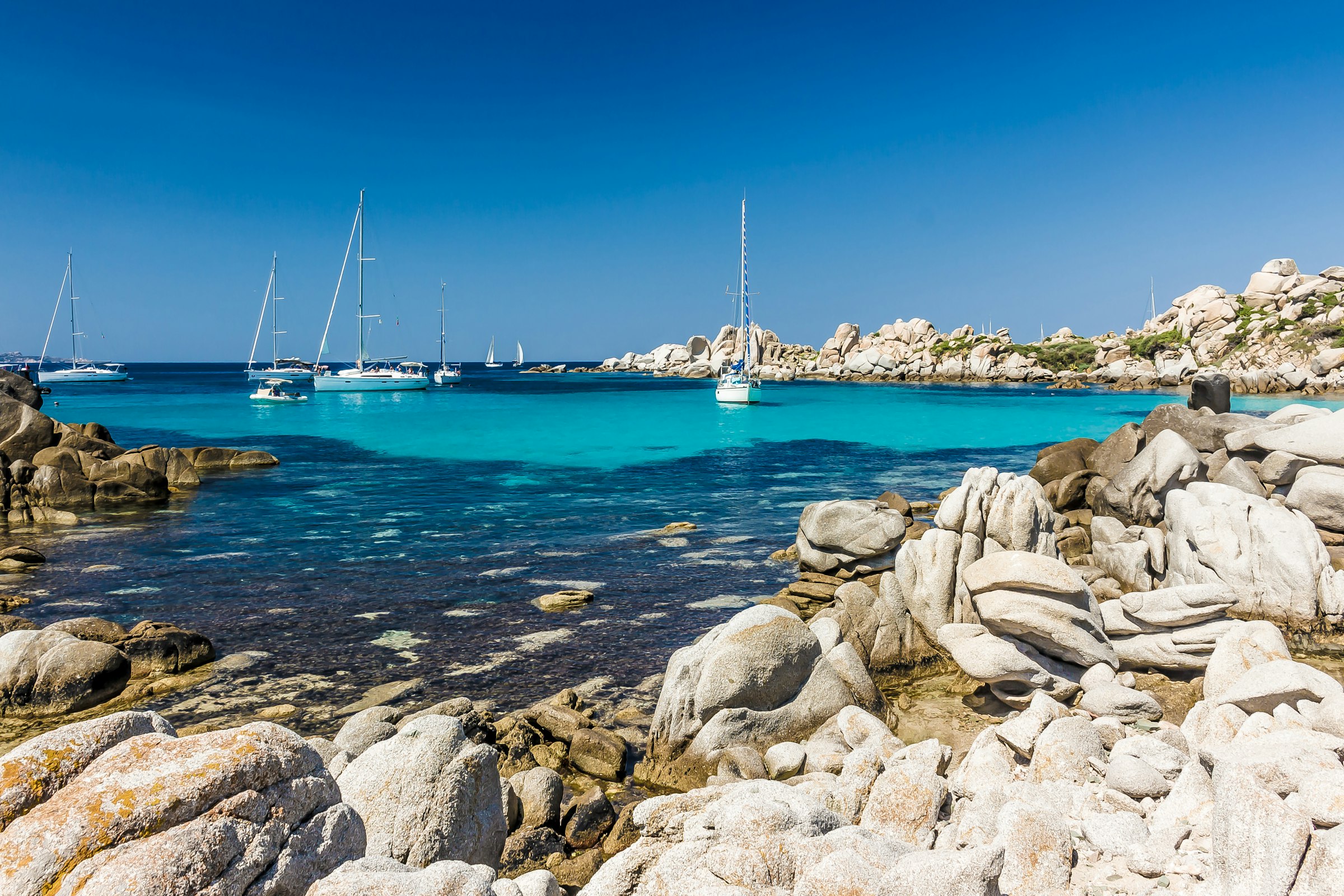
Corsica is a French island that behaves like a small continent: a spine of 2,000-metre peaks running the length of it, dropping through pine forest and maquis scrub straight into some of the clearest water in the Mediterranean. It's wilder, emptier, and more dramatic than its Italian neighbour Sardinia, with a fierce independent streak and a landscape that swings from Alpine to tropical in a single day's drive. One island for both serious hikers and beach-seekers.
Two Corsicas share the island. There's the coast — the white limestone cliffs and clifftop citadel of Bonifacio in the south, the red granite spires of the Calanques de Piana glowing at sunset in the west, the boat-only coves of the Scandola reserve, and beaches like Palombaggia and Rondinara that rival the Caribbean. And there's the interior — a mountain wilderness threaded by the GR20, widely rated the toughest and finest long-distance trek in Europe, plus gentler valleys, gorges, and stone villages where the food turns to chestnut, charcuterie, and brocciu cheese. Ferries and a scenic little mountain train connect it; a car unlocks the rest.
The honest part: Corsica is not cheap and not always easy — the roads are spectacular but slow and winding, July and August bring French holiday crowds and high prices to the coast, and outside summer much of the island closes down. English is patchy and the fierce local pride can read as standoffish at first. But time it for June or September, split your days between the mountains and the coves, and you get the most varied and dramatic island in the Mediterranean, with a fraction of the development of the Riviera across the water.
Highlights
-
Bonifacio
A medieval citadel perched on white limestone cliffs above a fjord-like harbour at the island’s southern tip.
-
Calanques de Piana
Surreal red granite spires plunging into the sea on the west coast — a UNESCO site, best at sunset.
-
The GR20
A brutal, beautiful high-mountain traverse widely called the toughest long-distance trek in Europe.
-
Scandola & the coves
A boat-only marine reserve of red cliffs and sea caves, near the harbour town of Girolata.
-
Palombaggia & Rondinara
Pine-backed, white-sand beaches over turquoise water that rival any in the Med.
-
Cap Corse
The wild northern peninsula — a coastal drive past fishing villages, watchtowers, and empty beaches.
Practical info
- Visa
- Schengen — visa-free for most Western passports (90 days).
- Currency
- EUR (€)
- Language
- French (and Corsican); English patchy outside main resorts.
- Safety
- Very safe; the hazards are the mountain roads and the sea, not crime.
- Getting around
- Rent a car — essential. Ferries and a scenic mountain train connect the main towns.
- Tap water
- Tap water safe and good.
- Plug type
- Type C Type E 230V
- Money
- Cards widely accepted; carry cash for village shops and beach kiosks.
General guidance — visas, safety, and health change, so check your government's travel advisory and the official sources before you go.
Common questions
- When is the best time to visit Corsica?
- June and September — with one caveat that decides shoulder trips: essentially every international flight is seasonal, running roughly late June to mid-September. In May or October you can absolutely go, but expect to connect through Paris, Marseille or Nice.
- Do GR20 refuges need to be booked?
- Yes — refuge bunks and bivouac pitches are booked on the park’s official portal, pnr-resa.corsica; for 2026 a bunk is €20 a night and a bivouac pitch €12. Bookings opened on 20 January and the small bottleneck refuges go first, so July–August itineraries are effectively fixed months ahead. Wild camping along the route is prohibited — tents are allowed only on the paid areas beside the refuges.
- Do you need a car in Corsica?
- Almost everywhere. There is no fast road on the island — none of the thirteen routes we checked averages better than 62 km/h — and no railway south of Ajaccio. The exceptions are the Balagne, where a local train links Calvi, Île-Rousse and the beaches between, and Porto-Vecchio in July–August, when beach shuttles run.
- Is Corsica expensive?
- Mid-range up — Corsica has no true budget tier of the agriturismo kind Sardinia has, and coastal prices peak hard in July–August. We don’t publish day-rates because they go stale within a season; the structural point is that there is no cheap way to do the coast in high summer.
- Should I choose Corsica or Sardinia?
- Corsica for mountains-plus-coves and unbooked beach days; Sardinia for shoulder-season trips, car-free travel, small children and August. They are 50 minutes apart by ferry — see our full comparison for the measured differences.
Flights
Book flights first — most routes are summer-only
Essentially every international flight to Corsica is seasonal. This is the island’s structural quirk, and it decides shoulder-season trips.
Year-round service is close to entirely domestic French — Air Corsica keeps Calvi–Paris Orly running all year, but Calvi’s CDG link and the international routes across the island run roughly late June to mid-September. Flying in from outside France in May or October usually means connecting through Paris, Marseille or Nice.
If you are planning Corsica for the shoulder months, sort the flights before anything else — accommodation and ferries are the easy part.
The GR20
The GR20 is booked in January, not planned in June
Widely rated the hardest and finest long-distance trek in Europe — no permit, no guide required, and one compulsory step: the refuge booking.
All GR20 refuges and bivouac pitches are booked through one official portal, pnr-resa.corsica, run by the Corsican regional park — online only, and 2026 bookings opened on 20 January. There is no official sell-out statistic, but the small bottleneck refuges (Ortu di u Piobbu, Carrozzu, Usciolu) go first, and July–August itineraries are effectively fixed within weeks of the January opening. A commonly cited figure — with no official source behind it — is that around 40% of starters abandon.
Wild camping along the route is prohibited — the trail runs end-to-end through the regional park, and tents are allowed only on the paid bivouac areas beside the refuges, up in the evening and down in the morning. The booking covers the night alone: dinner, breakfast and packed lunches are ordered and paid with the warden on site (arrive before about 18:00, carry cash), and a reserved place is only guaranteed until 19:00.
The route itself: the northern half, Calenzana to Vizzavona, is markedly harder — steeper, rockier, more scrambling — and Vizzavona is the standard split point, with a railway station on the Ajaccio–Bastia line right by the trail, so a half-trek or a bail-out is a train ride, not a logistics problem. Since 2016 the trail no longer crosses the Cirque de la Solitude — after the 2015 accident it was permanently rerouted over the shoulder of Monte Cinto via Pointe des Éboulis, at 2,607 m now the highest point on the route; the old chained route is off the official trail and its fixed gear is no longer maintained.
Season and snow: the refuges are staffed roughly mid-May to early October (for 2026, 16 May – 4 October), and outside that window the route is a self-sufficient alpine undertaking, not a trek. The high northern cols hold snowfields into June — most years the route is passable without crampons from early-to-mid June, but in heavy-snow years people have needed them into late June; early-season hikers are advised to start from the south. Access: Calenzana is ~13 km from Calvi (a summer bus runs, taxis ~€30–50); at the southern end the long-running Conca shuttle is reported suspended for 2026, so budget around €55 for a shareable taxi to Porto-Vecchio.
Driving & car-free
There is no fast road, anywhere
Distances mislead here more than almost anywhere in Europe — measure in time, not kilometres.
17 km of trunk-grade road on the whole island. Sardinia has 1,371.
The consequence shows up in every journey. We ran thirteen routes across the island on two open routing engines — OSRM and BRouter, free-flow — and not one averages better than 62 km/h; the more conservative engine puts the mountain crossings in the 30s. 130 km from Ajaccio to Bonifacio is somewhere between a two- and a three-hour drive.
| Route | Distance | Driving | Average |
|---|---|---|---|
| Ajaccio – Bonifacio | 130 km | 2h07 – 3h16 | 40–62 km/h |
| Bastia – Porto-Vecchio | 144 km | 2h32 – 2h37 | 55–57 km/h |
| Calvi – Porto-Vecchio | 202 km | 3h31 – 3h50 | 53–58 km/h |
Free-flow estimates — the faster figure is OSRM, the slower BRouter — with no traffic modelling; August around Porto-Vecchio will be worse. Scheduled coaches run slower again, which is about right for stops.
All thirteen routes, both engines — the full workings
| Route | Distance | OSRM | BRouter | Average |
|---|---|---|---|---|
| Ajaccio – Bonifacio | 130 km | 2h07 | 3h16 | 40–62 km/h |
| Bastia – Porto-Vecchio | 144 km | 2h32 | 2h37 | 55–57 km/h |
| Calvi – Porto-Vecchio | 202 km | 3h31 | 3h50 | 53–58 km/h |
| Ajaccio – Bastia | 148 km | 2h22 | 3h15 | 45–62 km/h |
| Ajaccio – Calvi | 163 km | 2h43 | 3h34 | 46–60 km/h |
| Bastia – Calvi | 92 km* | 1h46 | 2h12 | 51–52 km/h |
| Ajaccio – Corte | 80 km | 1h19 | 2h00 | 40–61 km/h |
| Bastia – Corte | 70 km | 1h09 | 1h18 | 54–61 km/h |
| Ajaccio – Porto (Ota) | 78 km | 1h26 | 2h11 | 36–55 km/h |
| Calvi – Porto (Ota) | 75 km | 1h23 | 2h18 | 33–54 km/h |
| Bonifacio – Porto-Vecchio | 28 km | 0h33 | 0h36 | 48–52 km/h |
| Bastia – Saint-Florent | 23 km | 0h30 | 0h43 | 32–47 km/h |
| Ajaccio – Zonza | 86 km | 1h29 | 2h29 | 34–58 km/h |
Checked 7 August 2026 on the public OSRM and BRouter (car-fast) instances — free-flow, reproducible by anyone with the same tools. Averages use each engine’s own routed distance; *on Bastia–Calvi the engines choose different roads (92 vs 112 km) and land on the same speed.
Car-free works in two pockets, and mostly in July–August. The Balagne, where a local train runs Calvi to Île-Rousse five times a day — more in summer — calling at beach halts; and Porto-Vecchio, which has an airport shuttle from Figari plus summer buses to Palombaggia and Santa Giulia, July and August only. There is no railway at all south of Ajaccio.
Beaches
No caps, no fees — the constraint is parking
Unlike Sardinia across the strait, not a single Corsican beach charges entry or runs a per-person quota for 2026.
Corsica restricts boats rather than people: navigation and mooring around the Îles Lavezzi are limited under a 2023 order running to 2028, and rules around the Scandola reserve are actively changing — check before booking a boat trip there. On land, the famous beaches fill their car parks by mid-morning in season; arrive early or come by the summer shuttle where one exists.
One safety note for families: the south-east (Palombaggia, Santa Giulia, Tamaricciu, Rondinara) shelves gently into sand, but the west and north-west coasts are pebbly and shelve steeply — the west-coast guides warn of undercurrents that pull swimmers off the shore at Portiglio and Baracci, and beaches near Porto can turn dangerous in wind.
Wind
The Mistral is not the wind that matters here
Corsican wind inventories put the south-westerly Libeccio at roughly 60% of windy days against the Maestrale’s 5%.
By the time it reaches Corsica the Mistral arrives as a westerly anyway, and its real footprint is Cap Corse, the Balagne, the west coast and the Strait of Bonifacio. A Libeccio at Palombaggia is actively good — it blows offshore and flattens the water — though it will carry an inflatable out to sea.
The swap that matters: an easterly stirs Palombaggia’s seabed sand, costing the clarity you came for, and pushes jellyfish inshore — neighbouring Santa Giulia, which the same wind usually spares, is the right answer that day.
August
August, in actual numbers
One month carries a quarter of the year — and the peak lands earlier in the month than people plan for.
26% of the year’s overnight stays fall in August alone
Complaints
What will actually annoy you
Every guide lists the good bits. These are the recurring complaints from people who went.
Santa Giulia divides people sharply. Sheltered and genuinely calm — which is why it is the right answer when the wind blows — but it draws more complaints than any other Corsican beach: banked posidonia, jet skis and parascending boats, one reviewer’s summary that "it looks like a water park, not a beach". The weed is luck; the boat traffic is not. Go early either way.
The Îles Lavezzi are the classic let-down. The boat trip out of Bonifacio is the island’s most-sold excursion, and in high season reviewers keep arriving at the same verdict — an uncountable number of boats in the bay, and an uninhabited island with no shops, no food, almost no shade. The fix people who enjoyed it give is the same every time: take the first boat around 09:00 and come back before midday.
The famous wild beaches are a project. Saleccia and Lotu in the Agriates are reachable only by boat, on foot, or down about 10 km of rough track covered at walking pace — and the boat is cancelled when it blows. Ostriconi is beautiful and notoriously dangerous to swim in rough seas, with currents that carry people offshore.
And dried seagrass on the sand is normal, not neglect — posidonia is protected and left in place deliberately.
Where to base
Plan it as two islands: north and south
Corsica’s own tourist board publishes two separate one-week itineraries — one north, one south — rather than one for the island. Its own line: distances here are measured in time, not miles.
| Base | Suits | Car needed |
|---|---|---|
| Porto-Vecchio | Beach-first trips and families — Palombaggia, Santa Giulia, Bonifacio 40 min away | Not in Jul–Aug |
| Bonifacio | The setting, and the ferry to Sardinia. No beach shuttle at all | Yes |
| Calvi / Île-Rousse | The car-free option — one train links them and the beaches between | No |
| Ajaccio | Widest flight choice, rail and coach hub. Ordinary beaches | Partly |
Adding Sardinia
Sardinia is 50 minutes away
The Bonifacio ferry runs year-round — combining the islands is a short hop, not a project.
50 min Bonifacio to Santa Teresa Gallura
Your hire car almost certainly cannot make the crossing. The ferries carry vehicles happily — the block is on the rental side: reading the terms of Europcar, Hertz, Sixt and Avis plus the local island firms, none permits it as a matter of course, and Europcar’s Italian ferry carve-out covers Italian islands only, which Corsica is not. Hire separately on each island, or get written authorisation before you board. Weighing the two islands against each other? See Corsica vs Sardinia, measured.
Sources
Where this comes from
The detail above was read off primary sources on — operator timetables, municipal ordinances, regional tourism boards, national statistics offices and first-hand traveller reports, rather than other travel articles. Researched and maintained by Dmitrii Romashchin — how we research.
- Drive times: OSRM routing engine (public instance)
- Drive times: BRouter routing engine (car-fast profile)
- Road-class measurements: OpenStreetMap via Overpass
- GR20 refuge booking portal (PNRC), 2026 terms
- GR20 stage profiles and reroute
- GR20 season, refuges and transport
- Calvi flight schedules (Air Corsica)
- Corsica visitor statistics (ATC)
- Corsica road speed limits (Préfecture de Corse-du-Sud)
- Corsican railway network and timetables
- Corsica one-week itineraries (Agence du Tourisme de la Corse)
- Bonifacio–Santa Teresa ferry (Moby)
- Bonifacio–Santa Teresa service charter (public-service contract)
Compare Corsica with
If you like Corsica, also consider
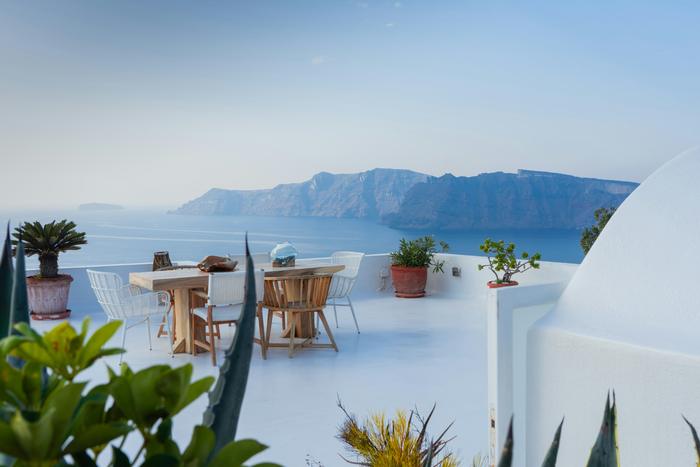
Greece
Ruins in the morning, a swim by noon, taverna until dark.
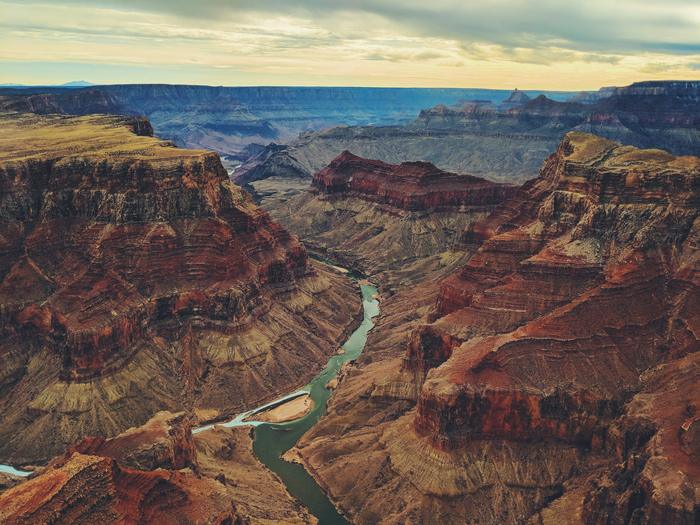
United States
A continent pretending to be a country — cities, deserts, and the best national parks anywhere.
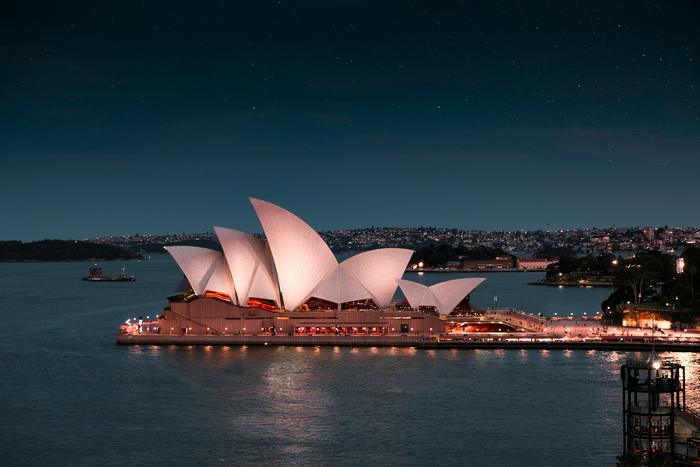
Australia
Vast, varied, relaxed. Reef, Sydney, and proper wilderness in one.
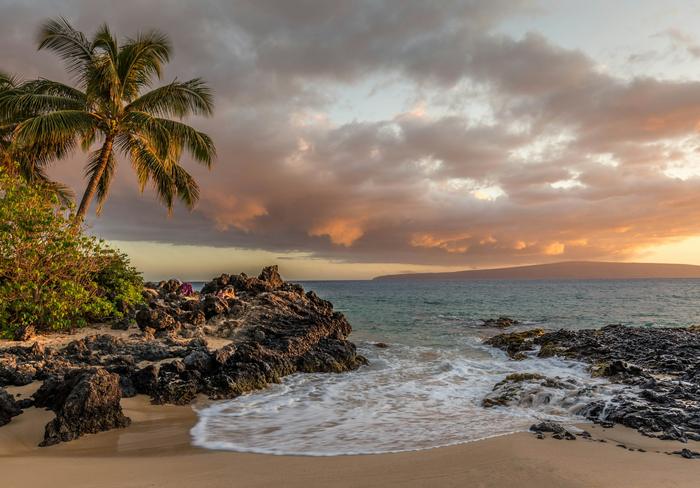
Hawaii
A handful of islands where the landscapes and the ocean genuinely earn the flight.
Not sure where to go
Take the 5-minute quiz
Answer a few honest questions and get matched to destinations that actually fit how you travel.
Start the quiz