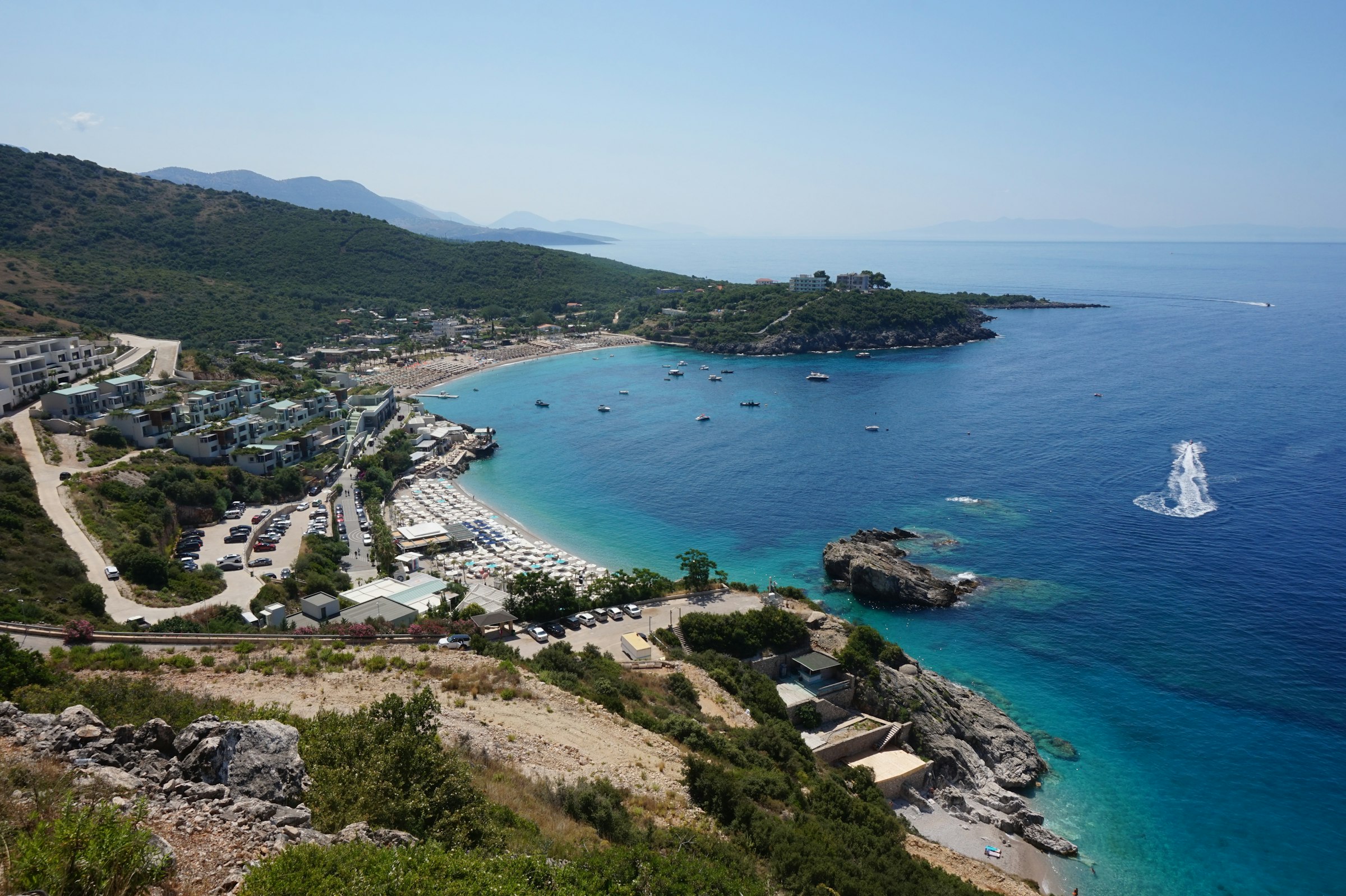
Albania
The cheapest stretch of Mediterranean coast left in Europe — for now.
Albania is where budget travelers go for clear-water beaches, Ottoman stone towns, and raw mountains without the prices of Greece or Croatia. It is up-and-coming and a little rough at the edges, which is exactly the appeal for some and the dealbreaker for others. A week or two covers the coast, the old towns, and a taste of the north.
A common route runs down the Albanian Riviera — Ksamil's turquoise coves, Himarë, the beaches around Dhërmi — then inland to the UNESCO stone towns of Berat and Gjirokastër, with Tirana's blunt, colorful capital as the entry point. For the adventurous, Theth and the Accursed Mountains in the north deliver serious hiking and a famous valley-to-valley trek. Food is cheap and good, byrek and grilled fish and strong coffee, and your money goes a remarkably long way.
The honest part: infrastructure is the real drawback. Roads range from fine to genuinely bad, signage is patchy, and self-driving means potholes, aggressive overtaking, and hairpin mountain passes with no guardrails. Ksamil in August is crowded and over-built with sun-loungers wall to wall. English is limited outside the young and the tourist trade, so a translation app earns its keep. Come for the value and the rawness, not for polish.
Highlights
-
Albanian Riviera & Ksamil
Clear coves and cheap beach days facing the Greek islands.
-
Berat
The "town of a thousand windows," Ottoman houses stacked up a hill.
-
Gjirokastër
A slate-roofed stone city below a hulking castle.
-
Theth & the Accursed Mountains
Dramatic peaks and the classic valley-to-valley trek up north.
-
Tirana
A blunt, fast-changing capital painted in bold colors.
Practical info
- Visa
- Visa-free for most Western passports (up to 90 days). Not in the EU. Verify before travel.
- Currency
- ALL (Albanian Lek).
- Language
- Albanian. English among the young; Italian common.
- Safety
- Safer than its old reputation; main hazards are the roads and driving.
- Getting around
- A rental car gives the most freedom but roads are rough; furgon minibuses and intercity buses are cheap if slow.
- Tap water
- Stick to bottled water; tap is not reliably safe to drink.
- Plug type
- Type C Type F 230V
- Money
- Cash is king — carry Lek. Cards work in cities but not in smaller towns and the mountains.
General guidance — visas, safety, and health change, so check your government's travel advisory and the official sources before you go.
Common questions
- When is the best time to visit Albania?
- The shoulder seasons — mid-May to June, and September through October — give warm, swimmable sea, open venues and prices well below the July–August peak. The Riviera (Ksamil, Dhërmi, Sarandë) is seasonal: beach bars and boat tours start up in spring and the coast largely shuts down in winter, when most resort restaurants and hotels close. Inland — Berat, Gjirokastër, Tirana — is good year-round, and the northern Alps have their own summer hiking window (roughly June to early October).
- Do you need a car in Albania?
- A car is the most flexible option but not essential. There’s no useful passenger rail (Tirana has had no train since 2013), and driving is assertive, so many travellers use the furgons — shared minibuses that are the cheap backbone of public transport, with no fixed schedules (they leave when full). The coastal SH8 road is fully paved; just fill up in Vlorë, as there’s no fuel on the mountain stretch over the Llogara Pass to Himara.
- Can you fly into the Albanian Riviera?
- Almost. For years Tirana was Albania’s only functioning international airport, but Vlorë’s new airport began its first scheduled flights in 2026 — so the southern coast is becoming more directly reachable, though Tirana (plus the ferry from Corfu to Sarandë) is still how most people arrive. Check Vlorë’s current route list before planning around it.
- Is Albania expensive, and can you pay in euros?
- It’s among Europe’s cheapest destinations and cash-heavy. The currency is the lek (around 96–100 to the euro); euros are often accepted and priced in tourist hotels and by tour operators, but furgons, markets, small shops and cafés want lek, and you’ll get lek as change. ATMs are widespread in cities and tourist hubs but scarce in the mountains, so carry cash there.
- What do you need to enter Albania?
- Albania is non-EU and non-Schengen, so the EU’s EES and ETIAS do not apply to entering it, and time here doesn’t count against your Schengen days. Most Westerners enter visa-free: UK, EU, Canadian and Australian citizens for 90 days in any 180, and — unusually — US citizens for up to a full year. Albania also runs rotating seasonal visa waivers for other nationalities, so check the current list if yours isn’t on the standard one.
- Albania, Greece or Montenegro?
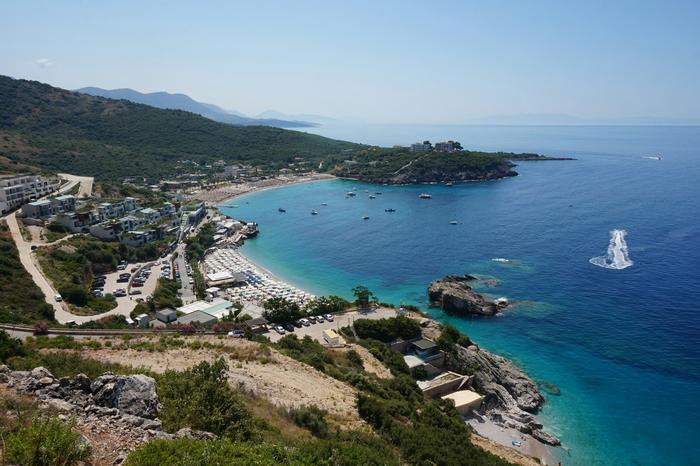
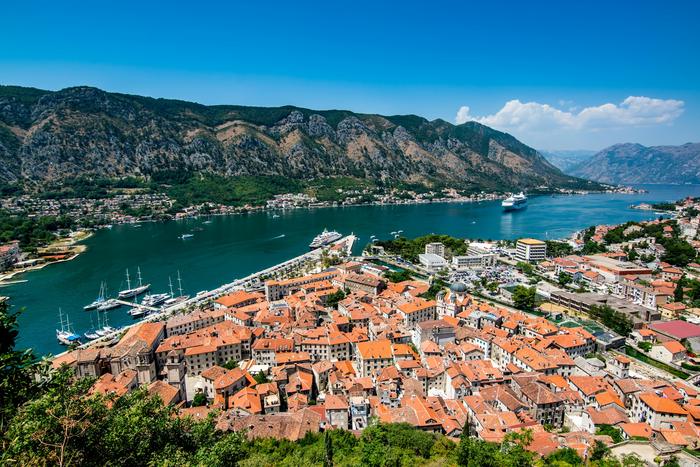
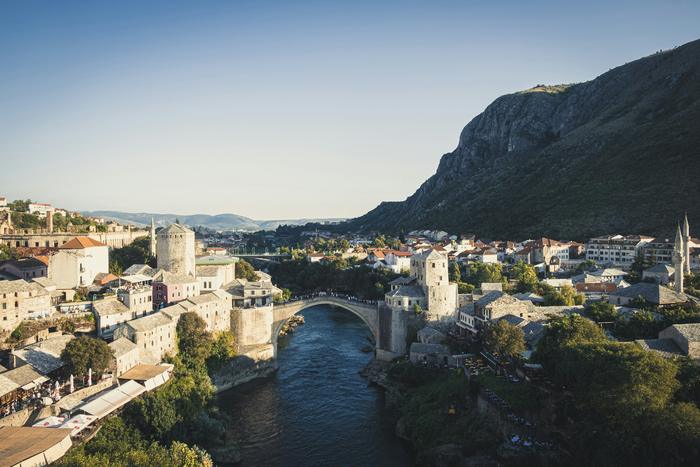
- Albania is the cheapest and least-developed of the three — the same turquoise Ionian coast as its neighbours at a fraction of the price, plus wild mountains and Ottoman towns, but rougher infrastructure. Greece is more polished and island-rich; Montenegro is tiny and scenic with a shorter, pricier coast. See Albania vs Greece, Albania vs Montenegro and Albania vs Bosnia.
When to go
A seasonal coast, year-round interior
The Riviera is a summer product that switches off in winter — the inland towns aren’t.
Crimson is the off-season: the Riviera’s beach bars and many resort hotels close from late autumn to spring, and the northern Alps are snowbound (the Theth road impassable until about April). The shoulders — mid-May to June and September to October — are the sweet spot for the coast; midsummer for the mountains.
Time a coast trip for the shoulder — mid-May to June, or September to October — for warm sea, open venues and prices a fifth to a half below the July–August peak. The key fact travellers miss is that the Albanian Riviera is seasonal: the beach bars, sunbeds and boat tours set up in spring and the coast largely closes from late autumn, when resort restaurants and hotels shut until spring (Sarandë and Himara stay open as real towns, but the dining options shrink sharply). The inland cities — Berat, Gjirokastër, Tirana — are good year-round, and the northern Alps have a distinct mid-summer hiking season.
- the Riviera is packed and pricey in AugustSkipKsamil and Dhërmi at the peakGothe mid-May–June or September shoulder, or quieter beaches like Borsh and Qeparo
- you come in winter for the coastSkipexpecting an open Riviera — it largely shutsGothe year-round inland towns — Berat, Gjirokastër, Tirana
- the Theth road is still snowbound (before ~April)Skipplanning the Alps hike too earlyGothe June–September window, with the Komani ferry and guesthouses open
Entry & money
Generous visas, outside Schengen, cash-first
One of Europe’s most relaxed entry regimes — and a handy Schengen "reset".
Albania keeps one of Europe’s most relaxed entry regimes: US citizens may stay visa-free for up to a year, and UK, EU, Canadian and Australian visitors for 90 days in any 180, with rotating seasonal waivers for others. Because it is non-EU and non-Schengen, the EES and ETIAS systems don’t apply to entering Albania — and time here doesn’t count against your Schengen allowance, which makes it a useful reset on a long Europe trip (they apply only when you cross back into the EU).
It is among the cheapest countries in Europe, and cash-first: the currency is the lek, euros are taken and priced on the tourist coast, but furgons, markets and cafés want lek. Draw cash in the cities — ATMs thin out fast in the mountains.
Getting around
No trains, chaotic roads, and the furgon
Albania has no useful railway — it runs on cars, shared minibuses and one paved coastal road.
Forget rail: there’s no useful passenger network, and Tirana hasn’t had a train since 2013. A hire car is the most flexible way around (widest choice at Tirana airport, roughly €20–35/day for a compact), with the caveat that driving is assertive. The budget alternative is the furgon, the shared minibus that is the country’s real public transport — cheap, but slower, with no fixed timetable. The coastal SH8 (Vlorë–Himara–Sarandë) is fully paved, the Llogara Pass the one bottleneck, with no fuel on the ~55 km mountain stretch from Vlorë to Himara, so fill up first. Tirana remains the main gateway, but Vlorë airport started scheduled flights in 2026, bringing the coast closer.
| Mode | What | Note |
|---|---|---|
| Furgon | Shared minibuses — the real public transport | No fixed schedule; they leave when full, cash only |
| Rental car | The Riviera, the Alps, flexibility | Driving is assertive; widest choice at Tirana airport |
| Passenger rail | Derelict — effectively none | Tirana has had no train since 2013 |
| Komani Lake ferry | The scenic way toward Valbona | Runs roughly mid-April to early November |
Tirana (Mother Teresa / TIA) is the main airport; Vlorë’s new airport began its first scheduled flights in 2026, and Kukës also operates. The coastal SH8 road over the Llogara Pass is paved — but fill up in Vlorë, as there’s no fuel on the mountain stretch to Himara. Checked October 2026.
Two driving cautions that catch people on the classic coast run: there is no fuel on the ~55 km of mountain road over the Llogara Pass between Vlorë and Himara, so top up in Vlorë before you climb; and if you lean on the furgons instead, they’re cash-only in lek, leave when full rather than to any timetable, and are easiest caught early in the day — so carry small lek notes and don’t plan a tight onward connection off one.
The big sights
Riviera beaches, Ottoman towns, Accursed Mountains
A small country with a surprising range — beaches, UNESCO stone towns and serious mountains.
The summer draw is the Albanian Riviera on the Ionian Sea — Dhërmi, Himara, Gjipe and the near-Maldivian islets of Ksamil down by the Greek border, with Sarandë the gateway, a short hop across the strait from Corfu. Beaches are free, though many sunbed setups are paid, and the water is extraordinary.
Inland are the two UNESCO Ottoman towns — Berat, the "city of a thousand windows" under a still-inhabited castle, and Gjirokastër, the grey-stone "city of stone" (Enver Hoxha’s birthplace) — plus the layered Greek-Roman ruins of Butrint near Sarandë. To the north, the Accursed Mountains deliver the classic Theth–Valbona pass hike (roughly mid-June to October, about 17 km and 6–8 hours), reached via the spectacular Komani Lake ferry. East of the mountains, Lake Ohrid — one of the oldest and deepest lakes in Europe, UNESCO-listed — is shared with North Macedonia.
Where to go
Coast, stone towns, and the north
A compact country, but three very different trips — pick the ones that fit your season.
Most trips pair Tirana (the entry hub) with either the south — the Riviera, Sarandë, Butrint and the stone towns of Berat and Gjirokastër — or the northern Alps around Theth and Valbona. The two don’t combine easily in a short trip: the coast is a warm-weather beach-and-ruins circuit, the Alps a summer hiking one, and the drive between them is long. Choose by season, and don’t try to do everything.
| Region | What it’s for | Good to know |
|---|---|---|
| Tirana | The colourful capital — communist history, nightlife | The hub; the Pyramid, Bunk’Art, Skanderbeg Square |
| The Albanian Riviera | Ionian beaches — Dhërmi, Himara, Ksamil | Seasonal; reached by road from Tirana or Sarandë |
| Sarandë & Butrint | The southern coast and ancient ruins | Corfu is across the strait; Butrint is UNESCO |
| Berat & Gjirokastër | The two UNESCO Ottoman museum-towns | "Thousand windows" and the "city of stone" |
| The Albanian Alps | Theth, Valbona, the pass hike, Lake Koman | Summer only; snowbound Nov–April |
| Lake Ohrid (Pogradec) | One of Europe’s oldest, deepest lakes | Shared with North Macedonia; UNESCO |
The food
Ottoman-Med home cooking, and endless coffee
Cheap, generous, yogurt-and-olive-oil cooking — in the country with the most cafés on earth.
No. 1 in the world coffee houses per capita
Albanian cooking is Ottoman-meets-Mediterranean and consistently cheap: the national dish is tavë kosi, lamb baked under a tangy yogurt custard, and the everyday staple is byrek, flaky filled pastry sold by the slice. Add fërgesë (baked peppers and cheese), grilled qofte, and fresh seafood and olive oil on the coast.
The drink is coffee — Albania has the most coffee houses per capita in the world — and raki, the ubiquitous homemade fruit brandy. A long morning in a café, then a raki with dinner, is the rhythm of the place.
| Dish | What it is | Note |
|---|---|---|
| Tavë kosi | Baked lamb and rice under a yogurt custard | The national dish |
| Byrek | Flaky filled pastry (cheese, spinach, meat) | The everyday cheap bite |
| Fërgesë | Peppers, tomato and soft cheese, baked | The Tirana speciality |
| Qofte | Grilled or fried herby meatballs | The grill staple |
| Ionian seafood | Fresh fish and olive oil on the coast | The Riviera table |
| Raki | Homemade grape or plum brandy | The welcome shot, poured generously |
Albanian food is Ottoman-meets-Mediterranean — grilled meat, filo pastry, yogurt, fresh produce and olive oil — and very cheap. It pairs with an extraordinary café culture, and homemade raki appears whenever you’re welcomed.
Culture
Isolation, bunkers and besa
No country in Europe spent the 20th century quite like Albania — and it shows in a secular, fiercely hospitable present.
~170,000 bunkers the concrete legacy of a paranoid dictatorship
Under Enver Hoxha (1944–1985), Albania sealed itself off in near-total isolation and declared itself the world’s first atheist state, banning religion outright in 1967. The physical legacy is the bunkers and the Tirana museums (Bunk’Art, the renovated Pyramid); the social legacy is a strikingly secular, tolerant society — Muslim-plurality, with Catholic and Orthodox minorities and an easy interfaith coexistence that Albanians are proud of.
The deepest cultural thread is besa — the Albanian code of honour, the inviolable "word" that, among much else, led Albanians to shelter thousands of Jews during the Second World War. Expect generous, insistent hospitality (and a glass of raki). The language, Albanian, is a branch of Indo-European all its own; English and Italian are widely used in tourism, Greek in the south. (Mother Teresa, incidentally, was ethnic Albanian.)
For LGBTQ+ travellers: same-sex activity has been legal since 1995 and Tirana has an active scene and pride events, but Albania recognises no same-sex marriage or partnership and attitudes stay conservative, particularly outside the capital — the usual discretion applies.
Good to know
Lek in hand, and a realistic safety note
The practical footnotes — including an honest read of the safety picture.
Carry lek, especially in the mountains and for furgons and markets, even though euros are taken in the coastal tourist zones. Albanian is the language, but English and Italian are widely used in tourism and Greek is common in the south; younger Albanians often speak good English. Plugs are European Type C/F at 230V, and the emergency number is 112 (or the dedicated 129 police, 127 ambulance, 128 fire).
A realistic safety note: for visitors Albania is an easy, welcoming place and tourist-targeted crime is low — but the US rates it Level 2 ("exercise increased caution"), citing organised-crime violence that rarely touches travellers. The genuine day-to-day risk is the driving, fast and assertive on mountain roads. The old "blood-feud" reputation is a rural, historical matter, not a tourist concern.
Compare Albania

If you like Albania, also consider

France
Paris is only the opening act — wine country, the Alps, and two coastlines.
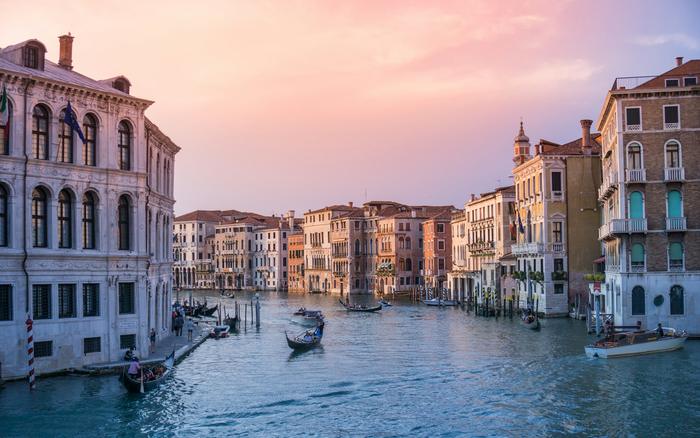
Italy
The benchmark for food, history, and beauty.
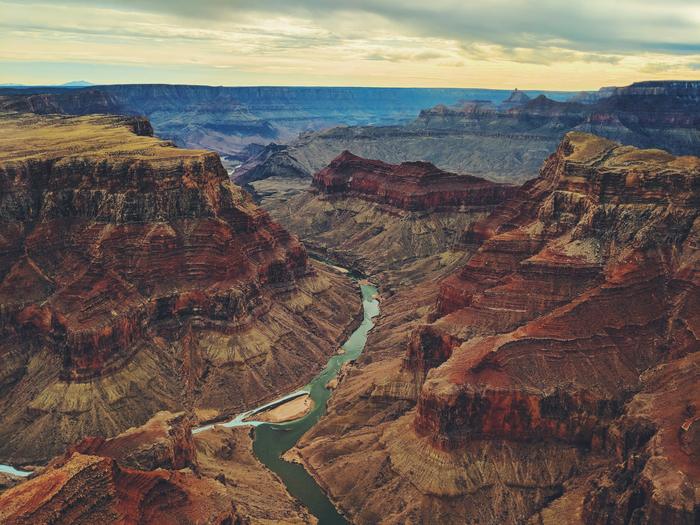
United States
A continent pretending to be a country — cities, deserts, and the best national parks anywhere.
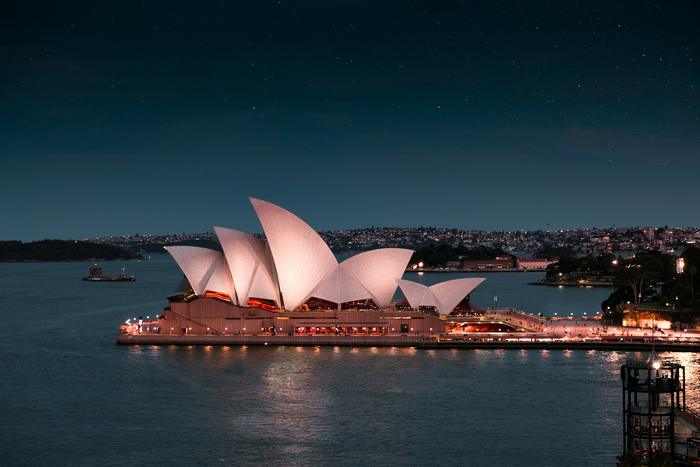
Australia
Vast, varied, relaxed. Reef, Sydney, and proper wilderness in one.
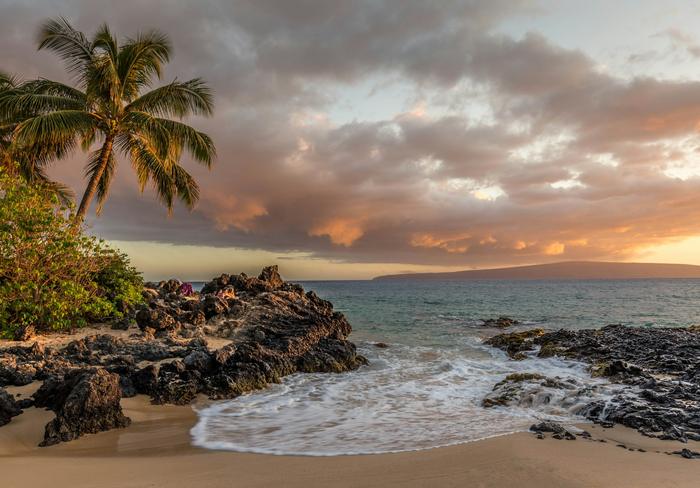
Hawaii
A handful of islands where the landscapes and the ocean genuinely earn the flight.
Not sure where to go
Take the 5-minute quiz
Answer a few honest questions and get matched to destinations that actually fit how you travel.
Start the quiz